
On December 14, 1972, Apollo 17 commander Gene Cernan took the last steps a human being has ever taken on the Moon. More than half a century later, NASA’s Artemis program is preparing to end that silence — and for the first time in the history of human spaceflight, you can watch the next chapter unfold live from your couch on HBO Max or discovery+.
What the Artemis Program Actually Is — and Why NASA Is Going Back Now
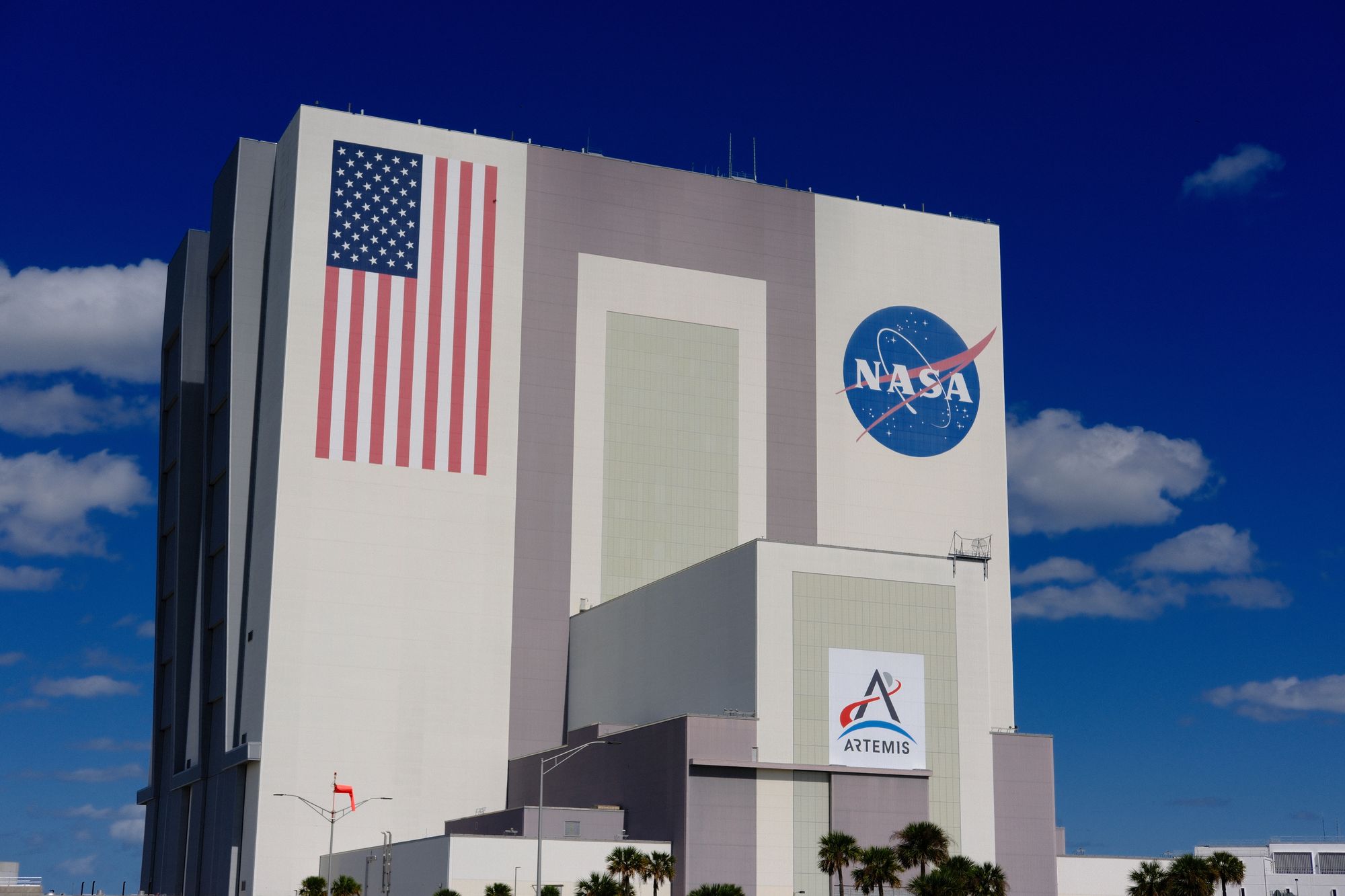
Artemis is NASA’s multi-mission lunar exploration program, named after Apollo’s twin sister in Greek mythology. Its stated goals, per NASA’s official Artemis program documentation, are to land “the first woman and first person of color” on the Moon and to establish a sustainable, long-term human presence at the lunar South Pole — objectives that are scientific and geopolitical in equal measure, not merely symbolic.
The program unfolds in three distinct acts. Artemis I, completed in December 2022, was an uncrewed test flight of the Space Launch System (SLS) rocket and the Orion crew capsule. Artemis II is a crewed lunar flyby carrying four astronauts around the Moon and back. Artemis III is the actual crewed landing — widely characterized, including by the NASA Artemis community, as the most logistically and technically complex mission the program will attempt.
The scientific urgency driving this timetable centers on something hiding in the Moon’s permanent darkness. NASA’s LCROSS and Lunar Reconnaissance Orbiter (LRO) missions confirmed the presence of water ice in the permanently shadowed craters of the lunar South Pole in 2009 and 2018, respectively. That ice — mixed into the lunar regolith at concentrations estimated between 1 and 10 percent by weight in some locations, according to findings published by NASA’s LCROSS science team in the journal Science — could theoretically be converted into drinking water, breathable oxygen, and hydrogen rocket propellant. If that extraction can be demonstrated at scale, it would fundamentally change the economics of deep-space exploration by reducing the amount of consumables that must be launched from Earth.
Unlike Apollo, which was driven primarily by Cold War competition with the Soviet Union, Artemis is explicitly framed by NASA as a science-and-sustainability mission. Commercial lander partnerships — most notably SpaceX’s Starship Human Landing System (HLS) — and the planned Lunar Gateway space station are intended to make lunar access routine rather than episodic. That distinction matters: Apollo was a sprint; Artemis is designed to be infrastructure.
The Engineering Explained: How SLS and Orion Actually Get Humans to the Moon
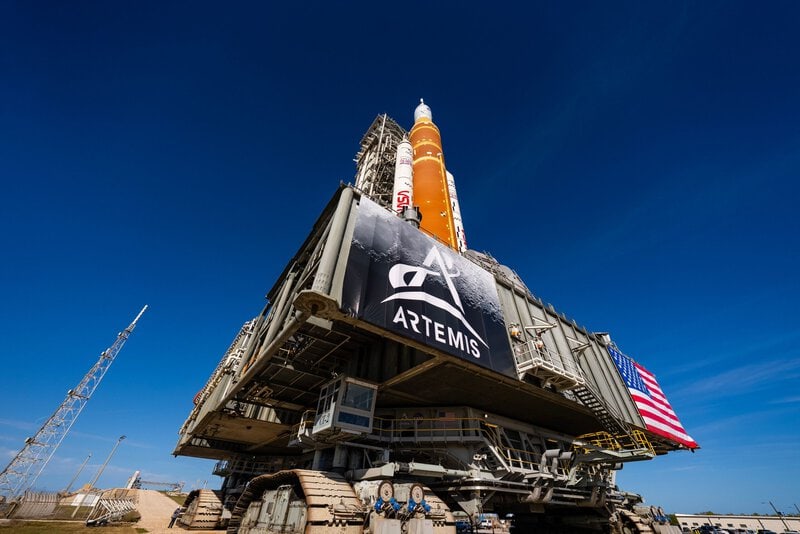
NASA’s Space Launch System stands 98 meters tall — taller than the Statue of Liberty on its pedestal — and produces 8.8 million pounds of thrust at liftoff, making it the most powerful rocket ever successfully flown, according to NASA’s official SLS fact sheet. The Block 1 configuration, used for Artemis I and planned for Artemis II, combines a core stage powered by four RS-25 engines — heritage hardware from the Space Shuttle program — with two five-segment solid rocket boosters. Together, they produce enough thrust to push a 2,600-metric-ton vehicle off the launch pad and onto a trans-lunar injection trajectory within roughly 90 minutes of liftoff.
The Orion crew capsule, built by Lockheed Martin, is engineered for conditions that vehicles serving the International Space Station simply are not designed to handle. Its heat shield — the largest ever flown, at 5 meters in diameter — must survive reentry at approximately 11 kilometers per second, roughly 32 times the speed of sound, after returning from lunar distance. NASA validated that heat shield during Artemis I’s December 2022 splashdown in the Pacific Ocean. Orion is also paired with a European Service Module (ESM), provided by the European Space Agency, which supplies propulsion, electrical power, thermal regulation, and consumables including water and oxygen for the crew — a multinational engineering dependency with no direct Apollo precedent.
The trajectory planned for Artemis II is a “free-return” lunar flyby, a path that uses the Moon’s gravity to sling the spacecraft back toward Earth without requiring a powered lunar-orbit-insertion burn. NASA flight directors describe this as a critical safety margin for the first crewed SLS flight: if a major system fails, the crew can ride the free-return trajectory home without depending on an engine burn that might not be available.
Artemis vs. Apollo: What Is Actually Different This Time
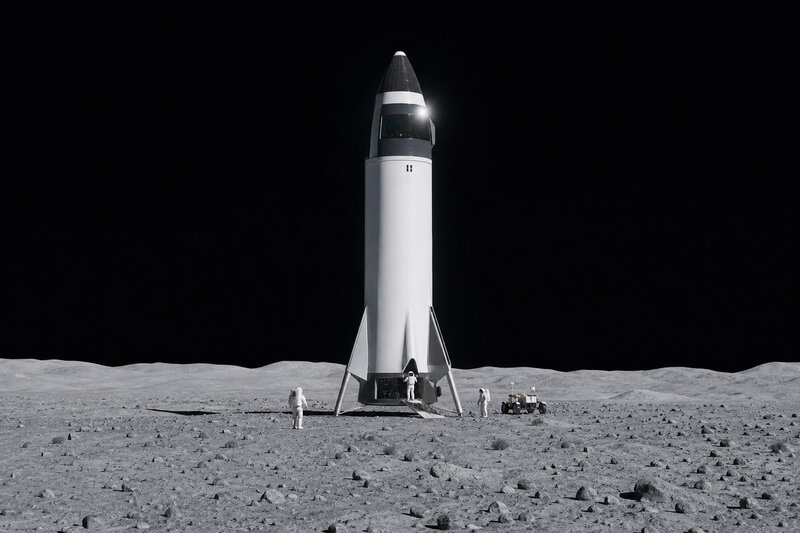
The differences between Artemis and Apollo are not merely incremental — they reflect a fundamentally different model of how humans reach and work on the Moon.
- The lander is commercial, not government-built. Apollo’s Lunar Module was a purpose-built NASA vehicle. Artemis III’s lunar lander is SpaceX’s Starship HLS, a variant of the fully reusable Starship rocket. Critically, Starship HLS will need to be fueled in Earth orbit by a separate tanker Starship before proceeding to the Moon — a propellant-transfer technique never before demonstrated at operational scale, according to NASA’s HLS contract documentation.
- The landing zone is radically different. Apollo landed near the equator in relatively flat mare terrain chosen primarily for safety and communication line-of-sight. Artemis III targets the lunar South Pole region — rugged, heavily cratered, and in places permanently dark — requiring new navigation systems, spacesuit thermal management, and surface mobility solutions still under active development.
- The spacesuits are redesigned for diversity. Apollo-era suits were built for a narrow range of crew body sizes. The Artemis spacesuits, now being developed commercially by Axiom Space as the AxEMU (Axiom Extravehicular Mobility Unit), are engineered to allow greater range of motion and to accommodate a broader range of crew body sizes — a direct engineering response to NASA’s crew diversity commitment.
- The communications bandwidth is incomparably greater. High-definition video from the lunar surface can now be relayed in near-real time through assets like NASA’s Lunar Reconnaissance Orbiter and the planned Lunar Gateway, enabling live streaming coverage of a kind that was physically impossible during Apollo.
The Science Artemis Is Actually There to Do
The primary scientific target — lunar South Pole water ice — is not a trivially accessible resource. Extracting ice mixed into regolith and purifying it for human use requires in-situ resource utilization (ISRU) technology that Artemis surface missions are specifically tasked with demonstrating for the first time. One significant complication: NASA’s VIPER rover (Volatiles Investigating Polar Exploration Rover), which was intended to map the South Pole’s ice deposits before a crewed landing, had its contract cancelled in 2024, meaning Artemis III crews may arrive with less ground-truth resource mapping than originally planned. The exact quantity of accessible water ice, and whether it can be economically extracted, remains an active and contested area of scientific debate.
Artemis missions will also conduct geological fieldwork in and around the South Pole-Aitken Basin, one of the largest confirmed impact craters in the solar system at roughly 2,500 kilometers in diameter. Samples from this region could expose material from the Moon’s mantle — material that has never been directly studied — which would reshape scientific understanding of how the Moon, and by extension the early Earth, formed, according to the Lunar and Planetary Institute.
A secondary but significant science objective involves human biology. Unlike astronauts aboard the International Space Station, who are partially shielded by Earth’s magnetosphere, Artemis crew members will transit through the Van Allen radiation belts and spend days in open cislunar space. The biological data collected from Artemis crews will directly inform medical risk assessments for eventual crewed Mars missions, per NASA’s Human Research Program — making every Artemis crew member simultaneously an explorer and a research subject.
Where and How to Watch Every Artemis Launch and Mission Milestone
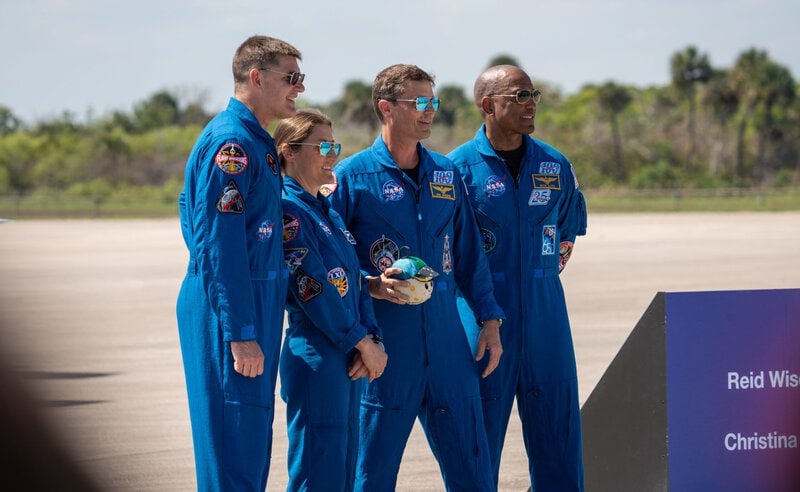
Watching the next phase of human lunar exploration no longer requires a television set or a press credential. NASA live content is now available on both discovery+ and HBO Max, both Warner Bros. Discovery platforms, following a landmark distribution deal. Live 24/7 NASA coverage is available on discovery+ starting at $5.99 per month. HBO Max, starting at $10.99 per month, carries NASA live programming as a sister platform and additionally hosts two on-demand titles directly tied to the Artemis program: the documentary NASA’s Artemis II Mission: Liftoff, which covers the SLS launch with a four-person crew, and Artemis II: To the Moon and Back, a documentary series following the mission in depth.
For viewers who prefer not to pay a subscription fee, NASA+ is NASA’s own free streaming platform, carrying live launch coverage, original documentary series, and archival mission content. It requires no subscription and is accessible via the NASA App on iOS and Android as well as through select third-party streaming devices — making it the zero-cost baseline option for any viewer who wants to watch history without a paywall.
For viewers who want maximum depth before tuning in, a practical two-platform approach works well: free science briefings and mission explainers on NASA+, followed by cinematic documentary coverage on HBO Max. Viewers outside the United States looking to stream the mission live have additional options worth exploring, including VPN-assisted access to NASA+ and the Warner Bros. Discovery platforms depending on regional availability. NASA content has also appeared in documentary formats on Prime Video, Peacock, and Netflix, though live launch coverage for the Artemis program cycle is most reliably anchored to NASA+ and the Warner Bros. Discovery platforms.
NASA’s expansion onto HBO Max and discovery+ represents a first for a major U.S. space program — live mission coverage integrated into the same consumer streaming ecosystem as prestige television. Viewer discussion of the streaming arrangements has already begun in earnest, with the NASA Artemis community on Reddit actively tracking platform availability and documentary coverage details ahead of the mission.
What Comes After Artemis III — and Why the Stakes Are Genuinely High
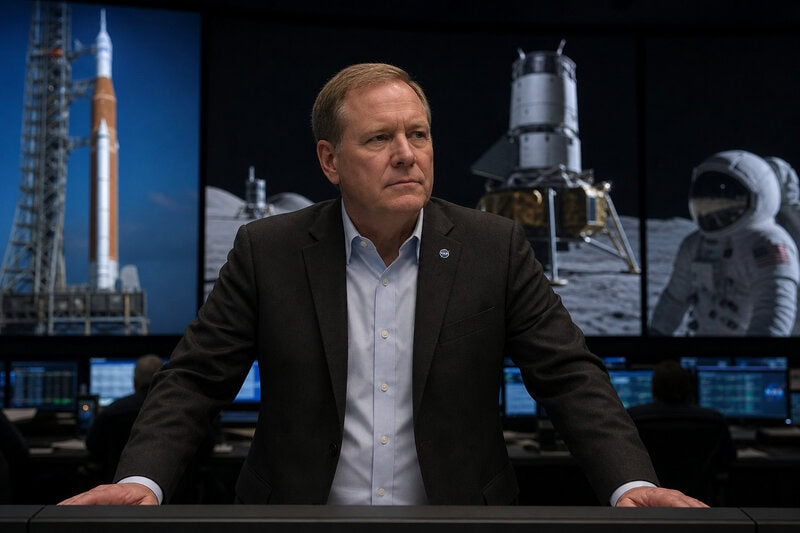
Artemis III’s complexity cannot be overstated. It requires the coordinated success of SLS, Orion, SpaceX Starship HLS, in-orbit propellant transfer, new spacesuits, and South Pole surface operations — all in precise sequence. A failure at any link in that chain would require a mission abort. NASA has publicly acknowledged the schedule and technical risks involved, and the program’s history has already included significant delays. Every viewer watching a launch on HBO Max or NASA+ should hold that reality in mind alongside the genuine excitement.
If Artemis does achieve its stated objectives, the downstream architecture is the Lunar Gateway — a small space station in a near-rectilinear halo orbit around the Moon, developed in partnership with ESA, JAXA, and the Canadian Space Agency — intended to serve as a staging point for lunar surface sorties and, aspirationally, as a waypoint concept for eventual Mars transit missions. That Mars application remains aspirational rather than funded at this time.
The geopolitical dimension is real and acknowledged at the highest levels of NASA leadership. China’s CNSA has publicly stated a crewed lunar landing goal of 2030. The Artemis Accords — bilateral agreements now signed by more than 40 nations — represent NASA’s diplomatic instrument for establishing norms of behavior in cislunar space before that competitive dynamic intensifies. The race back to the Moon is not just a science story; it is a story about which vision of space exploration — and which set of rules — shapes the next era of human activity beyond Earth.
Whether Artemis ultimately delivers on its scientific and exploration promises depends on funding stability, commercial partner execution, and a degree of schedule discipline that no NASA program in recent history has achieved without delay. That sober caveat does not diminish what the program is attempting. It simply means that every launch is genuinely uncertain — which is, in the end, exactly what makes it worth watching.