
The skeletal remains of Princess Ita, a royal woman buried at the Dahshur necropolis roughly 4,000 years ago, carry a story her tomb inscription never told. Her bones show the kind of remodeling at muscle-attachment sites that bioarchaeological researchers associate with repetitive, high-load pulling motions — the precise physical signature of a trained archer. She was not alone. Multiple royal women from the same burial site share that same anatomical pattern, and functional bows, arrows, and daggers were interred alongside them. A new study argues this combination of skeletal and material evidence fundamentally challenges what scholars thought they knew about the physical lives of Egypt’s royal women.
What Archaeologists Thought They Knew About Royal Egyptian Women
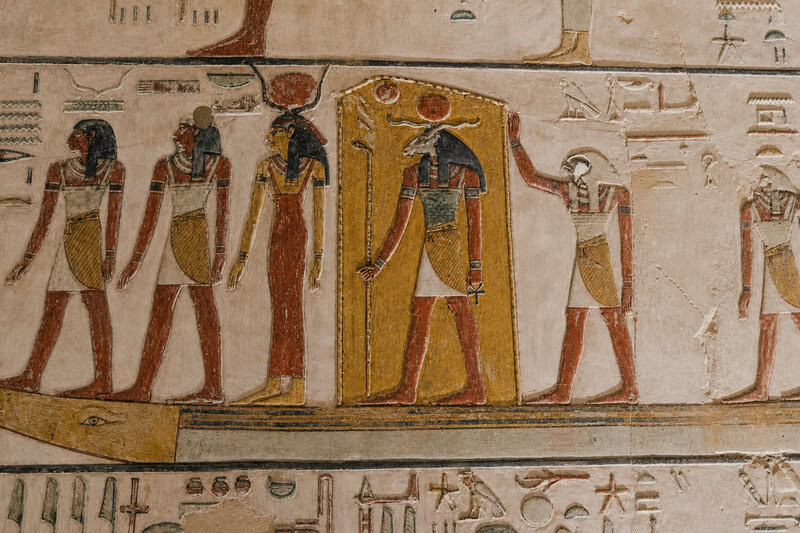
For generations, the scholarly consensus held that royal Egyptian women of the Middle Kingdom period — roughly 2055 to 1650 BCE — occupied ceremonial, domestic, or religious roles. They were visible at court, celebrated in art and inscription, and sometimes wielded real political influence, but the physical, martial dimensions of their lives were rarely part of the picture scholars painted. That assumption shaped how archaeologists interpreted the objects buried with these women: weapons found in royal female tombs were routinely classified as ritual or status goods, symbolic companions for the afterlife rather than tools their owners had actually used. That framing went largely unchallenged for decades.
The Dahshur necropolis, a royal burial ground on the west bank of the Nile south of Cairo, is the evidentiary setting for the research now disrupting that consensus. The site is associated with Middle Kingdom royalty and contains an unusually rich assemblage of weapons buried alongside female remains. What makes the new work methodologically distinct is its starting point: rather than asking what the objects mean, researchers asked what the bodies themselves record. The primary evidence shifted from artifact to anatomy — and the anatomy proved more forthcoming.
As reported in The Conversation, the bone analysis directly challenges the traditional view that royal Egyptian women lived idle, largely ceremonial lives — a characterization the researchers themselves attribute to the study’s findings, not to editorial interpretation.
The Science: How Bones Record a Life of Physical Training
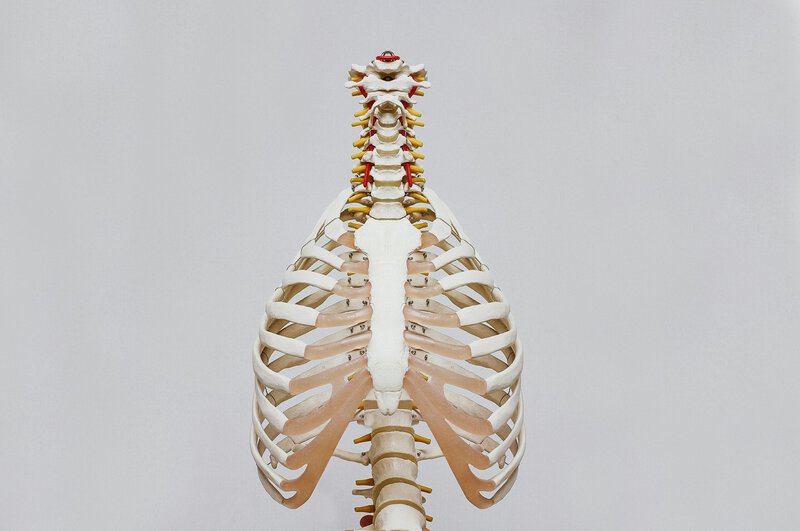
Bone is living tissue. It does not simply hold the body up; it responds, over years and decades, to the mechanical demands placed on it. Where muscles pull repeatedly and forcefully on their skeletal attachment points — sites called entheses — the bone at those locations tends to become enlarged, roughened, or more pronounced. Bioarchaeologists, researchers who study human remains within their archaeological context, have developed systematic frameworks for interpreting these entheseal changes as evidence of habitual physical activity.
Archery produces a particularly recognizable skeletal signature. Drawing a bow requires sustained, asymmetric loading of the shoulder, elbow, and wrist on the drawing arm, while the bow arm absorbs stabilizing force in a different but equally consistent pattern. Repeated over hundreds or thousands of practice sessions across a lifetime, this bilateral but asymmetric stress leaves an anatomical fingerprint that trained analysts can identify. The skeletal remains of the royal women at Dahshur showed robust muscle attachments at sites consistent with exactly this kind of habitual, physically demanding, repetitive activity.
Precision about what that finding does and does not establish is essential. “Consistent with” is not the same as proof. Entheseal changes are probabilistic evidence: they are influenced by age, genetics, nutrition, and general activity levels, and they indicate categories of motion rather than naming specific sports or tasks. The researchers do not claim the bones prove archery in isolation. Instead, as Archaeology Magazine explains, they argue that the combination of skeletal markers and weapons burial makes purposeful archery training the most parsimonious explanation available — the simplest interpretation that accounts for all of the available evidence.
The Evidence Package: Skeletons and Weapons Together
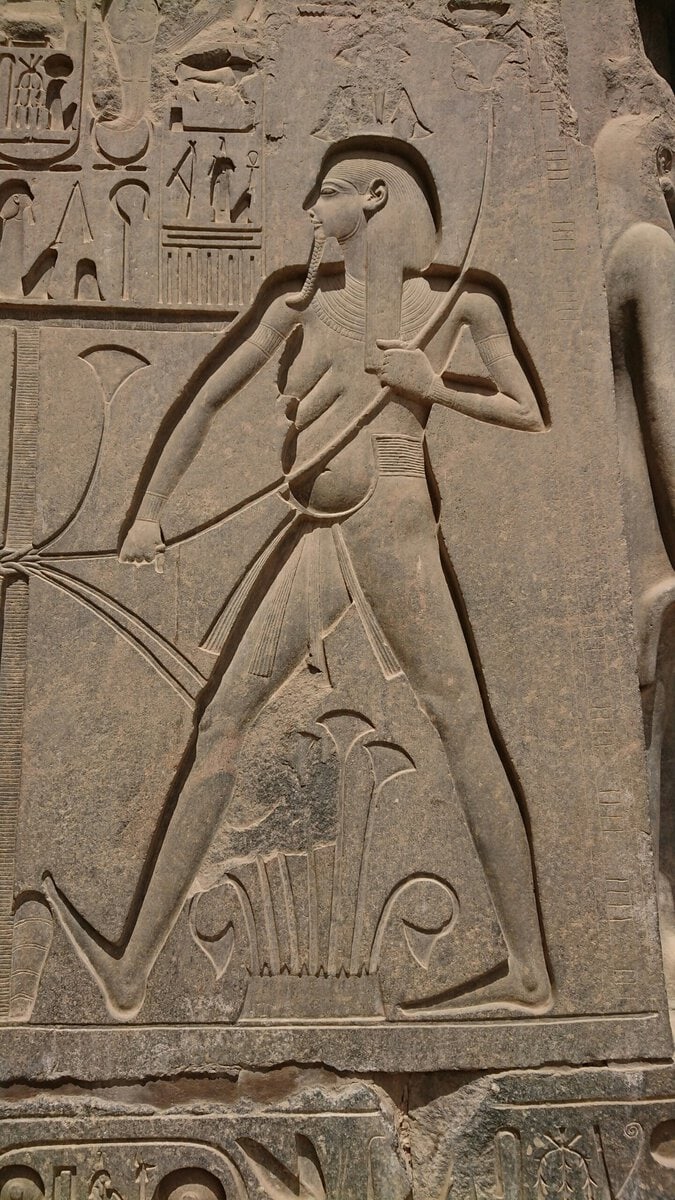
What was buried with these women matters as much as what was written in their bones. The grave goods included bows, arrows, and daggers — not decorative miniatures scaled for ritual display, but functional-sized weapons. Either line of evidence considered alone is open to alternative readings: bone changes could reflect agricultural labor or other repetitive tasks, and weapons could be purely ceremonial. Together, the two lines of evidence form a convergent case that is considerably harder to dismiss.
Princess Ita serves as the study’s most vivid named example, grounding the statistical and anatomical analysis in an individual human being rather than an abstracted data set. That specificity matters for public understanding: it is one thing to describe skeletal patterns across a sample, and another to recognize that a woman with a name, a tomb, and a royal lineage spent significant portions of her life training with a bow.
Equally significant is the scope of the finding. The skeletal pattern does not appear in a single skeleton that might represent an outlier or an individual with an unusual personal history. It appears across multiple individuals at the same site. That recurrence supports the inference, noted in reporting by The Jerusalem Post, that weapons training was a structured, institutionalized practice for royal women of this period — not an idiosyncratic personal choice but something closer to a formal curriculum.
What This Rewrites: Gender, Status, and Physical Life in Ancient Egypt
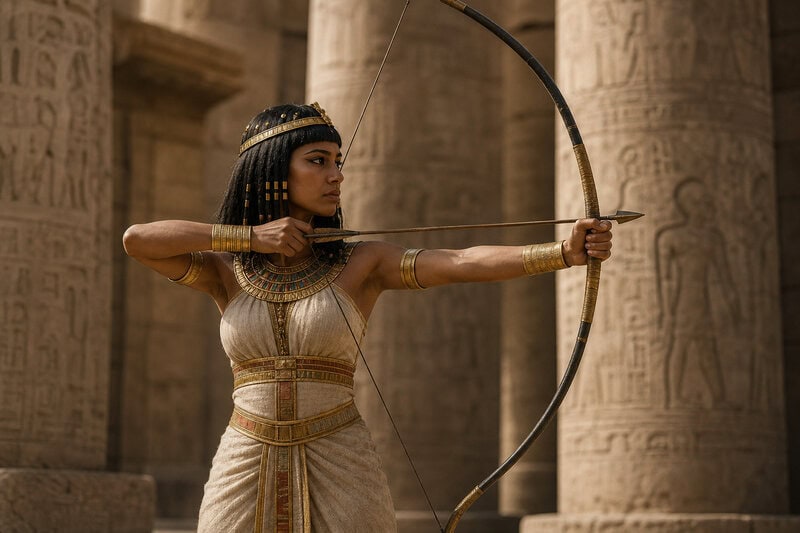
If royal Egyptian women roughly 4,000 years ago received extensive, rigorous weapons training, the standard narrative about gender roles and physical activity among Egypt’s elite requires revision. The study is careful about the scope of that revision: it does not argue that these women served as soldiers or fought in field battles. The evidence does not support that claim, and the researchers do not make it. What the evidence does support is that physically demanding, skilled martial training was part of royal women’s lives — possibly for reasons of status, ritual readiness, sport, personal protection, or some combination that the surviving record does not fully illuminate.
This finding joins a growing body of bioarchaeological research that has repeatedly recovered physical evidence of women engaged in activities — warfare, heavy labor, long-distance travel — that historical texts or traditional scholarly assumptions had assigned exclusively or predominantly to men. The pattern is global and increasingly well-documented: the written record, shaped by who controlled writing and what was considered worth recording, systematically under-represents what women’s bodies were actually doing. Coverage in The Independent frames the Dahshur findings within this broader reappraisal of ancient women’s physical lives, noting that the skeletal evidence points to royal women as active participants in skilled, physically demanding activities rather than passive recipients of ceremonial burial goods.
The question of why royal women trained this way remains genuinely open. The social logic that made weapons training a feature of elite female upbringing in Middle Kingdom Egypt — if that is indeed what the evidence reflects — is not recoverable from bones alone, and the textual record offers limited guidance. That ambiguity is not a flaw in the research; it is an honest acknowledgment of what different categories of evidence can and cannot answer.
Caveats and Open Questions the Science Cannot Yet Resolve
Transparency about interpretive limits is not a concession to uncertainty — it is what makes scientific findings trustworthy. Several important caveats apply here.
- Entheseal changes are not specific to archery. The bone remodeling documented in the Dahshur remains is consistent with archery, but consistency is not exclusivity. Other forms of repetitive upper-body labor could produce overlapping patterns. Isolating archery as the specific cause requires careful argument, convergent material evidence, and ideally independent replication on comparable remains from other sites and periods.
- The sample is inherently limited. Royal burials are rare, and preservation is uneven. The findings speak specifically to elite royal women of this period and location — they cannot be generalized to Egyptian women as a whole, or even to non-royal women of the same era. The lives of ordinary Egyptian women remain much harder to reconstruct through bioarchaeological methods.
- The social logic remains unexplained. The bones show that demanding physical training occurred. They cannot explain why it was structured the way it apparently was. Was archery part of royal ritual? A form of elite sport? A preparation for self-defense within the palace? A marker of status performed in public ceremonies? The study does not resolve these questions, and the surviving textual record offers limited guidance.
- The functional interpretation of the weapons remains debated. Classifying the buried bows and daggers as functional rather than ceremonial is a scholarly judgment, not a settled fact. Other researchers may weigh that evidence differently, and the debate is ongoing.
Scholars not involved in the study are likely to scrutinize both the entheseal analysis methodology and the interpretive steps from skeletal markers to archery practice. That scrutiny is healthy and expected. Follow-up research will either strengthen or complicate these conclusions — that is how the field advances, and readers should expect the picture to continue developing.
Why It Matters: Recovering the Physical Lives History Forgot
The Dahshur study is significant not because it proves that ancient Egyptian princesses were warriors — it makes no such claim — but because it demonstrates that physical, skilled, weapon-based training was part of royal women’s lives in ways the historical record obscured and that archaeology is only now recovering. The weapons in the tombs told one story; the bodies told a richer one.
That methodological lesson has implications beyond Egypt. When the primary evidence is the artifact — the object placed in the tomb — interpretation is inevitably filtered through assumptions about who that object was meant for and why it was placed there. When the primary evidence is the body, those assumptions are bypassed. Bones record what people actually did, not what contemporaries thought was worth commemorating in writing or art. Modern bioarchaeology’s expanding capacity to read that record is one of the most consequential developments in historical science of the past generation.
Archaeology Magazine’s coverage of the research notes that the finding has attracted significant attention precisely because it reframes familiar figures — Egyptian princesses — in unfamiliar physical terms. When the bones of royal women who lived 4,000 years ago show the same physical signatures as trained archers, and those women were buried with functional bows and daggers, the most evidence-consistent reading is that they knew how to use them.
As more ancient remains are subjected to modern bioarchaeological analysis — as techniques improve, as more sites are excavated, and as researchers bring fresh questions to collections that have sat in storage for decades — findings like this one from Dahshur suggest that the history of women’s physical lives, across cultures and across centuries, is likely to keep surprising us. The bones are speaking. We are only recently learning to listen carefully enough.