
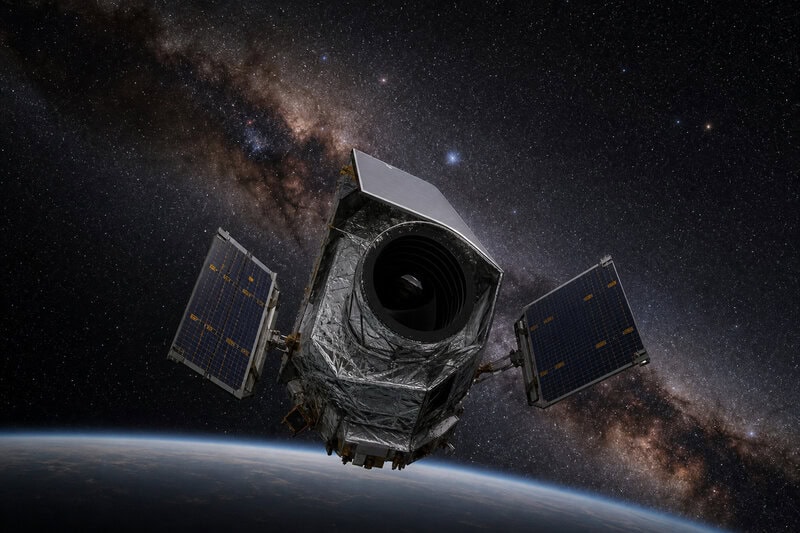
Somewhere in the darkness between stars, a planet the size of Earth drifts through interstellar space — no sun warming its surface, no orbit to trace, no light to betray its existence. The only evidence it is there will appear on our instruments as a brief brightening of a distant star, lasting perhaps a few hours, before vanishing as silently as it arrived. NASA’s Nancy Grace Roman Space Telescope is being built, in part, to catch exactly these fleeting signals. A 2023 analysis predicted it could detect roughly 400 such worlds during its mission — though that figure comes with what the researchers themselves describe as enormous uncertainty.
What Is a Rogue Planet?
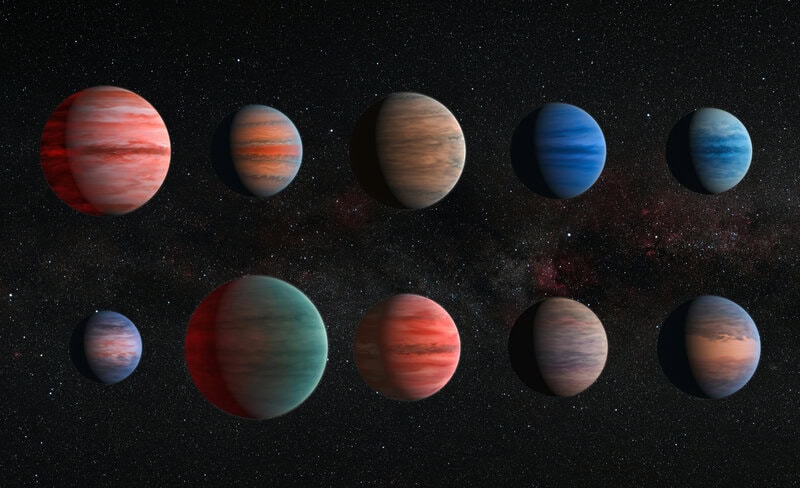
Rogue planets — also called free-floating planets — are planetary-mass objects traveling through interstellar space unbound to any host star. Most are thought to have formed inside a solar system and then been violently expelled through gravitational interactions with other planets or passing stars during the chaotic early stages of system formation. A smaller and more contested possibility is that some free-floating planets form independently, collapsing directly from interstellar gas clouds much as stars do, but on a far smaller mass scale. Whether that second pathway is rare or common remains an open question.
What is broadly accepted is that gravitational scattering during planet formation can and does launch worlds into permanent interstellar exile. What remains deeply uncertain is how often it happens, and across what range of planetary masses. Some theoretical simulations and early observational hints suggest the Milky Way could harbor more free-floating planets than stars — potentially numbering in the trillions — though observational confirmation of that population scale remains limited, and the models vary considerably depending on their assumptions.
Detecting these objects by conventional means is nearly impossible. They emit no starlight to collect with a spectrograph, and because they orbit nothing, they produce no periodic wobble or transit signal that planet hunters typically rely upon. They are, by every ordinary measure, invisible — which makes the technique Roman will employ all the more remarkable.
The Technique: Gravitational Microlensing
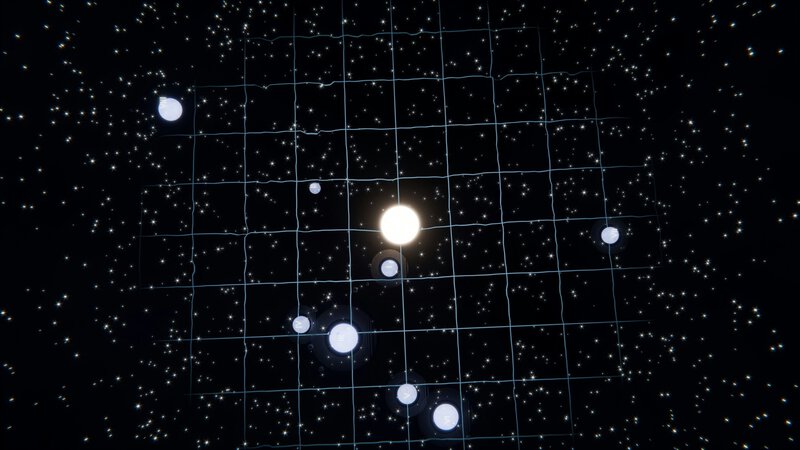
Gravitational microlensing is a phenomenon predicted by Einstein’s general theory of relativity and observed routinely since the 1990s. When a massive object passes between Earth and a more distant background star, the intervening object’s gravity bends the star’s light rays, focusing them toward Earth and causing the star to appear temporarily brighter. The lensing object acts as a natural magnifying glass — one that requires no light of its own to function. That property makes microlensing uniquely suited to detecting rogue planets: the technique is sensitive to the planet’s gravity alone, not its luminosity, so even a cold, dark, starless world leaves a measurable fingerprint on passing starlight.
The challenge is that rogue planet microlensing events are extraordinarily brief. Because the lensing object is low in mass and moving quickly relative to the background star, the characteristic brightening spike can last anywhere from a few hours to a couple of days, compared to weeks or months for events caused by stars. Missing even a single night of observations can mean missing the event entirely. Ground-based programs including the Optical Gravitational Lensing Experiment (OGLE) and the Korea Microlensing Telescope Network (KMTNet) have operated for years to build an observational baseline of such events, producing the data that informed the 2023 Roman forecast. Roman is designed to extend that baseline dramatically, with capabilities no ground survey can match.
The 400-Planet Prediction: Where the Number Comes From — and Why to Treat It Carefully
NASA highlighted a prediction of approximately 400 Earth-mass rogue planet detections in 2023, based on an analysis drawing on nine years of observational microlensing data. That figure is a forward-looking forecast for what Roman’s Galactic Bulge Time-Domain Survey might accumulate over the mission lifetime. It is not a count of already-confirmed detections and should not be read as one.
The researchers stress that the figure carries enormous uncertainty, and understanding the sources of that uncertainty is essential to reading the prediction honestly. First, the true frequency of rogue planets per unit of galactic volume is poorly constrained, particularly at the low-mass end of the distribution where Earth-sized objects reside. Second, the mass distribution of ejected planets depends on planet-formation and dynamical ejection models that differ significantly between research groups. Third, Roman’s detection efficiency for any given event depends on event duration and the survey’s observing cadence — and very short events, the ones most likely to signal low-mass rogue planets, are statistically the hardest to catch cleanly.
The honest framing is this: 400 is a scientifically motivated best estimate derived from the best available data, not a guaranteed outcome. Roman could find substantially more free-floating planets if the galaxy is as densely populated with them as some models suggest, or it could fall well short if ejection rates are lower than assumed. The value of the prediction lies not in the specific number but in establishing that a statistically meaningful detection haul is plausible — enough to make the survey scientifically worthwhile regardless of where the true count ultimately lands.
Roman’s Hardware Edge: Sensitivity, Scale, and Speed
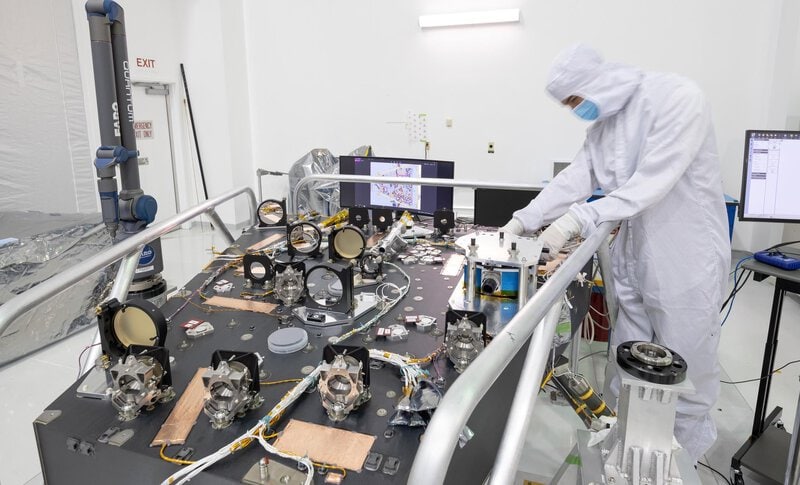
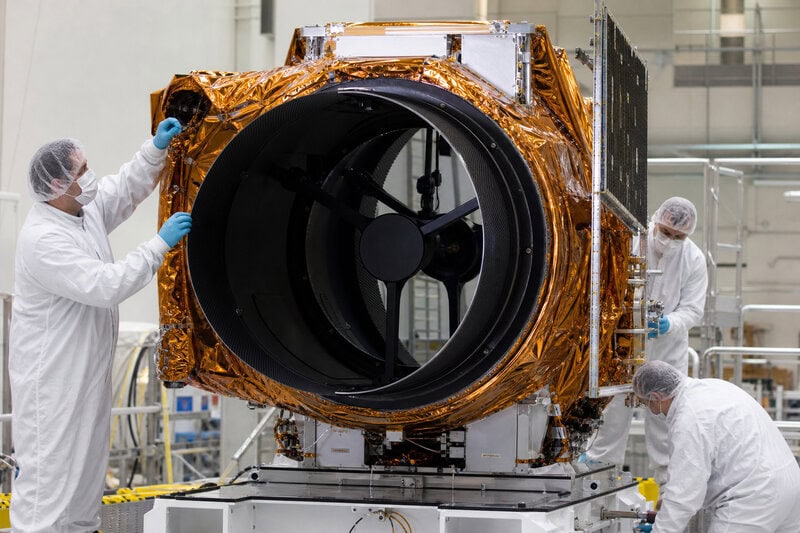
Roman’s technical specifications are engineered with deliberate precision for this problem. With just 55 seconds of exposure time, the telescope will be able to detect sources about a 40-millionth the brightness of what the human eye can see — a sensitivity level that makes the short-lived brightness spikes from low-mass microlensing events detectable where no ground-based survey could reliably catch them.
Roman’s 300-megapixel Wide Field Instrument can image a patch of sky roughly 100 times larger than Hubble’s field of view in a single pointing. This wide-field advantage allows the telescope to monitor hundreds of millions of stars in the galactic bulge simultaneously, dramatically increasing the probability that any given rogue planet passage will intersect a monitored background star. The galactic bulge is the preferred survey region because the density of both background source stars and potential lensing objects — including free-floating planets — is highest there.
To maximize the chances of catching events that may last only hours, Roman’s Galactic Bulge Time-Domain Survey is planned to re-image the same dense stellar fields approximately every 15 minutes throughout each observing season. That cadence is calibrated specifically to the expected duration distribution of rogue planet microlensing events. Because Roman operates in space, above Earth’s atmosphere, it also avoids the blurring, weather interruptions, and daytime gaps that cause ground-based telescopes to mischaracterize or miss outright the shortest events — the very signals most likely to point to Earth-mass free-floating worlds.
What Finding — or Not Finding — Hundreds of Rogue Planets Would Tell Us
The scientific stakes extend well beyond tallying an exotic population. The abundance of Earth-mass rogue planets is a direct diagnostic of how chaotic and violent the ejection process is in young solar systems. A large confirmed population would imply that planet formation is widespread and frequently disruptive — that solar systems routinely produce more planets than they can gravitationally retain, flinging the surplus into the dark. A sparse population would suggest the opposite, or that the ejection process preferentially affects larger, Jupiter-mass bodies rather than Earth-sized ones.
Roman’s rogue planet survey is particularly powerful because it runs simultaneously with the telescope’s survey of bound exoplanets, also detected through microlensing. For the first time, astronomers will be able to compare orbiting and free-floating planet populations using a single, consistent dataset — the same instrument, the same fields, the same detection pipeline. That apples-to-apples comparison could reveal whether the free-floating population is plausibly the ejected surplus of the same systems producing bound planets, or whether a separate formation pathway is needed to explain the numbers.
Equally important is the scenario in which Roman detects far fewer rogue planets than predicted. A null or low-count result would not be a failure — it would be informative in the opposite direction, constraining planet-formation and ejection models and revealing which assumptions built into the 2023 forecast are too generous. Science advances through both kinds of answers.
One complication deserves honest acknowledgment: distinguishing true planetary-mass free-floating objects from very low-mass brown dwarfs — objects too small to sustain hydrogen fusion, sometimes called failed stars — is genuinely difficult from microlensing data alone. The mass boundary between the two categories is blurry in theory and even blurrier in practice. Resolving individual ambiguous cases will require statistical arguments or, where possible, follow-up observations at other wavelengths.
Timeline and the Bigger Picture

Roman is currently scheduled to launch by May 2027. Its Galactic Bulge Time-Domain Survey is one of the mission’s core science programs and the primary channel through which rogue planet detections would accumulate. Readers should set realistic expectations about the pace of results: each candidate microlensing event must be carefully vetted to rule out stellar or brown-dwarf lenses before a planetary-mass interpretation is accepted. Confirmed rogue planet detections will emerge gradually across the mission lifetime, not in a single announcement, as statistical confidence builds event by event.
Roman will not be working alone. The Vera C. Rubin Observatory’s Legacy Survey of Space and Time, coming online in roughly the same era, will complement Roman with wide-field optical cadence data from the ground. Combining datasets from both facilities could sharpen population statistics beyond what either telescope achieves independently, helping to break model degeneracies and produce the most complete census of free-floating planets the field has ever attempted.
Whether Roman ultimately finds dozens or hundreds of free-floating worlds, each confirmed detection will represent something worth pausing over: a planet that formed inside a solar system, was gravitationally expelled into permanent darkness, traveled through interstellar space for millions or billions of years without a sun, and was revealed to human science by nothing more than a few hours of silent, invisible bending of light. The galaxy may be far stranger and more densely populated than any count of stars alone would suggest — and Roman is designed to measure, for the first time, just how strange and how populous it really is.