
NASA is looking for exactly four people willing to disappear into a simulated Martian habitat for 12 months — no sunlight, no real-time phone calls, and no way out until the mission ends. The agency’s CHAPEA program, scheduled to begin no earlier than August 2027, is not casting for a reality show; it is running a controlled scientific experiment, and the eligibility requirements reflect that with unusual precision.
What CHAPEA Actually Is, and Why the Data Matters
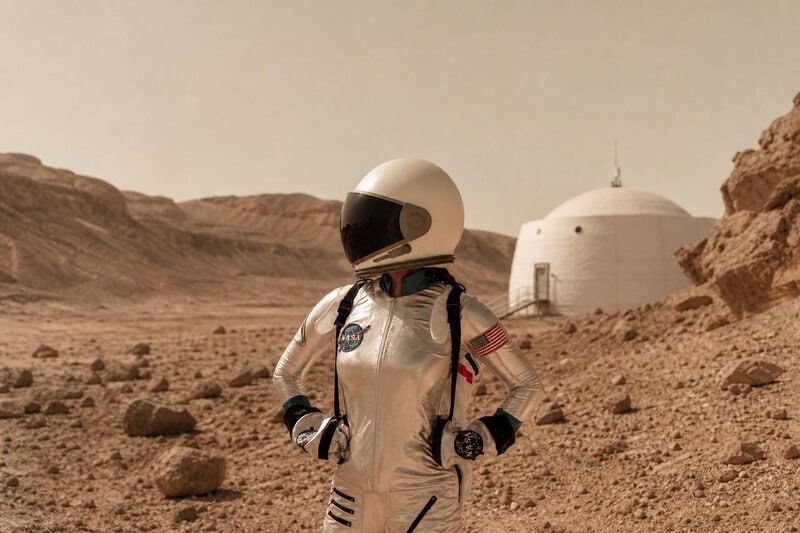
CHAPEA — short for Crew Health and Performance Exploration Analog — is NASA’s ground-based program designed to simulate the full arc of an interplanetary mission without leaving Houston. The habitat, a 3D-printed structure called Mars Dune Alpha located at Johnson Space Center, includes a sand yard meant to replicate Martian terrain, where crew members conduct simulated spacewalks under conditions of deliberate resource limitation. Every meal consumed, every conflict that surfaces, and every cognitive test result feeds directly into NASA’s long-range planning for crewed Mars missions.
Two previous CHAPEA missions have already run, making the August 2027 mission the third iteration. Each cycle refines what NASA understands about human endurance in deep-space-like conditions — not in the abstract, but in granular physiological and behavioral detail. The volunteers are, in the agency’s own framing, research subjects as much as participants. NASA’s official call for applicants makes this research framing explicit: the program exists to generate data, and the four selected individuals are the primary instrument.
The simulation replicates both the interplanetary transit phase — weeks of monotony, constrained communication, and resource rationing — and surface operations, where crew members don suits and move through the sand yard under protocols designed to mimic the physical and procedural demands of working on Mars. Communication with the outside world is subject to artificial delays meant to replicate the signal lag between Earth and Mars. For the duration of the mission, volunteers cannot call a friend, a partner, or a doctor in real time. That constraint alone distinguishes CHAPEA from any other civilian research participation most people will ever encounter.
The Hard Eligibility Cutoffs: Age, Citizenship, and Health
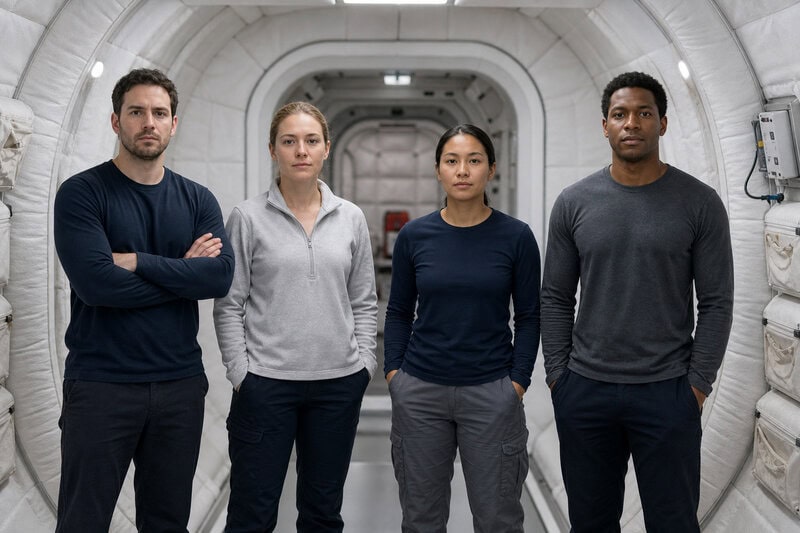
NASA’s requirements for the yearlong Mars simulation are structured as sequential filters, not a holistic scoring rubric. Applicants who fall outside the hard cutoffs are disqualified before any other evaluation begins — a first-pass logic that mirrors the astronaut candidate selection process itself.
The firm requirements, as NASA has specified them, are:
- U.S. citizenship or permanent residency
- Age between 30 and 55 years old
- Non-smoker status
- English language proficiency
- A technical professional background
- Baseline health standards sufficient to withstand a year of physical and psychological stress without routine access to outside medical care
The age window — 30 to 55 — reflects a calculated balance. Candidates younger than 30 may lack the professional maturity and risk tolerance that sustained isolation demands. Candidates older than 55 face statistically greater health variability over a 12-month period in a confined environment with no emergency evacuation option. The non-smoker requirement is both a health baseline and a practical one: a sealed habitat with recirculated air has no tolerance for combustion products.
English proficiency is a firm operational requirement, not a preference. All NASA mission communication, documentation, and emergency protocols are conducted in English, and the ability to respond accurately under stress in a shared language is a safety-critical function, not a cultural formality.
The Technical Background Requirement: Why NASA Won’t Take a Generalist
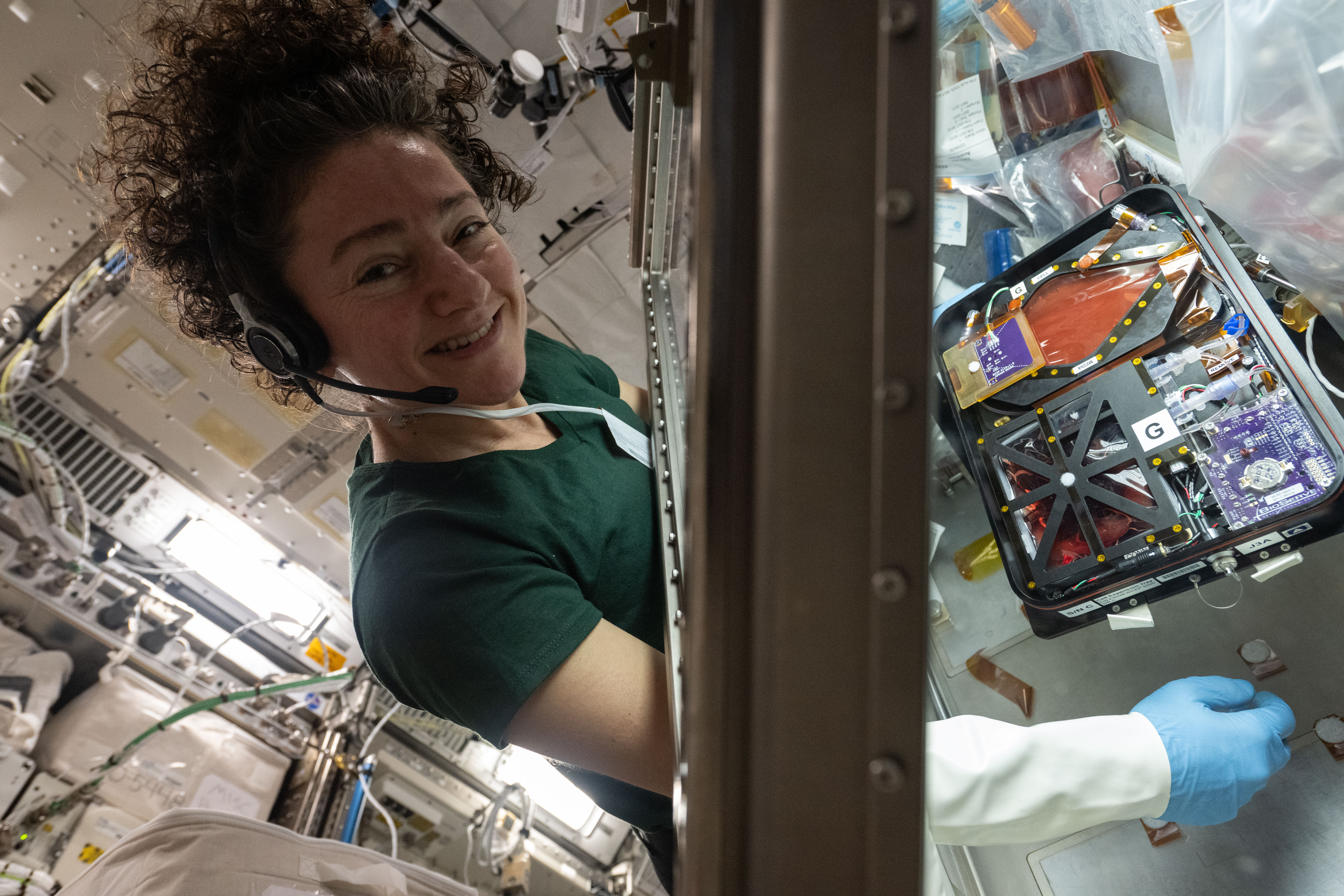
Among all the posted requirements, the technical background criterion is the one most likely to surprise applicants who assume that enthusiasm and psychological resilience are the primary qualifications. They are not. NASA specifies that CHAPEA volunteers must have professional or academic grounding in a technical field, because crew members will perform real scientific and operational tasks — equipment maintenance, geological surveys, systems troubleshooting — not merely endure the experience.
Relevant fields that satisfy this criterion broadly align with the academic prerequisites NASA uses for its astronaut corps: engineering disciplines, biological sciences, physical sciences, mathematics, and computer science are the clearest examples. A technical background correlates with something NASA considers essential when systems fail far from any support team — the practiced ability to diagnose, adapt, and improvise under pressure. That is a learned cognitive habit, developed through years of working in environments where problems have real consequences, not an innate personality trait that can be identified in an interview.
This requirement effectively filters out highly motivated but non-technical applicants, underscoring that CHAPEA is a research mission first and a human-interest story second. Coverage of the program’s recruitment has emphasized the unusual nature of the opportunity, but the underlying selection logic is rigorous rather than aspirational.
The Psychological Criteria NASA Won’t Fully Publish — but the Science Reveals
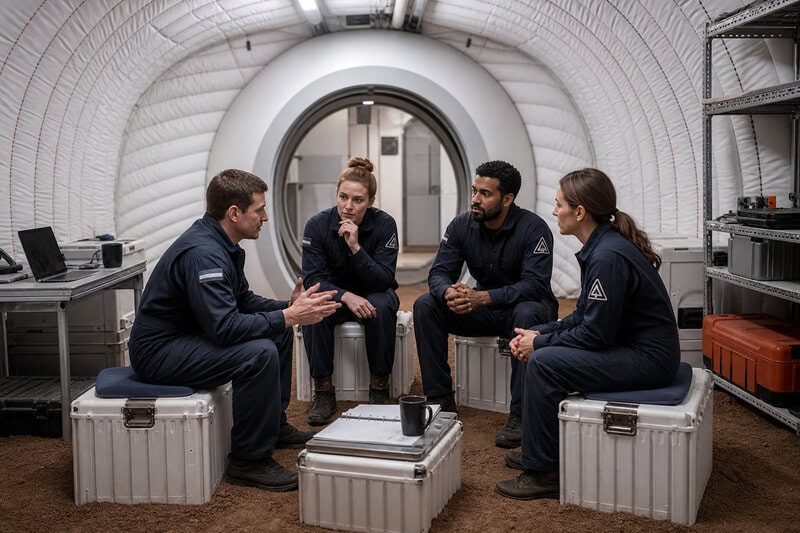
The posted eligibility checklist is only part of what NASA evaluates. Decades of isolation and confinement research — including studies funded through NASA’s Human Research Program — consistently identify emotional stability, conflict-resolution skill, and adaptability as the traits that predict crew cohesion over long durations. These qualities are harder to list on a requirements page, but they are no less determinative.
Research conducted on analogous environments, including Antarctic winter-over stations and the HI-SEAS Hawaii Space Exploration Analog that preceded CHAPEA, found that interpersonal friction — not technical failure — was the most common source of mission degradation. A crew that cannot resolve conflict in a confined space without external mediation becomes a liability regardless of individual technical competence.
NASA’s Human Research Program formally identifies behavioral health and performance as one of five top human risks for Mars-class missions. That classification means the psychological screening behind CHAPEA volunteer qualifications is as rigorous as the medical screening, even if it is considerably less publicly detailed. Research published in journals including Acta Astronautica has found that candidates who score high on conscientiousness and low on neuroticism in psychological assessments have historically fared better in long-duration analog environments — though NASA has not publicly specified which validated instruments it uses in CHAPEA selection specifically.
What the science makes clear is that the four people selected will need to be, simultaneously, technically credentialed enough to do real science, psychologically stable enough to manage months of grinding sameness, and interpersonally skilled enough to share a space smaller than most apartments without destroying the mission’s cohesion.
What a Year Inside Actually Demands
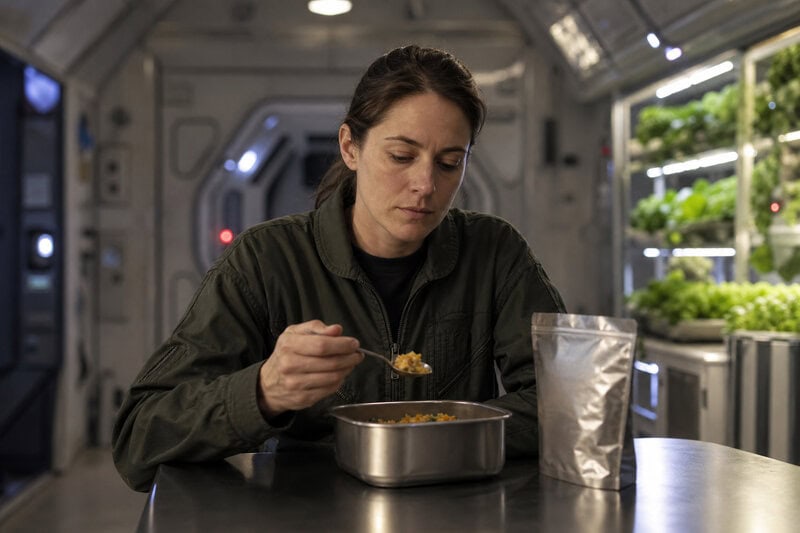
The physical and psychological reality of 12 months in Mars Dune Alpha is worth understanding concretely, because the requirements only make sense in context. Nutritional intake is constrained and monitored, with shelf-stable and bioregenerative food systems under study — placing demands on volunteers that extend beyond caloric management into sustained micronutrient adequacy over a full year. Sleep disruption, workload spikes during simulated emergencies, and the absence of varied sensory experience combine to create what NASA’s Human Research Program classifies as behavioral conditions distinct from any Earth-based work environment.
The communication delay alone — artificially imposed to replicate signal lag between Earth and Mars — represents a psychological demand that research consistently underestimates until people actually experience it. The inability to receive real-time support, reassurance, or even casual conversation from anyone outside the habitat is not equivalent to being busy or traveling for work. It is a structural alteration of the social environment that human cognition is not naturally calibrated to handle without deliberate preparation and resilience.
Local Houston reporting on the recruitment has highlighted the geographic dimension — the mission runs at Johnson Space Center, meaning volunteers live inside a simulated Mars while the actual city of Houston continues around them, separated by a door they will not open for a year.
How to Apply — and What Happens After You Do
Qualified candidates can submit applications directly through NASA’s analog studies application portal at Johnson Space Center. NASA has not published a hard application deadline for the August 2027 mission, but the agency’s previous CHAPEA cycles closed recruitment well ahead of the mission start date, and the selection pipeline — which includes medical screening, psychological evaluation, and group assessment — requires substantial lead time. Prospective applicants with borderline qualifications on any hard criterion should not wait to confirm eligibility.
Compensation is provided, though NASA has not publicly disclosed the specific pay structure for the third mission. Participants in the first two CHAPEA missions received financial compensation commensurate with the duration and demands of the commitment. The mission provides housing, food, and all operational needs for the full 12 months, with no personal expenses inside the habitat — a detail that matters more than it might seem when calculating whether a year-long absence from ordinary employment is financially feasible.
The selection process itself is not a single interview. NASA’s analog crew selection draws on the same multi-stage evaluation architecture used for astronaut candidates: initial screening against hard criteria, medical evaluation, psychological assessment using validated instruments, and group interaction assessments designed to surface interpersonal dynamics before the habitat door closes. Applicants should expect the process to take months, not weeks.
Why the Program Signals Where Deep-Space Crew Selection Is Heading
CHAPEA’s requirements function as more than a checklist for this specific mission. They reveal where NASA believes the civilian talent pipeline for deep-space exploration is maturing — away from the pure test-pilot profile that defined the early astronaut corps and toward a broader, technically credentialed population capable of conducting science under duress in confined environments.
NASA’s analog studies program at Johnson Space Center encompasses multiple research environments, and CHAPEA sits at the long-duration end of that spectrum. The selection pipeline itself generates data: the pool of applicants who meet all criteria but are not chosen represents a comparison group that researchers can use to study self-selection into extreme environments — a design feature common in astronaut selection research.
Whether or not humanity reaches Mars in the 2030s or 2040s as NASA’s current roadmap suggests, the data collected from the August 2027 mission will shape the crew selection criteria, habitat design, and mission architecture of whatever vehicle eventually makes the journey. The four people chosen are, in a measurable sense, helping to design a mission they will almost certainly never fly — and the specific combination of technical background, physical health, and psychological resilience NASA requires of them is the agency’s most honest public statement yet about what it believes a Mars crew will actually need to survive.