
An international team of researchers has achieved roughly a tenfold reduction in the size of precision laser optical systems — a breakthrough so consequential that it could transform a compartment no larger than a shoebox, hurtling through orbit at 17,000 miles per hour, into one of the most powerful physics laboratories ever built. For decades, the hardware simply did not exist to conduct humanity’s most probing experiments about gravity, quantum mechanics, and the fabric of spacetime anywhere but on the ground. That constraint is, for the first time, beginning to lift.
Why Space Is the Ultimate Physics Laboratory
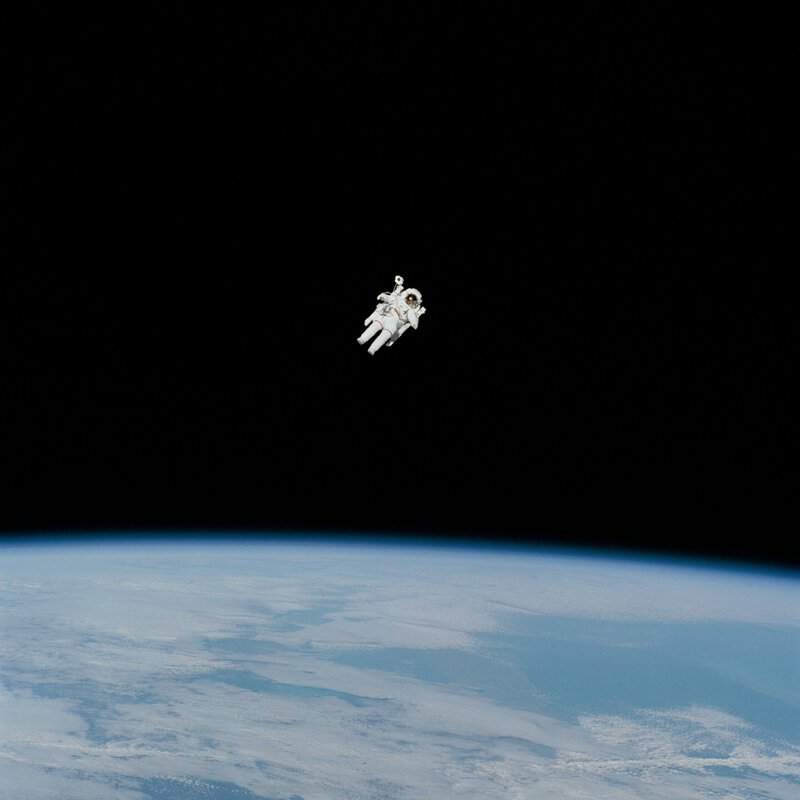
The case for conducting fundamental physics experiments in space comes down to one word: microgravity. On Earth, gravity is not merely a background condition — it is a relentless source of noise. Atoms in a ground-based experiment fall, interact with vibrating surfaces, and lose their fragile quantum coherence in milliseconds. In orbit, those same atoms float freely, evolving in their quantum states for seconds or even minutes. That difference in observation time translates directly into a difference in measurement precision spanning several orders of magnitude — the difference, in some cases, between detecting a predicted relativistic effect and being completely blind to it.
The experimental toolkit for exploiting this advantage was forged by Nobel Prize-winning physics. The 1997 Nobel Prize, awarded to Steven Chu, Claude Cohen-Tannoudji, and William Phillips for the development of laser cooling, and the 2001 prize recognizing Eric Cornell, Wolfgang Ketterle, and Carl Wieman for the creation of Bose-Einstein condensates (BECs) — quantum states in which millions of atoms merge into a single collective matter wave — established the techniques that space-based fundamental physics requires. These Nobel-awarded methods paved the way for cold-atom experiments in space, offering sensitivity to relativistic and quantum gravitational effects that no classical instrument can match.
The barrier has always been the lasers. Creating and interrogating ultra-cold atoms requires laser systems of extraordinary precision — devices that hold their exact frequency, or “color” of light, with almost unimaginable stability. Frequency stability, to define the term precisely, refers to how consistently a laser maintains its precise oscillation rate; even a drift of a few cycles per second in a laser operating at hundreds of trillions of cycles per second can mimic or completely mask the minute signals that Einstein’s theories predict. Until recently, achieving that stability required optical benches spanning several square meters, filled with components exquisitely sensitive to temperature changes and mechanical vibration. These systems were, in a word, unlaunchable.
The Tenfold Shrink: What the New Miniaturized Systems Actually Do
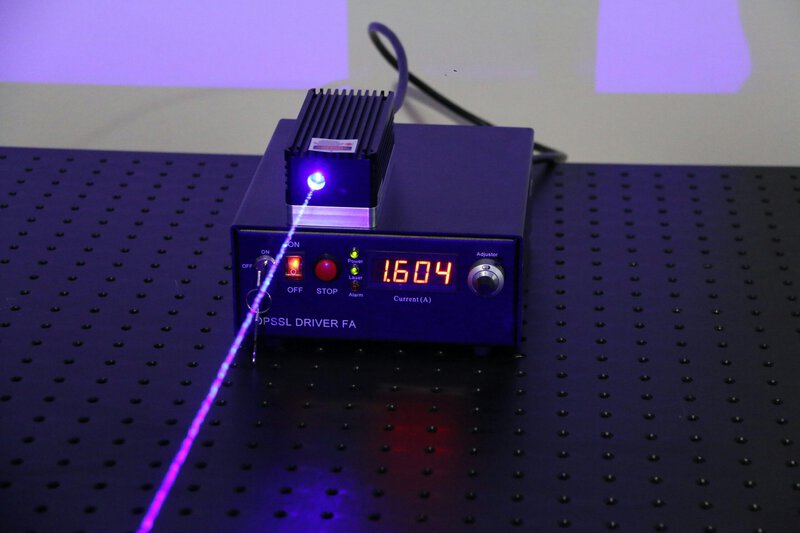
The recent advance is the successful development of miniaturized laser technology that paves the way for fundamental physics experiments in space, achieving approximately an order-of-magnitude reduction in size compared to previous systems. This is not an incremental refinement. It is the kind of discontinuous leap that moves a technology from “theoretically possible” to “practically deployable.”
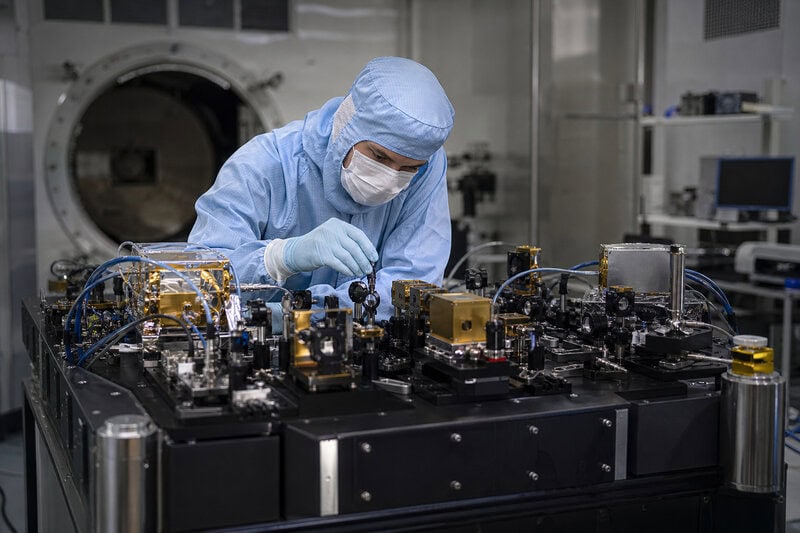
At the heart of the advance are micro-Fabry-Perot cavities. A Fabry-Perot cavity consists of two mirrors facing each other that trap light between them, forcing a laser to oscillate at one precise frequency — functioning, in effect, as a tuning fork for light. When the cavity is machined from a single solid piece of ultra-low-expansion glass rather than assembled from separate components, it becomes far more resistant to the thermal swings and mechanical shocks that accompany launch and spaceflight. Newly developed microfabrication techniques and advanced cavity designs are enabling compact, rugged, low-noise micro-Fabry-Perot lasers suited to fundamental physics missions, according to research on compact laser systems for space applications.
The fabrication process borrows from the semiconductor industry: layers of optical material are deposited and etched at micron-level precision, then bonded to substrates engineered to resist thermal warping in orbit. Critically, the resulting modules do not merely survive space conditions — they perform. Record-breaking metrics in frequency noise and laser linewidth (a measure of how narrow and pure a laser’s frequency output is) have been demonstrated in ground tests, meaning these miniaturized devices rival the precision of their room-filling predecessors. This record-breaking laser research carries direct potential for testing fundamental physics in space-based applications.
The ruggedness requirement deserves emphasis because it is non-negotiable. Launch vehicles subject payloads to acoustic vibrations exceeding 140 decibels and accelerations above 10 g — qualification tests that precision optical assemblies have historically failed. Monolithic cavity construction, combined with active stabilization electronics compact enough to share the same circuit board, is how researchers are addressing this problem. An important caveat applies: sustaining sub-hertz laser linewidths — the gold standard for relativity tests — across a multi-year orbital mission remains an open engineering challenge. That miniaturized cavities survive launch loads has been demonstrated in the laboratory; that they will perform flawlessly over years in orbit is the next milestone these research programs are actively pursuing.
From Cold Atoms to Gravitational Waves: Experiments Now Within Reach
With the hardware barrier beginning to lower, a cascade of long-theorized physics experiments in space moves into the realm of near-term planning. The most immediate beneficiaries include atom interferometry, equivalence principle tests, and space-based gravitational-wave detection.
Atom interferometry exploits the wave-like nature of matter — a consequence of quantum mechanics — to measure tiny differences in gravitational fields, accelerations, or the curvature of spacetime. In microgravity, where atoms evolve freely for seconds rather than milliseconds, the sensitivity of these instruments improves dramatically, becoming sufficient to resolve the minute spacetime curvature effects that general relativity predicts. A dual-species Bose-Einstein condensate produced in microgravity — in which two different atomic species are simultaneously cooled to within billionths of a degree of absolute zero and deployed as quantum probes — represents exactly the kind of experiment that chip-scale lasers now make feasible aboard a small satellite.
Equivalence principle tests occupy a particularly important place in this landscape. Einstein’s general relativity rests on the postulate that all objects fall identically regardless of their internal composition — confirmed to extraordinary precision on Earth, but never tested in the prolonged free-fall environment of orbit using quantum objects rather than macroscopic test masses. A null result at the new precision levels these instruments would deliver would powerfully constrain entire classes of theories that propose modifications to general relativity — a scientifically valuable outcome even in the absence of a dramatic positive discovery. A confirmed deviation, by contrast, would rank among the most consequential experimental results in a century. No such deviation is expected based on current evidence, and no finding is guaranteed; the value lies in testing the theory at a level of rigor that has never previously been possible.
At the larger scale, the European Space Agency’s LISA mission — the Laser Interferometer Space Antenna — represents the flagship fundamental physics project in space. LISA will deploy three spacecraft separated by 2.5 million kilometers, using laser links of extraordinary stability to detect gravitational waves from merging supermassive black holes and potentially signals from the early universe — phenomena entirely invisible to electromagnetic telescopes. The laser stabilization advances achieved at chip scale are directly relevant to LISA’s requirements, and the broader scientific community has outlined a roadmap for fundamental physics in space that places laser frequency stability at its center.
A more speculative — and not yet consensus — application involves searches for drift in fundamental physical constants using precision atomic clocks in orbit. Several research groups propose that if constants such as the fine-structure constant vary across space or time, those changes would appear as measurable frequency differences between space-borne clocks connected by stabilized laser links. The idea is scientifically plausible, but it remains at the frontier of conjecture pending hardware demonstrations at the required sensitivity.
The Competitive Landscape: Who Is Racing to Put Laser Labs in Orbit
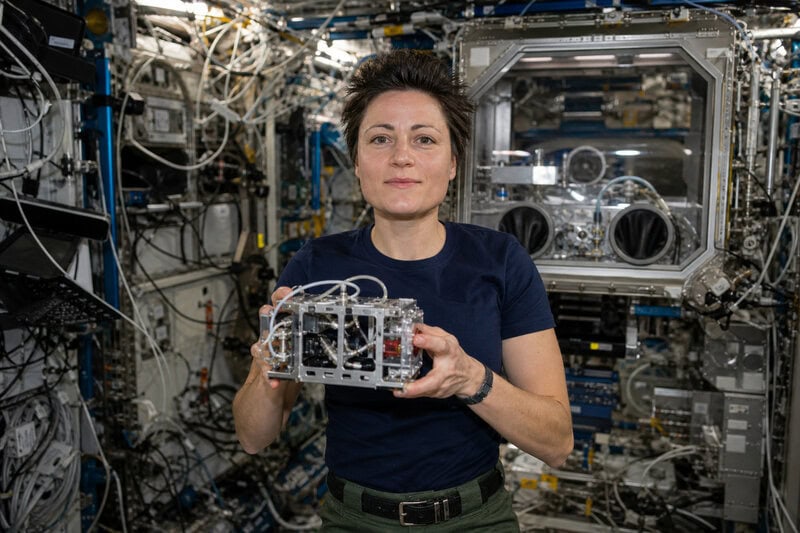
The institutional landscape for space-based fundamental physics is a mix of established programs and emerging international coalitions. NASA’s Cold Atom Lab (CAL) aboard the International Space Station produced the first Bose-Einstein condensates in space in 2018, validating the core scientific premise that cold-atom physics can function in the orbital environment. ESA has supported precursor work and remains deeply invested in LISA. European national programs — particularly in Germany, France, and the United Kingdom — have contributed substantially to both the science and the miniaturized hardware development.
The international team behind the latest laser results represents a collaboration spanning multiple institutions, reflecting a broader trend in which the high cost and technical risk of space-qualified quantum hardware drives cross-border consortia rather than single-nation programs. Private-sector interest is real but measured: quantum sensing companies frequently cite space as a long-term market, but most commercial roadmaps prioritize terrestrial applications — inertial navigation, geophysical surveying, underground infrastructure mapping — as nearer-term revenue sources. Dedicated fundamental physics missions remain largely in the public-research domain.
Timeline projections vary considerably. Optimistic assessments from within research teams suggest that fundamental-physics small satellites enabled by chip-scale lasers could launch within five to ten years. Independent analysts note, with justification, that space qualification of novel photonic components has historically taken longer than laboratory timelines suggest, and that the gap between a demonstrated optical module and a flight-ready instrument involves significant additional systems engineering. The honest assessment is that technology readiness has improved substantially, but the path to orbit remains demanding and the schedule uncertain.
What Success Would Mean: Tightening — or Rewriting — the Rules of Physics
The scientific stakes of this hardware progress extend well beyond any single experiment. If space-based atom interferometers detect no violation of the equivalence principle at their unprecedented precision levels, the null result will constrain theories of modified gravity more tightly than any previous measurement, closing off large regions of theoretical possibility. If LISA detects gravitational waves from supermassive black hole mergers in the early universe, it will open an observational window on cosmic history that has never before been accessible to any instrument. If precision atomic clocks in orbit reveal unexpected drifts in fundamental constants — a contested but scientifically serious possibility — it would demand a fundamental revision of physical law.
None of these outcomes is guaranteed, and science rarely delivers on a tidy schedule. The engineering challenges that remain between a laboratory demonstration and a multi-year orbital mission are substantial and real. But the tenfold reduction in laser system size documented by this international research team marks a genuine inflection point. For decades, the limiting factor in fundamental physics experiments in space was not imagination, not theory, and not funding alone — it was hardware. A laser system compatible with the thermal extremes, radiation environment, and mechanical violence of spaceflight, yet precise enough to probe the deepest predictions of Einstein’s theories, did not exist.
It is beginning to exist now. That shift — from “cannot be built” to “has been built, and is being refined” — is the quiet, unglamorous, and enormously consequential story behind the miniaturized laser technology now moving from laboratory benches toward the frontier of space.