
Out of more than 1.5 million Reddit comments analyzed across fan communities of 106 popular artists, one fandom produced measurably more happiness-coded language than every other: Stray Kids. That finding, from a large-scale sentiment analysis conducted by The Action Network, is not a matter of opinion — it is the output of a computational process that tagged each comment for the emotion it carried, then compared results across fandoms including those of BTS, Florence + The Machine, and more than a hundred other artists.
The Largest Sentiment Study of Music Fandom on Record
The Action Network’s study represents one of the largest sentiment analyses of music fandom ever reported. By tagging individual comments with discrete emotion categories — happiness, sadness, anger, and others — the researchers produced an emotional map of modern fan communities at a granularity that older survey-based music psychology research could not achieve. The volume of data lends the conclusions unusual empirical weight, even before researchers begin explaining the mechanisms behind them.
The contrast across fandoms is striking. According to Forbes, Stray Kids’ fandom ranked first in positive sentiment, while Mitski fans ranked as the saddest fandom and Future fans as the angriest. That spectrum — from communal joy to processed grief to expressed anger — gives researchers a rare, naturalistic window into how different fan communities use language to reflect, and possibly regulate, their emotional lives.
Genre-level context adds another dimension: a separate study found that metal music fans produce approximately 62 positive statements for every 100 comments, ranking them among the happiest fans by genre. That finding suggests intensity of community engagement — not simply the emotional tone of the music itself — may be a meaningful driver of online positivity, pointing toward community dynamics as a key variable worth investigating across genre lines.
What the Study Actually Measured — and What It Did Not
Sentiment analysis classifies text as positive, negative, or emotionally specific based on the language used. It identifies the emotional valence of words, not the internal emotional state of the person who wrote them — a distinction the researchers openly acknowledge and that any careful reading of the data must respect. A comment expressing happiness about a song release reflects happiness-coded language; it cannot confirm the writer’s overall psychological well-being.
Reddit communities also skew toward highly engaged superfans rather than casual listeners. The results therefore reflect the passionate core of each fandom and may not generalize to everyone who streams a given artist. Someone who plays a Stray Kids song once on a playlist is not represented in this dataset; someone who spends hours discussing the group’s discography in dedicated subreddits is. That sampling reality is a genuine limitation, but it is also — for scientists interested in the psychology of deep fan engagement — precisely the population worth studying.
Most importantly, the study does not establish causation. It cannot determine whether happy people are drawn to Stray Kids, or whether participating in the Stray Kids fan community — known as STAY — makes people happier. That distinction is the most consequential open question the data raises, and answering it will require longitudinal research designs that track individuals over time.
The Brain Science Behind Fandom Joy: Parasocial Bonds and Dopamine
To understand why fan communities produce measurable emotional signatures, it helps to understand what neuroscientists have established about parasocial relationships — one-sided emotional bonds that fans form with artists they have never met. Research published in journals including the Journal of Consumer Psychology has shown that parasocial relationships activate many of the same neural reward circuits as real friendships. The brain does not sharply distinguish between a bond formed across a dinner table and one formed across a screen.
The underlying mechanism involves the mesolimbic dopamine pathway — the same neural system that processes food, social reward, and other primary motivators. When a fan engages with content from a beloved artist, this pathway releases dopamine, producing genuine feelings of pleasure. Neuroscientists describe these responses as functionally real, not imagined or lesser than the responses triggered by face-to-face social interaction.
Oxytocin, sometimes called the bonding hormone, also rises during shared fan experiences such as group listening sessions or communal online discussion. This creates a dual-layered reward: connection to the artist and connection to fellow fans simultaneously. Solo music consumption does not fully replicate this effect, which may help explain why community-embedded fandoms like STAY show such distinct emotional profiles compared with more passive listener groups.
Emerging — and still contested — research suggests that the predictable emotional arc of parasocial fan engagement (anticipation of new content, release, communal celebration) may reinforce the brain’s reward circuitry in ways that support baseline mood. Scientists caution, however, that this mechanism is not yet fully established and should not be overstated.
Social Belonging: Why the Community May Matter More Than the Music
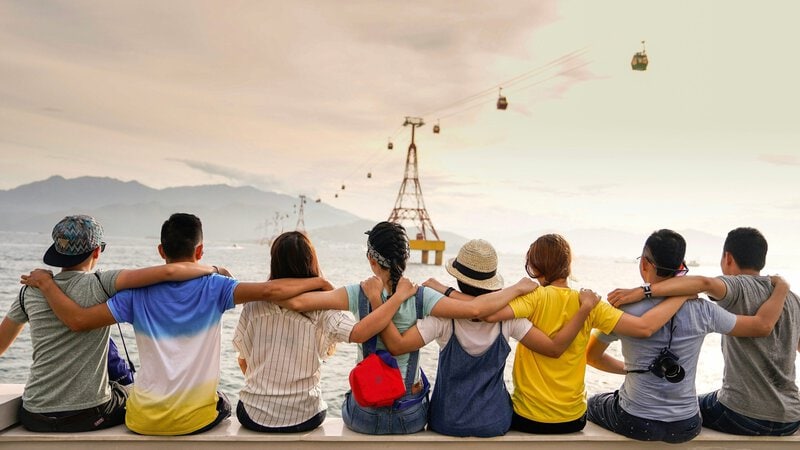
Decades of social psychology research support a foundational claim: belonging is not a luxury but a biological need. Landmark work by Roy Baumeister and Mark Leary, published in Psychological Bulletin in 1995, established that the need to belong is one of the most fundamental human motivations, shaping well-being across cultures. Music fandoms function as ready-made belonging structures — complete with shared identity, rituals, inside language, and collective memory — that satisfy this need with unusual efficiency.
For STAY specifically, Stray Kids’ active cultivation of fan interaction — including direct social-media engagement and fan-facing creative decisions — may amplify this belonging effect by reducing the psychological distance that normally defines a parasocial bond. When an artist demonstrably acknowledges its community, the one-sided nature of the relationship shifts, and the sense of mutual connection grows correspondingly stronger.
Research on K-pop fandoms, including studies published in the journal Psychology of Music, has documented unusually high levels of collective identity and mutual support behavior within these communities — patterns consistent with what positive psychologists call a community of practice: a group united not just by shared interest but by shared commitment to one another’s engagement with that interest.
Social belonging is, in turn, one of the most robust predictors of subjective well-being identified across decades of happiness research. That relationship implies something counterintuitive but empirically grounded: for many fans, the community the music creates may ultimately matter more to their happiness than the music itself.
What the Saddest and Angriest Fandoms Actually Reveal
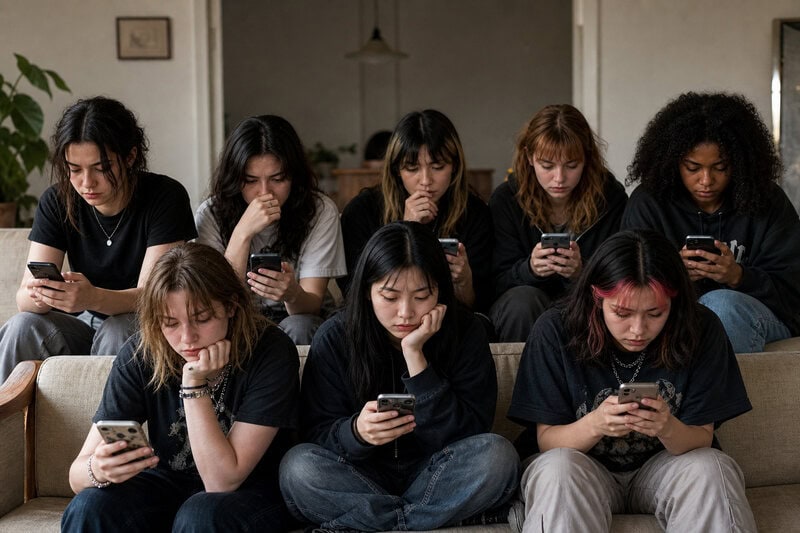
Ranking low in positivity is not a ranking of quality or value. Mitski’s music is critically acclaimed precisely for its unflinching emotional honesty about loneliness, longing, and alienation — and her fans’ sad-coded language likely reflects deep resonance with that material rather than personal unhappiness. Music psychologists draw an important distinction between felt emotion (what a listener personally experiences) and perceived emotion (the mood recognized in the music). A fan community collectively processing grief through Mitski’s catalog may be performing a healthy and sophisticated form of communal emotional regulation, using music to make difficult feelings legible and shared.
Future fans’ anger-dominant sentiment profile deserves similarly nuanced interpretation. Researchers studying hip-hop fan communities have noted that anger expressed in fan spaces can serve cathartic and identity-affirming functions, particularly for listeners navigating systemic stress and social marginalization. Anger, in this context, is not dysfunction — it is a legitimate emotional vocabulary.
Taken together, the spectrum from STAY to Mitski’s fandom to Future’s fandom illustrates what music psychologist Stefan Koelsch of the University of Bergen has described as music’s unique capacity to afford a wide range of emotional states. Different fan communities may be optimizing for different emotional needs — and a complete science of fandom happiness must account for the full range of what emotional well-being looks like across different lives and contexts.
What This Means for Mental Health and Everyday Life

Mental health researchers increasingly treat fan community participation as a legitimate form of social support, not a trivial hobby. A 2019 study published in Frontiers in Psychology found that parasocial relationships can buffer loneliness and reduce anxiety symptoms, particularly in individuals with limited in-person social networks. For people who struggle to build local community ties — due to geography, disability, social anxiety, or circumstance — intentionally engaging with a fan community around music they love may offer measurable psychological benefit.
This is consistent with the broader social prescribing movement in public health, which encourages clinicians to recommend community participation, creative engagement, and shared activities as adjuncts to traditional mental health care. Fan communities, with their low barriers to entry and high levels of existing social infrastructure, represent an underexplored resource in that framework.
Experts caution, however, that parasocial bonds become problematic when they substitute for rather than supplement real-world relationships, or when fan identity becomes so fused with an artist that criticism of that artist triggers disproportionate personal distress — a phenomenon researchers call identity fusion. The goal, from a mental health standpoint, is integration: a fan community that enriches social life rather than replacing it.
Music journalist Jeff Benjamin, who covered the study’s release, noted the significance of an empirical finding that validates what many fans already feel intuitively — that their communities are sources of genuine, not imaginary, joy. The science now offers a framework for understanding why.
The Takeaway: What a K-Pop Fandom Can Teach Us About Human Happiness
The core lesson of the data is not that Stray Kids are objectively superior to other artists. It is that certain combinations of musical identity, communal ritual, and artist-fan relationship design appear to reliably produce positive emotional environments — a blueprint worth studying carefully. Fan communities themselves have responded to the findings with recognition rather than surprise, which is itself a data point worth noting: the people living inside these communities already know something that the science is only beginning to measure.
For scientists, large-scale sentiment datasets like The Action Network’s 1.5-million-comment corpus represent a new methodological frontier. They offer a naturalistic, high-volume window into collective emotional life that laboratory-based happiness research has never had access to at this scale — real behavior, in real communities, over real time, rather than responses to questionnaires in controlled settings.
For fans, the research provides evidence-grounded validation: the joy experienced inside a fan community is neurologically real, socially functional, and — kept in healthy balance — genuinely good for you. And for anyone who has dismissed fandom as trivial or adolescent, the emerging science offers a clear corrective: the human impulse to love music together is not a guilty pleasure but a core feature of how our brains are built to find happiness.