
A single cut mark on an 850,000-year-old human neck bone — placed exactly where the muscles connecting skull to spine would have been severed — has handed researchers one of the most unsettling findings in the study of early human behavior. That bone, recovered from Gran Dolina cave in Spain’s Atapuerca Mountains, did not get its mark from an animal, a rockfall, or the slow grind of geological time. It got it from another member of the same species, deliberately processing a corpse.
A Cut Mark That Changes Everything
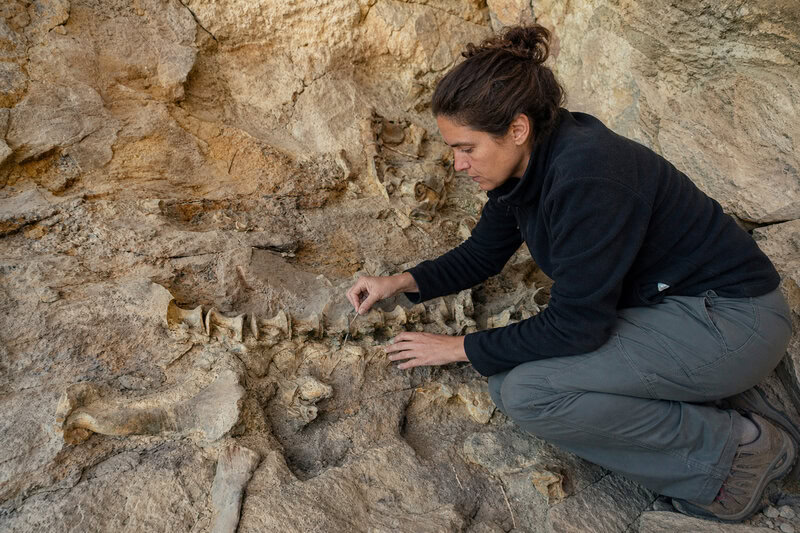
The neck bone is not the only evidence. During the 2026 excavation season at Gran Dolina, researchers recovered 24 new human fossil fragments from the Aurora stratum — the cave’s most productive geological layer — representing the remains of at least six individuals, including both adults and children. Every piece of bone examined bears the same signatures: cut marks, percussion fractures, and intentional breakage patterns consistent with a single, deliberate practice. That practice was cannibalism, and at roughly 770,000 to 850,000 years old, it represents some of the oldest direct physical evidence of the behavior anywhere in the human fossil record.
The immediate question — and the one that makes this discovery more than a macabre footnote — is not simply whether these ancient humans ate each other. It is why. Gran Dolina’s Homo antecessor were not starving opportunists scraping for survival. They were effective hunters of large game. Something else was driving this behavior, and the 2026 finds have given scientists a sharper set of tools to investigate what.
What Is Gran Dolina and Why Does It Matter?
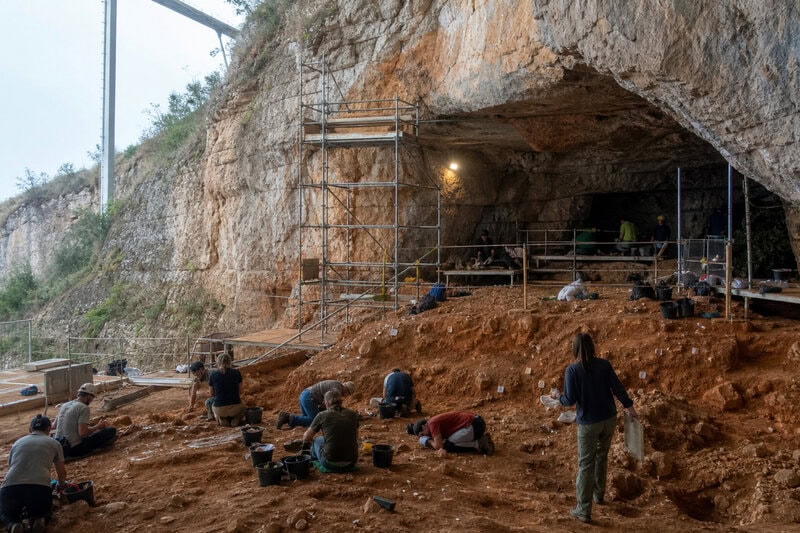
Gran Dolina is a cave deposit within the Sierra de Atapuerca, a limestone ridge near Burgos in northern Spain that has been under continuous excavation since the 1990s. The site is a UNESCO World Heritage Site, and for good reason: no comparable stretch of sediment in western Eurasia preserves so dense and continuous a record of early human occupation. Within Gran Dolina, the Aurora stratum — formally designated TD6 — is dated to roughly 770,000 to 850,000 years ago and has produced the highest concentration of early European hominin remains known to science.
Those remains belong to Homo antecessor, an archaic human species formally named in 1997. Homo antecessor inhabited Europe between approximately 800,000 and 1.2 million years ago and is known almost exclusively from Gran Dolina, making the site scientifically irreplaceable. Research at Atapuerca is led by a consortium that includes Spain’s National Research Center on Human Evolution (CENIEH) and the Catalan Institute of Human Paleoecology and Social Evolution (IPHES-CERCA), institutions whose involvement lends the 2026 findings significant institutional authority.
The New Fossils: What the 2026 Excavation Season Uncovered
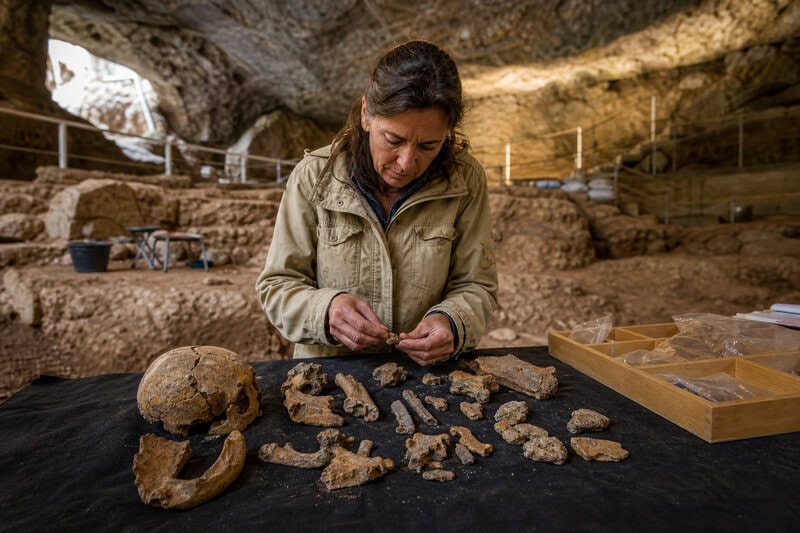
The 2026 field season added 24 human fossil fragments to the existing Gran Dolina collection — a substantial haul from what researchers described as an exploratory excavation. The material represents at least six individuals spanning multiple age groups, a detail that carries considerable interpretive weight. Earlier Gran Dolina cannibalism evidence had centered predominantly on juvenile victims, which left open the possibility that the practice was opportunistic or age-selective. The new fossils confirm that adults were also targeted, effectively ruling out any explanation that depends on the physical vulnerability of children alone.
The taphonomic signature — taphonomy being the study of how organisms decay and become fossilized, and what that process reveals about what happened to a body after death — is consistent and specific. Cut marks appear at muscle-attachment sites. Long bones show percussion fractures characteristic of marrow extraction. The breakage patterns applied to human remains are identical to those found on animal prey bones recovered from the same layer. Whoever processed these bodies did so with the same efficiency and intention they brought to butchering deer, bison, and horse.
Crucially, the new material spans the full estimated date range of the Aurora stratum, from approximately 770,000 to 850,000 years ago. This is not evidence of a single crisis event or a one-time aberration. Cannibalism at Gran Dolina was recurrent, practiced across generations, and apparently normal enough to leave a consistent archaeological signature across tens of thousands of years.
Reading the Bones: How Scientists Identify Ancient Cannibalism
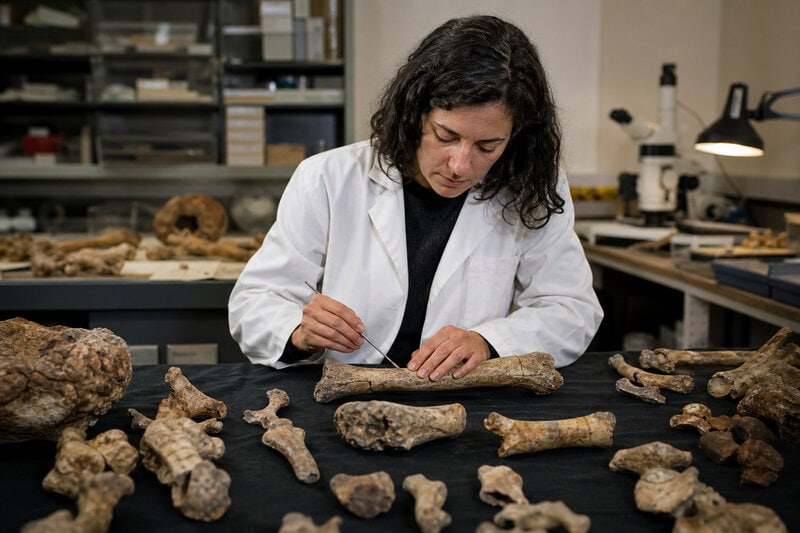
Identifying cannibalism in the fossil record requires more than finding a cut mark on a human bone. Researchers look for a specific convergence of evidence: cut marks positioned at muscle-attachment sites rather than scattered randomly, intentional splitting of long bones consistent with marrow access, and — critically — the same processing techniques applied to both human and animal remains within the same stratigraphic context. Any one of these features alone is suggestive; all of them together, across dozens of bones from multiple individuals, constitutes a forensically robust case.
The 850,000-year-old cervical vertebra — the neck bone that opened this article — illustrates the method precisely. The cut marks are located exactly where the muscles connecting the skull to the spine would have been severed during deliberate removal of the head, a pattern irreconcilable with animal gnawing or geological compression. IPHES-CERCA researchers have been explicit that no single mark is conclusive in isolation, but that the Gran Dolina assemblage as a whole — now enlarged by the 2026 finds — presents a convergence of evidence that meets the standard for identifying cannibalistic processing.
Where scientific consensus ends and active debate begins is on the question of motivation. That cannibalism occurred is now the mainstream position in the field. Whether it was nutritional, ritualistic, or a byproduct of inter-group violence remains a genuinely open question, and researchers are careful to say so.
Not About Hunger: The Case for Ritual or Social Cannibalism
The nutritional hypothesis — that Homo antecessor ate humans because food was scarce — runs into an immediate problem. The caloric yield of human flesh is relatively modest compared to the large mammals these hominins were demonstrably hunting and processing at the same site. Deer, bison, and horse bones found in the Aurora stratum show the same butchery marks as the human remains, indicating that Homo antecessor had access to high-calorie prey. Starvation-driven cannibalism typically leaves a different archaeological signature: it tends to be episodic, limited, and concentrated in periods of environmental stress. The Gran Dolina record, by contrast, is recurrent and spans a vast time window.
Researchers at the Catalan Institute have pointed to an alternative that is both more disturbing and more anthropologically interesting: inter-group predation. The pattern of victims — spanning age groups and, apparently, both sexes — resembles the aftermath of a raid on a rival band rather than the internal consumption of community members who died of natural causes. This hypothesis situates the Gran Dolina cannibalism within a broader framework of inter-group violence, a behavior documented across many later human societies and potentially far older than the archaeological record has previously suggested.
A third possibility — funerary or ritualistic cannibalism, in which consuming the dead serves a symbolic social function — is documented ethnographically in numerous historical cultures and cannot be excluded for Homo antecessor. Evidence from the Aurora stratum has long suggested that the treatment of human remains was deliberate and patterned rather than random, which is consistent with behavior governed by social rules rather than immediate hunger. No single explanation has achieved scientific consensus, and the 2026 finds are expected to generate new analytical work — including isotopic and spatial studies — designed to test these competing models directly.
Where Homo antecessor Fits in the Human Family Tree
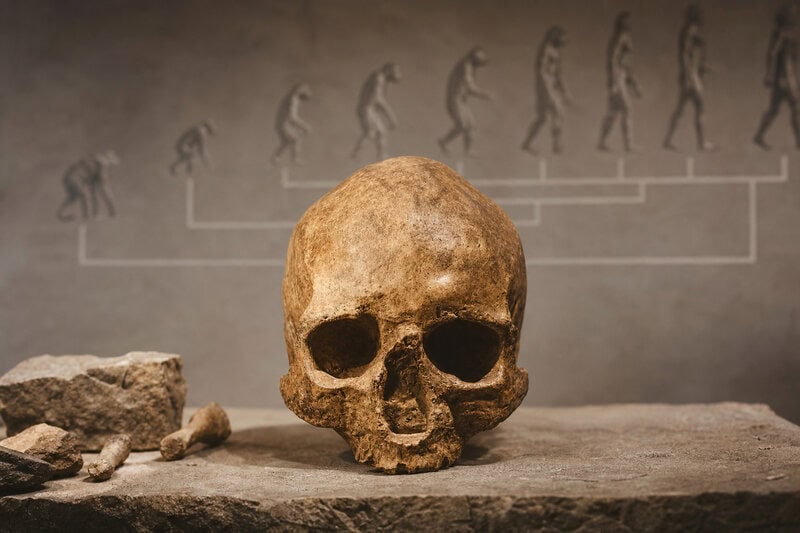
Homo antecessor was proposed in 1997 as a potential common ancestor of both modern humans and Neanderthals, a position that would make it a pivotal node in hominin evolution. That phylogenetic placement remains contested. Recent ancient-protein analysis — the oldest recoverable genetic material from bones of this age — has supported a close relationship between Homo antecessor and the Neanderthal-modern human lineage without definitively resolving whether it is a direct ancestor or a closely related side branch.
What the cannibalism evidence contributes to this picture is a cognitive argument. Deliberate, recurrent cannibalism — practiced consistently across generations, applied to victims of multiple ages, and governed by recognizable processing conventions — implies a level of social complexity, group identity, and potentially symbolic thinking that challenges older assumptions about the mental lives of hominins 850,000 years ago. These were not reflexively reactive creatures. They were making choices structured by social meaning.
Gran Dolina sits within a broader Atapuerca complex that amplifies this point. Nearby Sima de los Huesos — another cave at the same site — has yielded 430,000-year-old remains of Neanderthal precursors, making Atapuerca a nearly continuous window into roughly a million years of European human evolution. The full picture that emerges is of a lineage in which complex, socially organized behavior has far deeper roots than once assumed.
Significant gaps remain. No complete Homo antecessor skull has ever been recovered. DNA preservation at 850,000 years is currently beyond the reach of any available technology. The species’ full geographic range and temporal extent are still being mapped through ongoing excavations, and Gran Dolina itself has not been fully excavated.
What Comes Next: Open Questions and Future Research
The 24 fossils recovered in 2026 will undergo a battery of analyses designed to push the interpretation of Gran Dolina’s cannibalism evidence as far as the material allows. Micro-CT scanning will allow researchers to examine cut marks and fracture patterns in three dimensions without further damaging the bones. Zooarchaeological analysis — the comparative study of animal and human remains to reconstruct behavior — will test whether the processing sequence applied to human bodies matches or diverges from the sequence used on prey animals. Geometric morphometric study will compare bone modification techniques across the entire Gran Dolina sequence to assess whether the practice changed over time.
The most consequential avenue may be isotopic analysis. Strontium and oxygen isotopes preserved in tooth enamel carry a geochemical signature tied to the geology of the landscape where an individual grew up. If the victims at Gran Dolina were outsiders — individuals raised in a different region — their enamel isotopes will differ from those of any locally documented Homo antecessor remains. That would constitute a direct, testable line of evidence for the inter-group raid hypothesis, potentially transforming an interpretive debate into an empirical one.
Situating Gran Dolina within the global record of ancient cannibalism clarifies what is at stake. Comparable evidence exists at Gough’s Cave in England, dated to roughly 15,000 years ago, and at Moula-Guercy in France, where Neanderthals processed human remains approximately 100,000 years ago. Gran Dolina’s date makes it the earliest well-documented case in western Eurasia by a considerable margin, and one of the oldest anywhere in the world.
The broader implication is one that the field is only beginning to absorb. Complex, socially motivated behavior — including the deliberate, repeated consumption of other humans — appears to be far older than the archaeological record has previously demonstrated. Understanding early human nature in full means confronting not only the creativity and cooperation that made our lineage successful, but also the capacity for organized, purposeful violence that accompanied it from very near the beginning.