
A single curved sliver of skull, catalogued as RVH-1 and no larger than a human hand, has just become the oldest cranial fossil ever recovered from the Ruidera site in Ciudad Real, Spain. Dated to at least 200,000 years old, it is quietly forcing researchers to redraw the map of who was living on the Iberian Peninsula long before anyone thought to look there.
A Fragment of Bone, 200,000 Years in the Making
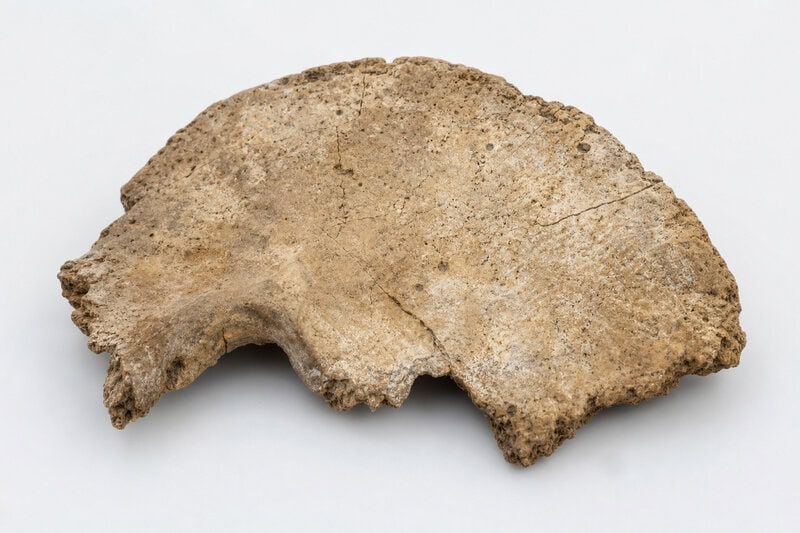
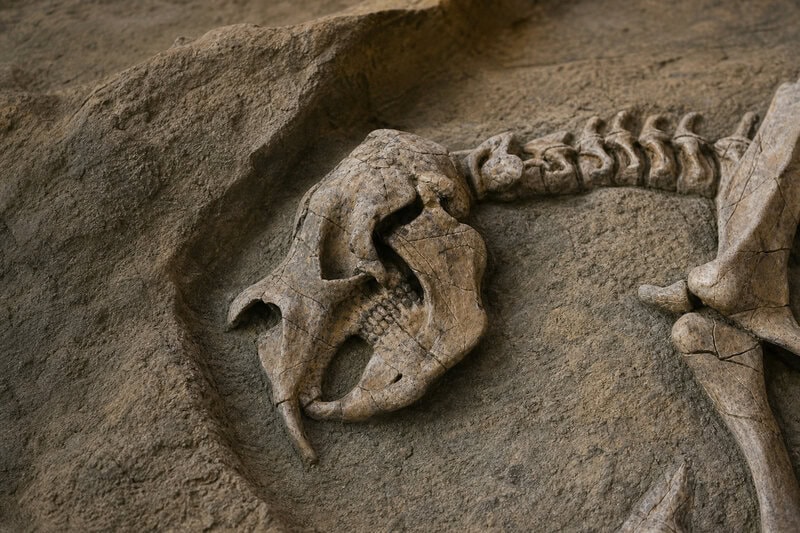
The specimen is a partial parietal bone — the curved plate that forms the upper side wall of the braincase — recovered from compacted rock breccia, a naturally cemented mixture of rock fragments and sediment that acts as a geological time capsule for ancient bones. According to CENIEH (Centro Nacional de Investigación sobre la Evolución Humana), one of Spain’s foremost human evolution research institutions, RVH-1 is the first cranial remain ever excavated from Ruidera — instantly elevating a locality previously known only for its animal-bone assemblages into a site of serious paleoanthropological significance.
The fossil belongs to the genus Homo, the broad evolutionary grouping that includes Neanderthals, Denisovans, and modern humans, though its precise species identity remains under analysis. CENIEH and IPHES (Institut Català de Paleoecologia Humana i Evolució Social), the two Spanish institutions leading research at the site, have described Ruidera as a “promising paleoanthropological enclave” — language that in scientific communications signals an expectation of further significant finds rather than a one-off discovery.
Why a Parietal Bone Matters More Than It Sounds
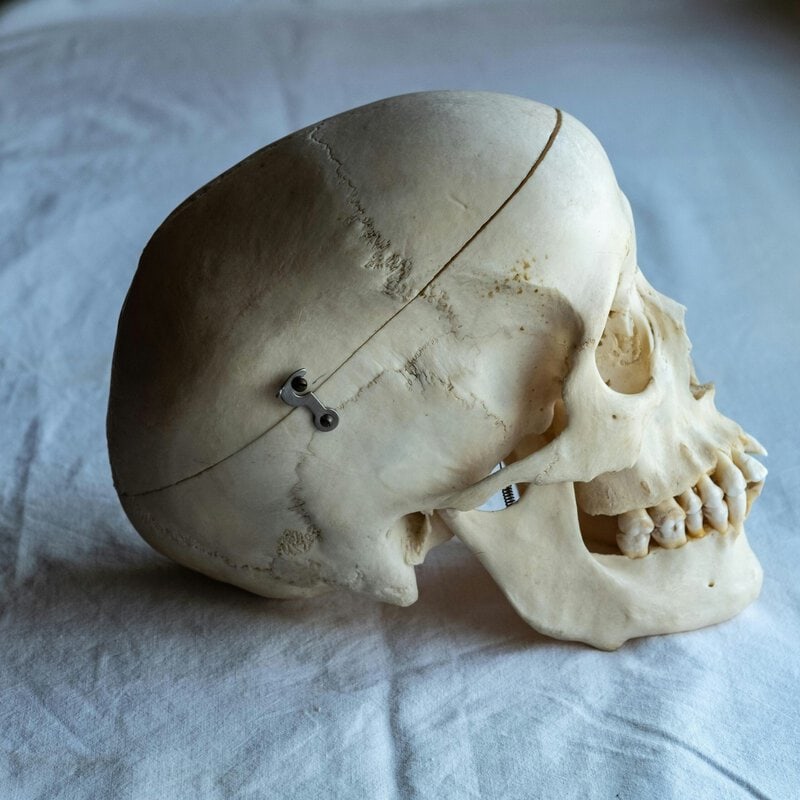
To a non-specialist, a fragment of cranium might seem like a thin basis for large conclusions. In practice, the parietal bone is one of the most analytically rich elements a paleoanthropologist can recover. Its curvature, thickness, and surface ridges carry measurable anatomical signatures that researchers use to distinguish between Homo species and estimate relative brain size. Even a partial parietal can reveal whether a skull housed a brain reorganized toward the larger frontal and parietal lobes associated with complex cognition — a key developmental benchmark separating archaic Homo lineages from later populations.
Breccia preservation, while notoriously difficult to excavate, often protects delicate cortical bone surfaces from the erosion and chemical weathering that degrade fossils found in open sediment layers. Extracting a fossil from breccia requires controlled mechanical and chemical disaggregation — researchers chip away surrounding matrix in millimeter increments, frequently under magnification, to avoid fracturing bone that may have become as brittle as the encasing rock after millennia of mineralization. The reward for that painstaking labor is that RVH-1 may retain microscopic surface detail that would be lost in a specimen recovered from looser deposits.
Dating a Middle Pleistocene fossil — the Middle Pleistocene spans roughly 781,000 to 126,000 years ago — cannot rely on radiocarbon methods, which are only reliable to approximately 50,000 years. Instead, researchers typically combine uranium-series dating of the carbonate matrix surrounding a fossil, electron spin resonance (ESR) applied to tooth enamel from associated fauna, and paleomagnetic stratigraphy, which reads the record of ancient geomagnetic reversals preserved in sediment layers. According to reporting by Sci.News, this multi-method approach produced an age of at least 200,000 years for RVH-1, with some estimates placing it at approximately 224,000 years old. That range represents a current best estimate subject to refinement as additional matrix samples from the same stratigraphic layer undergo independent analysis — a standard and expected part of the peer-review process in paleoanthropology.
The Timeline Problem: Who Was in Europe 200,000 Years Ago?
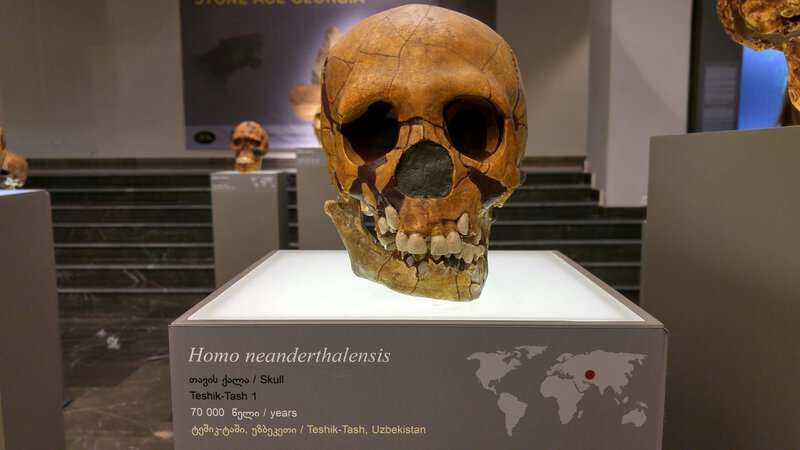
Two hundred thousand years ago, Europe was not empty. Neanderthals were consolidating their presence across the continent, and earlier archaic Homo populations — sometimes grouped under the informal labels “pre-Neanderthals” or Homo heidelbergensis — had already occupied sites ranging from Atapuerca in northern Spain to Swanscombe in England. The established scientific consensus holds that anatomically modern Homo sapiens did not reach Europe until roughly 45,000 to 48,000 years ago, which means RVH-1 almost certainly represents an archaic Homo lineage rather than a modern human.
What remains scientifically contested — and what makes RVH-1 genuinely significant — is the precise identity and geographic range of the archaic populations moving through the Iberian Peninsula during the Middle Pleistocene. Glacial cycles repeatedly opened and closed migration corridors during this period, making it difficult to determine whether archaic Homo groups in southern Spain represented a continuous local population, periodic influxes from Africa via the Strait of Gibraltar, or waves moving westward from Eurasia. RVH-1 adds a new southern Iberian data point to that contested map, potentially helping researchers trace population movements that currently remain poorly understood.
The discovery strengthens an emerging picture — supported by sites including Aroeira in Portugal and the Sima de los Huesos chamber at Atapuerca in Burgos — that the Iberian Peninsula sustained archaic Homo populations across multiple glacial-interglacial cycles for hundreds of thousands of years before Homo sapiens appeared. Discover Magazine has noted that the find raises the possibility of diverse, coexisting archaic human populations in ancient Spain — a picture that grows more complex with each new specimen recovered from the peninsula’s increasingly productive fossil sites.
Ruidera: From Wetland Lagoons to Paleoanthropological Enclave
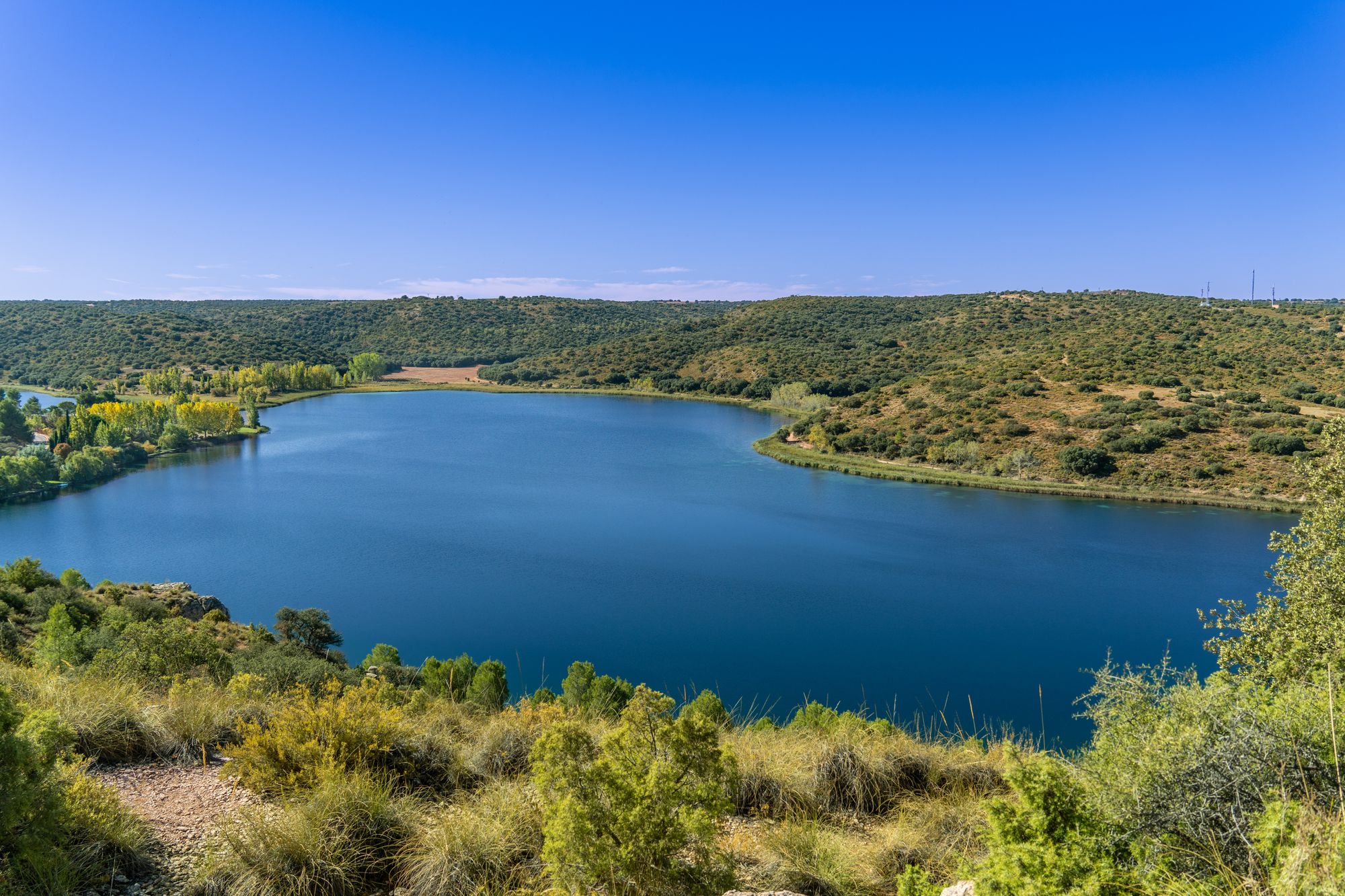
The Ruidera site sits within the Ruidera Lagoons Natural Park in Ciudad Real, a landscape shaped by karstic geology — limestone dissolved over millennia by groundwater to form caves, sinkholes, and rock fissures that trap and preserve fossil-bearing sediments across geological timescales. Karstic fissure fills are among the most productive fossil repositories in European paleoanthropology. The Atapuerca sites, which have yielded some of Europe’s most consequential hominin fossils — including more than 6,500 bone fragments from the Sima de los Huesos chamber alone — operate on the same geological principle: organic material washes or falls into natural traps and is sealed by accumulating sediment before it can be scattered or destroyed.
Before the recovery of RVH-1, Ruidera was known primarily for its Middle Pleistocene faunal assemblages — the bones of ancient animals that established the site’s antiquity and ecological context — but it lacked the hominin evidence needed to classify it as a significant human evolution locality. The presence of those associated faunal remains is itself informative: a Middle Pleistocene environment that supported large herbivores such as ancient elephants, rhinoceroses, and large bovids would have provided resources that archaic Homo populations actively sought. RVH-1’s recovery from the same depositional environment suggests those hominins were present in this landscape, not merely passing through.
Karstic sites also tend to yield fossils in concentrated pockets rather than uniform layers, meaning a single productive fissure can contain specimens spanning thousands of years. That geological reality supports the expectation expressed by CENIEH and IPHES researchers that ongoing excavations at Ruidera carry a meaningful probability of producing additional hominin material. Eurasia Review’s coverage of the discovery underscores the institutional commitment to continued fieldwork at the site.
What RVH-1 Changes — and What It Doesn’t
It is worth being precise about what this discovery does and does not establish. RVH-1 does not overturn the well-supported timeline of modern human arrival in Europe. What it does is fill a geographic gap in the archaic Homo record of southern Spain, a region historically underrepresented in Middle Pleistocene fossil databases relative to the fossil-rich Atapuerca complex in the north. A single specimen cannot resolve debates about population continuity, migration patterns, or the transition from archaic to Neanderthal morphology in Western Europe — but it can, and in this case does, confirm that archaic Homo was present in the Ciudad Real region at a time when that presence was previously undocumented by cranial evidence.
Species-level identification of RVH-1 requires comparative morphometric analysis — systematic measurement and shape comparison — against reference collections of Homo heidelbergensis, early Neanderthals, and other Middle Pleistocene specimens. That work is well within the capabilities of CENIEH and IPHES researchers but has not yet produced a formally published species attribution. Until peer-reviewed analysis establishes otherwise, characterizing RVH-1 as belonging to the genus Homo is both scientifically accurate and appropriately cautious. Any preliminary claims that definitively name the species should be treated as speculative until that attribution appears in the reviewed literature.
Looking further ahead, future excavations at Ruidera may recover dental or postcranial material suitable for ancient DNA extraction — a technique that has already revealed patterns of interbreeding between Neanderthals, Denisovans, and early Homo sapiens, and that could potentially place RVH-1 within a genetic family tree rather than merely an anatomical one. Whether the site’s preservation conditions are favorable for DNA survival at this age range remains to be determined; Middle Pleistocene DNA recovery is extremely rare and technically demanding. That possibility, however remote, is one more reason the scientific community will be watching Ruidera closely in the years ahead.
For now, a fragment of bone at least 200,000 years old recovered from a Spanish lagoon park has quietly expanded the documented footprint of early humans in Europe — and given the researchers at CENIEH and IPHES compelling scientific grounds to keep digging.