
At 1.2% of its true size, the model of SpaceX’s Starship rocket fits inside a wind tunnel test section — but it took that level of miniaturization to solve one of the most stubborn logistical problems in modern launch vehicle development. In late 2025, engineers at NASA’s Ames Research Center in California’s Silicon Valley subjected that precision-fabricated scale model to airspeeds ranging from Mach 0.7 to Mach 1.4, generating aerodynamic data on the Super Heavy Version 3 configuration that would otherwise be unobtainable before flight.
When the Rocket Won’t Fit, You Shrink It
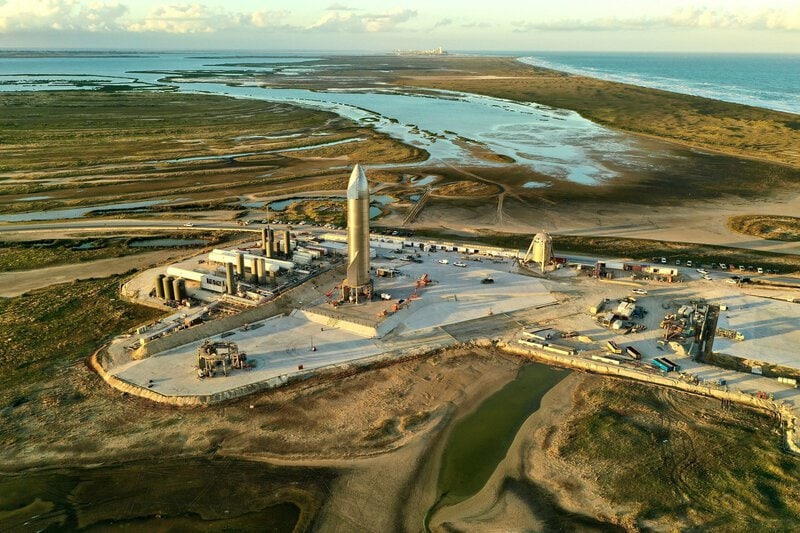
Starship stands nearly 123 meters tall — taller than the Statue of Liberty with its pedestal — making full-scale wind tunnel testing physically impossible in any existing facility on Earth. That is not a funding problem or a scheduling problem. It is a geometry problem. Wind tunnels work by flowing air over a model at controlled speeds inside a confined test section, and Starship’s diameter alone exceeds the usable throat width of most high-speed facilities worldwide. No amount of engineering ambition changes the size of the door.
The stakes attached to solving that problem are considerable. According to NASA, the tests were designed to quantify the extreme aerodynamic forces Starship experiences during atmospheric re-entry — a phase where a miscalculation can mean the difference between a controlled landing and a vehicle breakup. Re-entry is not the most energetic phase of a mission, but it is among the most aerodynamically complex: the vehicle must simultaneously decelerate through a wide speed range, manage enormous heat loads, and remain controllable.
The work was a NASA-SpaceX joint effort, building on a previous round of wind tunnel testing and extending the aerodynamic dataset on the Super Heavy Version 3 stack. It represents one layer in a multi-tiered verification process — one that rarely generates headlines but is foundational to the program’s safety margins.
Why Starship’s Size Creates a Distinct Aerodynamic Engineering Challenge
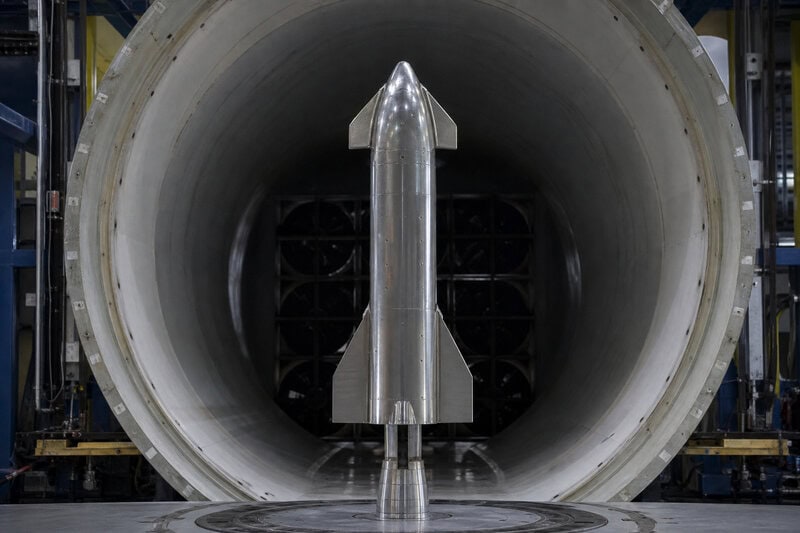
The scaling challenge has a precise technical name. When a model occupies too large a fraction of a tunnel’s cross-section, it artificially accelerates the airflow around it, producing pressure readings that do not reflect free-flight conditions. Engineers call this the blockage ratio, and standard practice keeps it below roughly 5 to 10 percent of the test section area. A model of Starship at any practically useful scale — say, 5 or 10 percent of full size — would violate that constraint in every high-speed tunnel currently operating. The 1.2% solution is not a compromise; it is the physics-constrained answer.
The speed range tested — Mach 0.7 to Mach 1.4 — was chosen deliberately to cover what aerodynamicists call the transonic regime, roughly Mach 0.8 to Mach 1.2. This corridor is uniquely difficult because shock waves and turbulent airflow interact simultaneously in ways that even modern computational fluid dynamics, or CFD, codes struggle to predict accurately without experimental validation. CFD simulates fluid behavior mathematically on computers and has become extraordinarily powerful, but it still relies on empirical measurements to confirm its predictions, especially in transonic flow. Without reliable wind tunnel data across this range, engineers would be making trajectory and structural decisions based on unverified simulations — a condition accurately described as flying partially blind through the portion of re-entry where aerodynamic loads are most uncertain.
Inside NASA Ames: Facilities, the Model, and What Was Measured
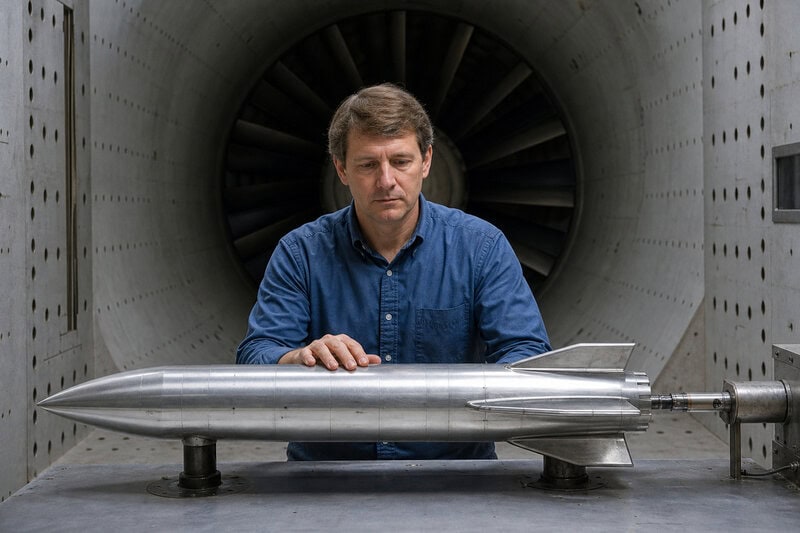
NASA’s Ames Research Center operates some of the world’s largest and most capable wind tunnel complexes, including facilities purpose-built for transonic and supersonic aerospace research. The 1.2% scale model tested there was precision-fabricated to capture Starship’s external geometry — including the booster-plus-spacecraft stack and features relevant to aerodynamic stability, such as grid fins, the large lattice-like control surfaces that steer the vehicle during descent.
Two separate wind tunnel facilities at Ames were used during the late-2025 campaign, each serving a distinct engineering purpose. One measured steady aerodynamic forces — lift, drag, and pitching moment averaged over time — the quantities that determine whether a rocket flies straight and remains controllable. The other measured unsteady or fluctuating airloads, including buffet and pressure oscillations driven by shock waves and turbulent wakes. The distinction matters enormously in practice: steady forces feed into flight control algorithms, while unsteady forces determine whether structural components — heat shield tiles, grid fin attachments, propellant lines — accumulate fatigue damage over repeated flight cycles and eventually fail.
The data collected feeds directly into what engineers call an aerodynamic database — a comprehensive lookup table of forces and moments at every combination of speed, angle of attack, and altitude. That database is not decorative; it is the numerical foundation of the flight software that keeps Starship on its intended trajectory during every phase of flight.
Notably, reporting on the Ames campaign confirms these tests build on a previous round of wind tunnel testing, meaning engineers are refining and expanding an existing dataset rather than starting from scratch. That iterative approach is standard, rigorous aerospace practice — each test campaign answers questions raised by the last and identifies new ones to pursue.
The NASA-SpaceX Collaboration: Shared Infrastructure, Shared Data
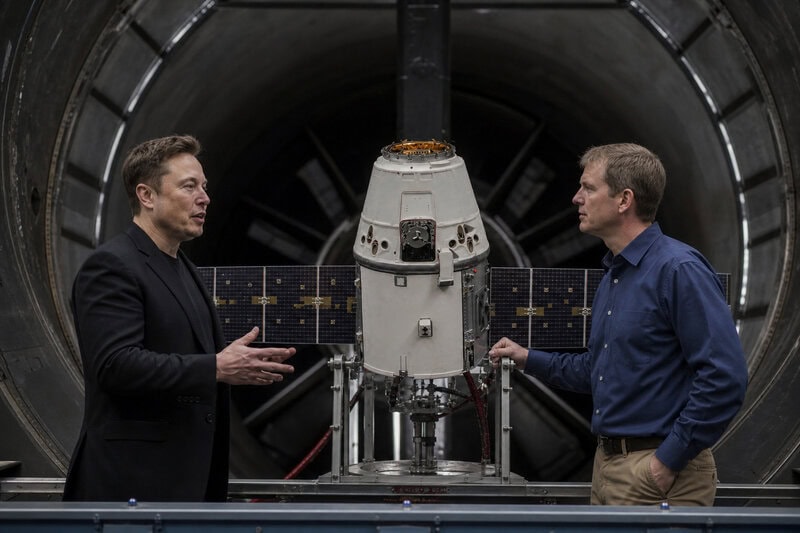
The partnership model underlying this work is worth understanding clearly. NASA provides access to unique government-owned test infrastructure — world-class wind tunnel facilities that no private organization currently replicates at equivalent capability — while SpaceX supplies vehicle geometry, flight data, and engineering priorities. This is a cost-sharing arrangement, but it is also something more substantive: both organizations’ engineers work from the same experimental dataset, aligning their aerodynamic models around common ground-truth measurements.
NASA’s institutional stake in the outcome is direct. The agency has contracted SpaceX’s Starship as the Human Landing System for Artemis lunar missions, giving NASA a programmatic interest in independently verifying the vehicle’s aerodynamic performance and safety margins — not simply accepting SpaceX’s internal analysis. Wind tunnel testing at a government facility with joint data collection represents a deeper technical partnership than a standard procurement, one in which both sides’ engineering credibility depends on the same results.
It is important to be precise about what is publicly known. Detailed quantitative results from the late-2025 tests — specific force coefficients, identified stability margins, or design changes triggered by the data — had not been publicly released by NASA or SpaceX at the time of writing. The confirmed facts are the test conditions, the facility, the scale, the speed range, and the general categories of data collected. Specific engineering conclusions should be treated as preliminary until formally published.
Can a Model the Size of a Carry-On Bag Actually Tell You Anything Reliable?
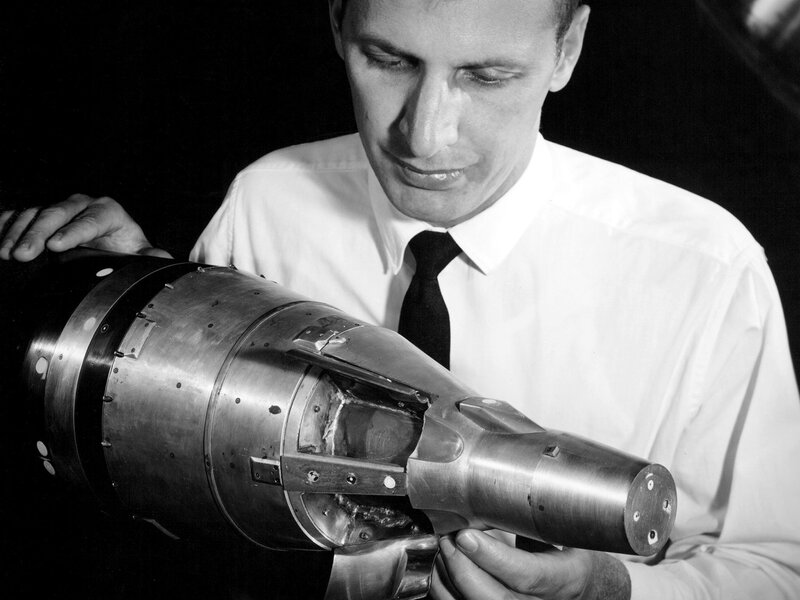
A 1.2% scale model of a 123-meter rocket is roughly the size of a large carry-on bag. The skepticism that observation invites is reasonable, and it deserves a direct answer.
Aerodynamic similarity between a scale model and a full-size vehicle is governed by a dimensionless quantity called the Reynolds number — a ratio of inertial to viscous forces in the airflow that determines whether the flow behaves in physically comparable ways at different scales. Tunnel operators adjust air pressure, temperature, and speed to partially compensate for reduced model size and partially match the Reynolds number of full-scale flight conditions. Perfect matching across all relevant parameters simultaneously is rarely achievable, which is an honest limitation of the method.
That limitation does not undermine the method’s validity. The use of small-scale models in high-speed wind tunnels is a well-validated, decades-old practice in aerospace engineering, applied to every major U.S. launch vehicle from the Saturn V that carried Apollo astronauts to the Moon through the Space Launch System currently flying Artemis missions. Scale model tests are most reliable for capturing gross aerodynamic trends, stability characteristics, and the overall force environment — precisely what the Ames tests were designed to measure. Very fine-scale flow phenomena, such as boundary-layer transition on a specific surface texture, may not scale perfectly; this is why wind tunnel data is invariably used alongside CFD analysis and, ultimately, flight test data from the vehicle itself. No single method substitutes for the others.
What the Data Does Next — and What Remains Open
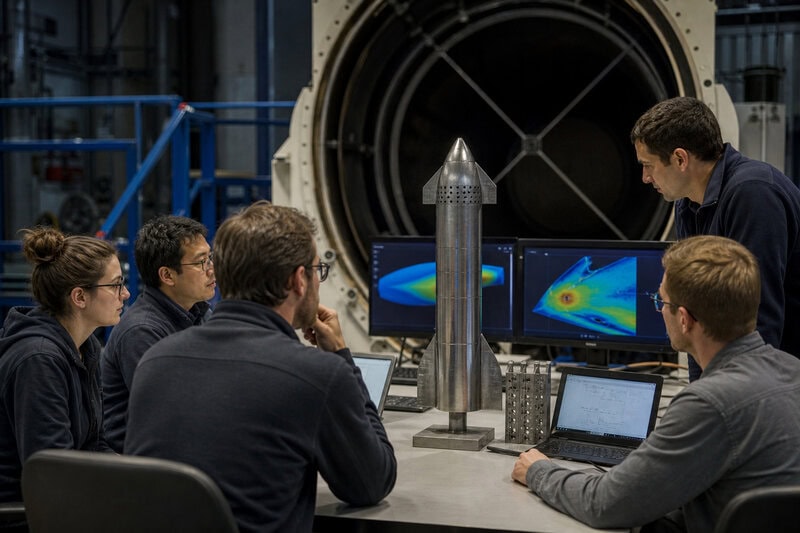
The aerodynamic database assembled from the Ames testing will be used to update Starship’s flight control algorithms, refine structural load predictions for the heat shield and grid fins, and validate or correct the CFD models used for future design iterations. In that sense, the wind tunnel is not a destination; it is a calibration tool that improves the reliability of every other analytical method downstream.
Wind tunnel validation sits within a broader verification stack that also includes ground structural testing, engine firing tests, and full integrated flight tests of the complete vehicle. Each method probes a different aspect of vehicle performance, and the results must be reconciled with one another. A discrepancy between wind tunnel data and CFD output is not a failure — it is information, pointing engineers toward a phenomenon that requires further investigation.
One important boundary condition deserves acknowledgment. The Mach 0.7 to Mach 1.4 test range covers transonic and low supersonic conditions. Hypersonic re-entry — above roughly Mach 5 — was not within scope of the reported tests. Characterizing aerodynamic forces at hypersonic speeds requires different facilities and methodologies, and it is not publicly confirmed whether comparable hypersonic tunnel testing of Starship has been completed or is planned. That remains an open question in the public record.
The NASA-SpaceX wind tunnel campaign at Ames represents the kind of methodical, incremental ground-test work that rarely makes headlines but is precisely what separates a vehicle that survives re-entry from one that does not. In a development program defined by ambitious timelines and novel engineering challenges, the unglamorous work of measuring airflow over a carry-on-sized model at controlled speeds is, in the end, one of the most consequential things engineers can do.