
Sealed inside a crypt beneath a Lithuanian church for roughly four centuries, a 17th-century mummy has yielded something scientists could barely have imagined a generation ago: intact genetic material from variola virus, the pathogen responsible for smallpox. That discovery, combined with ancient DNA recovered from mummified remains in Chile, now provides the strongest molecular evidence yet that European colonizers carried smallpox to the Americas — and that the virus did not exist in the New World before they arrived.
A Centuries-Old Debate, Narrowed Decisively by Genomics
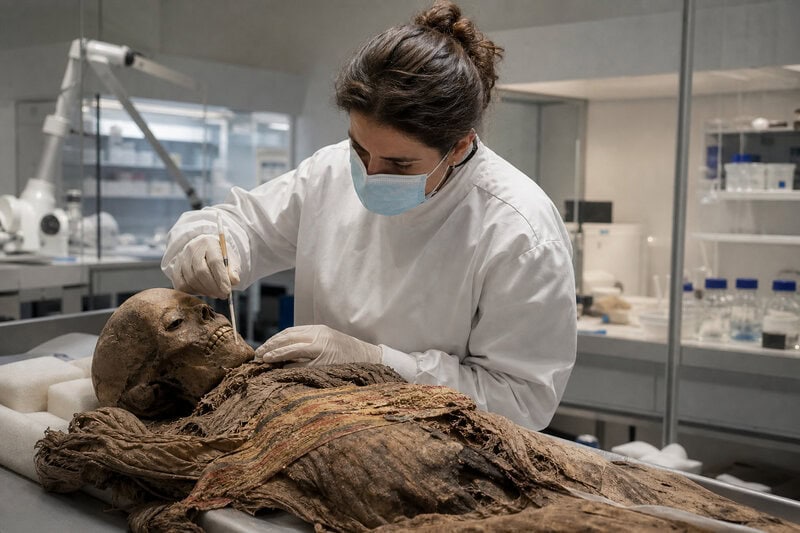
For decades, a stubborn question lingered at the edge of colonial history: was smallpox truly a European import to the Americas, or could some form of the virus — or a close relative — have already been circulating among Indigenous populations before 1492? Historical records, demographic data, and epidemiological inference all pointed toward colonial introduction, but hard biological proof remained elusive. The new genomic findings, drawn from mummy DNA on two continents, tip the scales decisively toward what researchers call the colonial-introduction hypothesis.
The method that made this possible is ancient DNA analysis, or aDNA analysis — the recovery and sequencing of degraded genetic material from historical biological remains such as bones, teeth, and mummified tissue. Over the past decade, aDNA research has quietly revolutionized historical epidemiology, reconstructing the origins of the Black Death, tracing the 1918 influenza virus, and now illuminating the transatlantic spread of smallpox. Each new mummy, each preserved genome, adds a data point to a molecular map of human disease history that written records alone could never produce.
What makes the current findings notable is not that they overturn the historical consensus — they do not — but that they replace inference with direct molecular evidence. That shift matters enormously in science, where the quality of evidence determines how confidently conclusions can be held and how much further investigation is warranted.
What the Lithuanian Mummy Revealed — and Why It Matters Beyond Europe
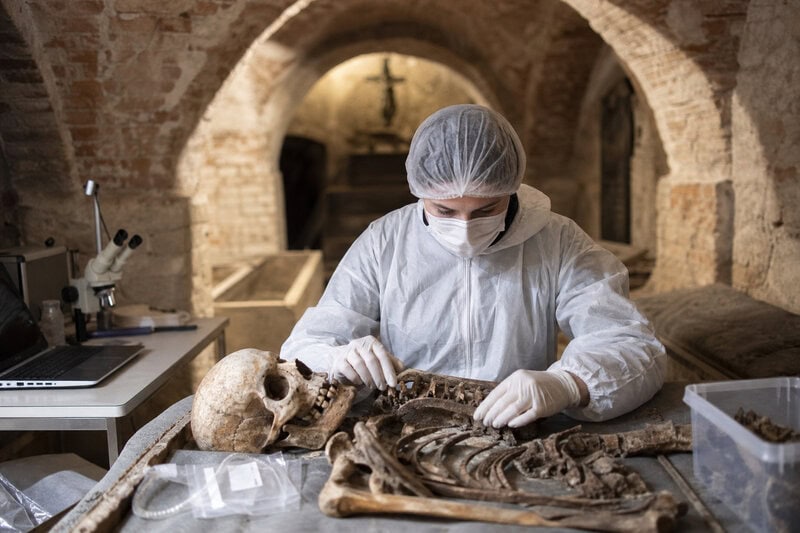
The Lithuanian case is remarkable in its specificity. Researchers identified variola virus DNA extracted from the remains of a 17th-century individual entombed in a church crypt in Lithuania, making it one of the oldest confirmed genomic recoveries of the smallpox pathogen. The crypt’s stable, enclosed environment slowed the natural degradation of biological material, leaving enough intact viral genetic sequence to be read by modern sequencing technology. BioTechniques has a detailed account of how the Lithuanian mummy helped unwrap smallpox’s genomic history, including the laboratory methods used to isolate and read the viral DNA.
Once extracted, the variola genome from the Lithuanian mummy was compared with DNA from more modern smallpox samples using phylogenetic analysis — a technique that reconstructs an organism’s evolutionary family tree from its genetic data. By charting where the Lithuanian strain sits on that tree relative to later viral lineages, scientists can trace how smallpox evolved and moved geographically over time.
The European mummy serves as a linchpin for the American story because it establishes a precisely dated, geographically anchored genomic reference point — a signature of smallpox circulating in the Old World at the very moment when colonial contact with the Americas was most intense. When researchers compare that reference against viral material recovered from colonial-era American remains, they can ask a precise question: do these strains share a common ancestor consistent with transatlantic transmission, or do they show signs of independent, pre-existing evolution?
Crucially, the analysis revealed no viral lineages requiring an independently evolved smallpox reservoir to have existed in the Americas before European contact. That absence of divergent pre-Columbian strains is itself significant evidence, though scientists are careful to note that absence of evidence in a limited dataset is not the same as proof of absence — a distinction the field takes seriously.
The Chilean Mummy Evidence: Smallpox Fingerprints in the New World
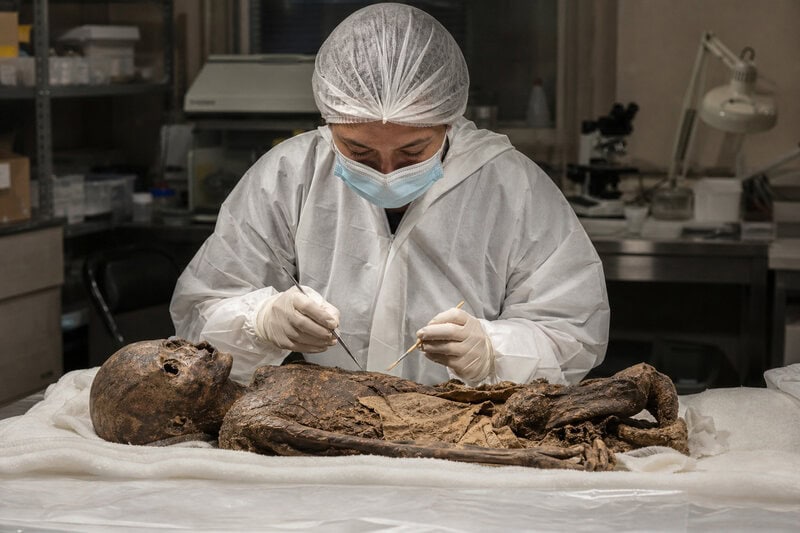
While the Lithuanian mummy anchors the European side of the story, ancient DNA recovered from mummified remains in Chile provides the most direct biological link yet between colonial contact and smallpox’s arrival in South America. The genetic evidence of smallpox found in those Chilean remains clusters with European lineages on the phylogenetic tree — not with any hypothetical pre-Columbian American variant. In genomic terms, this is the equivalent of a paper trail leading back unmistakably to the Old World.
The significance of this direct biological record cannot be overstated when set against what historians previously had to work with. Prior arguments for European-introduced smallpox relied on two categories of evidence: written colonial accounts describing catastrophic epidemics among Indigenous populations shortly after contact, and demographic studies documenting population collapse across the Americas in the 16th and 17th centuries. Those records are compelling, but they are also subject to interpretation — accounts can be questioned for bias or incompleteness, and demographic models depend on assumptions that researchers continue to debate. Ancient mummy DNA provides scientific evidence that colonization brought smallpox to the Americas in a way that historical documents cannot: through the virus’s own genetic signature, preserved in human remains and readable across centuries.
Researchers are careful to frame this finding proportionally. Ancient DNA sampling across the Americas remains geographically and temporally limited. The conclusions drawn from the Chilean evidence are robust within their scope, but a more complete picture — one that traces every introduction event and rules out every pre-Columbian scenario — will require broader surveys of remains across North, Central, and South America. These findings narrow the range of defensible positions considerably; they do not close the debate with a single study, nor do their authors claim otherwise.
How Ancient DNA Works — and Why It Can Be Trusted Here
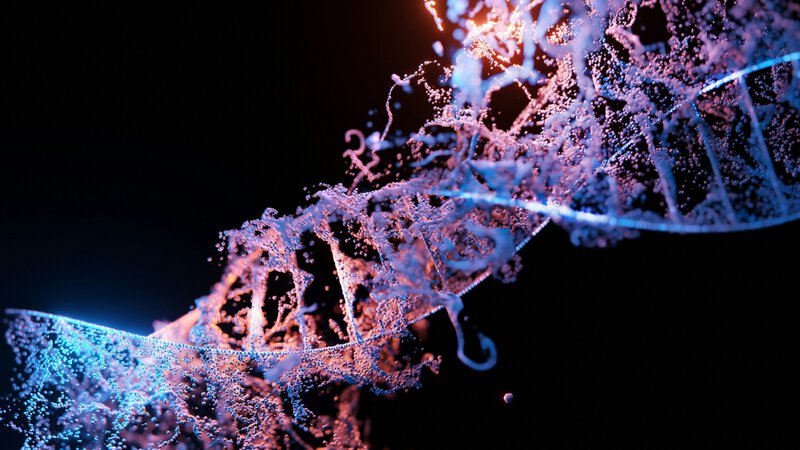
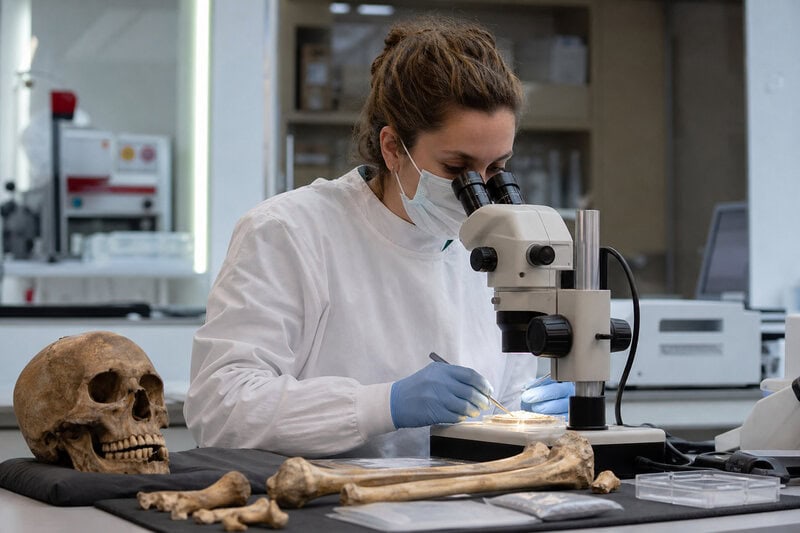
Ancient DNA is not simply old DNA pulled cleanly from a sample. Genetic material degrades over time through chemical processes that break the double helix into shorter fragments and alter the bases that encode genetic information. What modern aDNA laboratories recover is often a mosaic of short, damaged sequences that must be computationally reassembled into something meaningful.
The reliability of this process depends on two safeguards the field has developed rigorously over the past two decades. First, aDNA laboratories operate under strict clean-room protocols designed to prevent researchers from accidentally sequencing their own DNA or that of anyone who handled the sample after excavation. Second, and more critically, genuinely ancient DNA carries a characteristic chemical damage signature — specific patterns of base modification that accumulate predictably over centuries. Computational filters distinguish sequences showing these patterns from modern contaminant DNA, which lacks them. When a recovered sequence passes both safeguards, researchers can be confident they are reading material that is truly ancient.
Mummified remains are particularly valuable in this context. Whether mummification occurs naturally — through extreme cold or aridity — or through human intervention, it substantially slows the biological and chemical processes that degrade DNA. Church-crypt environments, like the one that preserved the Lithuanian mummy, often maintain stable temperature and humidity conditions that further extend the window during which pathogen genomes remain recoverable. Scientists who extracted evidence of smallpox from the 17th-century Lithuanian mummy noted the exceptional preservation quality of the remains as a key factor in the study’s success. Arid environments in South America have similarly preserved organic material for centuries, making Chilean mummies comparably rich repositories.
Honest accounting of the method’s limits is essential. aDNA analysis cannot recover viruses from every historical sample; preservation must be near-ideal, which means the existing dataset is patchy by definition. Scientists in this field consistently emphasize that conclusions should be held in proportion to the evidence actually recovered — a principle that distinguishes rigorous genomic archaeology from overreach, and one that the researchers behind these findings have applied visibly.
Why Indigenous Populations Had No Defense: The Immunological Reality
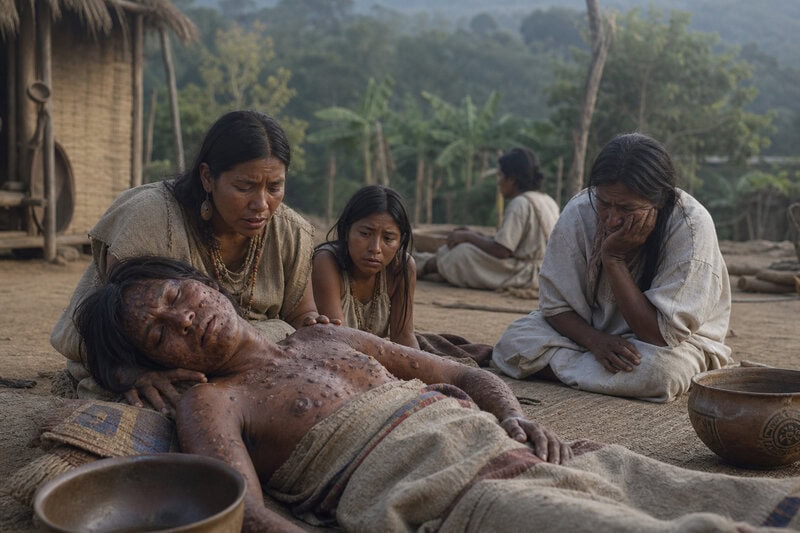
Understanding why smallpox proved so catastrophic in the Americas requires a brief detour into immunology. When the human immune system encounters a pathogen, it generates a targeted response and retains a molecular memory of that encounter, enabling faster and more effective defense if the same pathogen appears again. Populations that have lived alongside a disease for generations carry a statistical advantage: survivors of past epidemics passed on immune memory, and over centuries, immune characteristics better suited to combating the pathogen became more common in those populations.
The Indigenous peoples of the Americas had never been exposed to variola virus before European contact. Their immune systems carried no prior memory of the pathogen and could not mount the kind of rapid, calibrated response that generations of Old World exposure had enabled in European populations. This condition is called immunological naivety, and it is not a reflection of any inherent biological inferiority — it is the predictable consequence of geographic isolation from a particular disease. Any population encountering a genuinely novel pathogen for the first time faces the same vulnerability, as historical records of European encounters with diseases endemic to other regions confirm.
The demographic consequences were devastating. Historical records and demographic studies document catastrophic population declines across the Americas following colonial contact, and epidemiologists have long identified smallpox as one of the primary drivers. For documentary context on how the disease moved through the Americas in the early colonial period, this account of smallpox’s arrival in the Americas between 1507 and 1524 offers important historical background that complements the genomic picture. The new molecular data does not change what historians already understood about the human toll; it provides a biological foundation beneath conclusions that previously rested on circumstantial, if compelling, grounds.
What This Changes — and What It Doesn’t — in the Historical Record
It is worth being precise about what these studies establish and what they leave open. The research confirms that a European-lineage variola virus was present in colonial-era remains on two continents, strongly supporting the model that smallpox crossed the Atlantic with European colonizers. What the studies do not yet provide is a complete viral family tree mapping every introduction event, every outbreak origin, or every possible transmission route across the Americas in the 16th and 17th centuries. The evidence is compelling; it is not exhaustive.
The findings do substantially undermine the minority hypothesis that some form of smallpox or a closely related orthopoxvirus — a family that includes smallpox, monkeypox, and cowpox — may have existed in the Americas before 1492. The genomic clustering of colonial-era American viral material with European lineages, rather than with any independently evolving American branch, makes that hypothesis significantly harder to sustain. It does not render it mathematically impossible, but it shifts the burden of evidence heavily onto those who would argue for pre-Columbian presence.
Researchers in this field are consistently careful to note that their role is to report and interpret genetic evidence, not to adjudicate historical justice or political questions. At the same time, establishing that smallpox was a colonial import — not a pre-existing condition — has genuine implications for how historians, educators, and Indigenous communities understand and narrate the demographic catastrophe of the colonial period. The science informs the historical record; what societies choose to do with that record is a separate, though not unrelated, matter.
The Bigger Picture: Ancient DNA and the Rewriting of Disease History
The smallpox findings sit within a broader scientific revolution. Over the past decade, aDNA research has identified the bacterium Yersinia pestis as the causative agent of the Black Death, traced its geographic origins through Central Asian remains, reconstructed the 1918 influenza virus from preserved lung tissue, and now added the colonial transmission of smallpox to its list of achievements. Genomic archaeology is becoming one of the most powerful tools available to historical epidemiologists — one that can resolve questions that written records and physical artifacts alone cannot.
The timing of this research also carries practical relevance. With continued global concern about biological threats and the ongoing spread of mpox — the disease formerly called monkeypox, caused by a close relative of variola — understanding how orthopoxviruses move through populations and evolve across centuries is not merely an academic exercise. The patterns revealed by colonial-era smallpox genomes — how a novel virus enters an immunologically naive population, how it diversifies as it spreads, how its evolutionary rate changes under different demographic pressures — inform both vaccine development strategy and the design of public health surveillance systems. The dead, in this sense, continue to teach the living.
Taken together, the convergence of ancient mummy DNA from Chile and 17th-century Lithuania transforms what had long been a well-supported historical inference into a genomically documented conclusion. Researchers emphasize, with appropriate scientific humility, that the story is not fully told. Every new mummy examined, every new crypt opened, every ancient genome recovered has the potential to add precision, nuance, or even surprise to the emerging molecular history of human disease. The archive is vast, and scientists are still learning how to read it — but the pages recovered so far tell a coherent and consequential story.