
Inside a fragment of the Allende meteorite — a carbon-rich rock that crashed over Mexico in 1969 — scientists have identified microscopic specks of stardust up to 3 billion years older than the solar system itself, making them the oldest solid material ever examined in a laboratory. New research now proposes that these ancient grains did not merely survive the solar system’s birth: they may have helped trigger it.
The Oldest Solid Material Ever Found on Earth
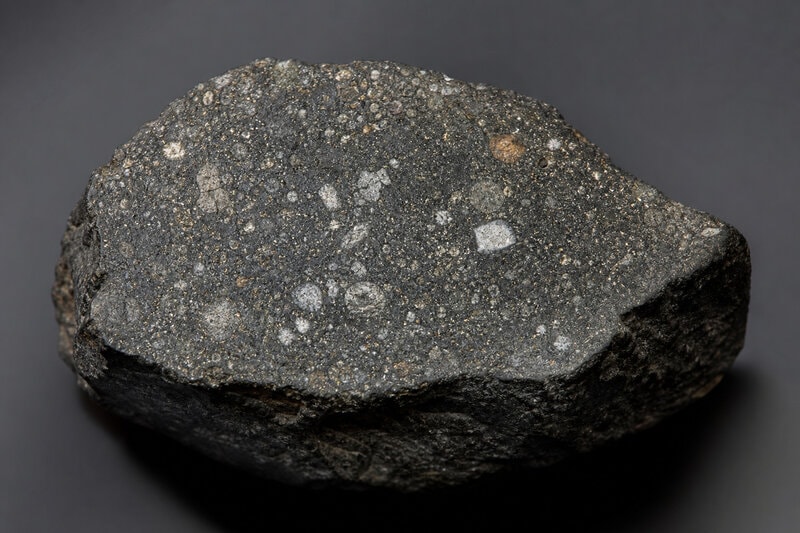
The grains in question are presolar grains — microscopic mineral particles of silicon carbide, graphite, or silicate that crystallized inside or around stars that lived and died long before our Sun ignited roughly 4.6 billion years ago. Most presolar grains recovered from meteorites date to between 4.6 and 5 billion years old. The oldest confirmed specimens push that boundary to roughly 7 billion years — more than halfway back to the Big Bang — predating not only Earth but the molecular cloud from which our entire solar system was born.
These grains formed within the outflowing, cooling gases shed by earlier generations of stars, crystallizing into solid specks that were then scattered into interstellar space. Billions of years later, some were swept up by the collapsing cloud of gas and dust that became our solar system, and a handful ended up preserved inside a primitive meteorite that fell onto a Mexican farm, waiting to be found.
Research led by Philipp Heck and colleagues at the Field Museum and the University of Chicago, published in 2020 and peer-reviewed, confirmed that Allende grains spanning 5 to 7 billion years in age represent the oldest solid material ever found on Earth. That finding is now firmly part of the scientific consensus. What has emerged more recently is a bolder proposal about what those grains actually did.
Seeds for the Solar System’s First Solids
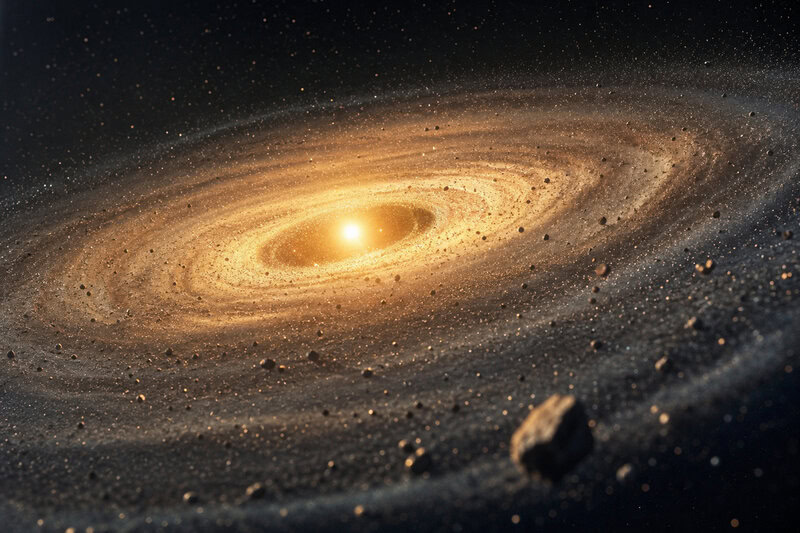
New analysis of Allende material proposes a striking mechanism: presolar stardust grains acted as nucleation seeds — microscopic surfaces onto which primitive condensates in the early solar nebula preferentially crystallized. The analogy is instructive. In Earth’s atmosphere, ice crystals do not form spontaneously in empty air; they need a solid particle — a speck of dust or sea salt — to serve as a surface on which water molecules can lock into a crystal lattice. The researchers suggest the same physics governed the young solar system.
When the collapsing molecular cloud heated and then began to cool, gas-phase minerals needed a solid surface to initiate condensation. Presolar grains, already threading through the newborn nebula as interstellar hitchhikers, provided exactly that substrate. According to the study published in Science Advances, this nucleation role means presolar grains were not passive bystanders but active participants in producing calcium-aluminum-rich inclusions — known as CAIs — the solar system’s oldest dated solids, found throughout primitive meteorites.
If confirmed, the hypothesis carries a remarkable implication: the very first solid matter assembled in our solar system was organized around material forged in entirely different stellar systems, blurring the boundary between interstellar and solar system chemistry. The solar system’s earliest building blocks may not have been born here at all.
How Scientists Identify Grains Older Than the Sun
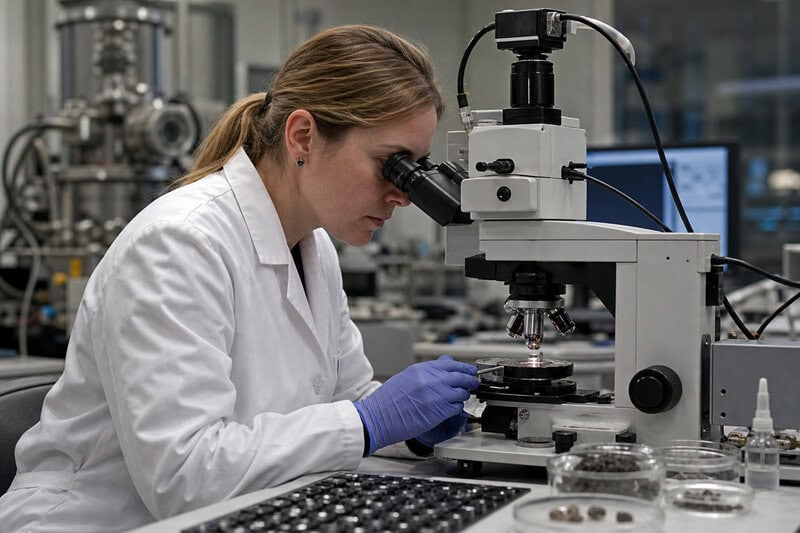
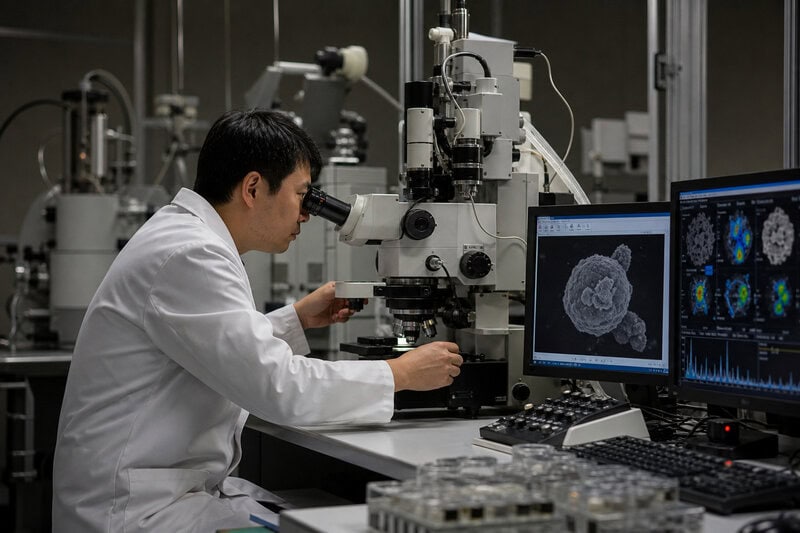
Identifying presolar grains among meteorite material requires an exacting technique. Researchers dissolve away the surrounding rock with acids, leaving behind only the most chemically stubborn grains — those that survived not just billions of years of travel through interstellar space but the violent heat of atmospheric entry. What remains carries an unmistakable signature.
The isotopic fingerprints of these grains — the precise ratios of atomic variants in elements such as xenon, neon, carbon, and silicon — are wildly different from anything produced within our solar system, allowing scientists to identify presolar grains unambiguously. For silicon carbide grains, the ratio of carbon-12 to carbon-13, combined with neon and xenon isotope signatures, points to specific stellar environments such as asymptotic giant branch stars or supernova ejecta, each with known nucleosynthetic histories. Cross-referencing these signatures with stellar evolution models lets researchers bracket the approximate formation age of the grain itself.
It is important to note that the 5-to-7-billion-year age range reported for the oldest Allende grains carries inherent uncertainties. Dating presolar grains does not rely on radioactive decay clocks in the conventional sense; it relies on isotopic anomalies, which are powerful but not equivalent to a precision stopwatch. The scientific community treats these figures as well-supported inferences, not exact measurements — a meaningful distinction when the numbers span billions of years.
The Robert A. Pritzker Center for Meteoritics at the Field Museum has been a leading institution in cataloguing and dating these specimens, building a reference archive that underpins much of the current research.
The Allende Meteorite: Earth’s Best Archive of Deep Time
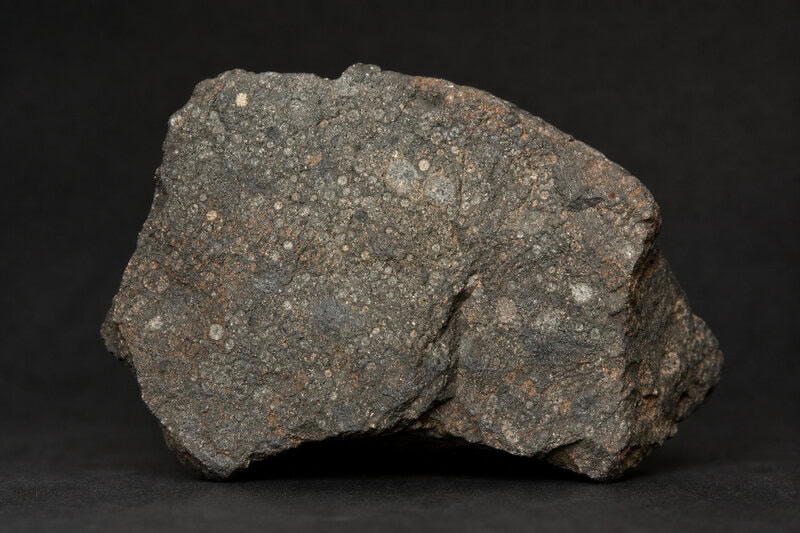
The Allende meteorite is a carbonaceous chondrite — a primitive, chemically unaltered class of space rock that preserves ancient material with minimal thermal or chemical overprinting, making it among the most studied meteorites on Earth. Its primitive matrix locked away interstellar dust before the Sun’s radiation and solar wind could destroy or alter it, functioning as a time capsule that carried presolar material across billions of years and vast stretches of interstellar space to a laboratory bench.
As Science News reported on the Field Museum findings, the grains extracted from Allende represent a direct physical sample of the galaxy’s stellar history — objects you could, in principle, hold between two fingers, though each is far too small to see with the naked eye. That tactile nearness to 7-billion-year-old stellar debris is part of what makes the Allende material so scientifically and conceptually extraordinary.
What Is Established and What Remains Open
It is essential to distinguish what is settled from what is proposed. The existence of presolar grains, their extreme age, and their identification through isotopic anomalies are firmly established scientific consensus, supported by decades of independent peer-reviewed research. The nucleation-seed hypothesis is newer and more speculative. While it is physically plausible and consistent with known condensation physics, it has not yet achieved the same level of independent verification, and the researchers themselves frame it as a proposed mechanism requiring further testing.
Several key questions remain open. Whether the density of presolar grains in the early nebula was sufficient to dominate nucleation — rather than simply contribute to it — is not yet resolved. How many CAIs can be directly linked to presolar substrates, and whether the pattern seen in Allende appears in other carbonaceous chondrites, are active areas of investigation. Some researchers also caution that the intense thermal processing experienced by material in the inner solar nebula may have destroyed most presolar grains before they could serve as seeds, potentially confining any nucleation effect to cooler, outer regions of the protoplanetary disk.
These are not reasons to dismiss the hypothesis. They are the normal mechanics of science: a striking idea now subject to the scrutiny and independent testing that could either establish it or refine it into something more precise.
What This Means for How We Understand Planetary Origins
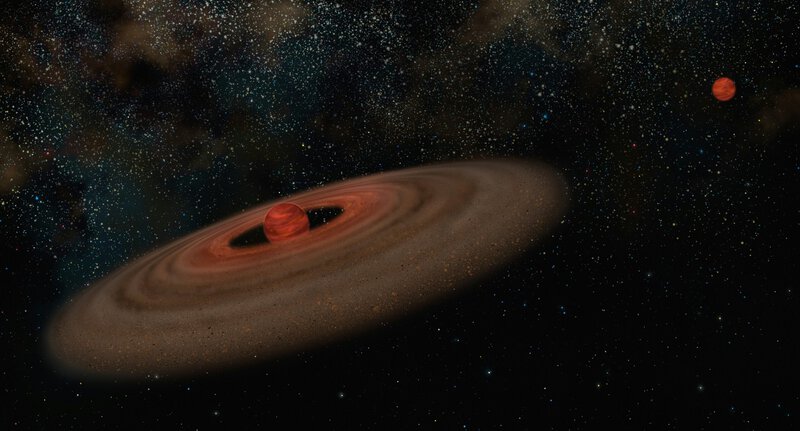
The standard model of solar system formation begins with a molecular cloud of gas and dust collapsing under gravity, with solids condensing from scratch in the resulting hot nebula. The nucleation hypothesis adds a new layer: the earliest condensation may have been chemically guided by material from foreign stars, meaning the solar system’s first solid building blocks carried isotopic memories of multiple stellar generations. Our origins are more deeply entangled with galactic history than the standard account suggested.
For the broader study of planetary systems across the galaxy, the finding raises an intriguing possibility. Interstellar grain populations vary in age and composition depending on a star-forming region’s history. If those grains influence nucleation, they could shape the chemistry and timing of planet formation in ways that differ systematically from one stellar nursery to another — a variable that current planet-formation models do not yet fully account for.
The most immediate path to testing the nucleation hypothesis lies in fresh primitive material. Sample-return missions — including NASA’s OSIRIS-REx, which retrieved material from asteroid Bennu, and JAXA’s Hayabusa2, which sampled asteroid Ryugu — are delivering pristine specimens that have never experienced terrestrial contamination. If presolar grain nucleation signatures appear consistently beyond the Allende archive, the hypothesis could graduate from an intriguing proposal to an established mechanism, reshaping the opening chapter of Earth’s own origin story.
For now, what is certain is this: scattered through the most primitive rocks in the solar system are grains of matter that formed around stars long dead, traveled through interstellar space for billions of years, and arrived at the birth of our solar system already ancient beyond reckoning. Whether they merely survived that birth or actively shaped it is the question researchers are now pursuing across meteorite collections, particle accelerators, and the returned samples of distant asteroids.