
In 2023, researchers at Stanford Medicine published a finding in Nature Medicine that quietly challenged one of psychiatry’s oldest assumptions: that “depression” names a single, coherent disease. Using brain imaging and cognitive testing from more than 800 participants, a team led by Leanne Williams, PhD — a professor of psychiatry and behavioral sciences at Stanford Medicine — identified six distinct neurobiological subtypes of depression and anxiety. The single word on a diagnostic form, the study implied, may be as clinically imprecise as labeling every form of chest pain simply “heart trouble.”
That finding is reshaping how one of the world’s leading academic medical systems thinks about the brain, and it raises an urgent practical question: if mental health conditions have measurable, differentiable brain signatures, why are clinicians still largely guessing which treatment to try first?
The Treatment Gap That Brain Science Is Trying to Close
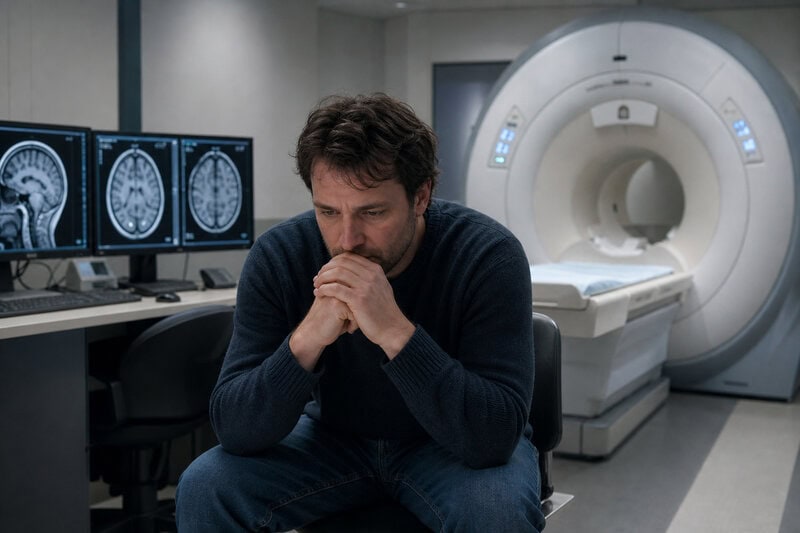
The stakes are not abstract. The landmark STAR*D trial — the largest real-world antidepressant study ever conducted, funded by the National Institute of Mental Health — found that roughly 30 to 40 percent of patients with major depression do not respond adequately to a first-line antidepressant. Many endure months of failed medication trials before finding something that works, each attempt carrying its own side-effect burden and psychological toll. If those patients could be sorted in advance by measurable brain state rather than symptom checklist alone, the calculus of treatment changes entirely.
That is the structural premise embedded in facilities like the Stanford Neuroscience Health Center — an outpatient facility operating under Stanford Medicine’s Department of Neurology & Neurological Sciences, purpose-built around the idea that the brain, not just behavior, is the fundamental unit of clinical measurement. Understanding what that means in practice requires understanding both what the center actually does and how far the science behind it has — and has not yet — traveled.
What the Stanford Neuroscience Health Center Actually Is
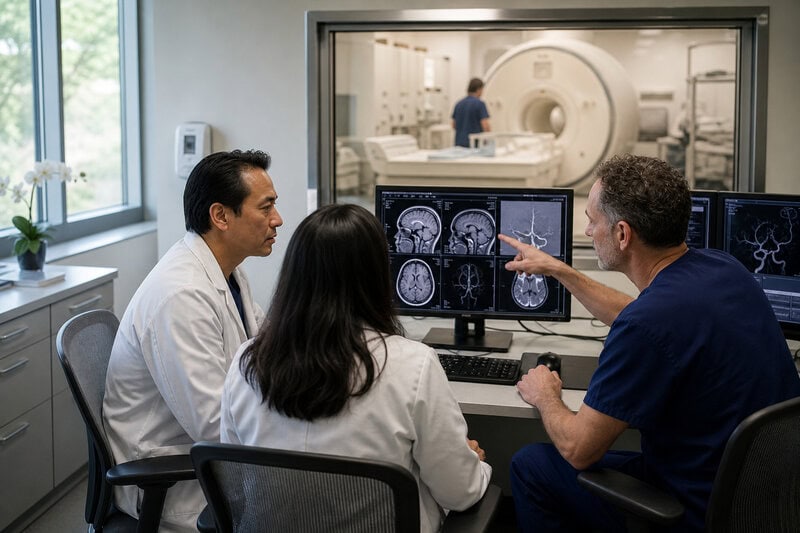
The Stanford Neuroscience Health Center is not a traditional psychiatry ward, and the distinction matters. It is an outpatient facility that brings together neurologists, neurosurgeons, and neurointerventional radiologists under one institutional roof, with associated clinics spread across Northern California. The collaborative design is intended to make cross-specialty consultation clinically routine rather than administratively burdensome.
Consider what that co-location means for a patient presenting with memory loss and mood changes simultaneously. In a conventional system, that patient might wait months for separate neurology and psychiatry referrals, with each specialist working from incomplete information. In an integrated center, neurological, psychiatric, and imaging assessments can occur in coordinated sequence — compressing diagnostic timelines and reducing the chance that a brain-based cause of psychiatric symptoms goes undetected.
The center’s breadth is illustrated by one of its more unexpected programs: a Dance for Parkinson’s Disease program that applies rhythm and movement science to the management of motor symptoms. The inclusion of such a program signals something philosophically important — the center treats neurological conditions as whole-body states involving cognition, mood, and movement, not as isolated lesions to be mapped and managed in isolation.
A conventional psychiatry department diagnoses primarily through structured symptom checklists and clinical interviews — tools that are valuable but inherently subjective. The integrated model at Stanford Medicine’s Department of Neurology & Neurological Sciences adds objective neurological and imaging data to that clinical picture. That methodological shift is meaningful, but it is also still evolving: the science is advancing faster than clinical infrastructure and regulatory frameworks can fully absorb.
Brain Biomarkers: A Plain-Language Definition
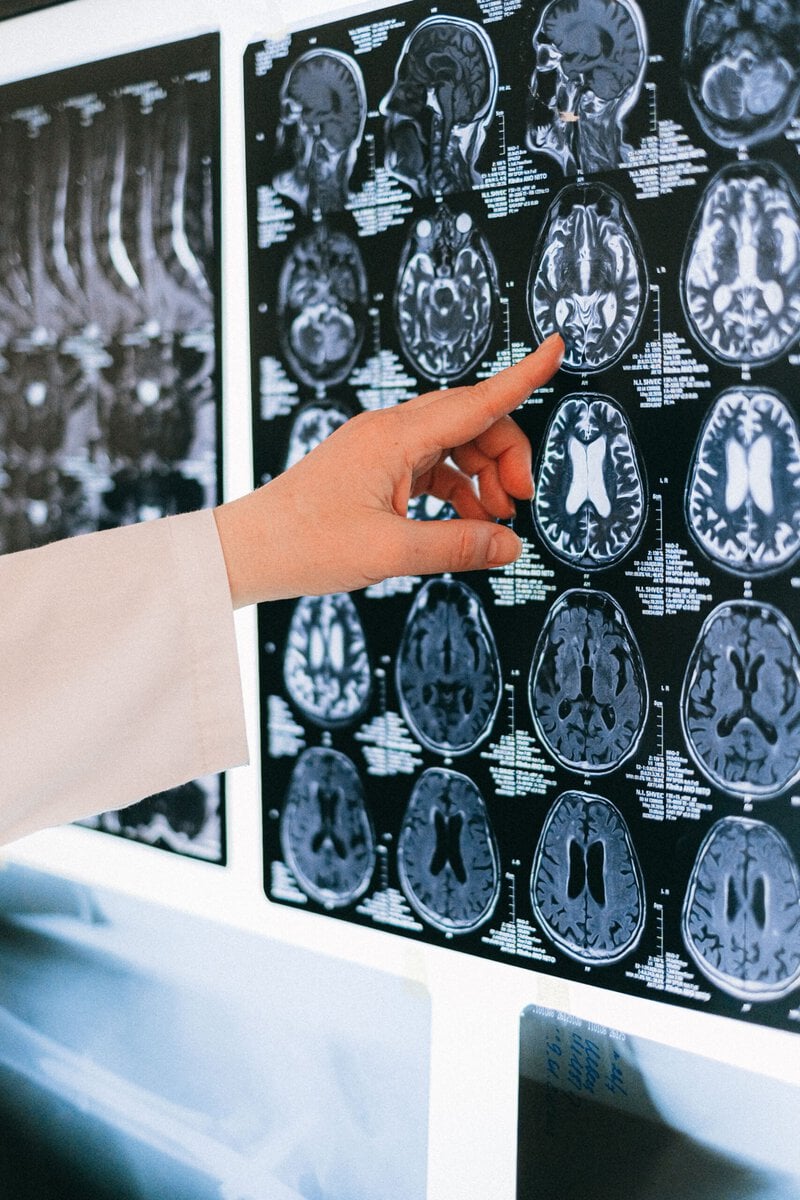
A brain biomarker is a measurable, objective signal — derived from brain imaging, electrical activity, or blood — that corresponds reliably to a specific brain state. The analogy researchers most often use is instructive: the way a blood glucose reading gives a physician quantifiable information to guide diabetes management, a brain biomarker could, in principle, give a psychiatrist quantifiable information to guide treatment selection for depression or anxiety. The analogy has limits, but it captures the core ambition.
Two imaging methods dominate psychiatric neuroscience research. Functional MRI, or fMRI, measures changes in blood flow across brain regions as a proxy for neural activity, offering detailed spatial resolution but requiring expensive equipment and controlled conditions. Electroencephalography, or EEG, records the brain’s electrical rhythms in real time, offering excellent temporal resolution — measuring activity millisecond by millisecond — but with less anatomical precision. Researchers typically weigh these trade-offs carefully when designing studies and selecting which tool best matches a given clinical question.
The institutional framework for this work arrived in 2010, when the National Institute of Mental Health launched its Research Domain Criteria initiative, known as RDoC. RDoC formally shifted federal psychiatric research away from purely symptom-based diagnostic categories — the kind encoded in the DSM — toward identifying the biological circuits underlying mental health conditions. That framework gave scientific legitimacy and federal funding momentum to the biomarker approach Stanford researchers have been pursuing.
One critical limitation deserves honest emphasis: brain biomarkers identified in research settings have not yet become standard clinical diagnostic tools. The science is real and peer-reviewed, but regulatory approval, replication in diverse populations, and the development of cost-effective clinical protocols remain necessary steps before any psychiatrist can order a “brain biomarker panel” the way a cardiologist orders a lipid panel. Stanford researchers, along with colleagues at other academic medical centers, are actively working to close that gap — but it has not closed yet.
Stanford’s Depression Subtype Findings: What the Data Actually Show
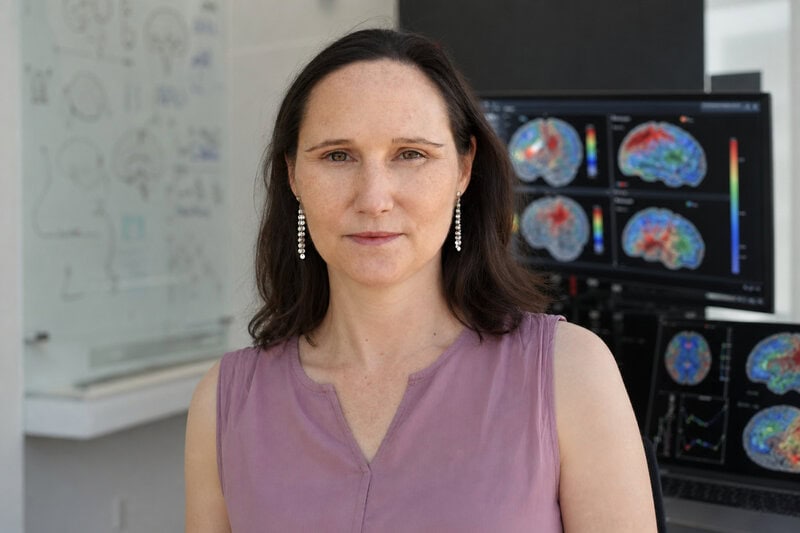
The most discussed recent contribution from Stanford to this field is the 2023 Nature Medicine study led by Leanne Williams, PhD. Using brain scans and cognitive testing from more than 800 participants, Williams and her colleagues identified six distinct neurobiological subtypes — or “biotypes” — of depression and anxiety, a finding that reframes decades of clinical assumption.
One of those biotypes has drawn particular clinical attention: a “cognitive biotype,” characterized by reduced activity in the dorsolateral prefrontal cortex, a brain region that governs executive functions including planning, working memory, and sustained attention. Participants with this biotype showed poor response to two commonly prescribed antidepressants in the SSRI class — selective serotonin reuptake inhibitors, the most frequently prescribed first-line medications for depression — but responded significantly better to a different medication. The implication is direct: a brain scan taken before treatment begins could, in principle, spare a patient with the cognitive biotype months of an ineffective medication trial.
What brain imaging reveals in these cases is not a broken brain region in any simple sense, but rather a pattern of altered connectivity — circuits communicating too strongly, too weakly, or with dysregulated timing relative to typical patterns. Those connectivity signatures manifest as the symptoms clinicians observe and patients experience: rumination, inability to feel pleasure (a symptom clinicians call anhedonia), cognitive slowing, or disrupted sleep. The brain is not malfunctioning the way a fractured bone malfunctions; it is organized differently, in patterned ways that imaging can now begin to distinguish.
Epistemic honesty requires a clear caveat. The Nature Medicine study was conducted in a research cohort under controlled conditions. It has not yet been translated into a clinical diagnostic test available to patients outside trial settings. Replication in larger, more demographically diverse populations is the necessary next step before any finding of this kind enters routine clinical use. The results are genuinely promising and have drawn significant scientific attention — but promising is not the same as proven at clinical scale, and that distinction matters for patients making decisions now.
Beyond Depression: Neurological Conditions Redrawing the Mental Health Map
Depression is not the only condition being reconsidered through a neurobiological lens at centers like Stanford. Conditions long classified as purely psychiatric — including certain presentations of obsessive-compulsive disorder, post-traumatic stress disorder, and treatment-resistant mood disorders — show consistent, reproducible patterns on brain imaging across multiple independent research groups. That reproducibility is significant: it lends biological specificity to what were once defined entirely by patient-reported symptoms and clinician observation.
Parkinson’s disease offers an instructive bridge case. The Dance for Parkinson’s program at the Stanford Neuroscience Health Center reflects well-established neuroscience: the disruption of dopaminergic circuits — pathways that rely on the neurotransmitter dopamine — underlies both the characteristic motor symptoms of Parkinson’s and the depression that affects a significant proportion of people living with the disease. Motor dysfunction and mood disorder sharing a single biological substrate is not a metaphor; it is a measurable circuit-level reality. That convergence is precisely why an integrated neuroscience health center is better positioned to treat the whole patient than either a neurology or psychiatry department working in isolation.
Some researchers use the phrase “psychiatric neurology” to describe this emerging clinical orientation — a framing that resists the traditional hard boundary between brain diseases (the historical province of neurology) and mind diseases (the historical province of psychiatry), treating them instead as overlapping points on a spectrum of neural circuit dysfunction. Stanford’s integrated model operationalizes that framing structurally, not just rhetorically.
What remains genuinely uncertain deserves equal space. Not all mental health conditions show clear or consistent imaging signatures across study populations. Trauma history, social environment, early-life adversity, and genetic variation interact with brain states in ways that imaging alone cannot fully capture. The biological model being developed at centers like Stanford complements — but does not replace — psychosocial understanding. Researchers in this field are, by and large, careful to make that distinction, even when popular coverage sometimes is not.
How This Changes — and Does Not Yet Change — Patient Care

For most patients today, brain imaging is not part of a standard psychiatric workup. The biomarker-guided approach to mental health diagnosis exists primarily in research protocols and specialized academic medical centers. A patient walking into a community mental health clinic will still receive a diagnosis based primarily on symptom duration, severity, and pattern — not a brain scan. That is the current clinical reality, and it is important to state it plainly rather than allow the excitement surrounding research findings to obscure it.
Where the neuroscience-based shift is already visible to patients is in neuromodulation therapies. Transcranial magnetic stimulation, or TMS, uses targeted magnetic pulses to modulate activity in specific brain circuits and is FDA-cleared for treatment-resistant depression. Stanford’s own accelerated TMS protocol — known as SAINT, or Stanford Accelerated Intelligent Neuromodulation Therapy — has shown striking results in clinical trials for severe, treatment-resistant depression, representing a practical application of neuroscience-based mental health treatment that is reaching patients now, not in a theoretical future.
An access gap is also worth naming honestly. Cutting-edge neuroscience-based psychiatric care is concentrated in academic medical systems. Stanford Medicine operates clinics across Northern California, giving patients in that region substantially greater proximity to these emerging tools than patients in rural areas or regions without major academic medical centers. That geographic concentration of advanced care is a structural equity problem the field has not yet solved, and no amount of scientific progress resolves it automatically.
For individuals navigating treatment-resistant depression or anxiety today, the most evidence-informed step is a direct conversation with a psychiatrist about clinical trial eligibility and neuromodulation options. The Stanford Neuroscience Health Center and institutions like it are actively enrolling participants in research that could determine what becomes standard care within the next decade.
The Road From Research to Routine Care
Several milestones separate current research from clinical standard of care, and identifying them clearly is more useful than projecting timelines no one can responsibly guarantee. Larger replication studies across diverse populations are needed to confirm that the six biotypes identified in the 2023 Nature Medicine study hold across different demographics, geographic contexts, and comorbidity profiles. A regulatory pathway for imaging-based psychiatric diagnostic tools — one that does not yet exist in structured form at the FDA — would need to be developed and tested. And cost-effective biomarker protocols that do not require a full fMRI session, accessible to clinicians outside major academic centers, would need to be engineered and validated. All three are active areas of scientific and regulatory investment.
Stanford’s Precision Mental Health initiative, embedded within its broader neuroscience infrastructure, is explicitly aimed at moving brain-based diagnostics from research cohorts into clinical workflows. Scientists working in this space have compared the arc to personalized oncology — the decades-long journey from genomic research to routine tumor profiling that now guides cancer treatment. That analogy is genuinely encouraging and genuinely sobering in equal measure: the journey was real, the destination was reached, and it took longer than early optimists projected.
The evidence that depression, anxiety, and related conditions have distinct, measurable neurobiological subtypes is real, peer-reviewed, and growing. The translation of that science into a routine clinical test that guides a psychiatrist’s prescription remains years, not months, away. Both of those sentences are true simultaneously, and holding them together is what accurate science communication requires — particularly when patients in distress are trying to decide what to do next.
The significance of institutions like the Stanford Neuroscience Health Center lies less in any single breakthrough than in the structural commitment they represent: the institutional bet that treating the brain as an organ, subject to the same measurement rigor applied to the heart or the liver, will ultimately produce better outcomes for the hundreds of millions of people living with conditions the world has long called, too imprecisely, mental illness. Whether that bet pays off at the scale its architects envision is a question the next decade of science will begin to answer.