
A marine reptile that died approximately 245 million years ago was unearthed in Yunnan, China, with its stomach, liver, and intestines still recognizable inside its fossilized skeleton — a level of soft-tissue preservation so rare for an animal of this age that researchers described the specimen as exquisitely preserved. The find belongs to a newly identified species, Austronaga minuta, and it offers scientists something almost without precedent: a direct anatomical look inside an early Triassic sea reptile, not an inference drawn from bones alone.
A 245-Million-Year-Old Body, Still Largely Whole
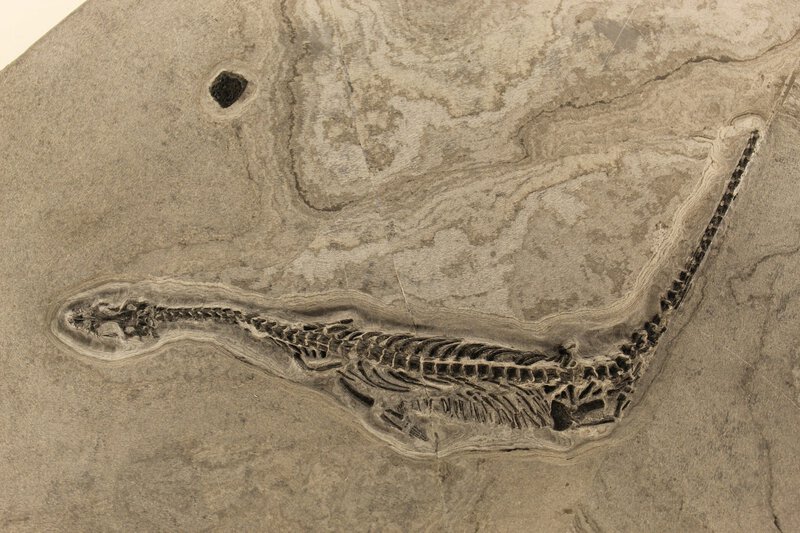
To appreciate how extraordinary this discovery is, consider what normally happens to an animal after death. Bacteria and chemical breakdown typically destroy soft organs — the stomach, liver, intestines — within days to weeks. Over geological timescales measured in hundreds of millions of years, the odds of those structures surviving in any recognizable form become vanishingly small. Yet the Austronaga minuta specimen recovered from Yunnan preserves not just bone but identifiable soft-tissue structures corresponding to the major organs of the digestive and visceral cavity.
Most of what paleontologists know about the internal anatomy of early marine reptiles has been reconstructed through careful comparison with living relatives and through skeletal geometry — essentially, educated inference. This specimen changes that equation. It provides direct anatomical data where before there was largely speculation, making it one of the most scientifically significant marine reptile fossils to emerge in recent years.
Meet Austronaga minuta: The Animal Behind the Fossil
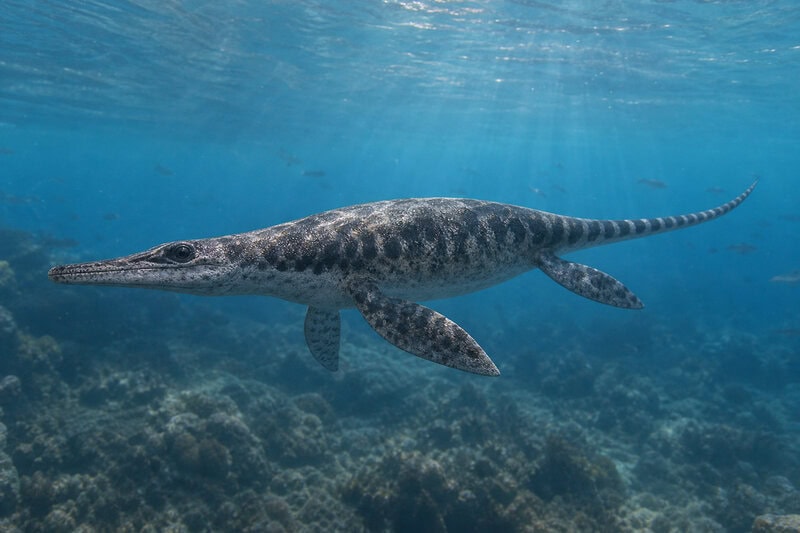
Austronaga minuta was a small, predatory marine reptile that swam in the shallow seas covering what is now southwestern China during the Triassic period. The Triassic, which lasted from roughly 252 to 201 million years ago, was a pivotal chapter in Earth’s history. It followed the end-Permian mass extinction — the largest extinction event ever recorded, which eliminated an estimated 90 to 96 percent of all marine species — and the oceans were being repopulated by entirely new lineages of animals. Every marine reptile lineage from this interval carries outsized scientific importance precisely because the ecological slate had been largely wiped clean.
The term “marine reptile” requires a brief clarification. Unlike fish, which never left the sea, or marine mammals like whales, which descended from relatively recent land ancestors, Triassic marine reptiles were air-breathing vertebrates whose evolutionary lineage had transitioned from land to water. That transition — reshaping limbs into flippers, compressing the body for streamlined swimming, and reorganizing internal organ systems for an aquatic lifestyle — is one of the most dramatic evolutionary shifts in the vertebrate record. Understanding how it happened, and how quickly, is a central question in paleontology, and it is exactly the kind of question that a fossil like Austronaga minuta begins to answer.
Yunnan province has become one of the world’s most productive sites for Triassic marine fossil discoveries. The region preserves sedimentary rock laid down in ancient shallow-marine environments, and its geological conditions have proven repeatedly favorable for exceptional fossil preservation. The emergence of Austronaga minuta from this location is consistent with Yunnan’s established status as a window into Triassic ocean life.
What Was Actually Found: The Anatomy of a Remarkable Fossil
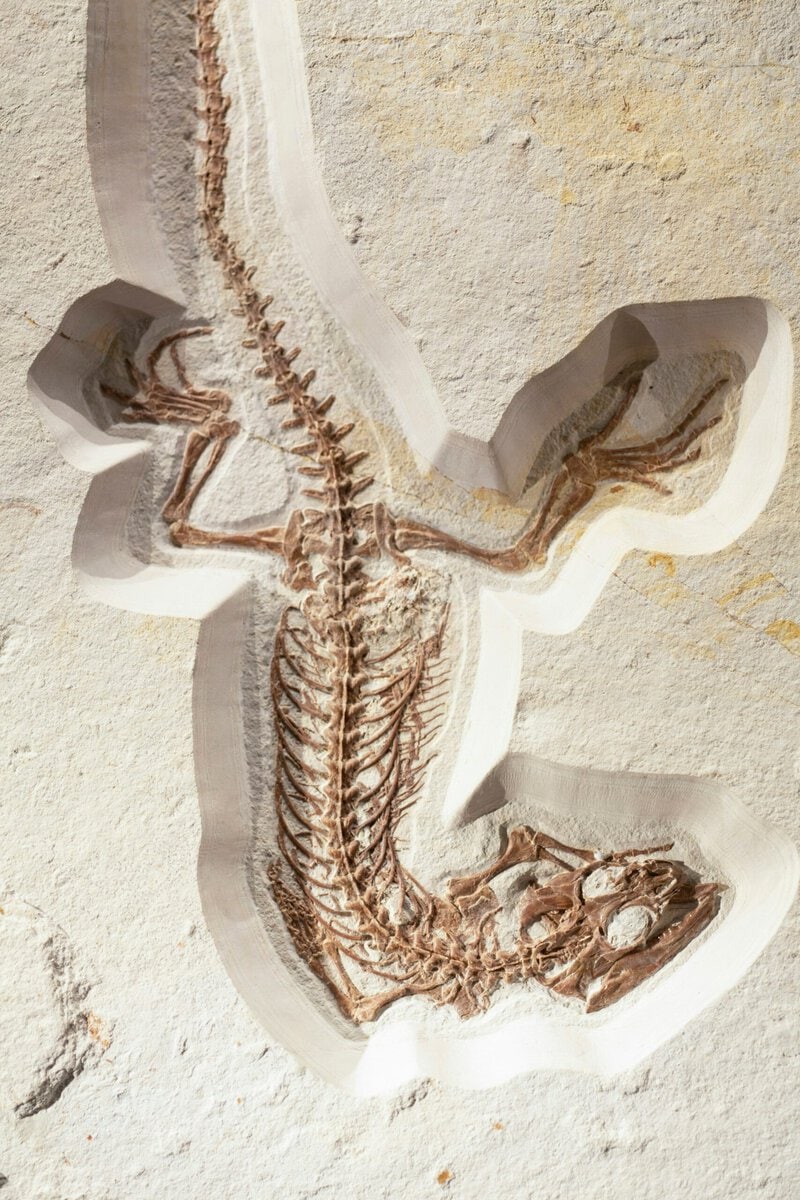
The Austronaga minuta specimen includes nearly the complete skeleton alongside clearly identifiable soft-tissue structures: the stomach, liver, and intestines. These organs did not survive as fleshy tissue — nothing of that kind persists across hundreds of millions of years — but rather as preserved impressions or mineralized films within the rock matrix, retaining enough form and positional information for researchers to identify them with confidence.
Soft-tissue fossilization of this quality requires an unusual convergence of circumstances. Rapid burial after death is essential, because it limits exposure of the carcass to scavenging and to the oxygen-rich conditions that accelerate bacterial decay. Low-oxygen sediment chemistry then slows decomposition further. In particularly favorable cases, minerals in the surrounding sediment infiltrate the decaying tissue before it fully breaks down, effectively casting the organ’s shape in stone. The precise geochemical environment responsible for the preservation seen in Austronaga minuta is part of ongoing analysis by the describing researchers.
It is important to distinguish clearly between what is directly visible in the fossil and what has been inferred. The positions and gross shapes of the major visceral organs appear to be directly observable in this specimen. Finer details of organ microstructure or cellular composition, if examined at all, would require additional analytical techniques and carry greater interpretive uncertainty. Responsible reading of this find means holding that distinction carefully.
What the Organs Reveal About How This Animal Lived
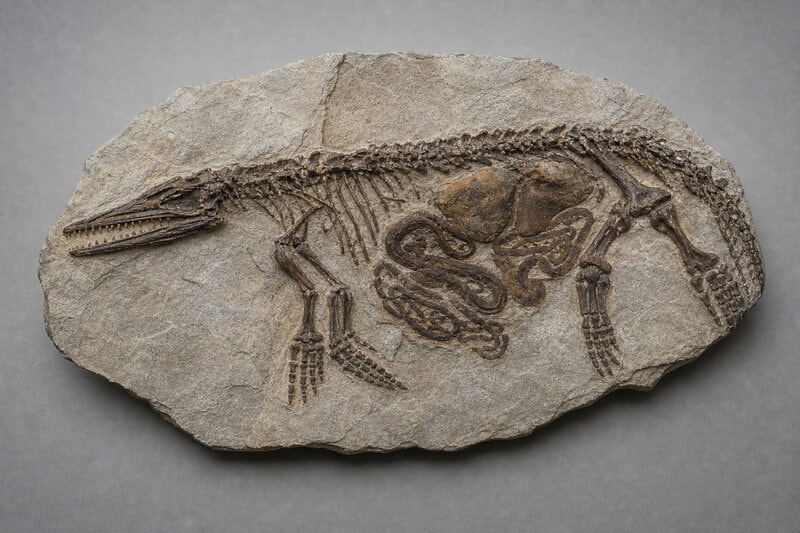
The preserved stomach and intestines of Austronaga minuta offer clues about the animal’s diet and digestive strategy. The proportions and arrangement of the gut in predatory marine reptiles tend to reflect what they ate — carnivores typically show a relatively compact, high-efficiency digestive tract suited to processing protein-rich prey, rather than the longer, more complex intestines associated with plant material or filter feeding. Whether the gut proportions of Austronaga minuta align with those expectations, and how they compare to other Triassic marine reptiles, is among the questions researchers are now positioned to address directly rather than by analogy.
The liver, where identifiable, can provide information about an animal’s metabolic strategy. In living reptiles, the liver’s size and position relative to other organs reflect how the animal processes energy, and in some aquatic species, organ arrangement also relates to buoyancy management. Whether the liver preserved in this fossil supports or challenges existing hypotheses about early marine reptile physiology is a question the researchers have begun to address, though firm conclusions in this area should be treated as emerging rather than settled science.
Perhaps most broadly, the arrangement of organs as a whole provides the first direct look at body-cavity organization in an early marine reptile of this age. Previously, scientists estimated how organs were packed inside these animals primarily from the dimensions of the rib cage and other skeletal indicators. A fossil that shows actual organ positions offers a meaningful correction — or confirmation — to those estimates.
Why This Changes Our Understanding of Marine Reptile Evolution
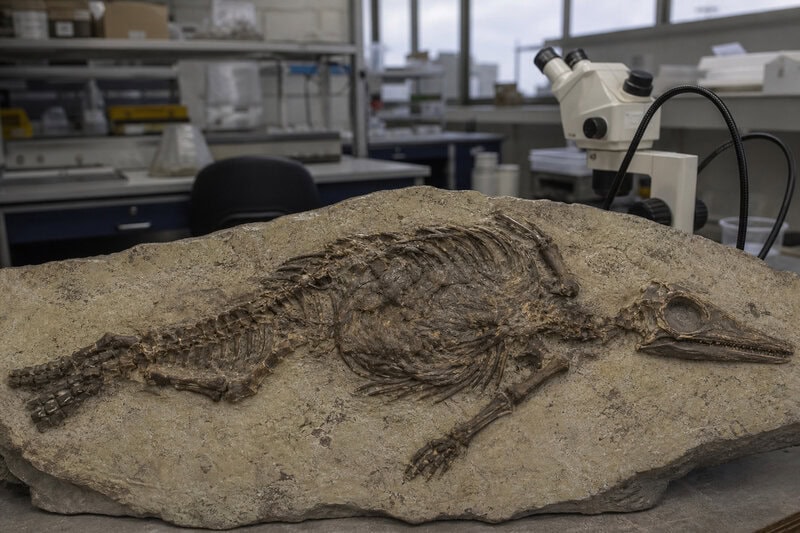
The central scientific debate surrounding early marine reptiles concerns how rapidly and completely the internal anatomy of ancestral land reptiles was reorganized for aquatic life. Changes to the limbs and overall body shape are legible from skeletons. Changes to organ systems — the digestive tract, the respiratory apparatus, the cardiovascular layout — are almost entirely invisible in the bone-only fossil record. Specimens like Austronaga minuta are therefore not merely impressive curiosities; they are potential turning points in the ability of science to reconstruct one of evolution’s most dramatic transitions.
Until fossils of this quality became available, researchers studying Triassic marine reptile soft tissue were largely confined to comparisons with rare, far younger specimens — including certain exceptionally preserved ichthyosaurs from Jurassic deposits — and with the living relatives of these extinct animals. Both approaches involve significant assumptions. A 245-million-year-old specimen with intact organs collapses at least some of that inferential gap.
One interpretation the authors suggest — and it should be read as a working hypothesis rather than a consensus conclusion — is that the organ layout of Austronaga minuta can be compared against those of later, more anatomically derived marine reptiles such as ichthyosaurs and plesiosaurs, potentially illuminating how body-cavity organization shifted as these lineages became increasingly committed to ocean life. Whether the digestive or visceral arrangement of Austronaga minuta more closely resembles early transitional forms or already anticipates the derived anatomy of its successors is among the genuinely open questions this fossil raises.
The Science of Reading a 245-Million-Year-Old Body
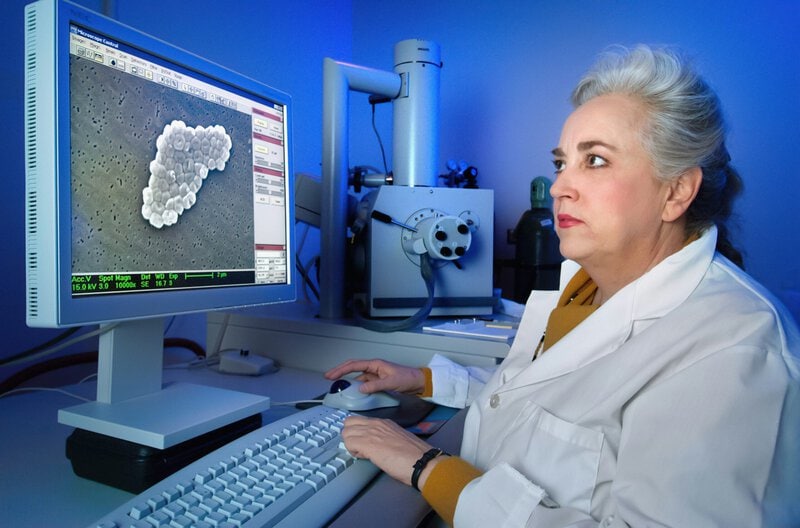
Identifying fossilized soft tissue requires more than visual inspection. Researchers working on specimens like this one typically employ a suite of analytical techniques. Scanning electron microscopy (SEM) allows scientists to examine the surface texture and structural detail of preserved material at very high magnification. Energy-dispersive X-ray spectroscopy (EDS or EDX) identifies the chemical elements present in a sample, helping distinguish genuine fossilized biological material — which retains characteristic chemical signatures — from surrounding sediment or secondary mineral infill. Synchrotron imaging, which uses intense X-ray beams generated at large-scale physics facilities, can produce three-dimensional maps of internal fossil structures without physically cutting or damaging the specimen.
Distinguishing genuine fossilized organ material from artifacts is a critical step. Sediment can intrude into body cavities after death and mimic the outlines of organs. Post-mortem displacement can move structures far from their original positions. Researchers must rule out these possibilities through chemical and structural analysis before claiming that what they see represents actual preserved anatomy. The field of soft-tissue paleontology has grown considerably more rigorous over the past two decades, partly in response to high-profile cases in which initial claims of exceptional preservation were later revised upon closer examination. That increased rigor benefits the entire scientific community and gives well-supported claims like those surrounding Austronaga minuta greater credibility.
Open Questions and the Broader Significance of This Find
To summarize what is currently known: the Austronaga minuta fossil from Yunnan is among the oldest marine reptile specimens in the world with directly identifiable internal organs, preserving the stomach, liver, and intestines alongside nearly the complete skeleton in a state researchers have described as exquisitely preserved. It provides anatomical data that no bone-only fossil can supply, and it does so at a point in evolutionary history — 245 million years ago, in the wake of the greatest mass extinction on record — when understanding the diversity and biology of marine reptiles carries particular scientific weight.
The find raises several open questions worth watching. Researchers will want to know whether other specimens from the same Yunnan site show comparable soft-tissue preservation, and whether a larger sample could reveal variation in organ anatomy across individuals or related species. A broader dataset of Triassic marine reptile organ fossils would transform what is currently a single remarkable data point into a pattern — and patterns are what allow science to draw firm conclusions about evolution.
There is also a methodological implication for paleontology more broadly. Finds like this demonstrate that soft tissues can survive, under the right depositional conditions, for hundreds of millions of years. That fact encourages more systematic and deliberate searching for soft-tissue preservation in other fossil-rich formations around the world, particularly those that share the sedimentary characteristics of the productive Yunnan deposits. The tools to find and authenticate such preservation now exist; the question is where else exceptional chemistry and circumstance conspired to preserve what time almost always destroys.
Continued analysis of Austronaga minuta, and of the broader Yunnan Triassic record, is likely to refine the current picture considerably. What this fossil already makes clear — without overstatement — is that the return of vertebrates to the sea was not only a transformation of fins into flippers, but a wholesale reorganization of the animal body. Specimens that preserve direct evidence of that reorganization are, in the truest sense, irreplaceable.