
Somewhere beneath the North Sea, a rusting network of steel pipes and platforms holds a secret that climate economists are only beginning to price: retiring the world’s fossil fuel infrastructure could unlock between $4 trillion and $11.69 trillion in avoided societal costs by 2050 — not by building anything new, but by strategically salvaging what already exists. That single finding, drawn from peer-reviewed research, reframes the energy transition from a story of pure new spending into something more surprising: a story of industrial inheritance.
The Trillion-Dollar Question Hiding in Plain Sight

For decades, climate economics has centered on a straightforward narrative — decarbonizing the global economy requires enormous capital investment in solar panels, wind turbines, transmission lines, and batteries. That is true. What has received far less attention is the mirror image of that challenge: the world must simultaneously decommission one of the largest concentrations of industrial infrastructure ever assembled, and the decision of what to do with that infrastructure will shape both the cost and the carbon footprint of everything built to replace it.
According to research published in Nature Communications, recycling the steel and copper embedded in oil wells, gas pipelines, offshore rigs, and refineries could avoid up to 1.95 gigatons of CO₂-equivalent emissions and generate up to $11.69 trillion in avoided externality costs — that is, costs borne by society at large rather than by the industries responsible for them, including healthcare burdens from air pollution and damages from a warming climate. Even the lower bound of that estimate, approximately $4 trillion, represents a sum large enough to meaningfully alter the economics of the clean energy buildout.
This is not speculative futurism. The timelines are concrete, running through the 2030s and 2040s, and the underlying mechanisms are grounded in established industrial chemistry and climate economics. The central tension is equally concrete: the infrastructure of the fossil fuel era is approaching retirement on a predictable schedule, while the clean energy era is simultaneously hungry for the very metals locked inside it. Whether those two processes feed each other — or proceed in costly isolation — is now an active question in materials science, energy economics, and industrial policy.
What ‘Recycling Fossil Fuel Infrastructure’ Actually Means
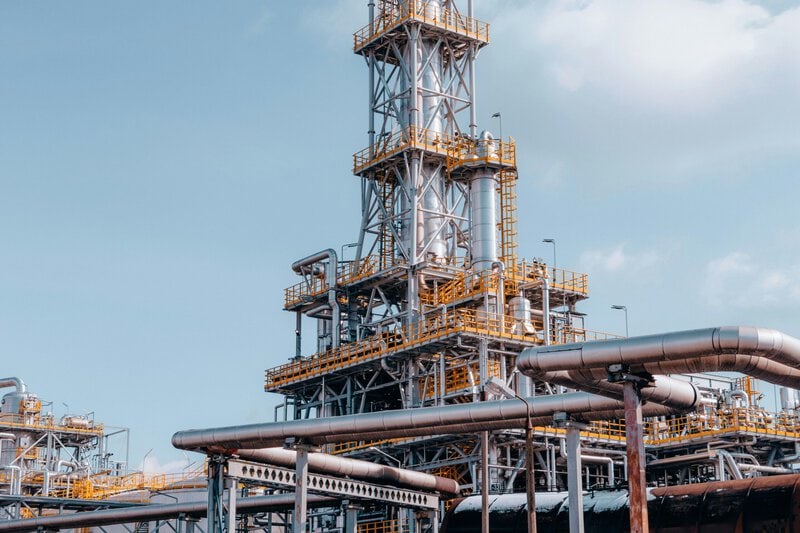
The term recycling fossil fuel infrastructure refers to the systematic dismantling of retired oil wells, gas pipelines, offshore platforms, and petroleum refineries, followed by the recovery and reuse of their primary raw materials. The dominant materials in question are high-grade steel — used in everything from pipeline walls to rig superstructures — and copper, which runs through electrical systems across the entire fossil fuel supply chain.
The scale of the asset base is difficult to overstate. The global fossil fuel system represents one of the largest accumulations of industrial metal ever fabricated, and as energy demand shifts away from hydrocarbons, those assets are moving toward retirement on a timeline that, in many regions, is already legally mandated or economically inevitable.
Researchers and institutions studying this space distinguish between two broad pathways. The first is material recycling: physically dismantling infrastructure, melting down the recovered metals, and feeding them into the supply chains for clean energy manufacturing. The second is infrastructure repurposing: converting existing pipelines or facilities to serve new functions, most notably transporting hydrogen or capturing and storing carbon dioxide. Both pathways are active areas of research and pilot projects globally, as reporting from TechXplore on the underlying research makes clear.
The material recycling pathway is where the quantified science of cost savings is most developed, and it is the primary focus of the large-scale economic estimates discussed here. The infrastructure repurposing pathway — particularly the conversion of gas pipelines to carry hydrogen — is a compelling and rapidly evolving adjacent field, but one where the engineering verdict is not yet fully established.
Enough Steel and Copper to Help Build a Green Grid
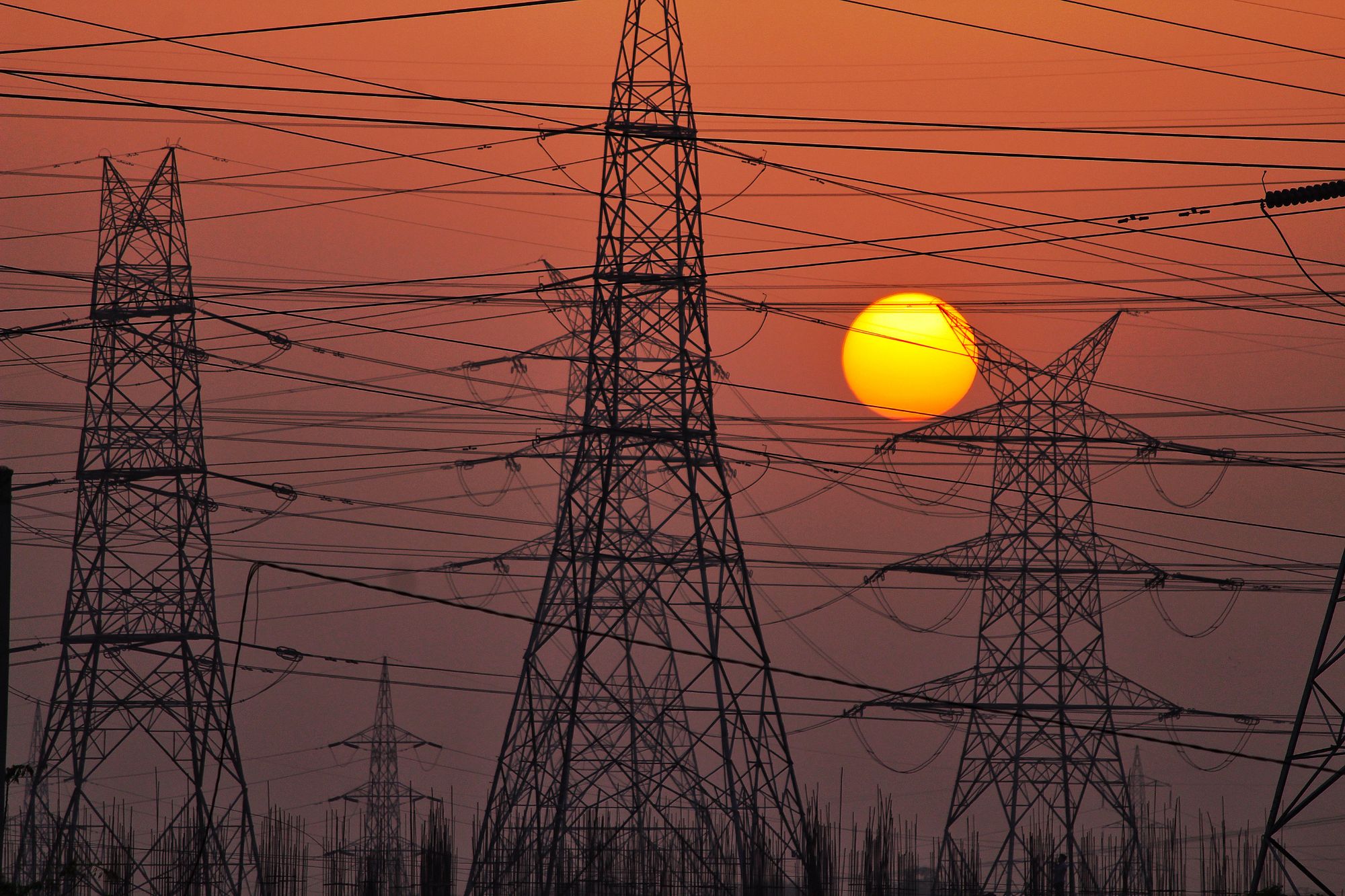
One of the more striking physical findings from recent research is a question of scale and timing: recycling retired fossil fuel infrastructure could supply all of the steel and approximately one-third of the copper required for the global energy transition. At a moment when supply chain analysts and clean energy manufacturers are raising serious concerns about metal scarcity, that is not a marginal supplement — it is a first-order materials opportunity.
The demand side explains why. Large-scale construction of solar photovoltaic installations and wind turbines is extraordinarily metal-intensive. A single offshore wind turbine can require hundreds of tonnes of steel in its tower and foundation alone, and copper is essential for the electrical wiring running through every clean energy technology, from rooftop solar inverters to utility-scale transmission infrastructure. The International Energy Agency has repeatedly flagged critical mineral supply as a potential bottleneck for the pace of decarbonization.
What makes the supply-side opportunity particularly significant is timing. The curves of retiring fossil fuel assets and rising clean energy metal demand overlap substantially through the 2030s and 2040s, creating what some researchers describe as a potential “material handoff” window — a period during which the decommissioning of old infrastructure and the construction of new infrastructure could, in principle, be synchronized to maximize material reuse.
That said, this remains an emerging finding rather than established consensus. As Anthropocene Magazine’s coverage of related research notes, the precise tonnage available varies significantly by region and decommissioning schedule. The supply potential is real, but it is logistically uneven and dependent on coordinated policy action to materialize at scale.
Gigatons and Dollars: How Scientists Calculated the Savings

The emissions arithmetic behind the financial estimates is worth understanding in plain terms, because the mechanism is both well-established and underappreciated. Smelting virgin steel from iron ore and refining raw copper from mined rock are among the most carbon-intensive industrial processes on earth. Recycling secondary metals — that is, metals recovered from existing structures — requires dramatically less energy and produces a fraction of the associated greenhouse gas emissions. This is not a theoretical advantage; it is a well-documented industrial reality reflected in life-cycle assessments across the steel and copper sectors.
When researchers apply that emissions differential to the full scale of fossil fuel infrastructure expected to retire by 2050, the cumulative avoided emissions reach up to 1.95 gigatons of CO₂-equivalent. To place that in context, 1.95 gigatons is roughly equivalent to the annual emissions of several hundred million passenger vehicles — a substantial and verifiable climate contribution achievable without any new technology, simply by applying existing industrial recycling processes more systematically and at greater coordinated speed.
The financial figure — up to $11.69 trillion in externality cost savings — is derived by applying established social cost-of-carbon frameworks to those avoided emissions. The social cost of carbon is an economic concept that attempts to quantify, in dollar terms, the long-term damage caused by each additional tonne of CO₂ released into the atmosphere, including impacts on agriculture, human health, extreme weather frequency, and sea-level rise. Multiplying avoided emissions by that figure yields the societal savings estimate.
An important caveat applies here. Externality cost estimates carry significant uncertainty, and the spread between $4 trillion and $11.69 trillion directly reflects disagreement among economists about the appropriate discount rate and the correct social cost of carbon value to apply. The upper bound represents an optimistic scenario under high-SCC assumptions, not a guaranteed outcome. The lower bound, however, remains a figure large enough to merit serious policy attention in its own right — and it is the conservative end that the research team emphasizes as the more defensible planning figure.
Pipelines, Hydrogen, and the Repurposing Frontier
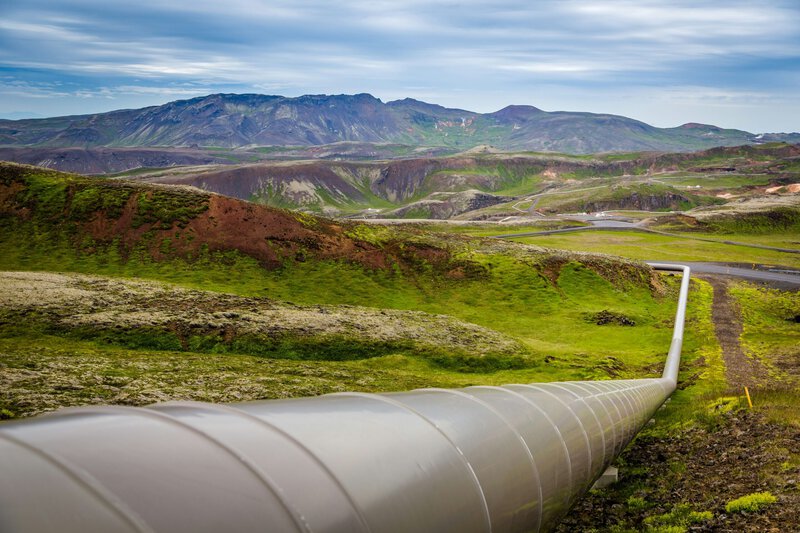
Beyond melting down metals, a separate and rapidly evolving field asks whether existing gas pipeline networks can be directly converted to transport hydrogen — the energy-dense gas increasingly seen as a potential backbone of a decarbonized industrial economy, particularly for sectors where direct electrification is difficult, such as steelmaking, shipping, and heavy industry.
The engineering case for repurposing pipelines for hydrogen is partly established and partly contested. Hydrogen molecules are significantly smaller and more diffusive than methane, the primary component of natural gas, which raises legitimate engineering concerns about embrittlement of certain steel alloys and the integrity of seals and fittings over time. These are not insurmountable problems — pilot projects in Europe and Australia are actively testing blend ratios and full-conversion scenarios — but they are real constraints that vary considerably depending on pipe age, steel grade, and operating pressure.
The economic logic for pursuing this pathway, where feasible, is powerful. Building new hydrogen pipeline networks from scratch would cost hundreds of billions of dollars globally. Reusing even a meaningful fraction of the world’s existing gas pipeline infrastructure could dramatically compress that capital requirement, accelerating the timeline for a hydrogen economy at lower cost.
The International Energy Agency and independent academic researchers have, however, expressed caution about overstating what fraction of existing pipelines can be converted without prohibitive retrofitting expenditures. This remains an area where the science is genuinely promising but where engineering and economic verdicts continue to be refined through active research and demonstration projects. Policy decisions made in the next few years — about which pipelines to retire outright and which to assess for conversion — will partly determine whether this potential is captured or foreclosed.
Why This Isn’t Happening at Scale — and What Would Change That
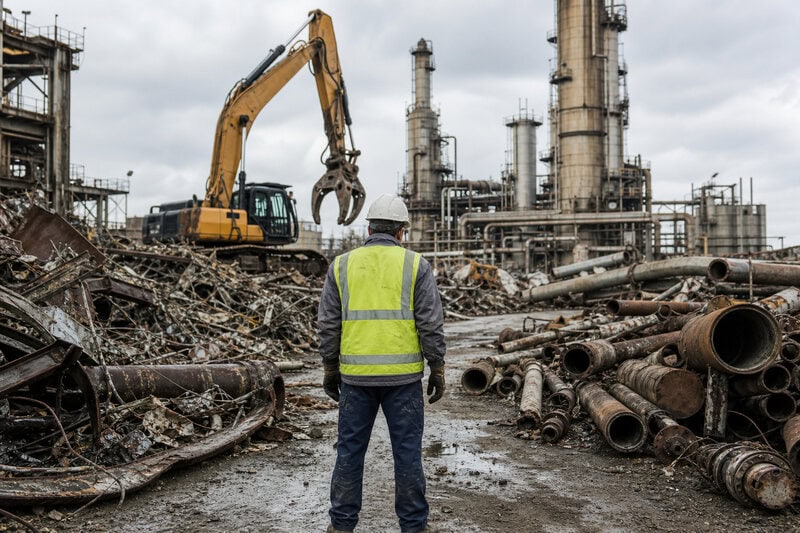
The primary barrier to capturing these savings is not technological. It is economic and regulatory. Under current frameworks in most jurisdictions, the costs of decommissioning fossil fuel infrastructure are borne by the operator, while the value of recovered materials flows to whoever performs the recycling and remanufacturing. That misalignment of incentives means that abandonment — simply walking away from an asset — is frequently more financially rational for an operator than investing in structured salvage, particularly for offshore infrastructure where decommissioning logistics are complex and expensive.
Several policy mechanisms could close this gap. These include mandated decommissioning funds with embedded recycling requirements, carbon credits for avoided emissions from secondary metal production, and international coordination on infrastructure retirement timelines so that salvaged materials enter clean energy supply chains at the moment of maximum demand. Academic groups studying circular economy transitions in the energy sector have argued that embedding recycling obligations directly into decommissioning regulation is among the highest-leverage interventions available to policymakers — one that does not require new public spending so much as clearer rules about who bears responsibility for legacy assets.
A compounding logistical challenge is geographic mismatch. The largest concentrations of retiring fossil fuel infrastructure are found in the North Sea, the Gulf of Mexico, and parts of the Middle East and Central Asia. The fastest-growing demand for clean energy metals, meanwhile, is in Asia — particularly in China, India, and Southeast Asia, where renewable energy deployment is accelerating most rapidly. For the material handoff to function efficiently, logistics infrastructure and international trade policy must be aligned in ways that do not currently exist at adequate scale. This is not merely a technical problem; it is a diplomatic and institutional one.
The Bottom Line: A Circular Economy for the Energy Transition
The core insight emerging from this body of research is both elegant and underappreciated: the fossil fuel era left behind an enormous industrial inheritance, and humanity’s choice of whether to abandon, recycle, or repurpose it will materially shape both the financial cost and the carbon footprint of the clean energy era that follows.
Avoiding up to 1.95 gigatons of CO₂-equivalent emissions through secondary metal production is a mechanism-grounded finding, not a projection contingent on breakthrough technology. It depends on applying industrial processes that already exist — metal recycling and remanufacturing — at greater coordinated scale and speed, linked to the retirement of fossil fuel assets that are already scheduled to come offline on known timelines.
The range of $4 trillion to $11.69 trillion in potential societal savings is wide, and intellectual honesty requires acknowledging that uncertainty rather than defaulting to the most dramatic number. But even the conservative end of that range represents a transformative sum — large enough, if captured through deliberate policy, to reduce the effective cost of the clean energy buildout while simultaneously lowering the carbon intensity of the materials it depends on.
The central conclusion for policymakers, investors, and the public is pointed: the infrastructure of the past is not merely a liability to be managed and forgotten. Treated strategically, it is potentially one of the most valuable material inputs available to a cleaner future. Whether the institutional coordination, regulatory frameworks, and economic incentives to treat it that way materialize before the retirement wave peaks is now one of the more consequential — and underreported — decisions of the energy transition. The window is defined by physics and by decommissioning schedules already in motion. It will not remain open indefinitely.