
On August 5, 1969, Neil Armstrong celebrated his 39th birthday inside a sealed government laboratory in Houston, separated from his family by a pane of glass — not because he had done anything wrong, but because no one on Earth could guarantee the Moon was sterile. The most famous explorer alive was, by federal law, a potential vector of alien plague.
The Fear Was Real: What NASA Thought the Moon Might Carry
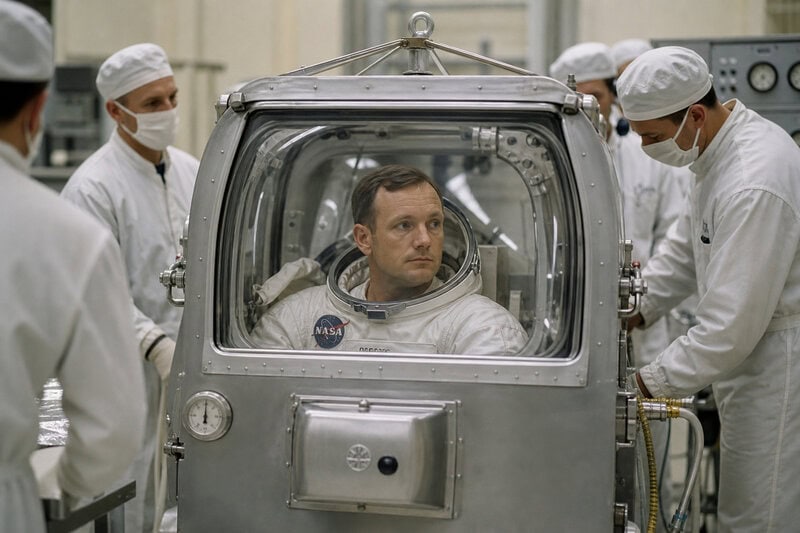
The concern had a name inside NASA’s planning documents from the mid-1960s: back contamination. The worry was straightforward, if unsettling — lunar microorganisms, should they exist, could trigger catastrophic biodegradation or novel illness in Earth’s biosphere, which would have no evolved immunity against them. Scientists informally called the hypothetical condition “lunar fever,” and while the probability of life on the Moon was judged to be low, NASA’s advisors argued forcefully that “low probability” was not the same as “zero.”
The scientific consensus of the era was agnostic rather than dismissive. The Moon’s lack of liquid water and a protective atmosphere made biology seem unlikely, but no robotic sample-return mission had yet settled the question definitively. Bacteriologists and ecologists consulted by NASA warned that introducing even a single self-replicating alien organism into Earth’s ecosystem posed an asymmetric risk: the downside was potentially civilizational, making even expensive, imperfect precautions rational. The same logic that isolated researchers working on dangerous pathogens was now being scaled up to a planetary threat with no known treatment protocol.
According to Space.com’s reporting on the Apollo 11 post-mission protocols, NASA ultimately decided that a three-week quarantine for the crew was the minimum defensible standard — a decision grounded as much in the limits of contemporary microbiology as in any specific evidence of lunar life.
How NASA Built a Quarantine From Scratch
The architecture of the quarantine did not arrive fully formed. NASA initially believed that a standard clean room — the type routinely used to keep spacecraft sterile before launch — would be sufficient to handle returning lunar material. That assumption was revised substantially as biological risk assessments deepened through the mid-1960s, and the final protocol was far more elaborate than anyone had originally envisioned.
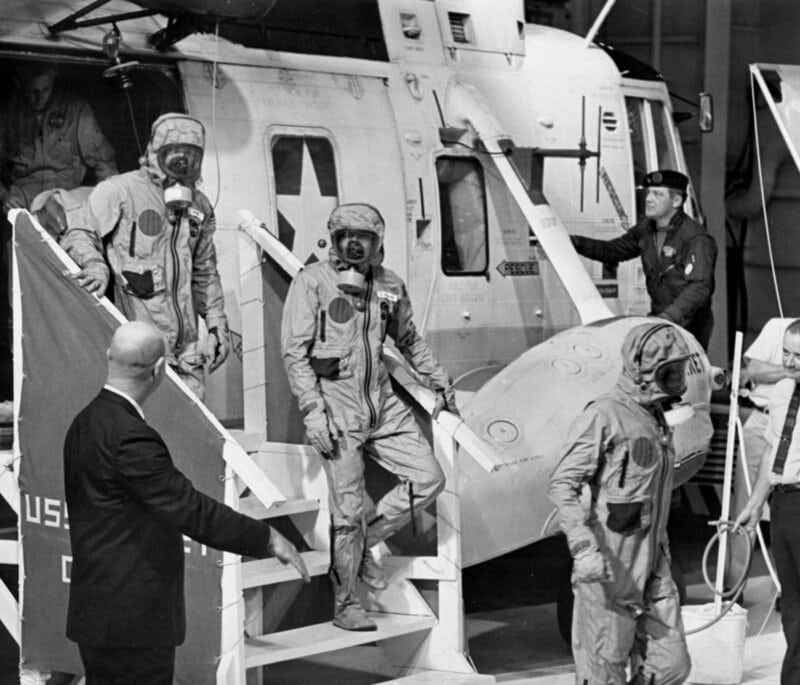
The first stage of containment began not on Earth but in the Pacific Ocean. Within minutes of the command module’s hatch opening after splashdown on July 24, 1969, the crew was required to don biological isolation garments (BIGs) — rubberized, close-fitting suits designed to prevent any exchange of air between the astronauts and the outside environment before a controlled barrier could be established. The Space Center Houston collection preserves Michael Collins’s Apollo 11 isolation garment as a tangible record of what that first line of defense looked like: unglamorous, functional, and improvised at the edge of the possible.
From the recovery ship USS Hornet, the astronauts moved through a sequential series of sealed environments — a quarantine van aboard the ship, then a pressurized aircraft — each functioning as an airlock stage designed to ensure that no hypothetical microbe ever reached open atmosphere. The final and longest stage of containment was the Lunar Receiving Laboratory (LRL) at NASA’s Manned Spacecraft Center in Houston, a purpose-built facility equipped with filtered air, negative-pressure rooms, and biological pass-through chambers. It was simultaneously a quarantine ward, a medical clinic, and the world’s most unusual geology laboratory.
Crucially, the 21-day quarantine clock did not start at splashdown. NASA’s own historical records confirm that the quarantine period began on July 21, 1969 — the moment the crew first made contact with lunar material on the Moon’s surface, approximately 240,000 miles from Earth. By the time Armstrong, Collins, and Aldrin arrived at the LRL, roughly 14 days of their mandated isolation period remained ahead of them.
Twenty-One Days Behind Glass
Life inside the LRL was not without its comforts, but it was unambiguously confined. The crew occupied a modified suite with sleeping quarters, a common room, and a medical bay. Interaction with physicians, technicians, and visiting family members was conducted through thick glass windows or via intercom; physical contact was strictly prohibited. The three men who had traveled farther from Earth than any human beings in history were now forbidden from shaking hands with their own wives.
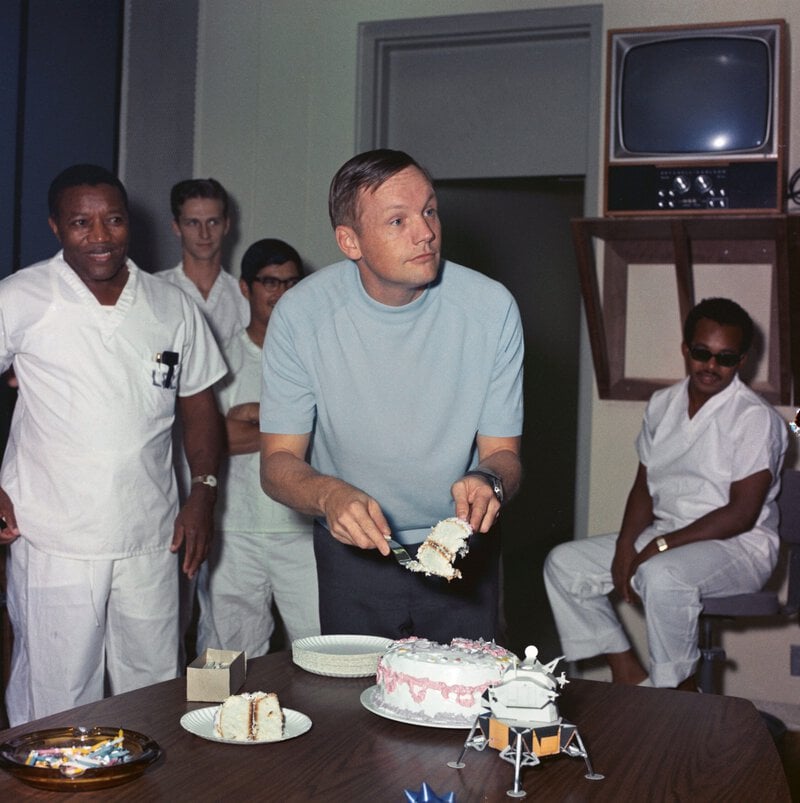
Armstrong’s 39th birthday on August 5 fell squarely within this period. While ticker-tape parades were organized in cities across the country and the world celebrated the mission’s success at public events, Armstrong marked the occasion inside the LRL — by all contemporary accounts without complaint. NASA’s post-mission debriefs described the crew’s conduct during the quarantine as cooperative and professional throughout.
In the adjacent sealed chambers of the same building, the lunar rocks the crew had returned were being processed and catalogued by scientists working through glove-box barriers — physical enclosures that allowed manipulation of samples without direct contact. The LRL’s dual function, as covered in Space Daily’s account of the quarantine’s history, made it one of the most unusual scientific institutions ever assembled: a place where the most celebrated humans alive and the most exotic geology samples ever collected were equally subject to federal containment rules.
The Armstrong Air and Space Museum records that on August 10, 1969, Armstrong, Collins, and Aldrin formally concluded their quarantine at the Lunar Receiving Laboratory — 21 days after first contact with the lunar surface, and more than two weeks after the world had already begun treating them as conquering heroes.
What the Moon Rocks Actually Revealed
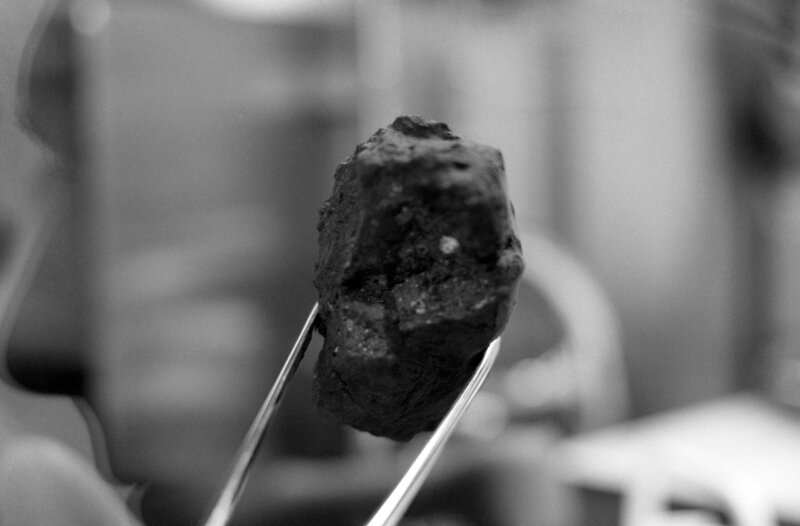
The biological testing of Apollo 11 lunar samples, conducted by research teams at the LRL under strict containment conditions, found no evidence of living organisms. Lunar material showed no organic compounds of biological origin, no capacity to support microbial growth, and no harmful effects when introduced to Earth bacteria, plants, and animals including mice and quail. The Moon, the data strongly suggested, was biologically inert.
That finding was reinforced by every subsequent Apollo mission. As scientific confidence in lunar sterility accumulated, NASA progressively relaxed the quarantine protocol: Apollo missions 12 through 14 maintained some version of crew isolation, while Apollo 15 through 17 abandoned it entirely. The decision to reduce precautions was grounded in accumulated evidence rather than convenience — a distinction worth preserving when evaluating the original protocol’s logic.
The quarantine was not without its acknowledged design flaws, however. NASA itself noted that the biological isolation garments worn at splashdown were not independently certified as fully airtight, and that Pacific seawater — which contacted the exterior of the command module before the crew emerged — was never itself quarantined. As Fast Company’s analysis of the protocol’s limitations documents, the biological barrier had detectable gaps from the moment it was deployed. The quarantine was, in the language of modern biosafety, a best-available-technology solution rather than a certified containment system.
The Federal Law Nobody Remembers
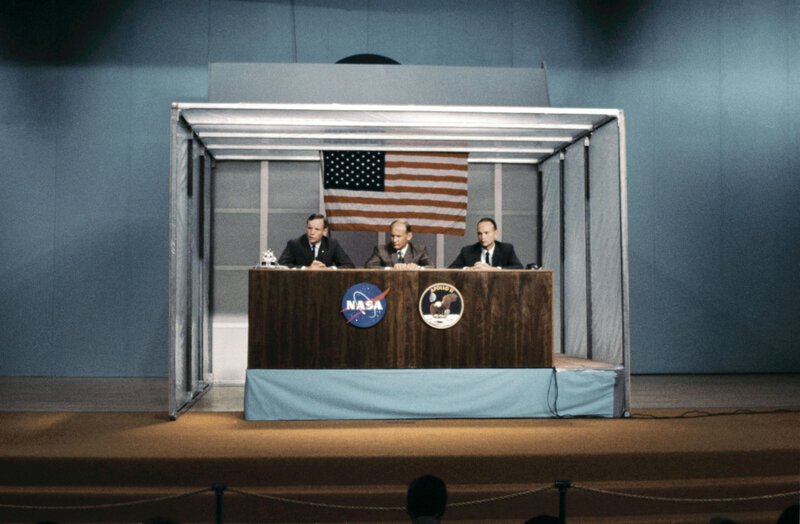
The quarantine was not merely a NASA policy preference. Armstrong, Collins, and Aldrin were confined under the Extra-Terrestrial Exposure Law, a genuine federal regulation that carried fines and the possibility of imprisonment for violations. The law applied not only to the astronauts but to anyone who came into uncontrolled contact with lunar material or with individuals who had been exposed to it — a legal architecture designed to give federal authorities the power to enforce containment even against unwilling subjects.
The Extra-Terrestrial Exposure Law remained on the books until 1977, when NASA formally removed it after concluding that accumulated evidence from six lunar landing missions supported a finding of lunar biological sterility. Its eight-year lifespan is a useful marker of how seriously the agency took the risk at the time, and how evidence-based the eventual relaxation of that concern actually was.
Why the Apollo Quarantine Still Shapes Space Science Today
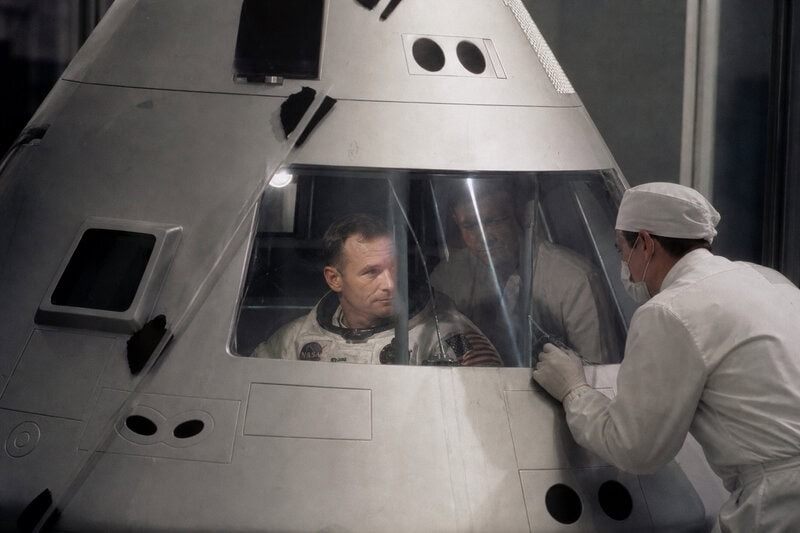
The Apollo 11 quarantine established the first operational framework for what NASA now formally calls backward planetary protection — the discipline of preventing sample-return missions from introducing extraterrestrial material into Earth’s biosphere without controlled study. Every subsequent sample-return mission, from Japanese asteroid capsules to the planned Mars Sample Return effort, has built on protocols whose conceptual foundations were laid in Houston in the summer of 1969.
The key distinction scientists draw between the Moon and Mars is geological history. Mars has ancient evidence of liquid water, a documented record of complex organic chemistry, and subsurface environments where microbial life remains a live scientific hypothesis. The risk calculus for Martian samples is therefore meaningfully different from the one NASA faced in 1969. Current planning by NASA and the European Space Agency, governed by updated guidelines from COSPAR — the Committee on Space Research, the international body that sets planetary protection standards — explicitly concludes that any Mars sample-return protocol would need to be substantially more rigorous than Apollo’s.
The Apollo 11 episode is, in the language of risk scholarship, a case study in asymmetric precaution: when the worst-case scenario is catastrophic and irreversible, precautionary costs that seem disproportionate in hindsight may still represent rational policy at the moment of decision. The Moon turned out to be sterile. The quarantine turned out to have gaps. And yet the framework it created — the idea that returning samples from another world requires a legally enforced, purpose-built biological barrier — has proven more durable than almost any other institutional legacy of the Apollo program.
Neil Armstrong pressed his hand against a glass window on his 39th birthday because the scientists advising his government could not rule out the possibility that he carried something the Earth had never encountered. That image is not a historical curiosity. For the engineers and biologists now designing the containment facilities that will receive the first samples from Mars, it is a working template — and a reminder that the most consequential part of a mission to another world may be what happens after the spacecraft comes home.