
Hundreds of faint, ruby-colored specks have appeared in the James Webb Space Telescope’s deep-field images of the early universe — and then, as if following some hidden cosmic clock, they collectively vanish before the universe reaches roughly two billion years of age. Their disappearance is not a calibration error or a data artifact; multiple independent research teams have confirmed that these objects, nicknamed Little Red Dots, are real, intensely luminous, and genuinely absent from later epochs of cosmic history. The mystery of where they go — and what they are in the first place — has become one of the most disorienting puzzles the telescope has yet produced.
What Are Little Red Dots?
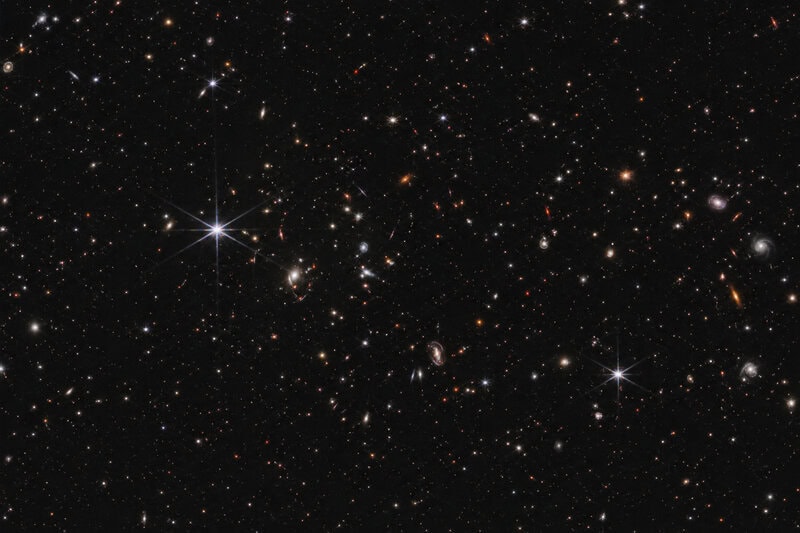
Little Red Dots are compact, extraordinarily luminous objects detected in Webb’s infrared deep-field surveys of the early universe. Their distinctive red color in Webb’s cameras results from one or both of two physical processes: dense dust absorbing shorter wavelengths of light, or extreme redshift — the stretching of light toward longer, redder wavelengths as the universe expands and light from distant sources travels across it. The higher an object’s redshift, the farther away it is, and the earlier in cosmic history astronomers are observing it. In the case of Little Red Dots, both dust and redshift appear to be at work simultaneously.
What made these objects immediately puzzling was a stark mismatch in scale. They are startlingly small on the sky — unresolved or barely resolved even by Webb’s powerful optics — yet they outshine galaxies many times their apparent size. Because no observatory before Webb was sensitive enough to detect objects this faint at these distances, Little Red Dots became a scientific controversy almost immediately after the telescope began science operations in 2022. CERN Courier’s overview of the Little Red Dots mystery documents how rapidly the objects moved from curiosity to genuine controversy within the astrophysics community.
Hundreds of candidates have now been catalogued across multiple Webb observing programs. Their sheer number rules out the possibility that they are rare flukes; whatever they are, they were a significant feature of the early universe’s landscape.
The Disappearing Act: When and How They Vanish
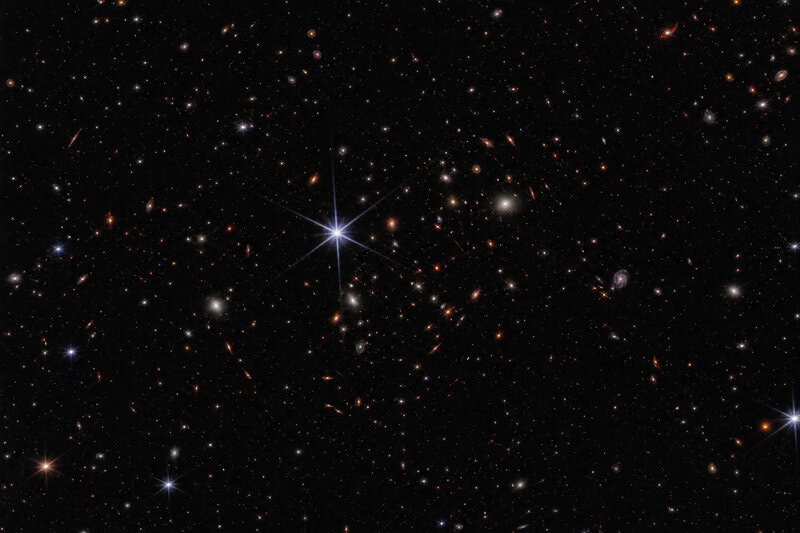
Little Red Dots appear abundantly in observations of the universe’s first one to two billion years after the Big Bang. Then, effectively, they stop. They are not seen evolving into a recognizable later population of galaxies or quasars — the bright, energetic cores of active galaxies powered by supermassive black holes. Their exit from the cosmic census is not a gradual dimming that could be explained by stars burning out on a normal timescale; the population drops out collectively, which rules out several straightforward astrophysical explanations.
Astronomers are left weighing two broad scenarios. Either the objects physically transform into something so different that they are no longer recognizable as the same class, or they become so thoroughly obscured or energetically quenched that even Webb cannot detect their descendants at later cosmic times. Neither option fits neatly into the current standard model of cosmic structure formation, known as Lambda-CDM — a framework describing how dark matter, dark energy, and ordinary matter interact to produce the large-scale structure of the universe. Lambda-CDM predicts a smoother, more traceable lineage for early luminous objects than Little Red Dots appear to follow. Space.com’s reporting on the disappearing Little Red Dots details how the vanishing population has sharpened the tension with existing theoretical frameworks.
Leading Hypothesis: Black Holes Cocooned in Gas and Dust
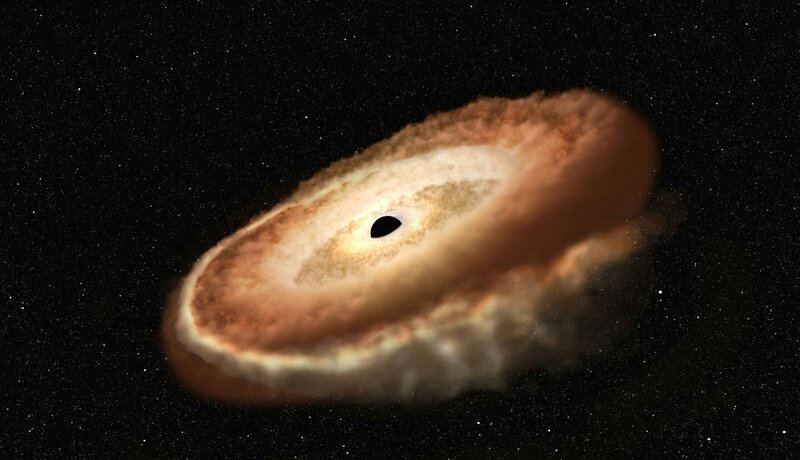
The most widely discussed explanation is that Little Red Dots are newborn black holes caught in a ferocious growth phase, enshrouded inside dense clouds of gas and dust. Under this model, the surrounding cocoon of material absorbs shorter-wavelength light and re-emits it at infrared wavelengths, producing the compact and intensely red signature Webb detects. The black hole at the center would be accreting — pulling in — enormous quantities of surrounding gas, generating extreme luminosity from a very small region of space.
The cocoon scenario also offers a plausible exit mechanism. Eventually, radiation pressure from the black hole itself — the outward push of its intense light — would disperse the surrounding gas and dust. Once the cocoon clears, the object would either reveal itself as a conventional quasar, no longer classifiable as a Little Red Dot, or fade below Webb’s detection threshold if the black hole has exhausted its immediate fuel supply. Some researchers have proposed that Little Red Dots mark the end stages of black-hole seed growth: the brief, brilliant phase during which the progenitors of today’s supermassive black holes accumulate most of their mass before settling into their host galaxies.
This hypothesis connects naturally to one of Webb’s broader, already-established surprises. Since coming online in 2022, the telescope has revealed mysteriously large black holes and galaxies that seemingly should not exist. Little Red Dots could represent the caught-in-the-act evidence of how those oversized black holes grew so large so quickly. The difficulty is that the black-hole masses inferred from Little Red Dots sometimes appear implausibly high given the objects’ estimated ages — a tension that has not been resolved and keeps the hypothesis contested rather than confirmed.
A Competing Idea: Stellar Nurseries Powered by Supermassive Stars
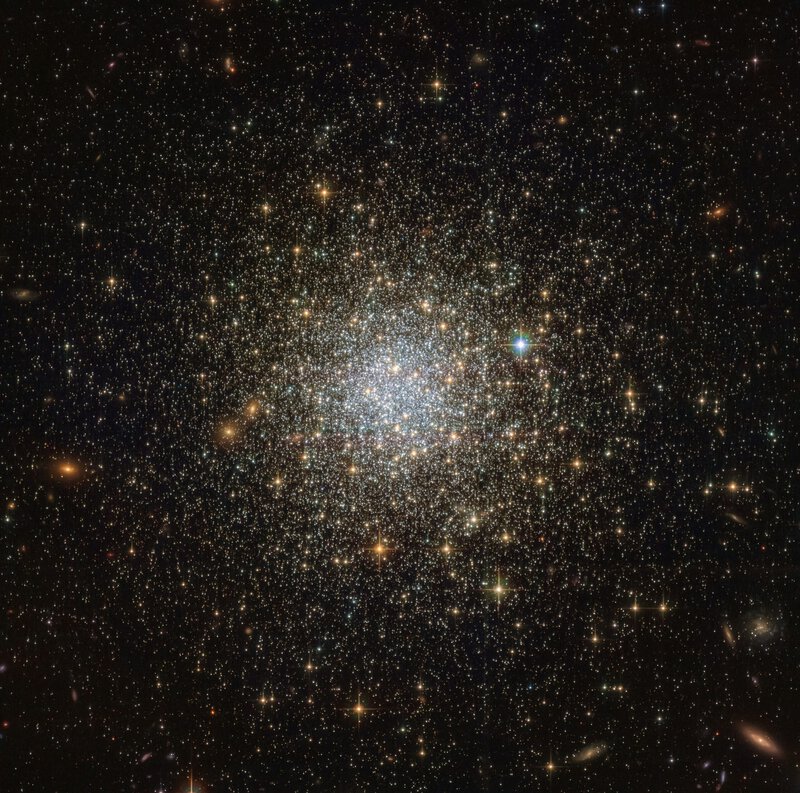
A second hypothesis, newer and less developed but not yet ruled out by available data, holds that Little Red Dots are not single exotic objects at all, but unresolved young globular clusters — dense, spherical collections of hundreds of thousands to millions of stars packed into a region far smaller than a typical galaxy. Under this model, the extreme luminosity would be powered by a short-lived population of supermassive stars, a theorized class of stellar objects potentially hundreds of times more massive than the Sun.
Supermassive stars, if they exist in the numbers this hypothesis requires, would burn through their nuclear fuel in just a few million years — an eyeblink on cosmological timescales. A population that ignites brilliantly and then burns out nearly simultaneously would naturally produce the kind of collective disappearance that astronomers observe. The objects would not transform or go into hiding; they would simply exhaust themselves. Science Daily’s coverage of recent findings on the phenomenon explores how this stellar explanation has gained traction among researchers seeking alternatives to the black-hole model.
If globular clusters are the answer, the implications extend well beyond explaining a single puzzling population. It would mean astronomers have been misclassifying early cosmic structures on a significant scale, and that apparent masses and luminosities attributed to individual compact objects may instead belong to entire unresolved stellar systems. This distinction matters profoundly for how scientists count and model the first generations of stars and galaxies. The globular-cluster hypothesis remains an emerging rather than consensus idea; confirming or disproving it will require detailed spectroscopy — the technique of splitting an object’s light into its component wavelengths to identify chemical fingerprints and gas motions — which Webb follow-up programs are being designed to deliver.
Could These Be a Completely New Type of Object?
Several researchers have raised a more radical possibility, still speculative and not yet supported by a consensus body of evidence: that Little Red Dots represent a class of astrophysical object with no clean precedent in existing models. The case for novelty rests on the combination of properties the objects display simultaneously — extreme compactness, high luminosity, dust-shrouded spectral signatures, and especially their collective disappearance on a defined timescale. No existing simulation of early-universe evolution fully reproduces all of these characteristics at once.
If this interpretation proves correct, it would require meaningful revisions to the standard cosmological model — a significant threshold the scientific community is understandably cautious about crossing without substantially more data. The history of astronomy includes many “new object” claims that later resolved into known categories once better observations arrived, which is why most researchers currently treat the novelty hypothesis as a live possibility rather than a leading conclusion.
Why This Puzzle Matters Beyond the Objects Themselves
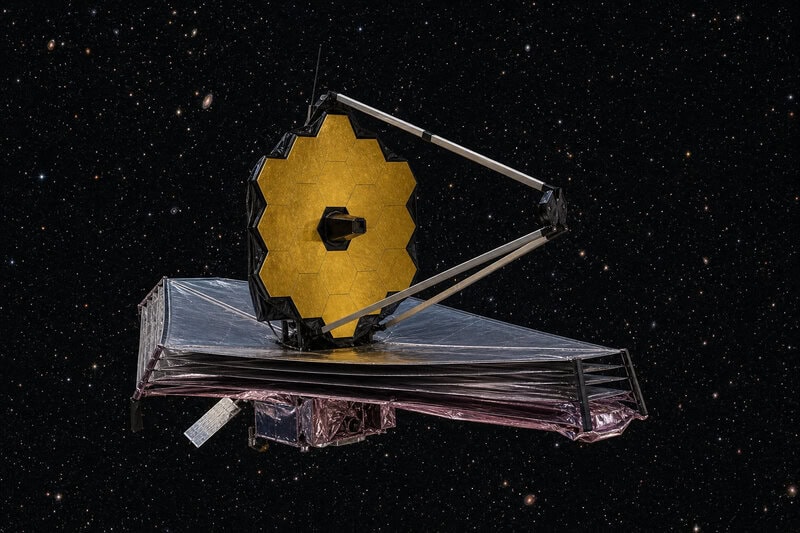
Little Red Dots are not an isolated anomaly. They sit within a broader pattern of early-universe surprises from Webb that collectively stress-test whether cosmologists correctly understand how matter first clumped together, ignited, and evolved in the universe’s first two billion years. Resolving what these objects are — and where they go — could reshape the understanding of how supermassive black holes formed and grew so rapidly after the Big Bang, given that such black holes now reside at the centers of nearly every large galaxy, including the Milky Way.
The disappearance question is itself scientifically productive in a way that straightforward detections often are not. Identifying where a bright, abundant population vanishes forces astronomers to map the full life cycle of early cosmic structures with a precision that was simply impossible before Webb existed. The telescope’s planned follow-up campaigns — including deeper spectroscopic surveys scheduled through the mid-2020s — are expected to provide the chemical composition data and gas-velocity measurements needed to arbitrate between competing explanations.
Whatever Little Red Dots ultimately prove to be — cocooned black holes in a growth spurt, dense stellar nurseries burning through supermassive stars, or something without a current name — their discovery has already confirmed one conclusion that is not in dispute: the early universe was stranger, denser, and more energetically active than models built before Webb ever looked at it had predicted. That conclusion alone is rewriting textbooks, and the Little Red Dots mystery is among its most vivid and consequential illustrations.