
Archaeologists studying Roman military and social history have confirmed something that stops most film historians mid-sentence: one of Hollywood’s most commercially convenient gladiator tropes — the fighter as object of mass desire and celebrity fascination — turns out to be among the most archaeologically defensible things the industry has ever put on screen. Filmmakers chasing box-office instincts accidentally preserved a documented historical reality, while many of their more “authentically Roman-looking” choices are the fabrications.
Why Hollywood Almost Always Gets Rome Wrong

The baseline problem is selection bias. As The Conversation has observed, Hollywood rarely depicts Roman warfare or society beyond gladiators and Caesars, leaving vast stretches of Roman history — frontier legions, naval engagements, auxiliary units recruited from across the empire, provincial towns — almost entirely unfilmed. The Roman world lasted, in various forms, for well over a millennium and stretched from Scotland to Mesopotamia, yet the cinematic version occupies a handful of recognisable postcards: the Colosseum, the toga, the laurel wreath.
The commercial logic behind this narrowness is straightforward. Studios default to the most recognisable iconography because audience recognition reduces marketing risk. If a poster needs no explanation, the film is easier to sell. That pressure calcifies inaccuracy across decades of productions, because each new film inherits the visual grammar of its predecessors rather than returning to primary sources. The result is a feedback loop in which the cinematic Rome of 2000 looks remarkably like the cinematic Rome of 1960, regardless of how much archaeology has advanced in the intervening decades.
Tristan Hughes, host of the archaeology and history podcast The Ancients, has reviewed scenes from famous films and television series set in the Roman period for historical accuracy, applying a scene-by-scene analytical approach that consistently finds visual spectacle overriding documented evidence. His reviews illustrate a recurring pattern: the more dramatic a given detail is, the more likely it is to have been amplified beyond what the record supports — and the more accurate-but-undramatic a detail is, the more likely it is to have been cut entirely.
Writer and researcher Carol Towriss has catalogued the consequences of this pattern in granular detail. Her documented list of ten recurring inaccuracies that appear across Hollywood films set in ancient Rome functions as a practical audit of where the industry consistently diverges from the historical record — ranging across costume, language, social structure, and military practice. Yet buried inside that catalogue of failures is one persistent, accidental truth that survived Hollywood’s otherwise liberal rewriting of Roman history.
What Gladiator Films Keep Getting Wrong

The release of Gladiator II in late 2024 brought renewed scholarly scrutiny of how the arena is depicted on screen. The University of Colorado published commentary on gladiators making a comeback on the silver screen, noting that the film’s arrival coincided with unusual public appetite for engagement with Roman history — which makes the accuracy question more consequential, because what people see in cinemas shapes what they believe about the past.
The well-documented inaccuracies in gladiatorial films are numerous. Gladiatorial bouts were rarely, if ever, fought to the death. They were expensive, regulated events more analogous to a sanctioned combat sport than to mob executions, and the death of a fighter represented a substantial financial loss to the organiser who had trained and maintained him. The elaborate helmets and layered armour fighters actually wore — designed to protect while creating spectacle for the crowd — are typically simplified or stripped away on screen in favour of bare skin that photographs better. The referee who stopped a bout when a fighter signalled submission has almost no cinematic presence, because a yielding fighter is less dramatically satisfying than a dying one.
Those inaccuracies are well-attested in the scholarly literature. The accidental accuracy, however, is something different — and it concerns not the mechanics of combat but the social status of the fighter.
The One Thing Hollywood Got Right — and How Archaeologists Can Prove It
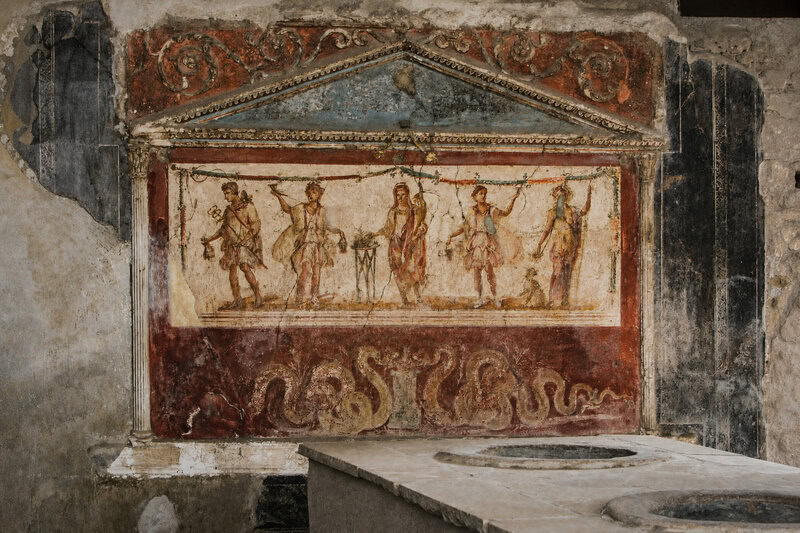
National Geographic has published analysis specifically identifying one thing Hollywood got right about gladiators: that they functioned as sex symbols in ancient Rome. This is not a vague cultural impression or a matter of interpretation. It is a claim grounded in recoverable, translatable material culture — the kind of evidence archaeologists can point to with precision.
The primary sources take several forms. Fan graffiti discovered at Pompeii, preserved by the volcanic eruption of 79 CE, includes short inscriptions naming specific gladiators alongside terms of admiration and erotic regard that classical scholars have translated and published. These are not ambiguous marks — they are legible declarations of celebrity attachment, written by identifiable hands near the spaces where gladiators trained and moved. Ancient writers, including the satirist Juvenal, documented the erotic status of successful fighters in textual accounts that survive and have been extensively studied. Commercial imagery on oil lamps and ceramic vessels depicted gladiators in ways that archaeology has connected to their cultural celebrity rather than purely to their martial function.
In archaeological terms, “sex symbol” refers to a recoverable pattern of material culture — fan graffiti, commercial imagery, the documented proximity of elite women to gladiatorial training grounds — not a vague attitude imputed to the past. The distinction matters because it means the claim is falsifiable and has been tested against the evidence. The broad fact of gladiatorial celebrity is widely accepted within the scholarly community. What remains an area of active scholarly debate is the precise social mechanism: whether that celebrity status translated to genuine upward social mobility for successful fighters, or whether it remained a stigmatised parallel track in which public admiration coexisted with legal and social marginalisation. The cinematic version papers over that complexity, but on the core fact — that gladiators occupied a recognisable celebrity and erotic role in Roman culture — Hollywood and the archaeological record are in agreement.
Why This Particular Truth Survived the Hollywood Filter
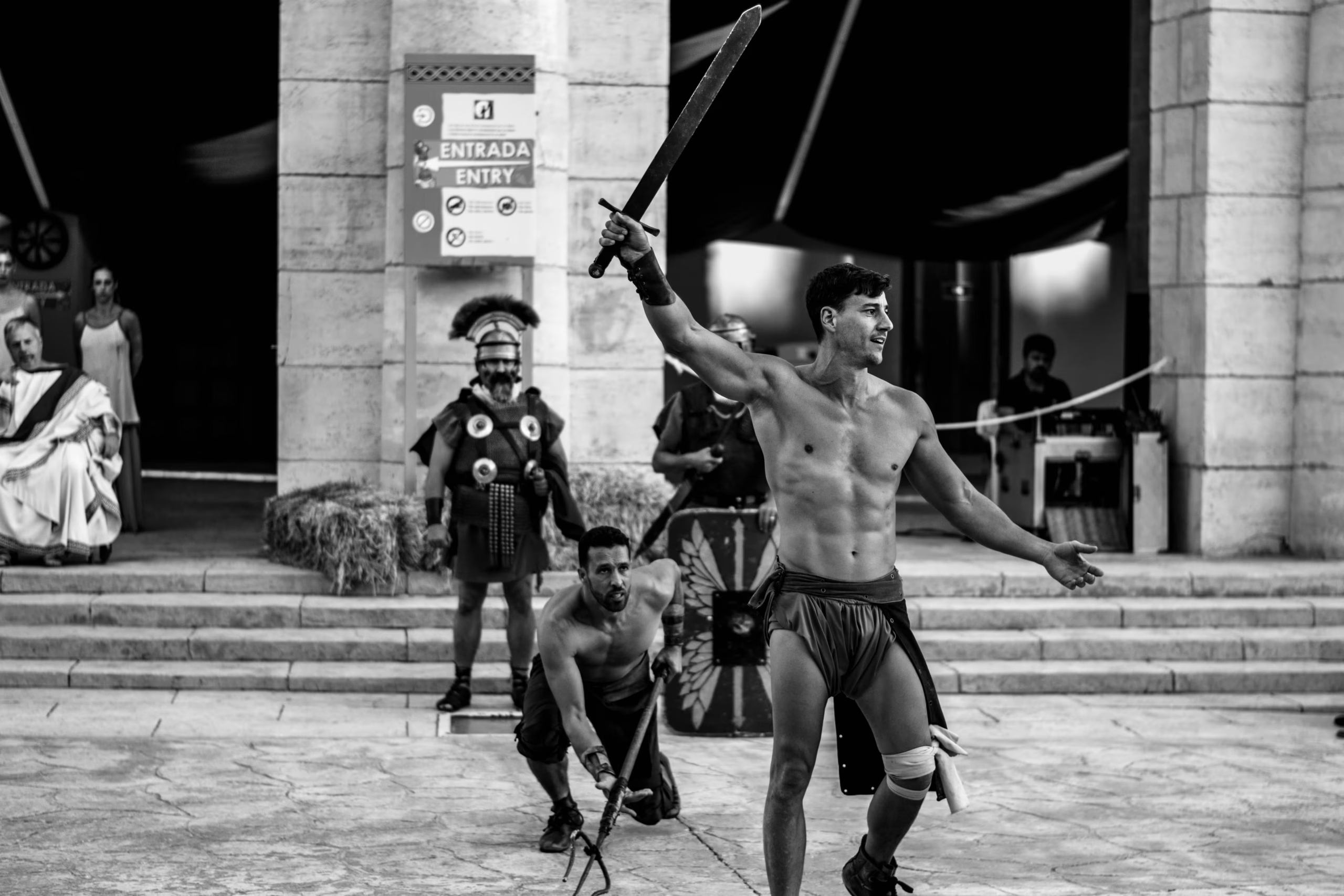
The survival of this one accuracy is not coincidental. Contrast the gladiator-as-sex-symbol with the death-match finale. Both are dramatically useful. Both serve the narrative logic of the arena film. But one aligns with the archaeological record and one contradicts it — and the surviving inaccuracy, the fatal combat, is the version that is more cinematically satisfying in its specific mechanics. A referee stopping a bout does not generate the same cathartic release as a crowd deciding a fighter’s fate. So the false version won out in the editing room, while the accurate version — the celebrity, the desire, the cultural fascination — was commercially compatible enough to never get cut.
This pattern illustrates a principle with broader implications for how popular media handles history. Accurate details that are also dramatic get amplified and retained. Accurate-but-undramatic details — the administrative complexity of legion supply chains, the multilingual reality of Roman military camps, the paperwork generated by provincial tax collection — disappear because they slow the story down. The gladiator’s celebrity status is accurate and dramatic. It was always going to make it through the filter.
Tristan Hughes’s scene-by-scene review methodology points toward a more deliberate alternative: a model in which historians and filmmakers engage in structured, public collaboration rather than relying on accidental alignment. When the review process is explicit and the findings are published, both the errors and the accuracies become legible, and the gap between screen and evidence can be closed by design rather than by luck.
What Archaeologists Wish Filmmakers Would Borrow Next
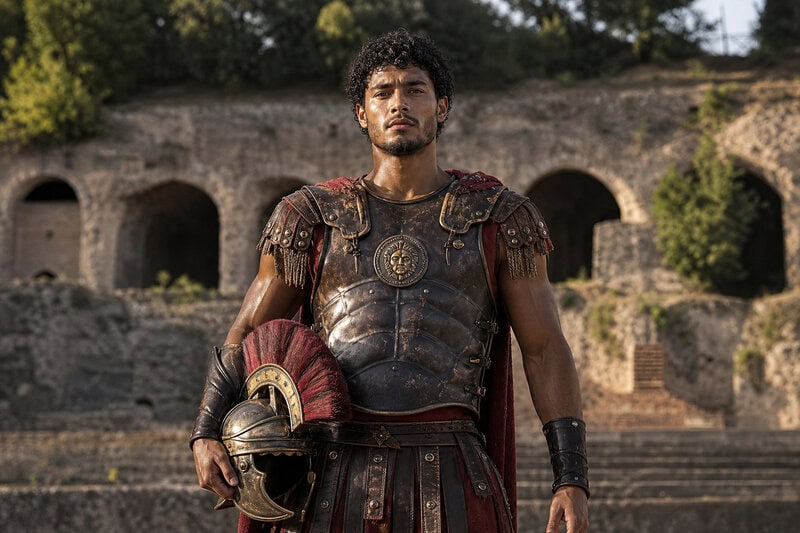
The Roman archaeological record contains dramatic material that Hollywood has left almost entirely untouched. The ethnic and geographic diversity of Roman legions is one of the most striking under-filmed realities of the ancient world. Funerary inscriptions, DNA analysis of skeletal remains, and equipment finds across Britain, North Africa, and the Levant collectively document a military institution that recruited from across the known world and deployed soldiers thousands of miles from their places of origin. The story of a soldier from what is now Syria serving on Hadrian’s Wall, or a North African officer commanding troops in what is now Romania, is not only historically attested — it is dramatically compelling in ways that the familiar centurion-in-Italy narrative is not.
The Conversation‘s analysis of Hollywood’s narrow Roman formula makes precisely this point: the frontier diversity, the experience of non-citizen auxiliary soldiers, the economics and social texture of provincial towns are all documented archaeologically and all represent viable dramatic territory. Carol Towriss’s ten recurring inaccuracies function as an implicit checklist of opportunities — correcting even half of them would produce more accurate films without requiring any sacrifice of narrative drive.
The actual Roman world, as the archaeological record documents it, is stranger, more varied, and in many respects more dramatically rich than the version cinema has standardised. Accuracy, in this framing, is not a constraint on storytelling. It is a creative resource that the industry has largely declined to exploit.
What One Accidental Truth Reveals About Cinema and the Past
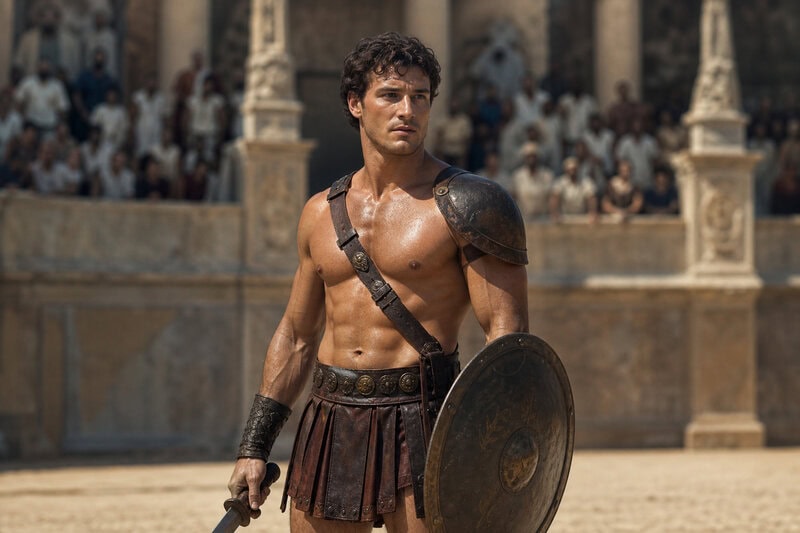
The fact that Hollywood got the gladiator-as-sex-symbol right by accident, while getting so much else wrong by default, illustrates how thin the line is between cinematic myth and documented history. When the commercial interests of storytelling happen to align with the archaeological record, accuracy slips through — and the result is a detail that feels true to audiences precisely because it is true, even if no one in the production consciously intended it to be.
The inverse also holds. When commercial interests diverge from the evidence, the evidence loses — not because filmmakers are indifferent to history, but because the decision-making logic of large-scale film production is not primarily oriented toward historical fidelity. That is not a scandal; it is simply how the medium works. The appropriate response is not to demand documentary realism from entertainment cinema, but to recognise that closer collaboration between filmmakers and researchers could make alignment the rule rather than the exception.
Readers are well-served by approaching all historical cinema as interpretation rather than record. A film set in ancient Rome is an argument about the past made in a commercial context, and every choice — of costume, casting, combat choreography, social dynamic — reflects the priorities of the moment in which it was made as much as anything recoverable from the ancient sources. The growing body of accessible archaeological scholarship — from podcast deep-dives like The Ancients to peer-reviewed institutional commentary — gives audiences better tools than ever to separate the accidental accuracy from the deliberate invention, and to ask, after the credits roll, which parts of what they just watched the evidence would actually support.