
In 1935, Albert Einstein and physicist Nathan Rosen discovered something quietly unsettling while working through the equations of general relativity: the same mathematics that describes a black hole also describes a mirror structure on the other side — a bridge connecting two separate points in spacetime. The universe’s own rulebook, it turned out, does not forbid shortcuts across cosmic distances. It merely makes them extraordinarily hard to build and, so far, impossible to keep open.
What a Wormhole Actually Is
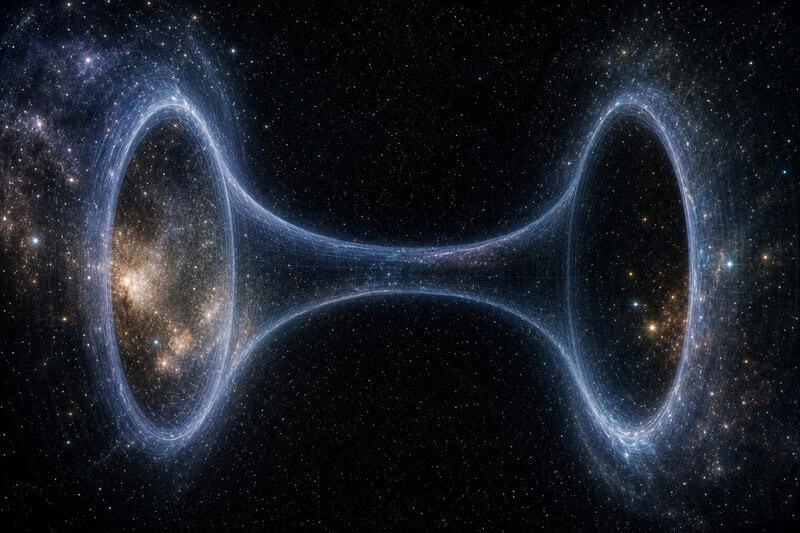
A wormhole is a hypothetical structure that connects two disparate points in spacetime. The most useful way to picture one is as a tunnel with two mouths — entry points — joined by a narrow throat that bypasses the ordinary space between them. Feed something into one mouth, and in principle it emerges from the other, having crossed a distance that would otherwise require billions of light-years of conventional travel.
The physics framework that makes such a tunnel mathematically expressible is general relativity, Einstein’s theory describing how mass and energy curve spacetime. The equations permit solutions in which spacetime folds back on itself, much as folding a sheet of paper brings two distant points into direct contact. The wormhole is, in essence, that fold made physical.
What distinguishes a wormhole from a black hole is directionality. A black hole is a one-way gravitational drain: matter and light fall in and cannot return. A traversable wormhole would theoretically allow passage in both directions — from one region of the universe to another, and potentially from one moment in time to another. That second possibility carries implications serious enough that most physicists treat it with extreme caution.
The word itself has a pleasantly mundane origin. To Shakespeare, a wormhole meant simply a hole made by a worm. Yet Shakespeare subtly linked the image to the passage of time in his poem The Rape of Lucrece — a literary coincidence that physicists occasionally note with wry appreciation, given that the modern concept connects not just places but potentially eras.
Why the Mathematics Says Yes
Einstein and Rosen’s 1935 paper established what is now called the Einstein-Rosen bridge: a mathematical solution to general relativity’s field equations that links two regions of spacetime within a single, internally consistent framework. No law of physics was violated. The equations simply permitted it.
The field advanced significantly in 1988, when physicists Kip Thorne and Mike Morris at Caltech demonstrated in a paper published in the American Journal of Physics that traversable wormholes — ones a person or signal could actually pass through — are valid solutions to general relativity. This was the first rigorous theoretical blueprint for a passable tunnel, and it remains a foundational reference in the field.
More recently, research discussed in April 2026 suggested that wormholes may be more mathematically robust than physicists previously credited, particularly once quantum corrections to general relativity are taken into account. Separately, research reported in May 2026 proposed that wormhole geometry may encode a symmetry between past and future states of spacetime — a hidden mirror of time that had not been fully mapped in earlier treatments of Einstein’s equations.
The mathematical reality is broadly accepted across the physics community: wormhole solutions exist within general relativity. The discipline’s open question has never been whether the equations allow them. It has always been whether nature actually builds them — and whether anything could survive the attempt to use one.
The One Catch: Exotic Matter
Every traversable wormhole solution in general relativity requires something that does not obviously exist: a material with negative energy density, which physicists call exotic matter. This substance would need to be threaded through the wormhole’s throat to hold it open against gravitational collapse.
Exotic matter is not merely rare in the way that antimatter is rare. It must exert a repulsive gravitational effect — pushing spacetime outward rather than inward — a property that no known stable material possesses at any scale relevant to a usable tunnel. Without it, a wormhole collapses into a singularity faster than light could traverse it. The throat slams shut before anything gets through.
There is one experimental hint that negative energy density is not entirely fictional: the Casimir effect. When two uncharged metal plates are placed extremely close together in a vacuum, a small but measurable attractive force arises between them, and the energy density in the gap is technically negative relative to the surrounding vacuum. This effect has been confirmed experimentally and is well understood. However, the quantities of exotic matter needed to stabilize even a microscopic traversable wormhole would exceed anything the Casimir effect could provide by many orders of magnitude — a gap so vast that no foreseeable technology could bridge it.
This is the consensus position in the physics community: exotic matter of the required magnitude has never been observed, its existence at traversable scales is not guaranteed by any current theory, and its absence means every known wormhole solution is physically impassable. The mathematics builds the tunnel; the physics collapses it.
Could Quantum Gravity Change the Equation?
A significant line of emerging research raises the possibility that the exotic matter problem is a limitation of classical physics, not an absolute barrier. Quantum gravity — the as-yet-incomplete theoretical framework that would reconcile general relativity with quantum mechanics — may describe mechanisms that stabilize wormholes without requiring exotic matter in the classical sense.
In 2022, a team led by researchers at Harvard and Caltech published results in Nature describing a simulation of wormhole dynamics on a quantum computer. The team concluded that quantum teleportation — the transfer of quantum information between entangled particles — and wormhole traversal may be two descriptions of the same underlying physical process. The finding remains actively debated, but it passed peer review and has influenced subsequent theoretical work.
This connects to a broader and deeply provocative hypothesis: the ER = EPR conjecture, proposed by physicists Juan Maldacena and Leonard Susskind in 2013. The conjecture suggests that quantum entanglement between two particles — an EPR pair, named after Einstein, Podolsky, and Rosen — is geometrically equivalent to a wormhole connecting them. If correct, wormholes would not be exotic engineering projects but fundamental features of quantum spacetime, present wherever entanglement exists.
The April 2026 theoretical work reinforced this emerging picture. The May 2026 research into wormholes as mirrors of time fits naturally within it, suggesting that wormhole geometry may encode deep information about the arrow of time — why the universe appears to run in one temporal direction rather than both.
Physicists have been careful to note, however, that these results operate in simplified, lower-dimensional models of spacetime. Extrapolating them to a four-dimensional, human-scale wormhole is a step the current mathematics does not yet support. The intellectual excitement is real; the engineering is not.
Time Travel, Paradoxes, and What Nature May Forbid
Because a wormhole connects separate points in spacetime rather than space alone, a sufficiently controlled wormhole could, in principle, connect two different moments in time. General relativity permits this. Most physicists believe nature finds a way to prevent it.
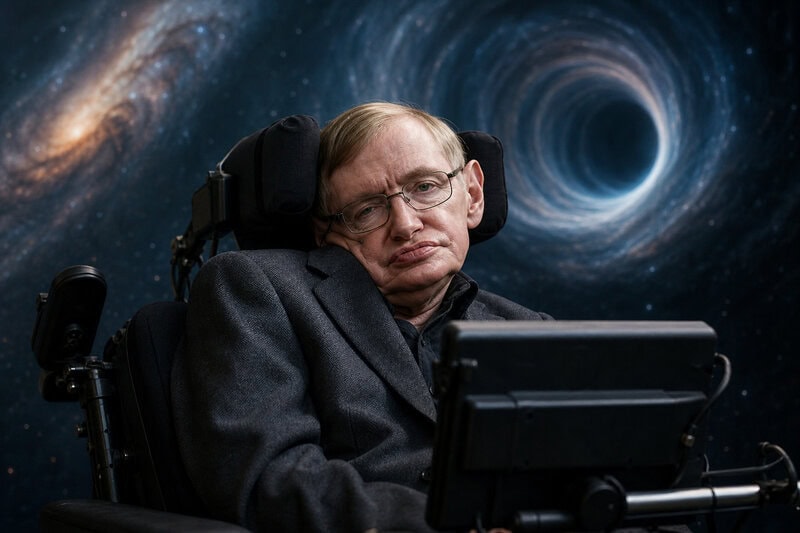
Physicist Stephen Hawking proposed what he called the chronology protection conjecture: the idea that quantum effects would always destabilize any wormhole before it could be used for backward time travel, effectively ensuring that the universe protects its own causal consistency. This conjecture is widely discussed but has not been formally proven. It remains an educated inference rather than a derived result.
The paradoxes that time-traveling wormholes would enable — the grandfather paradox being the most cited — are taken seriously enough that they inform the theoretical search for consistency conditions in quantum gravity. Whether nature enforces chronology protection through a specific physical mechanism, or whether the problem dissolves once a complete theory of quantum gravity is developed, is genuinely unknown.
How Wormholes Relate to Black Holes
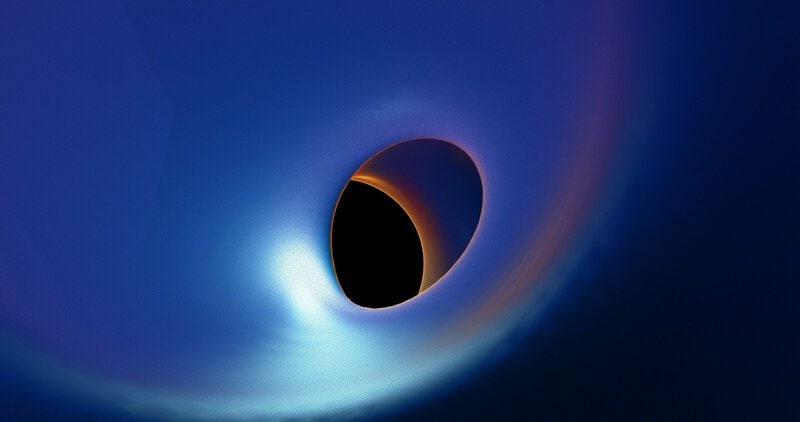
One of the more striking recent developments in theoretical physics is the growing evidence that black holes and wormholes may be far more intimately related than their surface differences suggest. The Einstein-Rosen bridge was itself derived from the same equations that produce black hole solutions, and some models suggest that the interior geometry of a black hole may be topologically connected to a second region of spacetime — effectively forming a non-traversable wormhole.
The ER = EPR conjecture pushes this further: it implies that two entangled black holes are connected by a wormhole, even when separated by vast distances. If black holes radiate information through Hawking radiation, as most physicists now believe, wormhole geometry may be part of how that information escapes — a possibility that sits at the frontier of current theoretical research and remains unresolved.
Understanding this connection matters because black holes, unlike wormholes, have observational evidence behind them. The Event Horizon Telescope has imaged the shadows of supermassive black holes. If black hole physics and wormhole physics are genuinely unified at the quantum level, constraints on one may eventually yield testable predictions about the other.
The Bottom Line: Real Math, Unreachable Engineering
The scientific consensus is unambiguous on one point: wormholes are legitimate, mathematically consistent structures within general relativity. They are as real as a solution to an equation can be — which is to say, precisely as real as an electron orbital or a geodesic in curved spacetime, structures that exist in the mathematics and are taken seriously because that mathematics has repeatedly corresponded to physical reality.
The consensus is equally clear on the barrier. No known physics provides the exotic matter required to hold a traversable wormhole open. No emerging theory has yet closed that gap with experimentally testable predictions. The throat collapses, always, before anything gets through.
What remains genuinely open — and actively investigated by leading theoretical physicists worldwide — is whether quantum gravity will eventually reveal a stabilization mechanism that bypasses the exotic matter requirement entirely, or whether traversable wormholes will remain permanently in the mathematics and never in the observable universe. The research of 2026 has made that open question feel more urgent, not less.
For now, a wormhole is perhaps the most consequential object physics has ever described that no one has seen, touched, or used. It is a tunnel built entirely from equations, propped open only by the unresolved frontier between the two greatest theories humanity has ever devised — and by the possibility, still alive, that nature is stranger and more generous than the current mathematics can yet prove.