
Most fossils sit behind museum glass, untouchable, explained by a placard. At Penn Dixie Fossil Park & Nature Reserve in Hamburg, New York, a visitor can split open a piece of shale with a hand tool on a Tuesday afternoon and slide a 375-million-year-old marine organism into their jacket pocket before the drive home — entirely legally, entirely by their own effort, and with the full encouragement of the nonprofit staff standing nearby.
A Rock You Can Legally Take Home Is 375 Million Years Old
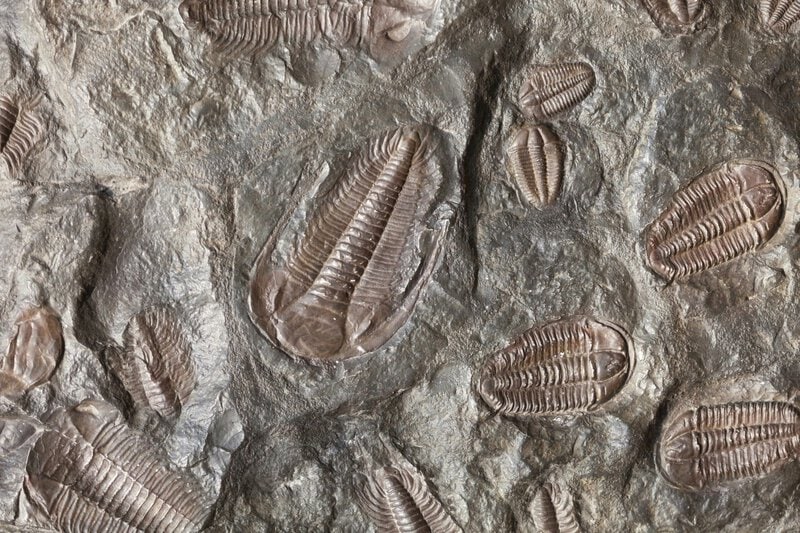
To anchor that number in context: 375 million years places these fossils in the Late Devonian epoch, a window of time that predates dinosaurs by approximately 140 million years. The Late Devonian also coincides with one of Earth’s major mass extinction events — a catastrophic collapse that eliminated a significant proportion of species on the planet. The organisms preserved in Penn Dixie’s shale layers were alive before that collapse, making them records of marine life at one of the most consequential turning points in the history of complex life.
What makes Penn Dixie genuinely unusual is not just its age but its accessibility. Penn Dixie Fossil Park is among a rare handful of public dig sites in the United States where a find-it, keep-it model is formally sanctioned — a convergence of geology, nonprofit land stewardship, and science education that sets it apart from both commercial fossil operations and restricted research sites. For families exploring fossil hunting in New York, there is functionally nothing else like it in the region.
A current sweepstakes offers the chance to win one of two General Admission Family Packs to Penn Dixie Fossil Park & Nature Reserve, each valued at $95 and including 2 adult tickets and 3 child tickets. Enter to win a General Admission Family Pack from Penn Dixie Fossil Park & Nature Reserve for an accessible introduction to hands-on paleontology for the whole family.
What Penn Dixie Actually Is — And Why It Exists
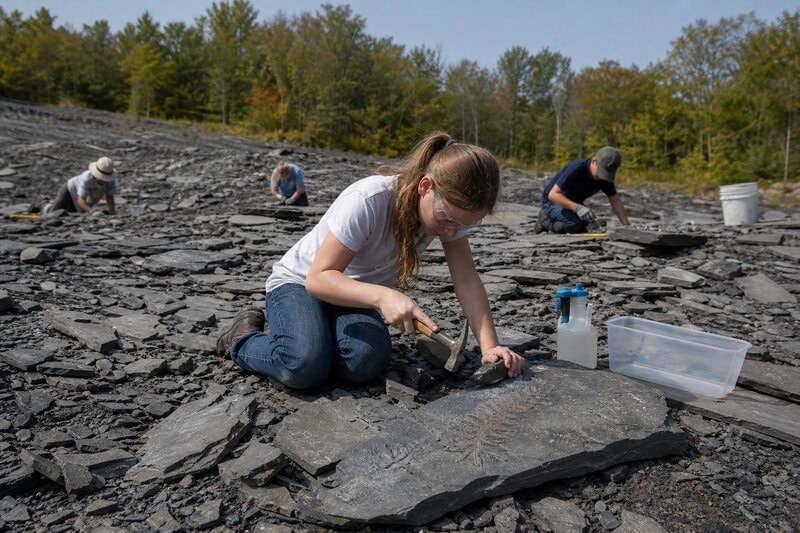
Penn Dixie Fossil Park & Nature Reserve is a nonprofit-managed, 54-acre site situated atop an ancient seafloor in Erie County, New York. It preserves one of the most productive public-access Devonian fossil beds in the northeastern United States. The rock layers underfoot belong to the Moscow Formation, a geological unit deposited roughly 375-380 million years ago when a shallow tropical sea covered what is now western New York.
That detail is worth pausing on. Western New York was once submerged beneath warm equatorial water. The bedrock of Erie County is, in a very literal sense, an ancient seafloor. Every quarry wall at Penn Dixie is a cross-section of that former ocean.
Unlike commercial fossil operations, Penn Dixie operates under a conservation and education mandate. Admission fees fund site preservation, guided programming, and ongoing geological research, positioning fossil hunting as citizen science rather than souvenir collecting. The find-it, keep-it policy is bounded by clear site rules: visitors dig only in designated quarry areas using hand tools, and commercial excavation or sale of finds is prohibited. This framework is what allows public access to coexist with responsible stewardship — and what distinguishes Penn Dixie from the kind of unregulated collecting that degrades scientifically significant sites.
The Devonian Seafloor Beneath Your Feet: A Plain-Language Geology Explainer
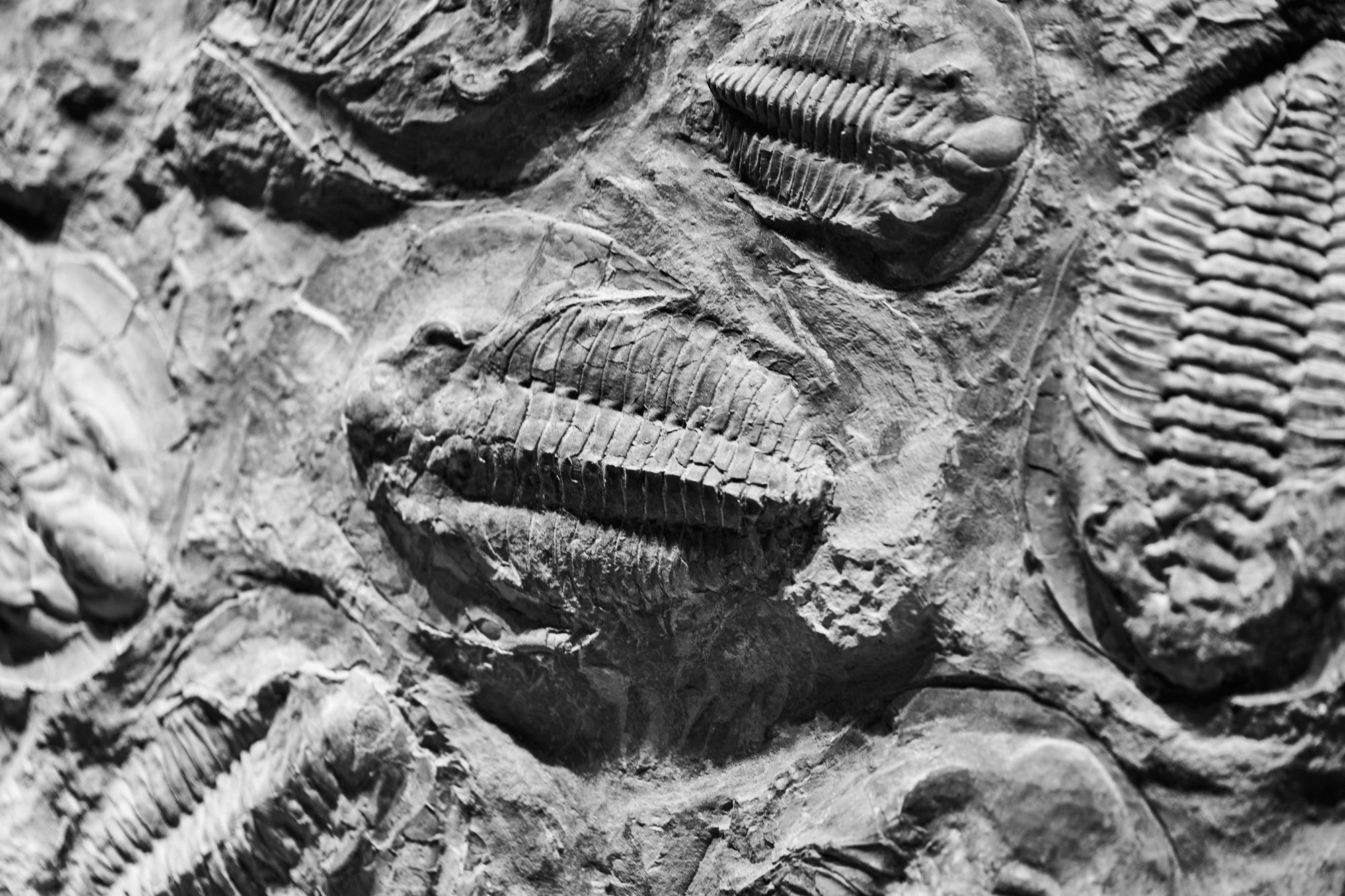
The Devonian period spans approximately 419-359 million years ago and was an era of remarkable marine biodiversity, sometimes called the “Age of Fishes.” Trilobites, brachiopods, crinoids, horn corals, and early cephalopods thrived in warm, shallow seas that spread across what would eventually become the North American continent.
Fossilization at Penn Dixie occurred through compaction burial: organisms died and settled into fine seafloor sediment, which gradually lithified — hardened into rock — under the pressure of accumulating layers above. That process preserved skeletal structures in the shale and limestone that visitors split open today. When a piece of shale cracks cleanly and reveals the ribbed silhouette of a brachiopod, the visitor is seeing the mineral-replaced remains of a shell buried under sediment before the first forests appeared on land.
Trilobites are what geologists call index fossils — organisms so time-specific and geographically widespread that they serve as biological timestamps embedded in rock. Index fossils allow geologists to correlate and date rock strata across vast distances, making trilobite-bearing formations scientifically useful far beyond their local boundaries. A trilobite recovered at Penn Dixie is not merely a curiosity; it belongs to the same group of organisms whose relatives help date rock formations on multiple continents.
What Visitors Actually Find — Setting Realistic Expectations
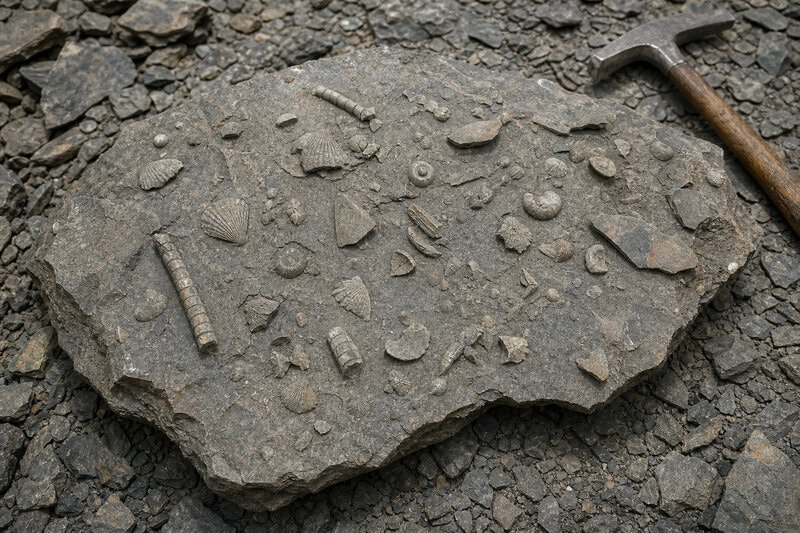
Responsible science communication requires honesty about what a typical Penn Dixie visit yields. The most commonly recovered specimens include brachiopods, horn corals, crinoid stems, and trilobite fragments. Complete trilobites are genuine finds — and they do occur — but they are exceptional, not routine. First-time visitors should calibrate expectations accordingly.
That said, “common” at Penn Dixie is not equivalent to “unimpressive.” Brachiopods are marine invertebrates that superficially resemble clams but belong to a biologically distinct group with a separate evolutionary lineage. They are abundant, well-preserved, and scientifically authentic at this site. A child who cracks open a piece of shale at the Penn Dixie quarry has a realistic probability of exposing an organism that last saw sunlight before the first forests evolved on land. That is not an exaggeration — it is the geology.
Fossil hunting at a public dig site also differs meaningfully from rockhounding, which involves collecting rocks and minerals. Every specimen recovered at Penn Dixie has direct biological provenance: it represents a once-living organism, not a mineral formation. That distinction matters for first-time visitors trying to understand what they are actually holding.
Tools and technique matter as well. Learning to read rock strata, identify the layers most likely to yield specimens, and apply proper splitting technique — using force at the right angle and reading natural cleavage planes in the shale — is part of what general admission at Penn Dixie includes. The educational value of the search process itself is not incidental to the experience; it is the experience.
Why Legal, Public Fossil Dig Sites Are Rarer Than They Sound
The majority of significant fossil localities in the United States fall under federal or state protection. The Paleontological Resources Preservation Act of 2009 makes commercial or personal fossil collection illegal on most federal public lands without a scientific permit. This regulatory context is essential for understanding how uncommon sanctioned public dig sites genuinely are. For most families interested in finding their own fossils in the United States, the legally available options are narrow.
Sites permitting the public to legally collect vertebrate fossils — bones of ancient fish, reptiles, or mammals — are subject to the most stringent protections and effectively off-limits to casual visitors. Penn Dixie’s invertebrate-focused quarry occupies a more permissible regulatory zone, but it still requires active, ongoing land-management decisions to maintain public access rather than restricting the site to credentialed researchers. That access is not automatic; it is the result of deliberate nonprofit stewardship.
Fossil hunting in New York state is further constrained by geography. The state’s most fossil-rich formations are distributed across private land, protected parkland, and, in some cases, lake- or river-bottom environments that are practically inaccessible to the public. Penn Dixie’s Erie County location and nonprofit access model represent a structurally important resource for the entire region — and the site is frequently cited in public science education contexts as a model for how accessible paleontology can function responsibly.
The Giveaway: What Is Included and How to Enter
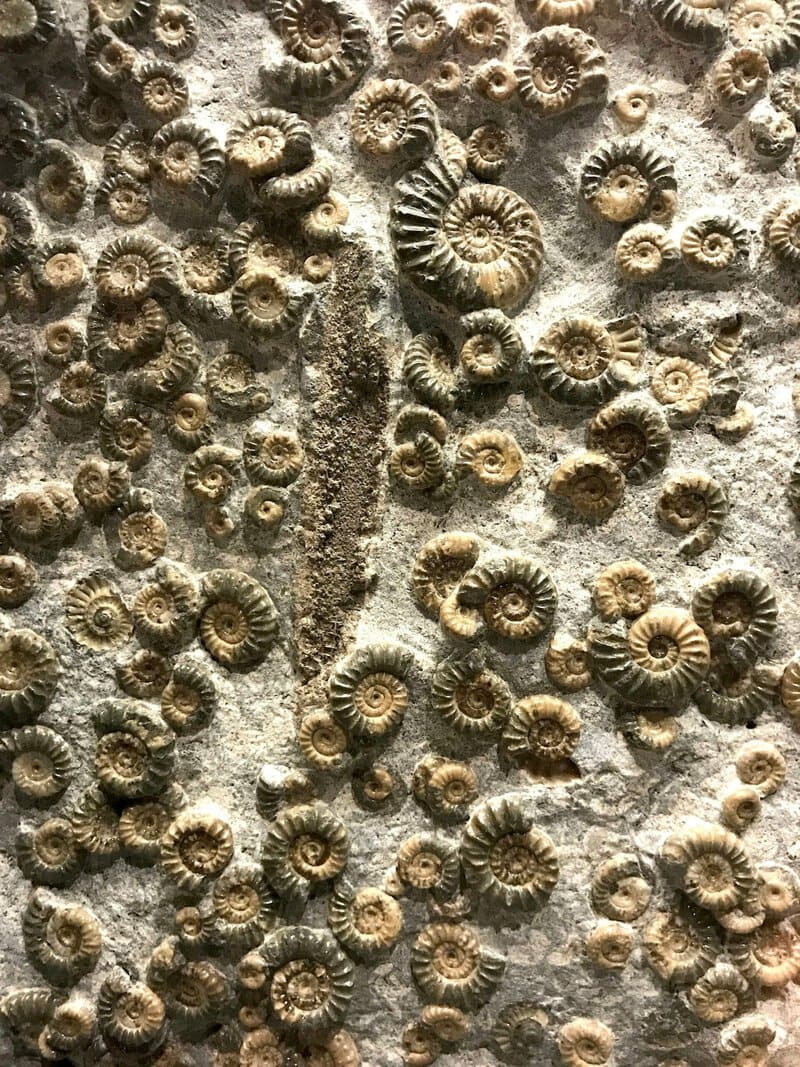
The current sweepstakes offers entrants the chance to win one of two General Admission Family Packs to Penn Dixie Fossil Park & Nature Reserve. Each pack is valued at $95 and includes 2 adult tickets and 3 child tickets — sufficient for a complete family fossil-hunting session in the quarry. General admission covers access to the active quarry dig area, use of on-site splitting tools, and educational programming from site staff. The ticket price directly supports Penn Dixie’s nonprofit conservation and education mission.
Entry details, eligibility requirements, and official sweepstakes rules are available via the contest landing page. Readers should review terms carefully, as prize fulfillment, expiration, and geographic eligibility conditions apply. View the Penn Dixie giveaway announcement on Facebook for additional details and to follow the sweepstakes as it develops.
Whether or not you enter, Penn Dixie accepts walk-in general admission on operating days. Visit the official Penn Dixie website for current seasonal hours, pricing, and group booking information before planning a trip.
Why This Matters Beyond the Day Trip
Public fossil sites occupy an underappreciated role in science literacy. They offer hands-on encounters with deep time that no classroom poster or museum diorama fully replicates. When a child holds a brachiopod they split from rock themselves, the abstraction of “millions of years” becomes tactile and personal in a way that is difficult to replicate through any other medium.
Visitor finds at sites like Penn Dixie can also carry genuine scientific value. The site maintains relationships with academic paleontologists and encourages visitors who uncover unusual material to report it to staff — creating an informal but real pipeline between public discovery and professional research. This is citizen science in its most direct form.
The broader context of public fossil dig sites is one of shrinking access. Land-use pressure, liability concerns, and regulatory complexity steadily reduce the number of sites available to non-specialist visitors. Every operational site that closes represents a permanent narrowing of public science infrastructure. Penn Dixie’s continued operation matters not just for the families who visit but for the wider project of keeping scientific curiosity accessible to people who will never pursue it professionally.
A brachiopod on a child’s windowsill — one they found themselves, in a quarry in Erie County on a Saturday morning — is verifiably older than the first dinosaur, the first flowering plant, and the first bird. It is a physical object that grounds abstract geological time in something a person can hold, examine, and keep. That is what the Penn Dixie Family Pack giveaway offers access to — and it is why sites like this one deserve to be taken seriously as scientific and educational infrastructure, not just weekend entertainment.