
For a small group of 22 people carrying a genetic predisposition to Alzheimer’s disease, a single experimental drug appeared to cut their risk of developing symptoms in half — a finding so unexpected that it prompted researchers to take a hard second look at a protein the field had largely written off as an unwinnable target.
What the Lancet Neurology Study Found

The drug is called diranersen, developed by Biogen, and its results were published in Lancet Neurology following a trial involving approximately 400 participants. Unlike every major Alzheimer’s drug approved or in late-stage development in recent years, diranersen does not target amyloid — the sticky protein that forms plaques between brain cells and has dominated Alzheimer’s research for decades. Instead, it targets tau, a structural protein inside brain cells that, when it misfolds and collapses into tangled threads, contributes to the cellular destruction that drives the disease forward.
Across the full trial population, diranersen measurably lowered tau levels in the cerebrospinal fluid — the liquid surrounding the brain and spinal cord — confirming the drug was reaching its intended target. More significantly, researchers observed signs that the drug may be slowing disease progression itself, not merely producing a favorable number on a laboratory test. That distinction matters enormously in Alzheimer’s research, where biomarker improvements have historically failed to translate into meaningful benefits for patients.
The most striking signal emerged from that subgroup of 22 genetically high-risk participants, in whom the apparent risk of developing Alzheimer’s symptoms appeared to be cut in half. Independent neurologists not involved in the study have been careful to frame this as preliminary and hypothesis-generating rather than definitive — a sample of 22 people is far too small to draw firm conclusions — but the signal was strong enough to shift what many in the scientific community believe may be achievable with tau-targeting therapy. Reporting on the Lancet Neurology findings describes the result as one of the most significant early signals yet that tau represents a viable and actionable drug target.
Why Tau Has Always Mattered — and Why It Has Been So Hard to Drug
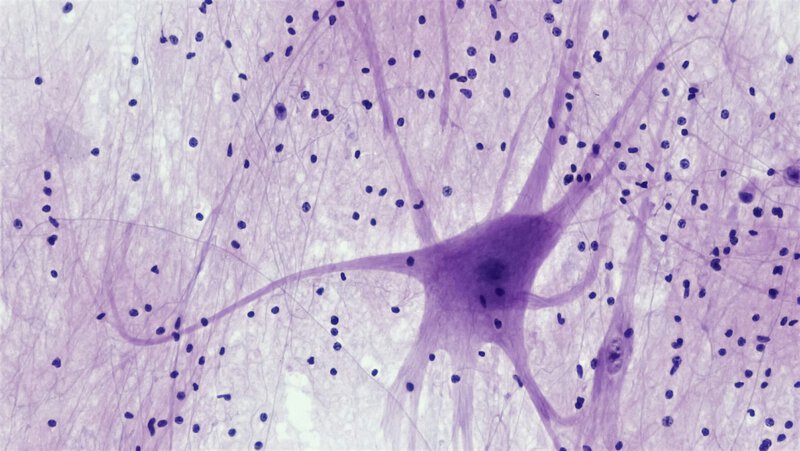
Alzheimer’s disease is understood through the lens of two rogue proteins that work in destructive concert. Amyloid accumulates in the spaces between neurons, forming insoluble plaques that disrupt cell communication. Tau, meanwhile, destabilizes the internal scaffolding of neurons themselves, collapsing into dense tangles that ultimately kill cells from within. Together, researchers describe them as a toxic duo — and for many scientists, the persistence of cognitive decline even in patients who successfully clear amyloid has long suggested that tau must eventually be addressed for treatment to be meaningful.
The pharmaceutical industry, however, placed its largest bets on amyloid. That investment has yielded results: drugs like lecanemab and donanemab have demonstrated modest but real benefits in slowing early-stage Alzheimer’s, earning regulatory approvals and establishing that amyloid clearance can produce measurable clinical benefit. Tau, by contrast, became the field’s most prominent disappointment. Multiple drug candidates designed to target tau failed in clinical trials, reinforcing a narrative that tau was a confirmed contributor to disease but an unreachable therapeutic target.
Diranersen takes a fundamentally different approach that may explain why it is producing results where previous tau drugs did not. Earlier candidates attempted to clear tau tangles after they had already formed inside neurons — an approach researchers now liken to mopping up a flood while the tap is still running. Diranersen belongs to a class of medicines called antisense oligonucleotides, or ASOs — short synthetic strands of genetic material that intercept a cell’s messenger RNA, the molecular instructions cells use to build proteins, and block production of tau before it is ever assembled. In plain terms, the drug instructs the brain to manufacture far less tau in the first place, potentially cutting off the toxic cascade at its source rather than attempting to reverse damage that has already occurred.
The ASO platform is not new, and that matters for assessing diranersen’s credibility. The same class of molecular tools has already been used successfully in other neurological diseases, including spinal muscular atrophy — a severe condition caused by the absence of a critical motor-neuron protein. The established track record of ASOs in reaching the central nervous system and modifying protein levels gives scientists a reasonable basis for confidence in the mechanism, even as the Alzheimer’s application remains early-stage.
How the Drug Is Delivered — and Why That Raises Practical Questions

One significant practical consideration is the delivery method diranersen requires. Because the drug must reach the cerebrospinal fluid that bathes the brain and spinal cord, it is administered via lumbar puncture — a spinal injection performed in a clinical setting. This is more invasive than the intravenous infusions used for amyloid-targeting drugs like lecanemab, and it raises legitimate questions about patient accessibility and willingness to undergo repeated procedures over a long treatment course. Researchers and clinicians will need to weigh those logistical realities against the drug’s potential benefits as the program advances into larger trials.
What the Study Did Not — and Cannot Yet — Establish
The Lancet Neurology publication is explicit about the limits of what the current data can support. A larger Phase 3 randomized controlled trial — the gold standard for confirming drug efficacy and safety — has not yet been completed, and no tau-targeting drug including diranersen has cleared that bar. The apparent 50% risk reduction observed in 22 high-risk participants is a signal that justifies rigorous follow-up investigation; it is not, on its own, sufficient to characterize diranersen as a proven treatment. Coverage of the findings notes that independent experts have consistently urged cautious optimism, emphasizing that the results merit serious scientific attention without premature clinical enthusiasm.
The publication also does not establish with certainty that diranersen’s upstream ASO mechanism is the specific reason it is outperforming previous tau-targeting approaches. That is the central scientific rationale Biogen and the study’s researchers are putting forward, and it is biologically plausible — but plausibility is not proof, and the definitive test awaits larger trials with more diverse patient populations.
What This Could Mean for Alzheimer’s Treatment

If diranersen’s promise holds up through Phase 3 testing, the implications for Alzheimer’s care would extend well beyond a single new drug. Physicians would gain a second therapeutic lever — a tau-targeting agent to deploy alongside amyloid-clearing drugs — potentially enabling combination strategies that attack the disease through both arms of its toxic duo simultaneously. That possibility is generating genuine excitement in a field that has long debated whether amyloid clearance alone is sufficient to produce meaningful patient benefit, or whether tau, neuroinflammation, and other pathways must be addressed in parallel.
For the roughly 55 million people worldwide living with dementia, the majority of whom have Alzheimer’s disease, a drug class targeting a different protein could also meaningfully expand who qualifies for treatment. Some patients do not respond to amyloid therapies; others cannot tolerate their side effects, which can include brain swelling and microbleeds. A tau-targeting alternative would give clinicians options for patients currently left without them.
The Lancet Neurology findings arrive at a moment of genuine strategic uncertainty in Alzheimer’s research — an ongoing debate about whether the field has over-indexed on amyloid and what other biological targets deserve sustained investment. Detailed reporting on the diranersen study captures the scientific community’s response as cautious but genuinely engaged — researchers treating this not as a solved problem but as a reopened question with new evidence behind it. Coverage from the Canadian Healthcare Network highlights the significance of the findings for broader Alzheimer’s treatment strategy, particularly the potential implications of targeting tau alongside established amyloid-based approaches.
The Bottom Line: A Hypothesis Revived, a Target Reopened
Diranersen has accomplished something no previous tau-targeting drug has managed: it lowered tau levels in a peer-reviewed clinical trial, produced signs of slowing disease progression, and generated a striking risk-reduction signal in a genetically vulnerable subgroup — all in a study rigorous enough to be published in Lancet Neurology. That is a meaningful scientific achievement, even as it falls well short of the evidence needed to call diranersen an established treatment.
What the Biogen trial has done, at minimum, is move tau from the category of failed therapeutic hypothesis back into active scientific contention — with a mechanistic rationale that is biologically credible, a platform technology with proven precedents in other diseases, and a dataset that justifies the substantial investment a Phase 3 trial requires. Analysis of the publication reflects this measured reassessment: not a breakthrough announcement, but a serious recalibration of what tau-targeting therapy might achieve.
In a field where genuine therapeutic progress is hard-won, where overpromising has damaged public trust, and where millions of patients and families are waiting for options that make a real difference, the diranersen findings represent exactly the kind of rigorous, incremental, and scientifically honest progress that deserves close attention — and appropriately patient follow-through.