
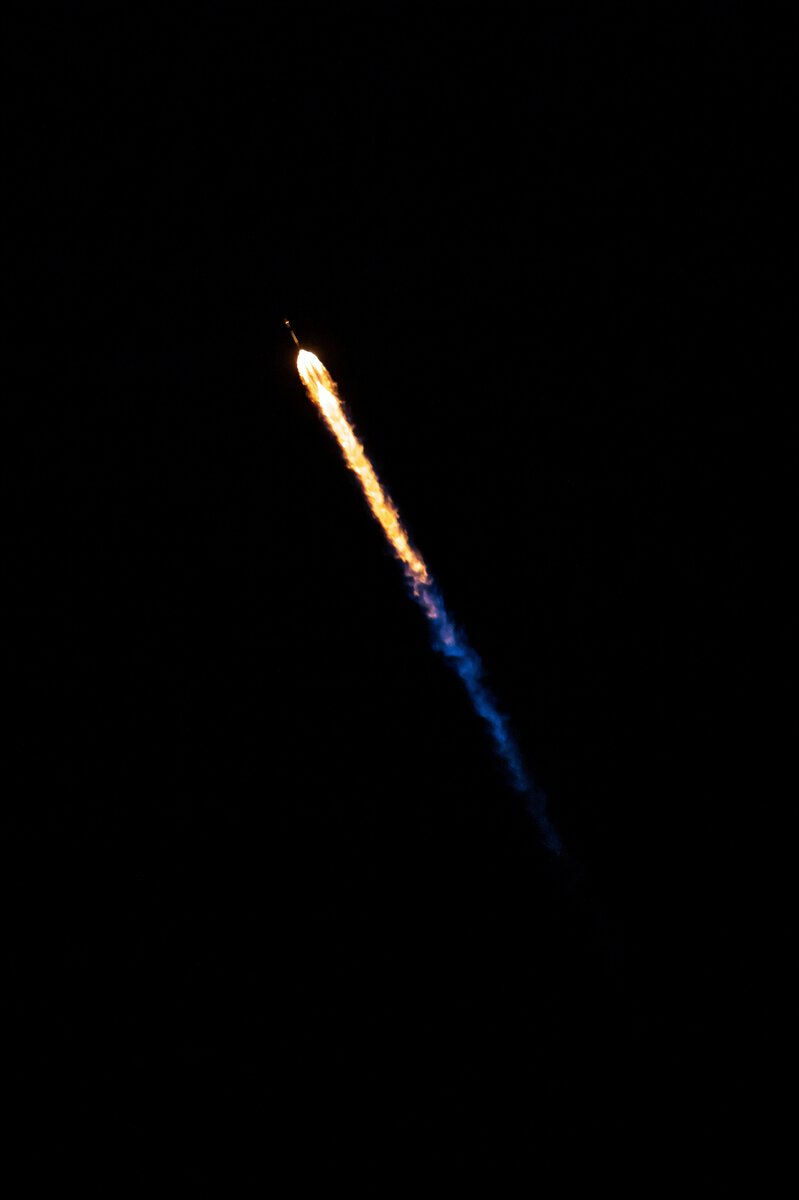
At 3:15 AM EDT on July 14, 2026, a SpaceX Falcon 9 rocket is scheduled to lift off from Space Launch Complex 40 at Cape Canaveral carrying 29 Starlink satellites. Within roughly 8 to 12 minutes of liftoff, a slowly rotating luminous spiral may bloom across the pre-dawn Florida sky — looking to unprepared observers less like a rocket trail and more like a glowing galaxy materializing overhead. The physics behind that spectacle is entirely understood, rooted in atmospheric optics and orbital mechanics, and this launch sits inside the geometric window that makes the phenomenon most likely to appear.
What Is Launching: Starlink Group 10-45
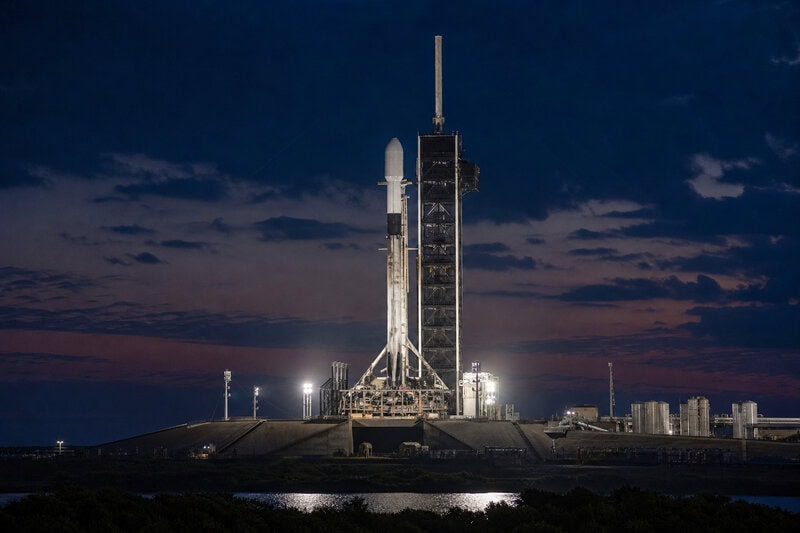
The mission is designated Starlink Group 10-45. The Falcon 9 will carry 29 flat-panel broadband satellites into low Earth orbit, with the rocket’s first stage targeting a droneship landing in the Atlantic — a recovery maneuver SpaceX has now executed more than 300 times. Launch status is currently listed as Go. Confirm the latest countdown status and any scrub announcements through the SpaceX launches page, which is updated in real time, or through the Visit Space Coast rocket launch schedule.
The 3:15 AM EDT launch time places liftoff well before nautical twilight reaches ground level at Cape Canaveral — roughly 90 minutes before any meaningful surface illumination in mid-July. That timing is not incidental. The launch corridor preceding astronomical dawn creates the precise geometric condition in which the upper atmosphere is already sunlit while the ground remains in full darkness. The Falcon 9’s northeast trajectory means the vehicle will arc over the Atlantic shortly after passing Max-Q, carrying the exhaust plume high enough to intercept direct sunlight well before sunrise reaches anyone watching from the beach below. The 45th Weather Squadron at Patrick Space Force Base provides the official go/no-go weather assessment for all Eastern Range launches, and SpaceX typically confirms a final weather waiver within two hours of T-0.
The Spiral Explained: What Rocket Exhaust Does in the Upper Atmosphere
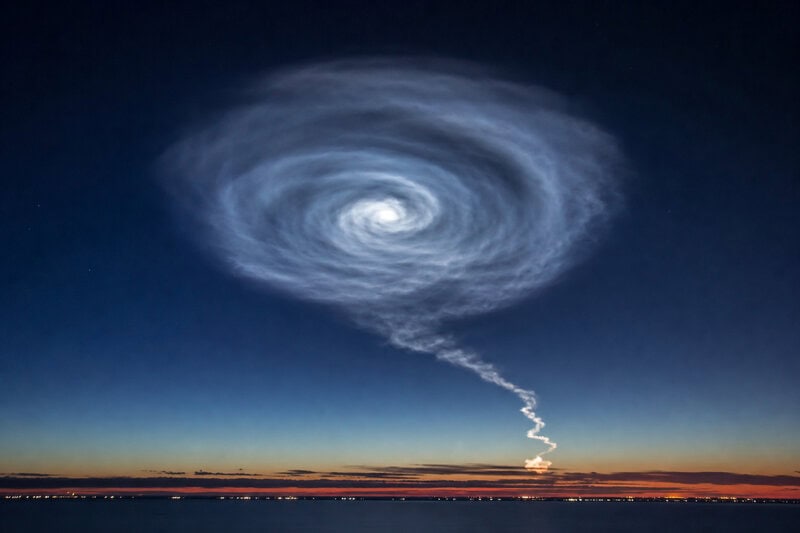
Understanding the spiral requires understanding what a rocket plume becomes at extreme altitude. When a Falcon 9’s Merlin engines burn liquid oxygen and RP-1 — a highly refined kerosene — they expel a high-velocity stream of carbon dioxide, water vapor, and unburned particulates. At sea level, atmospheric pressure compresses that exhaust into a relatively narrow column. Above roughly 70 kilometers, where atmospheric pressure is less than one ten-thousandth of its sea-level value, no such compression occurs. The plume expands freely and rapidly into a widening cone, behaving more like a gas vented into a vacuum than like the contrail of a commercial jet at cruising altitude.
The spiral geometry specifically emerges when the rocket performs a propellant dump — a deliberate release of residual liquid propellant carried out to prevent pressure buildup as the vehicle approaches orbit. The released liquid sublimates almost instantaneously into a cloud of ice microcrystals tens of kilometers wide. Because the rocket rotates slowly around its longitudinal axis for guidance stability during the burn, the vented plume corkscrews outward in a pattern that, viewed from below, appears as a tightening or expanding spiral arm. This corkscrew-from-rotation mechanism is the accepted scientific explanation for the spiral shape, independently documented across multiple photographed and timestamped launch events.
The color is equally explainable. The neon blue-green or milky-white luminosity that witnesses describe comes from sunlight scattering off those ice microcrystals at high altitude while the observer on the ground remains inside Earth’s shadow. The ice particles interact with sunlight through the same Rayleigh and Mie scattering principles that produce the colors of twilight. The spiral glows because it sits above the terminator — the boundary of Earth’s shadow in the upper atmosphere — while the ground below does not. That contrast is what makes the effect so visually striking and so unlike anything most observers have encountered before.
Why the Pre-Dawn Window Makes This Possible
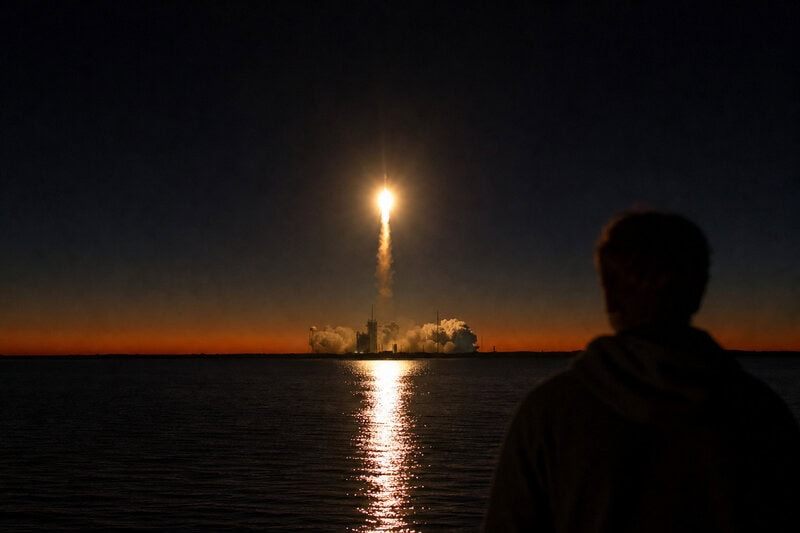
The spiral phenomenon depends on a geometric condition that is genuinely rare: the rocket must reach altitudes above Earth’s shadow while the surface below remains dark. In the upper atmosphere, the terminator line sits roughly 60 to 100 kilometers up, meaning the sunlit zone aloft can precede ground-level sunrise by 30 to 90 minutes depending on season and latitude. Atmospheric scientists refer to this transitional period as civil or nautical twilight, and it represents the only window in which a high-altitude exhaust or ice-crystal cloud can be simultaneously sunlit and set against a truly dark sky background.
A midday launch eliminates the effect entirely — the whole atmosphere is illuminated and any plume washes out against a bright sky. A true-midnight launch is equally unhelpful — the upper atmosphere is also in shadow, so no sunlight exists to backlight the cloud. Dawn and dusk launches within roughly 30 to 90 minutes of the terminator crossing are the rare exceptions, which is why historically documented spiral events cluster almost exclusively around twilight-window launches.
The 3:15 AM EDT launch time on July 14 places the Falcon 9’s upper stage in the sunlit zone of the upper atmosphere approximately 8 to 12 minutes after liftoff — precisely the interval during which a propellant dump or venting event, if one occurs, would be maximally visible against the still-dark ground below. However, SpaceX does not routinely announce propellant dumps in public mission documentation ahead of launch. The honest framing is that atmospheric conditions and timing are favorable, not that a spiral is guaranteed. Without a propellant dump, observers will still see a luminous, slowly expanding exhaust cone backlit by pre-dawn sunlight — a striking sight in its own right.
Where and When to Watch from Florida
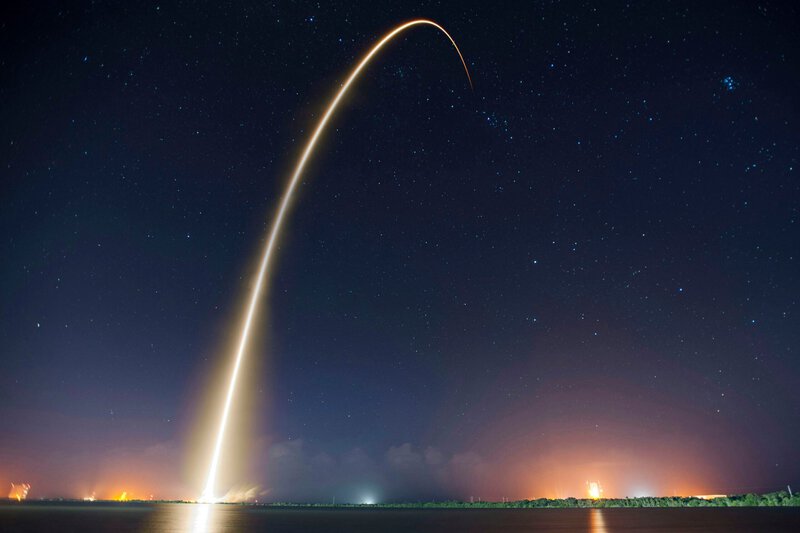
For observers who want the closest legal public access aligned with the northeast trajectory, Playalinda Beach — located approximately 7.2 miles from SLC-40, with Parking Lot 1 designated as a launch-viewing area — is among the best positioned ground-level options. Standard Canaveral National Seashore hours open the lot at 6:00 AM, though the park has extended access for pre-dawn launches in the past. Check the park’s official page the evening before to confirm whether early entry will be permitted for this mission.
Observers who cannot reach the park have a wide range of alternatives. The spiral or exhaust cone unfolds at altitudes of 70 kilometers and above, making it visible across a broad geographic area. Any open eastward sightline within 50 miles of Cape Canaveral — including Cocoa Beach, Titusville’s Space View Park, or Orlando’s eastern suburbs — provides a workable view. For more detailed pad-specific viewing angles and parking guidance, the Rocket Launch Photography Viewing Guide is a reliable reference used by photographers and serious observers.
A secondary light show arrives roughly 7 to 9 minutes after launch: the first stage’s boostback and atmospheric entry burns produce a second, smaller exhaust bloom to the northeast as the booster decelerates for its droneship landing, followed by sonic booms reaching shore approximately 8 to 10 minutes post-launch depending on distance.
- T-0 (liftoff): 3:15 AM EDT — watch to the northeast from any coastal or open-sky location
- T+60 to T+90 seconds: Main engine cutoff altitude region — plume begins expanding into the upper atmosphere
- T+7 to T+9 minutes: First-stage boostback burn visible to the northeast — a second luminous bloom; sonic booms follow
- T+8 to T+12 minutes: Upper stage reaches fully sunlit altitude — highest-probability window for any spiral or cone glow event
July nights at the Florida coast are warm and humid, and biting insects are active near coastal vegetation. Bring insect repellent. Use a red-light flashlight rather than a white one — red light preserves night-adapted vision in the minutes before liftoff, when your eyes need to be dark-adjusted to catch the earliest and faintest stages of plume glow.
What the Science Confirms — and Where Uncertainty Remains
The optical mechanics of high-altitude exhaust and ice-crystal scattering are established scientific consensus, independently reproduced in atmospheric physics research and verified against launch telemetry across multiple documented events. The spiral shape from a rotating vehicle is geometrically predictable given known rotation rates and plume expansion dynamics. There is no serious scientific dispute about the basic mechanism.
What remains under active investigation is the cumulative atmospheric effect of frequent launches through the mesosphere — the layer between roughly 50 and 80 kilometers altitude. Research published in Geophysical Research Letters has raised questions about repeated water vapor injection into the mesosphere from high-cadence launch programs, but authors have explicitly cautioned that long-term effects at that altitude remain uncertain and require substantially more observational data before conclusions can be drawn. This is emerging research, not settled science.
Claims circulating on social media that spirals of this kind indicate classified weapons testing or other covert activity are not supported by any peer-reviewed evidence and contradict the straightforward, independently verified physics of documented propellant-dump events, which have been photographed, timestamped, and cross-referenced with launch telemetry on multiple occasions.
How to Photograph the Event

Smartphone cameras in auto mode will struggle with the spiral. The cloud is wide, low in contrast, and slow-moving — a combination that requires long exposures to record meaningful detail. A camera with manual settings, mounted on a tripod, targeting ISO 1600 to 3200, an aperture of f/2.8 or wider, and exposures of 5 to 20 seconds will capture the plume structure far more reliably. Use a remote shutter release or the camera’s self-timer to eliminate vibration during the exposure. Frame wider than you think necessary — the spiral can expand to cover a surprisingly large arc of sky in a short time.
Accurate geotagging and precise timestamps in image metadata are genuinely useful to researchers. When sharing images on social media, including a plain-language description alongside the image — something like “SpaceX propellant dump lit by pre-dawn sunlight” — helps reduce the spread of misidentification that routinely follows striking atmospheric phenomena after launch events.
If the launch scrubs, the geometry remains favorable throughout mid-July 2026. SpaceX typically targets a 24-hour turnaround window for Starlink missions, and the pre-dawn twilight window that makes this spectacle possible will persist for several more days. Track the latest countdown status through the Visit Space Coast launch schedule and verify any updates to the target time or trajectory at the SpaceX launches page before heading out.