
A planet has survived the death of its own star — and James Webb Space Telescope observations appear to confirm it. That single finding, which points to a Jupiter-sized world orbiting a white dwarf in a stable configuration, forces astronomers to reconsider long-held assumptions about the fate of planetary systems, including our own. It is the most consequential of a cluster of 2025 results that, taken together, represent an unusually disruptive year for the field.
How These Discoveries Are Ranked — and Why 2025 Earned the Attention
The findings below are ordered by how substantially each one challenges working scientific models, redirects research priorities, or opens genuinely new questions. A result that fills a known data gap ranks lower than one that breaks an existing framework. By that measure, 2025 has compressed what might otherwise have been a decade of landmark moments into a single calendar year, spanning exoplanet physics, galactic structure, atmospheric science, and observatory policy alike.
A note on certainty: astronomy moves through stages — initial detection, peer review, independent replication, and revised consensus. Where a finding below remains at an early stage, that is stated plainly. Preliminary results are not presented as settled fact.
#1 — A Planet Outlived Its Star: JWST Rewrites Planetary Survival Odds

When a Sun-like star exhausts its hydrogen fuel, it does not simply switch off. It first expands into a red giant — swelling to hundreds of times its original diameter — before shedding its outer layers and collapsing into a white dwarf, the dense, slowly cooling core that remains. Inner planets are typically engulfed and destroyed during the red-giant phase. That is the established consensus, and it has long implied a grim eventual fate for Earth roughly five billion years from now.
What JWST observed in 2025 complicates that picture. The telescope detected a gas giant, broadly comparable in scale to Jupiter, orbiting a white dwarf in what appears to be a stable configuration. If confirmed through independent follow-up observations, this would constitute the first direct imaging evidence that an intact planet can survive — or potentially re-form after — a star’s catastrophic expansion and collapse.
Two mechanisms could explain the survival. The planet may have orbited far enough from the host star to avoid being engulfed during the red-giant phase and then migrated inward as the stellar envelope was shed. Alternatively, it could have formed or substantially reassembled from post-stellar debris. Both scenarios had been proposed theoretically; neither had previously been supported by direct imaging.
It is important to distinguish what is established from what is still emerging. White dwarfs with atmospheres contaminated by heavy elements — indirect evidence that planetary material survives stellar death in some form — have been documented for years. A directly imaged, apparently intact surviving planet is a considerably stronger and more specific claim, and the scientific community is treating it as a landmark result while appropriately awaiting independent confirmation and detailed characterization.
The implications, if the finding holds, extend well beyond orbital mechanics. If giant planets can outlast stellar death, smaller rocky worlds in other systems might also survive under certain conditions, raising the theoretical possibility of habitable zones around white dwarfs and dramatically expanding the time window in which life could persist near a given star. Universe Today’s coverage of white dwarf planetary systems provides useful background on the observational history leading to this result.
#2 — The Milky Way Is Bigger Than We Thought: Redrawing Our Cosmic Address
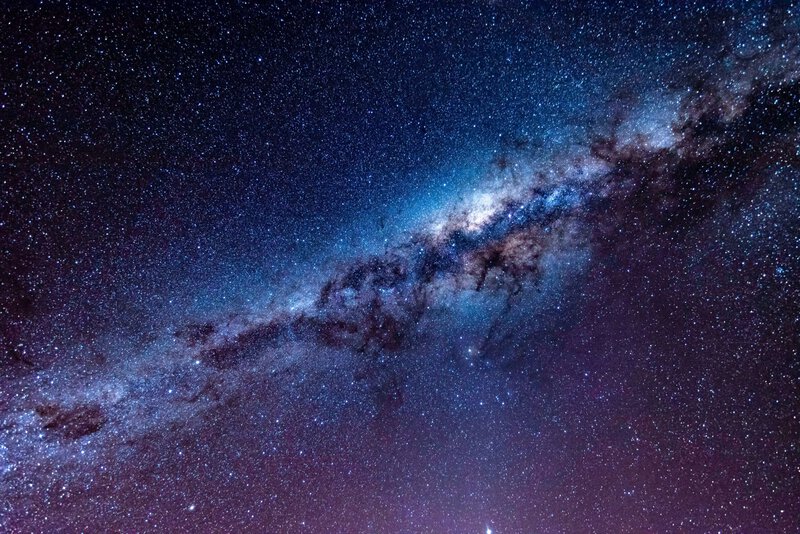
There is something genuinely disorienting about the possibility that astronomers have been systematically underestimating the size of the galaxy they inhabit. Yet that is precisely what new stellar surveys and revised distance measurements suggested in 2025. Researchers using populations of distant stars as positional tracers — mapping the galaxy’s outer boundary region by region — found evidence that the galactic disk or halo extends significantly farther than previously thought.
A larger Milky Way would not be a cosmetic revision. It would require recalculating the galaxy’s total mass, the spatial extent of its dark matter halo — the invisible gravitational scaffolding that governs stellar orbits and galactic rotation — and the dynamics that bind its satellite dwarf galaxies. It would also affect predictions for the Milky Way’s eventual collision with the Andromeda galaxy, an event expected billions of years from now whose timeline and character depend heavily on both galaxies’ masses.
This finding must be flagged as contested and not yet settled. Independent teams need to verify the stellar distance measurements and rule out alternative explanations — including the possibility that distant tracer stars are misclassified or their distances miscalculated — before any formal revision to the literature’s accepted galactic size is warranted. It remains one of the most consequential pending confirmations in recent astronomy, and its resolution will shape galactic-scale research regardless of which way it falls.
#3 — Two Planets Lighter Than Candy Floss: The Physics of Ultra-Low-Density Worlds
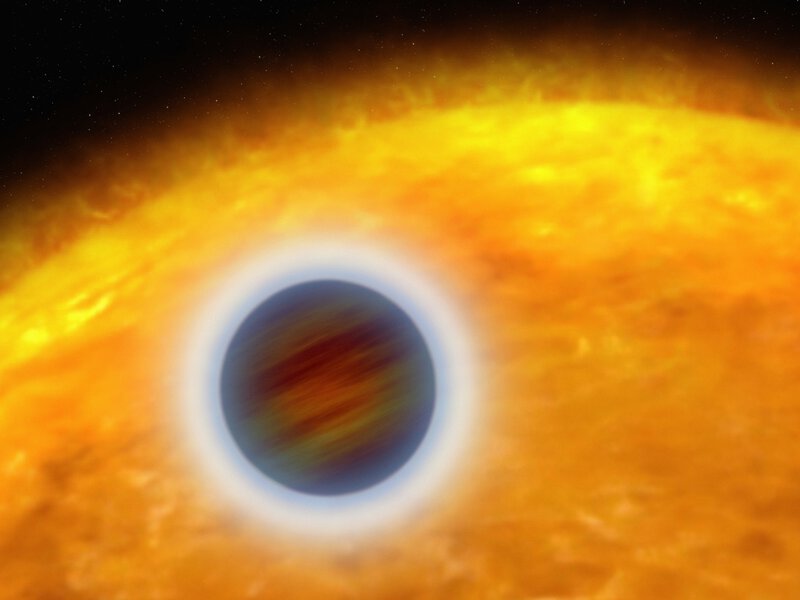
Spun sugar is itself almost entirely air, which makes the following worth pausing over: astronomers in 2025 announced the discovery of two giant planets with bulk densities lower than that of candy floss. These worlds have volumes comparable to gas giants but masses so low that their average density — total mass divided by total volume — falls below that of one of the least substantial materials humans routinely encounter.
The likely explanation involves distended hydrogen-helium envelopes puffed outward by intense stellar irradiation or insufficiently characterized internal heating processes. What makes these two objects scientifically significant is not just their extremity but what they imply for atmospheric physics. Current models of atmospheric escape — the process by which stellar radiation progressively strips gas away from a planet over billions of years — predict that envelopes as extended as these should not remain stable. They should erode and disperse. The fact that these planets apparently retain their inflated atmospheres is a direct challenge to existing theory, and resolving that tension will require either substantially revised escape models or the identification of stabilizing mechanisms the field has not yet characterized.
The discovery adds to a small but growing census of so-called super-puff planets, collectively demonstrating that planet formation produces a far wider range of bulk properties than standard models predicted. Astronomy Magazine’s archive on exoplanet atmospheres traces how the super-puff category has developed as detection methods improved over the past decade.
#4 — JWST’s Roasted-Planet Thermal Map and the Extreme-Heat Frontier
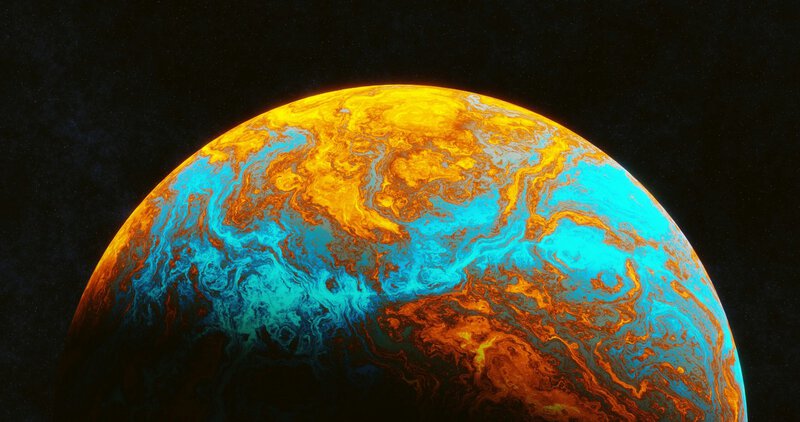
JWST’s infrared sensitivity has opened a new chapter in the study of severely irradiated worlds. In 2025, the telescope produced its most detailed thermal profile yet of a highly irradiated planet — a hot Jupiter or ultra-hot Neptune orbiting so close to its host star that its dayside temperature rivals the surface of a cooler star. The precision of the measurement pushed beyond what atmospheric science had previously considered reliably tractable.
What distinguishes JWST’s contribution here is the qualitative shift from detection to characterization. Earlier instruments could establish that such planets were extraordinarily hot. JWST can map how heat is redistributed across a planet’s surface, trace wind circulation patterns, probe chemical composition in the upper atmosphere, and assess whether clouds condense on the cooler nightside hemisphere. That granularity allows researchers to test atmospheric dynamics models that were previously unfalsifiable — a genuine advance in what the field can interrogate rather than merely observe.
The thermal data itself is considered robust. The theoretical framework for fully explaining what drives the observed heat distribution and chemistry remains an active area of competing models. Interpretation, in other words, is still catching up to measurement — a healthy and expected state for frontier science. Space.com’s science news section has tracked JWST’s ongoing exoplanet atmospheric campaign in detail.
#5 — JWST Turns Four, Images a Galaxy Merger, and Extends Its Lead as Astronomy’s Defining Instrument
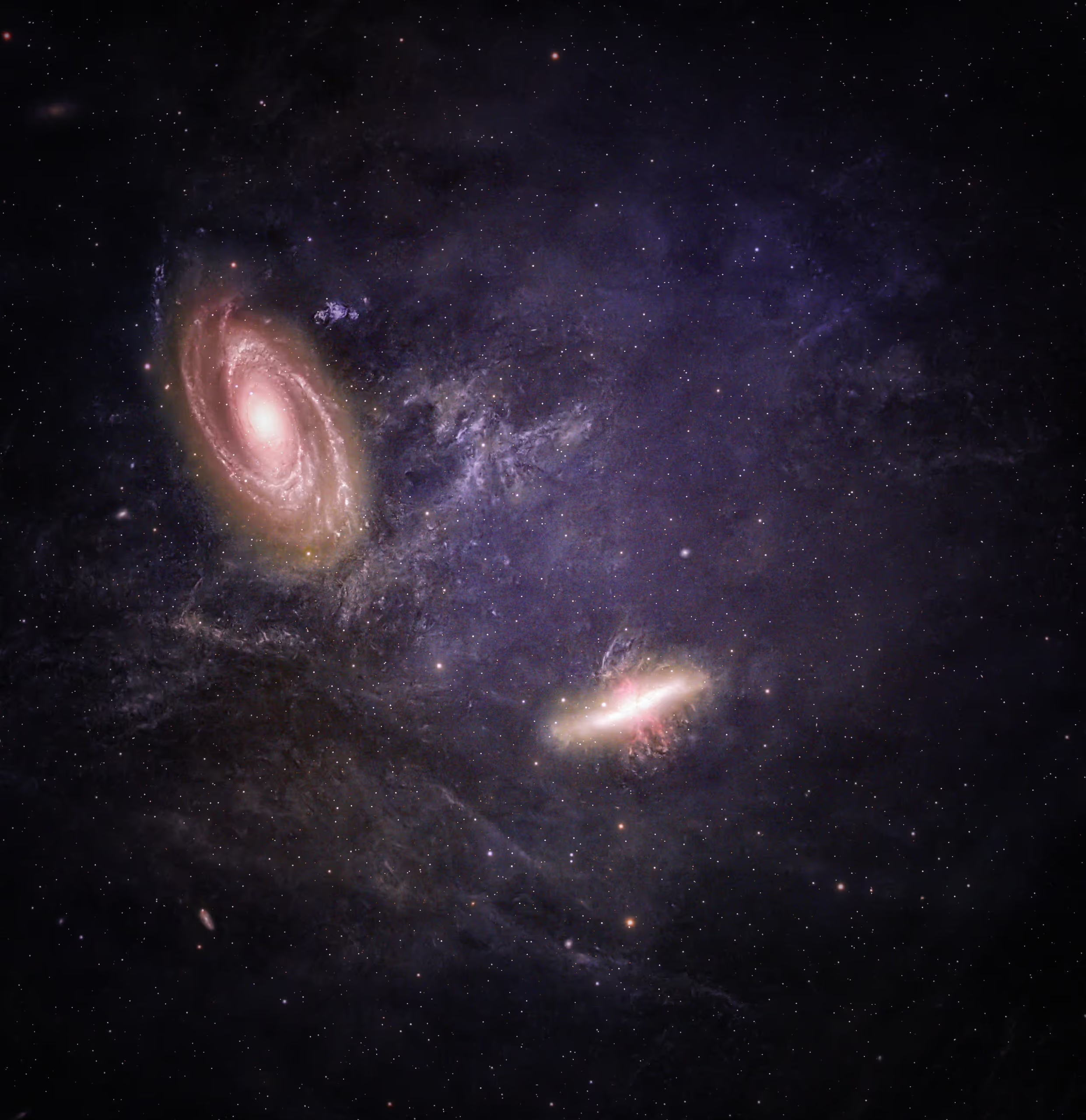
The James Webb Space Telescope marked its fourth year of science operations in 2025 with the release of a detailed image of a galaxy merger — two galaxies in the process of colliding and gravitationally reshaping each other across hundreds of millions of years. The event itself is not unusual at cosmological scales; galaxy mergers are common across cosmic history. What JWST provides is unprecedented clarity.
When galaxies collide, individual stars almost never physically strike one another — the distances between stars within any galaxy are simply too vast. Instead, the galaxies’ gravitational fields distort each other’s structure, compress gas into dense filaments, and trigger intense bursts of new star formation. These events produce thick dust clouds that block optical light. JWST’s infrared vision cuts through that obscuring material, revealing structural detail that ground-based and earlier space-based optical telescopes could not resolve.
The anniversary image is not primarily aesthetic. JWST’s four-year data archive underpins multiple discoveries across this list — from the surviving white-dwarf planet to the roasted-world thermal map — making the telescope the single most consequential active instrument in observational astronomy. With propellant reserves estimated to support operations well into the 2040s, its contributions to the discovery catalogue are expected to compound year on year. By that measure, 2025 is most likely a midpoint in JWST’s transformative run rather than anything close to its peak.
#6 — The Swift Orbital Boost: The Rescue Mission That Protected Irreplaceable Infrastructure
Not every milestone in astronomy is a discovery. Some are acts of institutional judgment that determine what future discoveries become possible. NASA’s Swift Boost mission — launched in 2025 to rescue the Swift space telescope — belongs in any honest account of the year’s astronomy milestones for exactly that reason.
Swift, launched in 2004, has served as the field’s primary instrument for detecting and rapidly characterizing gamma-ray bursts: the most energetic explosions in the observable universe, typically produced by the collapse of massive stars or the merger of neutron stars. Its ability to autonomously pivot and lock onto a transient event within seconds of detection is a capability no currently operational replacement fully replicates. Losing it would create a measurable gap in high-energy transient astronomy at a moment when the field is increasingly focused on multi-messenger events — phenomena detected simultaneously across gravitational waves, neutrinos, and electromagnetic light.
The Swift Boost reflects a principle that tends to be underweighted in public coverage of space science: sustained, continuous observation accumulates scientific value that new missions cannot immediately replicate. A 20-year-old telescope with calibrated instruments, a coherent long-baseline data record, and deep institutional expertise is frequently more productive per dollar than a newly launched mission still being commissioned and characterized. Infrastructure shapes discovery, and the 2025 decision to extend Swift’s operational life will likely yield findings that cannot yet be anticipated. Cornell University’s Department of Astronomy news offers perspective on how multi-decade observatories accumulate irreplaceable scientific value over time.
What 2025’s Discoveries Share — and Why the Pattern Matters
Taken together, the most significant astronomy results of 2025 share a structural quality: they do not simply add data points to existing models — they stress-test the models themselves. A planet that apparently survived stellar death challenges the established theory of planetary system evolution. A galaxy that may be substantially larger than previously mapped challenges the field’s self-portrait at galactic scales. Planets less dense than spun sugar challenge atmospheric physics. A roasted world measured in unprecedented thermal detail challenges assumptions about what irradiated-atmosphere science can actually know.
That pattern — discovery as disruption rather than confirmation — is what makes this particular year’s results worth ranking carefully and watching closely as follow-up science develops. In each case, the initial finding is only the beginning. The more consequential work is the replication, the modeling, and the eventual revision of frameworks that the community has relied on for decades. That process, slower and less publicly visible than the announcement headlines, is where 2025’s discoveries will ultimately prove their worth.