
On a clear, moonless night far from city lights, the unaided human eye can detect the Andromeda Galaxy — a smudge of ancient light that has traveled roughly 2.5 million light-years to reach the retina. That makes it the most distant object a person can see without optical aid. The observation reframes what “looking up at the sky” actually means: not passive wonder, but an act of biological precision that most people never fully exploit.
The Naked Eye’s Surprising Ceiling
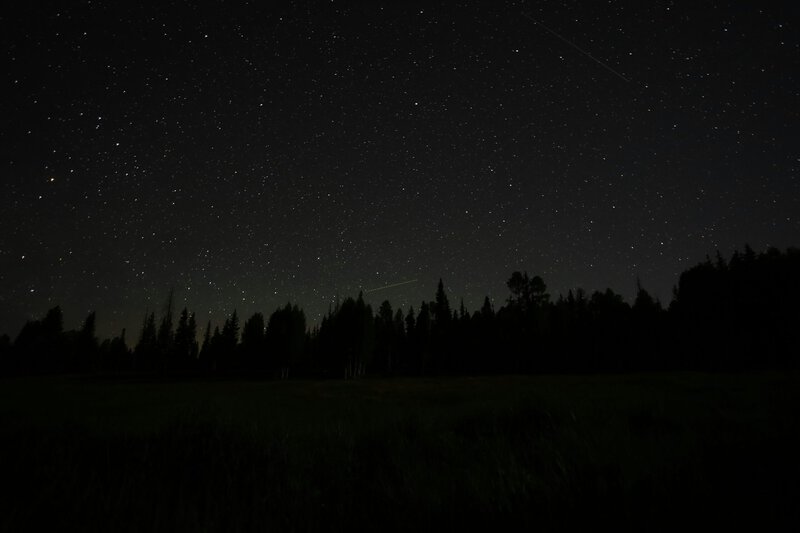
Under ideal conditions, the unaided eye can distinguish approximately 4,500 to 5,000 individual stars — more than enough to fill a detailed star chart for beginners. The limiting factor is almost never biology. Light pollution, not the eye itself, is what keeps most observers from approaching that ceiling. Move to a genuinely dark site and the sky becomes a different object entirely: the Milky Way resolves into lanes and dust clouds, and objects that seemed invisible from the suburbs materialize overhead.
The eye’s sensitivity under low-light conditions depends on the retina’s roughly 120 million rod cells, which are optimized for monochrome, dim-light detection. After 20 to 30 minutes of dark adaptation — sitting in darkness without looking at a phone or white-light flashlight — these cells become dramatically more sensitive to faint sources. That process is the single most important technique in any naked-eye astronomy practice, and it costs nothing.
Rod cells are concentrated outside the fovea, the eye’s sharp-focus center, which means they are paradoxically better at catching faint objects when the eye is not aimed directly at them. Astronomers call this technique averted vision: looking slightly to the side of a dim target so its light falls on the rod-dense periphery rather than the cone-packed center. A faint star cluster that vanishes when stared at will often snap into view the moment the gaze shifts a few degrees away.
The eye’s limiting magnitude — the faintest brightness detectable under ideal conditions — reaches approximately +6.5 on the astronomical magnitude scale, where lower numbers indicate brighter objects and the scale runs counterintuitively (the Sun sits around magnitude −26.7). Color perception fades for the dimmest stars because rods carry no color information, so noticing the vivid red of Betelgeuse or the blue-white of Rigel signals a relatively bright object — a cue encoded visually on many printed star charts through colored dots indicating stellar temperature class.
What a Star Chart Actually Is — and Why It Works
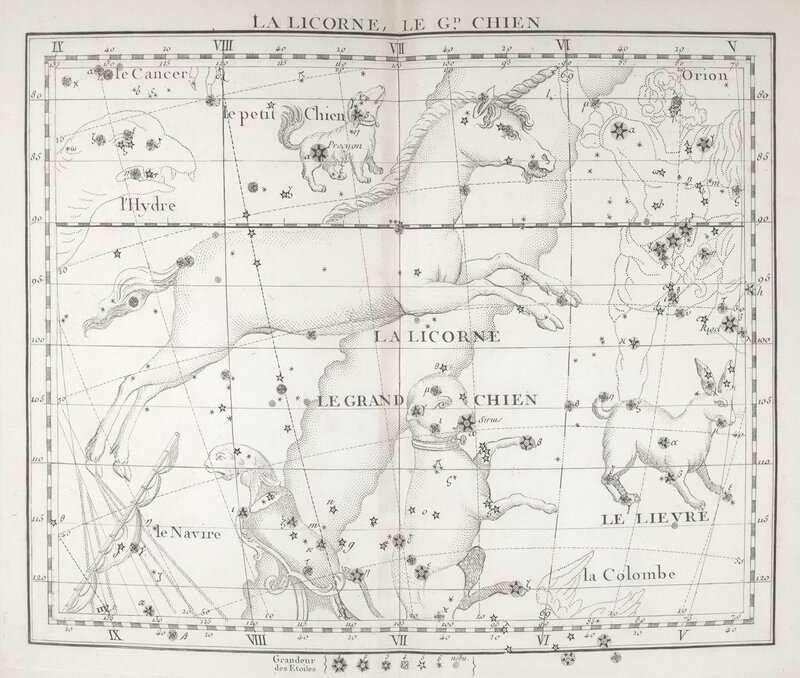
A star chart is a celestial map of the night sky with astronomical objects laid out on a grid system — a sky-to-paper (or sky-to-screen) translation that works on the same principle as a street map. The grid uses two coordinates: right ascension (celestial longitude, measured in hours rather than degrees) and declination (celestial latitude, measured in degrees north or south of the celestial equator). Together, these allow any object to be pinpointed with the same logical precision a GPS uses for addresses.
Because Earth rotates daily and orbits the Sun annually, the visible slice of sky shifts both nightly and seasonally. A well-designed star chart accounts for this by being date- and time-specific. Skymaps.com’s free Evening Sky Map publishes a downloadable monthly chart covering constellations, planets, and comets calibrated to that specific period, removing the guesswork for anyone planning an observing session.
Learning to read a star chart — orienting it to your horizon, then navigating from a bright anchor star to progressively fainter targets — is the foundational skill that converts raw eyesight into genuine astronomical literacy. Every other technique in this guide depends on it.
What You Can Actually See Tonight: A Practical Inventory
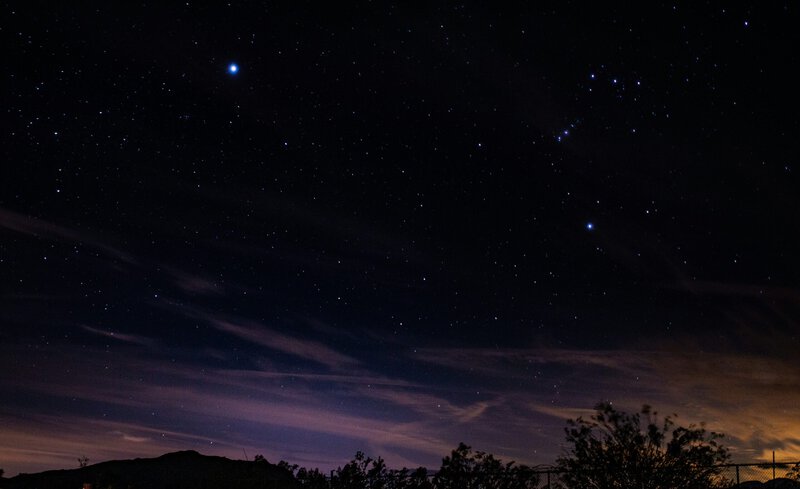
Not everything in the night sky demands effort or equipment. Some targets are simply there, obvious and bright, waiting to be named. The following ranked inventory moves from easiest to most dependent on dark skies.
- Planets: Venus, Mars, Jupiter, and Saturn are frequently the brightest objects in the sky after the Moon, and they do not twinkle the way stars do — their measurable angular size stabilizes them against atmospheric turbulence. Sky & Telescope’s interactive sky chart displays planet names alongside star names, with toggleable layers for constellation lines, constellation boundaries, and deep-sky objects, making it straightforward to distinguish a planet from a nearby star at a glance.
- Bright stars: Sirius (magnitude −1.46, the sky’s brightest star), Arcturus, Vega, and Capella are all visible without any optical aid and labeled in standard planning tools. Stellarium Web renders a realistic star map showing exactly what the unaided eye, binoculars, or a telescope can reach at a specific time and location — useful for previewing a session before going outside.
- Messier objects: The Orion Nebula (M42), the Pleiades star cluster (M45), and the Andromeda Galaxy (M31) all appear in Charles Messier’s 18th-century catalog precisely because they were conspicuous enough with the naked eye to be mistaken for comets — the hazard Messier was cataloging against. All three are genuine naked-eye objects under moderately dark skies, though M31 benefits from averted vision.
- Dynamic events: Meteor showers, the Milky Way band, and the International Space Station — which can reach magnitude −5.9, outshining Venus — are unaided-eye phenomena that reward planning. Skymaps.com flags these events on its monthly chart so observers can prepare in advance rather than discover them by accident.
How to Read a Star Chart in Four Practical Steps

A star chart is useless if it stays flat on a table. The following sequence moves it from paper to sky, in the order that actually works in the field.
- Orient the chart to your horizon. Hold the chart overhead or tilt it so the edge labeled with your facing direction — North, South, East, or West — aligns with that horizon. The chart’s center represents the zenith, the point directly above your head. Misaligning this step is the most common beginner error, and it makes every subsequent identification harder.
- Find a bright anchor. Identify one unmistakably bright star or planet visible to the naked eye, then locate its counterpart on the chart. In the Northern Hemisphere, Polaris (the North Star, magnitude +2.0) is the ideal anchor because it remains stationary while all other stars rotate around it nightly. In the Southern Hemisphere, the Southern Cross serves a comparable orienting function.
- Star-hop toward fainter targets. Trace a line from the anchor along the chart’s constellation lines to progressively dimmer objects, training the eye to recognize angular distances — the apparent gap between two stars measured in degrees. A useful rule of thumb: a closed fist held at arm’s length covers roughly 10 degrees of sky. Stelvision’s online sky map is designed specifically to make this hop-by-hop identification of constellations and major stars accessible to first-time observers, presenting a clean real-time view without overwhelming detail.
- Use apps as a scaffold, not a permanent crutch. Apps like Star Chart for Android, used by over 40 million people worldwide, overlay labels on a live camera view and confirm identifications in real time. That augmented-reality confirmation genuinely accelerates confidence early on — but the underlying skill of reading a static chart transfers to any dark-sky site without a phone signal, battery, or data connection. Build the paper skill first; use the app to verify it.
Real Limits — and What Honest Science Says
Understanding what the naked eye cannot do is as important as knowing what it can. Two constraints matter most in practice.
The first is sky quality. The Bortle Dark-Sky Scale — a nine-point system developed by amateur astronomer John Bortle in 2001 — quantifies sky conditions from Class 1 (pristine dark sky, where the Milky Way casts visible shadows on the ground) to Class 9 (inner-city sky, where only a handful of the brightest stars and planets are visible). Most suburban observers live under Class 6 to 8 conditions, which suppresses the visible star count from roughly 5,000 to a few hundred. The biology is intact; the photons are being washed out before they arrive.
The second constraint is atmospheric seeing — the turbulence that causes stars to twinkle and blur. Twinkling is not a failure of eyesight; it is a physics problem caused by refractive index variations in moving air masses. Binoculars and telescopes cannot eliminate it, though changing location, elevation, or season often improves conditions significantly.
For observers ready to step beyond naked-eye limits, binoculars represent a modest, low-cost upgrade. Standard 7×50 or 10×50 binoculars reveal tens of thousands of stars that are invisible to the unaided eye — and every star-chart skill developed for naked-eye observation transfers directly to binocular use, since the same coordinate grid and constellation framework apply.
The scientific consensus sets a firm ceiling: the unaided eye cannot resolve individual stars in distant galaxies, split closely paired binary stars, or detect objects fainter than approximately magnitude +6.5 under any conditions, regardless of dark adaptation or technique. Any claim beyond those limits warrants skepticism. Within them, however, the naked eye remains a genuinely capable astronomical instrument — one that has mapped the sky for tens of thousands of years and still rewards anyone willing to stand in the dark long enough to let it work.