
Forty-two years of biological sampling—nearly 2,500 specimens ranging from algae to eagles—has produced the most detailed picture yet of how so-called “forever chemicals” have quietly infiltrated every tier of the Great Lakes food web. Concentrations multiply at each step up the food chain until they land on the plate of anyone eating lake trout from Erie or Ontario. The findings, published by University of Notre Dame researchers in the Journal of Environmental Quality, reframe PFAS contamination in the Great Lakes not as a localized pollution story but as a systemic, decades-long public-health concern touching tens of millions of people.
A Chemical Designed to Last Forever

PFAS—per- and polyfluoroalkyl substances—earned the “forever chemical” label for a precise chemical reason: the bond between carbon and fluorine atoms is among the strongest in all of organic chemistry. That bond resists heat, water, oil, and the biological enzymes that break down most other contaminants. Introduced widely in industrial and consumer applications beginning in the mid-twentieth century, PFAS compounds were used in everything from nonstick cookware and food packaging to firefighting foam and industrial manufacturing. Once released into the environment, they do not meaningfully degrade. They accumulate in sediment, percolate into water, and enter living tissue—where they stay.
The Great Lakes are not an abstract backdrop for this story. The five lakes together hold roughly 21 percent of the world’s surface fresh water and support fisheries that feed and employ communities across the United States and Canada. PFAS contamination here is, by definition, a continental public-health question.
What the Notre Dame Study Actually Did—and Why It Matters
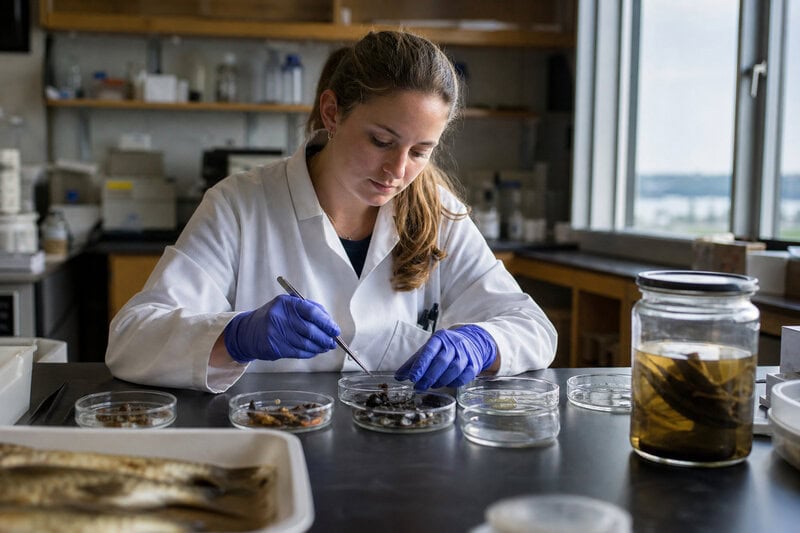
Previous PFAS research in the Great Lakes tended to examine a single lake, a single species, or a single point in time. The University of Notre Dame synthesis broke from that tradition by aggregating data from 42 years of independent studies into a single, unified analysis. The nearly 2,500 biological samples span multiple trophic levels—the ecological term for rungs on a food-chain ladder—including primary producers such as algae, filter feeders, small invertebrates, forage fish, apex predatory fish, and fish-eating birds.
The research team focused on six PFAS compounds because those specific substances appeared most consistently across all five lakes, making it possible to draw direct, decade-spanning comparisons. By holding the chemical list constant and varying the species, lake, and decade, the researchers could isolate how contamination patterns shifted across the entire ecosystem over time—something no prior single-study approach could accomplish. Great Lakes Now has covered the study’s broader implications for the region’s ecology and fisheries management.
Biomagnification: How Forever Chemicals Climb the Food Chain
To understand why a top predator carries far more PFAS than the water it swims in, it helps to distinguish two related processes. Bioaccumulation is the buildup of a substance within a single organism when absorption outpaces elimination. Biomagnification is the amplification of that concentration at each successive level of the food web: each predator eats many prey animals, absorbing not just one organism’s chemical load but many, compounding the contamination with every meal over a lifetime.
In the Great Lakes, the pathway begins with PFAS dissolved in water and bound to sediment, where algae and plankton absorb them. Small invertebrates eat the algae; forage fish such as alewives eat the invertebrates; large predatory fish such as lake trout and walleye eat the forage fish; and fish-eating birds—cormorants, herring gulls, osprey, Caspian terns—eat the predatory fish. Each step can multiply PFAS concentrations significantly. A bird or a person eating large predatory fish from a contaminated lake sits at the end of a 40-year, multi-species accumulation chain.
PFAS also behave differently from legacy contaminants like PCBs or DDT, which accumulate primarily in fat tissue. PFAS bind preferentially to proteins, which means they concentrate heavily in organs—liver, blood, eggs—and in lean muscle. That distinction carries a practical warning: the conventional advice to trim fat and remove skin before cooking fish, which meaningfully reduces PCB exposure, offers limited protection against PFAS. The chemical is in the protein itself.
A Tale of Two Basins: Why Erie and Ontario Show the Highest Levels
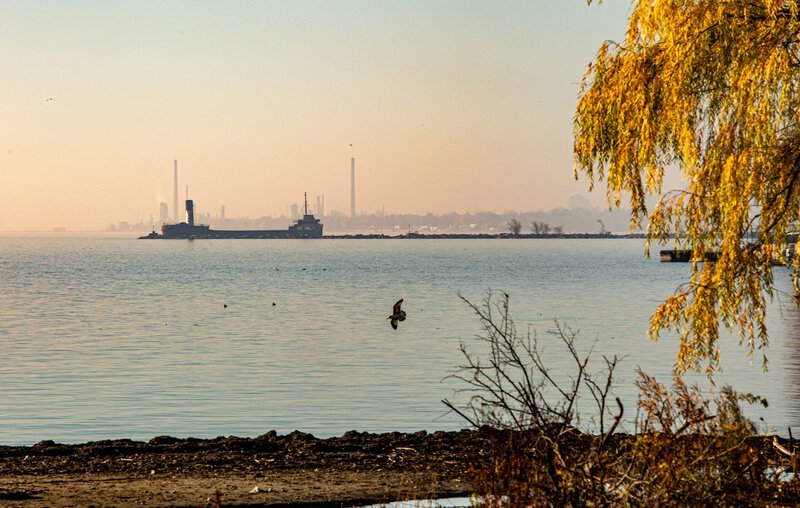
One of the clearest findings from the Notre Dame synthesis is a geographic gradient. Lakes Michigan, Huron, and Superior carry smaller PFAS concentrations compared with Lakes Erie and Ontario—a pattern that maps closely onto human geography. The southern and eastern shores of the Great Lakes basin encompass the most densely populated and industrialized watersheds in the region, including manufacturing corridors where PFAS were used extensively for decades in industrial processes, consumer goods production, and military and civilian firefighting operations.
Hydrology reinforces the pattern. Water flows generally from Lake Superior eastward through Huron and Michigan toward Erie and then Ontario, carrying pollutants downstream. The lower lakes also flush more slowly than the upper lakes, allowing contaminants more time to concentrate in sediment, water, and the organisms living there.
Species-level differences add another layer of complexity. Lake trout collected from Lake Erie have been shown in prior research to carry higher PFAS concentrations than walleye taken from the same lake. Researchers attribute this to diet composition, habitat depth, and lifespan—older, deeper-dwelling fish that eat higher on the food web for longer simply have more time to accumulate contaminants. The Notre Dame dataset, with its multi-decade, multi-species scope, allows these within-lake patterns to be seen in the context of broader ecosystem trends rather than as isolated data points.
Fish-Eating Birds as Ecosystem Alarm Signals

Among the most valuable data in the 42-year synthesis are tissue samples from fish-eating birds. Species such as double-crested cormorants, herring gulls, and Caspian terns serve as what ecologists call sentinel species: because they consume large quantities of predatory fish and live long enough for multi-year accumulation to become measurable, their tissue concentrations integrate contamination signals from wide areas of the lake and from multiple fish species simultaneously.
Other research—separate from the Notre Dame synthesis—has linked elevated PFAS levels in Great Lakes bird populations to eggshell thinning, immune suppression, and disrupted hormone signaling. The Notre Dame study itself carefully focuses on documenting PFAS concentrations rather than attributing specific health outcomes, a distinction the researchers draw deliberately. Demonstrating that a contaminant is present at a given concentration is methodologically distinct from proving that it causes a specific biological harm in a wild population.
What bird monitoring provides unambiguously is a long-term record. Tracking PFAS burdens in bird populations across four decades offers one of the clearest available signals for whether contamination in the broader food web is rising, stabilizing, or—in the case of specific regulated compounds—beginning to decline following manufacturing restrictions.
The Unknown PFAS Problem: A Shadow Inventory of Chemicals
The six-compound framework at the heart of the Notre Dame study captures the most consistently detected PFAS across the Great Lakes, but separate research suggests it represents only a fraction of what is actually present. A distinct study identified dozens of previously unknown PFAS compounds in the Lake Huron food web, detected in fish tissue, mussels, and lake water using non-target analytical methods—techniques that cast a wider chemical net than standard regulatory monitoring, which tests only for a predefined list of known substances.
This is a genuinely emerging and contested area of science. The detection of novel PFAS compounds does not, by itself, establish that those compounds are harmful; toxicological data characterizing their persistence, biomagnification potential, and health effects largely does not yet exist. What researchers emphasize is that cumulative exposure to dozens of low-concentration, unstudied compounds may produce biological effects that single-chemical studies are structurally unable to detect. The two bodies of research together illustrate a two-tier knowledge gap: science now has 40 years of data on a handful of PFAS, and almost none on the many more that advanced analytical chemistry is beginning to reveal. The PFAS Project has reported on both the established findings and the emerging unknowns in depth.
What This Means for People Who Eat Great Lakes Fish
Human exposure to PFAS through Great Lakes fish mirrors the food-web hierarchy the Notre Dame synthesis documents. People who regularly consume large, long-lived predatory fish—lake trout, walleye, salmon—from the more contaminated lower lakes face the greatest potential PFAS intake from this source. Subsistence fishers and communities with strong cultural traditions of Great Lakes fishing face disproportionate exposure simply by eating more fish more frequently.
State and provincial fish consumption advisories already address several Great Lakes species and locations, but those advisories are not uniformly updated to reflect PFAS specifically. Researchers argue that comprehensive datasets like the Notre Dame synthesis should directly inform regulatory and advisory thresholds. The Great Lakes Commission has highlighted the study’s potential role in shaping updated guidance for resource managers and public-health agencies across the basin.
The practical advice that follows from PFAS protein-binding behavior is counterintuitive to many fish consumers: trimming fat, removing skin, and grilling to let fat drip away—all effective strategies for reducing PCB exposure—do not substantially reduce the PFAS burden in a fish fillet. Species choice and lake of origin matter far more than cooking technique.
Perhaps the most important takeaway from four decades of data is that the situation is not static. Concentrations of some regulated PFAS compounds show early signs of leveling off in certain lakes following manufacturing phase-outs, a finding that demonstrates regulatory action can produce detectable environmental responses. The carbon-fluorine bond ensures these chemicals will not disappear quickly, but the 42-year record also shows that the trajectory of contamination is not fixed. The full peer-reviewed analysis provides the methodological foundation for what must now become a sustained, decades-long effort to monitor, regulate, and ultimately reduce the chemical burden the Great Lakes carry—and pass on.