
A Tyrannosaurus rex — the apex predator of the Cretaceous, the monster that has stalked cinema screens for decades — walked at roughly 2.86 miles per hour, a pace a determined toddler could match. That finding, published in 2021 in Royal Society Open Science by Dutch researchers using biomechanical modeling of tail vertebrae stiffness, is one of dozens of peer-reviewed revelations that have quietly dismantled the pop-culture dinosaur most people carry around in their heads. A new attraction in east Wichita is now putting that revised science directly in front of families.
What the Wichita Attraction Actually Offers
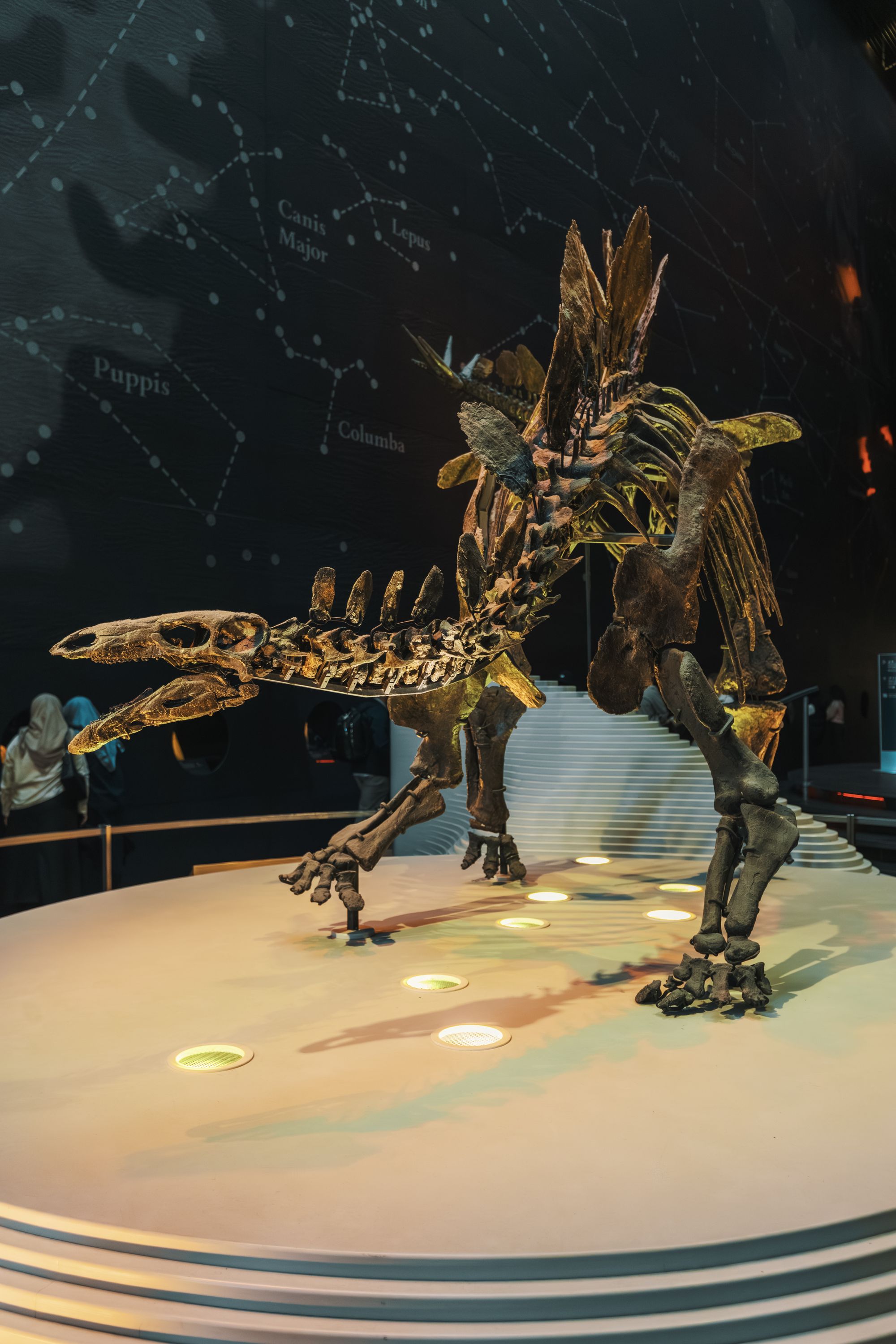
The experience features more than 30 state-of-the-art exhibits spanning the Triassic through Cretaceous periods, a suite of virtual reality environments, and a robotic walking baby Stegosaurus named Steve. The exhibits give visitors a chronological spine for understanding how dinosaur body plans evolved across roughly 165 million years of Mesozoic history. The virtual reality experiences place visitors inside reconstructed ancient environments — a format increasingly used by institutions including the Smithsonian National Museum of Natural History to communicate what is confirmed versus what is inferred.
The attraction’s more than 30 displays and interactive models have the infrastructure to reach audiences who will form lasting impressions of what dinosaurs were. The standard worth holding such venues to is the one set by institutions like the American Museum of Natural History and the Field Museum: label speculative reconstructions as speculative, cite the scientific advisors who informed design choices, and commit to updating displays as new findings emerge.
Meet Steve — and Why a Walking Robot Baby Stegosaurus Changes the Conversation
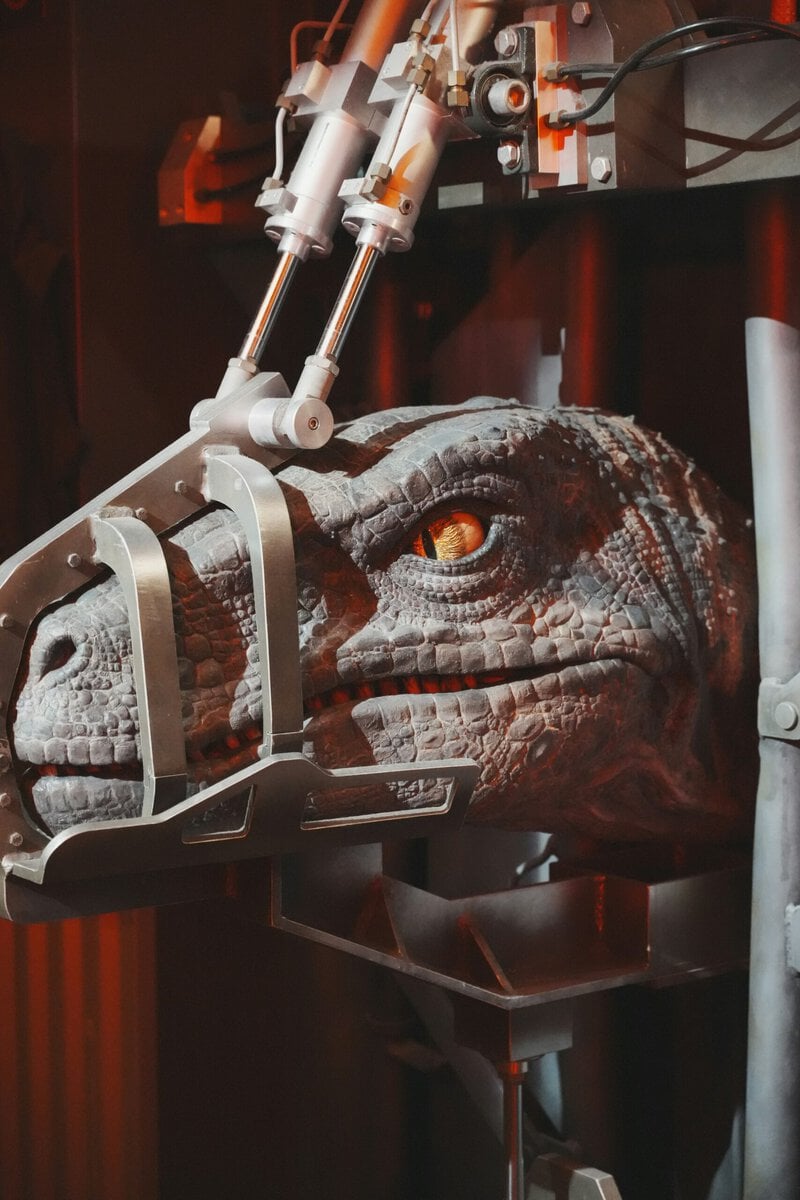
Steve matters because building an animatronic forces designers to make hard, specific choices. What angle does the tail hold? How wide is the stance? How fast do the legs cycle? Each of those decisions has a scientific answer — or, in some cases, a scientific debate — and the choices embedded in Steve reveal exactly how much the field now knows and how much remains genuinely uncertain.
When Steve moves through the exhibit with his tail extended horizontally behind him, that posture encodes decades of corrected science. Fossilized trackways — preserved footprints from multiple dinosaur species — show no tail-drag marks, meaning the tail was held off the ground during normal locomotion. Skeletal articulation studies support the same conclusion: most dinosaurs carried their tails horizontally, extended as a counterbalance to the forward-leaning torso. This interpretation has been reinforced by researchers including Paul Barrett at the Natural History Museum London and is now standard in the field.
Visitors should also understand a critical distinction about Steve’s species: Stegosaurus belongs to Ornithischia, a dinosaur lineage entirely separate from theropods. Evidence for feathers in ornithischians is far weaker and more limited than in theropods, making scales the scientifically defensible default for depicting a Stegosaurus. Steve’s scaly appearance, if accurate to the fossil record, reflects sound paleontological reasoning.
How Dinosaurs Actually Moved: Biomechanics Over Box Office
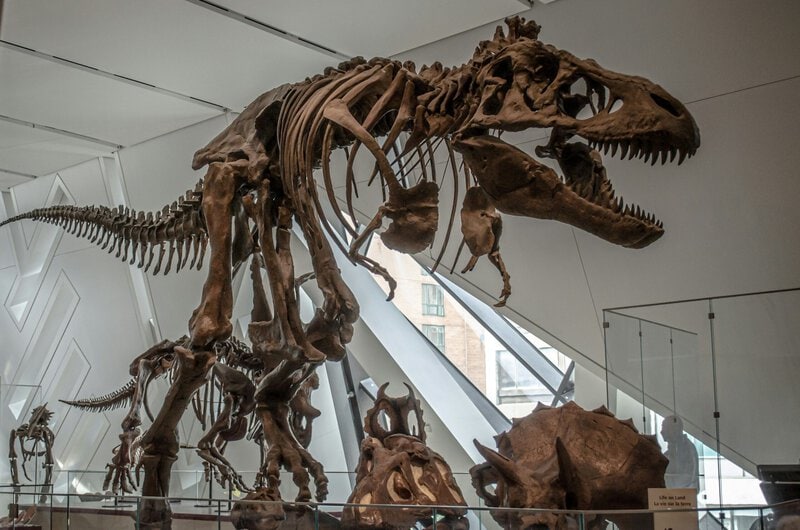
The primary scientific tool for reconstructing how extinct animals moved is biomechanical modeling — a method that uses bone geometry, muscle attachment scars on fossil surfaces, and comparisons with living animals to estimate locomotion in creatures no one has ever observed. Its conclusions frequently contradict cinema.
The 2021 Royal Society Open Science study on Tyrannosaurus rex is among the most striking recent examples. By analyzing the stiffness of tail vertebrae and the mechanical demands placed on the skeleton during movement, researchers calculated a preferred walking speed of approximately 2.86 mph. The study further suggested the animal likely could not sustain the explosive sprinting speeds depicted in the Jurassic Park franchise without risking structural injury. That conclusion — that T. rex was a walker, not a sprinter — is now part of the broad scientific consensus on large theropod locomotion.
The picture is more complicated for smaller predators. University of Manchester research led by Bill Sellers in 2013 used digital musculoskeletal models to analyze theropod agility and concluded that animals like Velociraptor were quick and maneuverable, but not the hypersonic ambush machines of cinema. Pursuit speeds were moderate and heavily dependent on prey behavior and terrain. The cinematic Velociraptor is also substantially wrong in body size: the real animal stood roughly knee-high to a human and was almost certainly feathered — a point the next section addresses.
Scientists broadly agree that large theropods walked rather than galloped and that their locomotion was more constrained than film suggests. The precise top speeds of mid-sized predators — animals in the 100-to-500-kilogram range — remain genuinely contested, with different biomechanical models producing meaningfully different results.
Did Dinosaurs Have Feathers? The Evidence Is Stronger Than Most People Realize
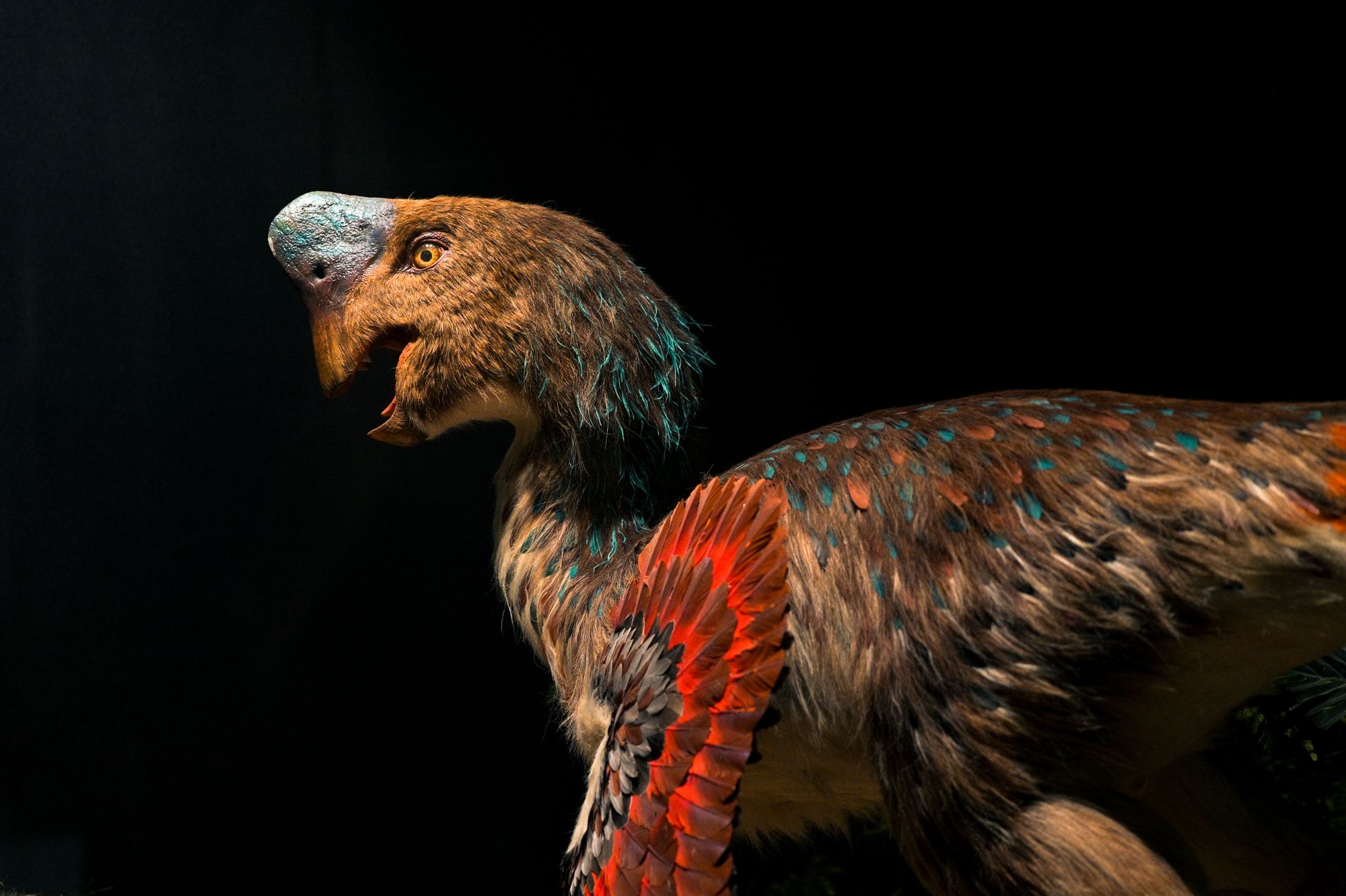
For non-avian theropod dinosaurs — the lineage that includes Velociraptor, the giant Yutyrannus, and the direct ancestors of modern birds — the presence of feathers or feather-like filaments is no longer a fringe hypothesis. It is supported by dozens of fossil specimens with preserved soft tissue, documented in reviews across journals including Nature and Current Biology, and it represents the current scientific consensus for that group.
A landmark piece of evidence arrived in 2012, when paleontologist Xu Xing and colleagues described Yutyrannus huali in Nature. This nine-meter-long theropod — large enough that size alone had long been used to argue against feathers in big dinosaurs — bore extensive filamentous feather impressions across its body. The specimen effectively closed the debate about whether large-bodied theropods could be feathered: they demonstrably could.
The question of T. rex specifically is more nuanced. Skin impressions recovered from multiple T. rex specimens, analyzed by researchers at the University of Alberta and elsewhere, show scaly skin across significant portions of the body, including the neck, hips, and tail. Current evidence suggests adult T. rex was predominantly scaly, with feathers possibly present in juveniles or restricted to specific body regions. This is a genuine area of ongoing scientific debate, and honest reconstructions should acknowledge that uncertainty.
Color, Skin, and the Hidden Palette of the Mesozoic
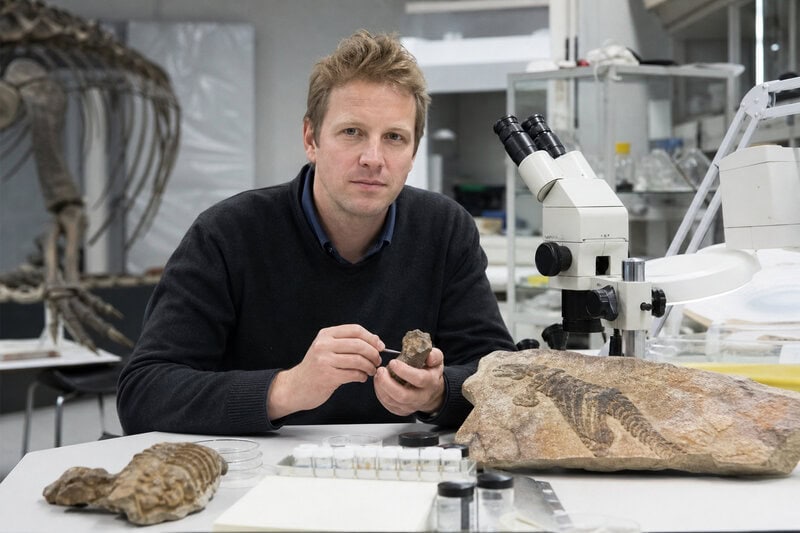
For most of paleontology’s history, dinosaur color was pure speculation — artists chose hues based on gut instinct and comparisons to living reptiles. That changed beginning in 2008, when Jakob Vinther at the University of Bristol pioneered the analysis of melanosomes: microscopic, pigment-carrying structures that can survive fossilization under exceptional conditions and whose shape correlates with specific colors in modern birds.
The technique produced a celebrated result in 2012, when Li and colleagues published melanosome analysis of Microraptor gui in Science, reconstructing the small four-winged dinosaur as iridescent black — structurally similar to the plumage of a modern starling. It remains one of the very few dinosaur species with a color reconstruction resting on direct physical evidence rather than artistic license.
The limits of the technique are equally important. Melanosome analysis requires exquisitely preserved fossils, and the conditions that allow soft-tissue preservation are rare. For the vast majority of dinosaur species — including large sauropods, ceratopsians, and most of the animals visitors will encounter at any attraction — color is entirely unknown. Any bold, specific color scheme applied to those animals is an educated artistic inference, not a scientific claim. Credible exhibits communicate this distinction openly.
Posture, Tails, and the Long Goodbye to the Tail-Dragging Monster
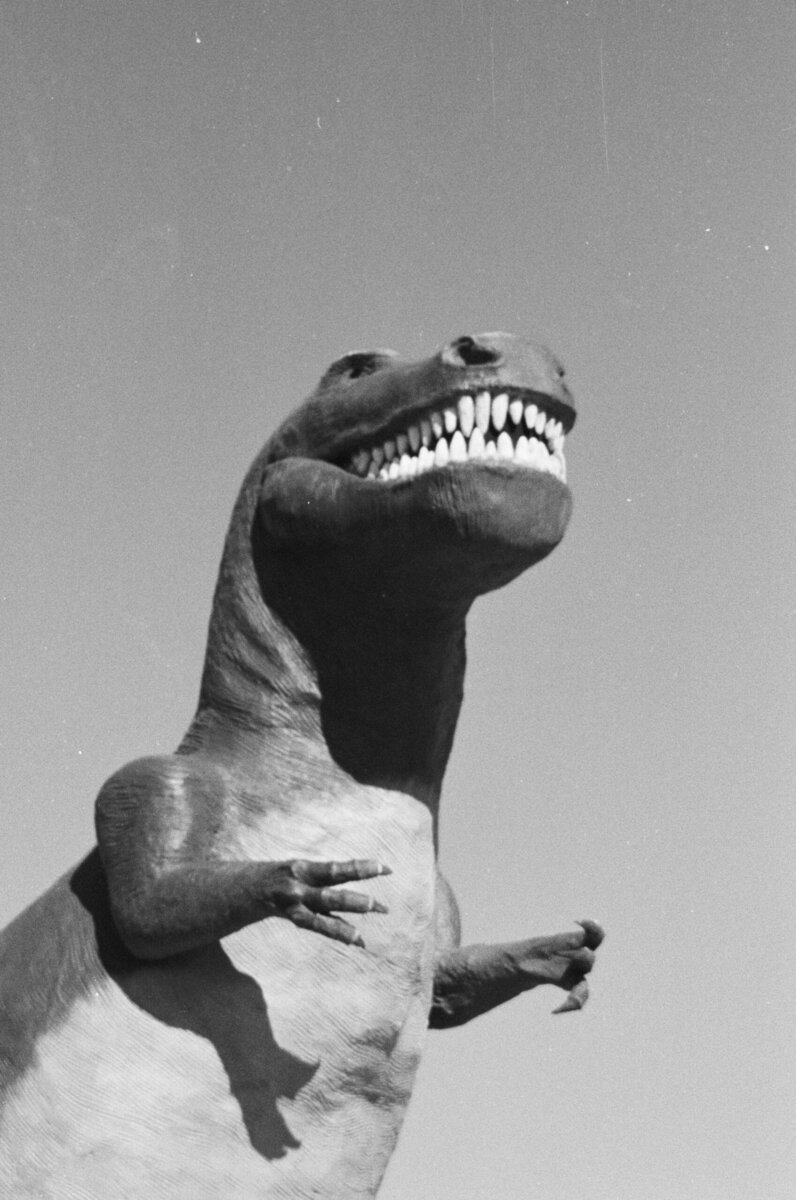
Through most of the 19th century and well into the 20th, museum reconstructions depicted dinosaurs as upright, slow, tail-dragging creatures — essentially overgrown lizards with poor posture. The corrective came most visibly through the Dinosaur Renaissance of the 1970s, a paradigm shift associated with paleontologists Robert Bakker and John Ostrom, who used bone geometry and behavioral evidence to argue for active, dynamic animals with very different body mechanics.
One question that remains actively debated is neck posture in long-necked sauropods. Competing biomechanical models, developed by researchers at institutions including Ohio University and the Natural History Museum London, produce different answers about whether these animals typically held their necks horizontally, raised at an angle, or nearly vertical — and the answer likely varied by species and behavior. It is a useful reminder that even broad, seemingly simple questions about dinosaur appearance can remain scientifically open.
Why Attractions Like This One Matter for Science Communication
A 2023 Pew Research Center survey found that public understanding of evolution and prehistoric life remains significantly shaped by entertainment media rather than formal education. That finding places venues with strong visitor traffic — places with robotic animals, immersive environments, and the power of physical spectacle — in an unusually influential position relative to public understanding of science.
The east Wichita attraction, with its more than 30 exhibits and VR experiences, is positioned to reach audiences who may never encounter a paleontology journal. Every time a visitor watches Steve walk, they are observing a hypothesis made physical — a three-dimensional scientific argument about how a baby Stegosaurus moved 150 million years ago, built from fossil evidence, biomechanical inference, and the hard choices of designers who had to commit to specific answers.
Paleontology is a living science. What researchers know about dinosaurs in 2025 is more detailed, more evidence-based, and more surprising than any film franchise has managed to convey — and it is almost certainly incomplete, in ways that future fossil discoveries will reveal, somewhere in the ground, waiting.