
By 2028, a NASA astronaut is expected to stand on the surface of the Moon wearing a garment co-designed by the same Milanese fashion house behind some of the world’s most expensive luxury goods — and that detail is considerably less absurd than it sounds. The Moon’s surface swings between +127°C in direct sunlight and −173°C in shadow, and a suit must manage both extremes within the same moonwalk. That thermal engineering problem is severe enough to justify reaching well outside the traditional boundaries of aerospace for solutions.
A Fashion House, a Houston Startup, and the Artemis III Mission
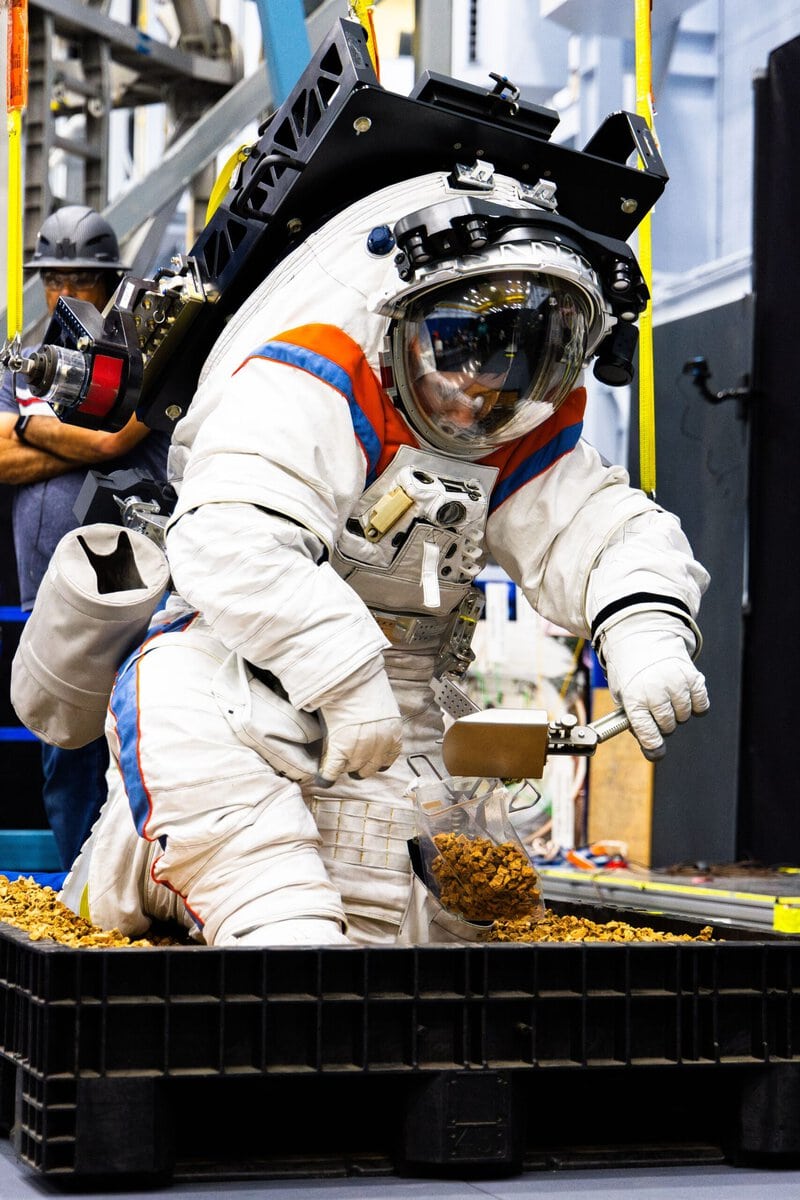
The suit in question is the Axiom Extravehicular Mobility Unit, known formally as the AxEMU, developed by Houston-based Axiom Space in partnership with Prada for NASA’s Artemis III crewed lunar landing, currently planned for 2028. Axiom Space describes itself as an industry leader and architect of the world’s first commercial space station. Prada’s confirmed role, as reported by Al Jazeera on 24 June 2026, centres on the cooling garment — the layer worn directly against the astronaut’s skin beneath the hard outer shell — a component where advanced textile science directly determines crew survivability.
The AxEMU is not simply an updated version of what came before. Apollo-era suits and the International Space Station’s Extravehicular Mobility Unit were engineered for different environments and a narrower demographic of astronauts. The AxEMU was designed from the outset for the lunar south pole — a region of permanently shadowed craters, electrostatically charged regolith dust, and extreme lighting contrasts that no Apollo mission ever encountered. NASA’s stated requirements include greater mobility, an expanded fit range to accommodate a more diverse astronaut corps, and additional safety redundancies. Those goals collectively make the engineering harder, not easier, than anything that preceded it.
The Thermal Problem: Managing a Human Furnace in a Vacuum
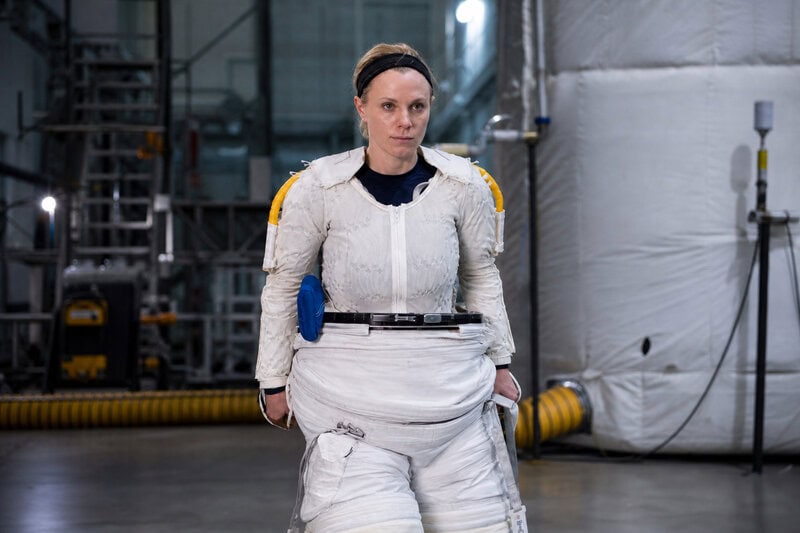
The first and most relentless challenge is heat. A suited astronaut performing moderate extravehicular activity generates roughly 300 to 500 watts of metabolic heat — comparable in output to a person running on a treadmill, according to NASA human performance data. That heat must be removed continuously; if it is not, core body temperature climbs to dangerous levels within minutes.
The cooling garment addresses this by circulating chilled water through a fine network of tubes woven into a close-fitting undergarment worn directly against the skin. The garment absorbs body heat and carries it to a sublimator — a device that expels heat by boiling a small quantity of water into the vacuum of space. It is an elegant solution to a brutal problem, and it is precisely the component where Prada’s decades of work with high-performance technical fabrics becomes relevant. The challenge is manufacturing tubes, seams, and thermal layers that are simultaneously flexible enough to move with a human body, durable enough to resist abrasion over repeated use, and precise enough to meet aerospace quality tolerances. Those demands map closely onto the construction standards of high-end technical garments, which is why the partnership has a functional rationale beyond marketing.
The outer shell faces an almost contradictory requirement: it must act as both a thermal radiator and an insulator. When an astronaut traverses a sunlit surface, the outer layer must reflect solar radiation to prevent overheating. When that same astronaut steps into the permanent shadow of a polar crater moments later, the layer must retain enough warmth to prevent dangerous heat loss. No single material solves both problems elegantly, which is why the AxEMU’s outer construction relies on multiple specialised layers working in concert — a multi-layer architecture that aligns directly with the layering expertise Prada brings to the collaboration.
The Pressure Problem: Why Inflation Makes Movement Almost Impossible
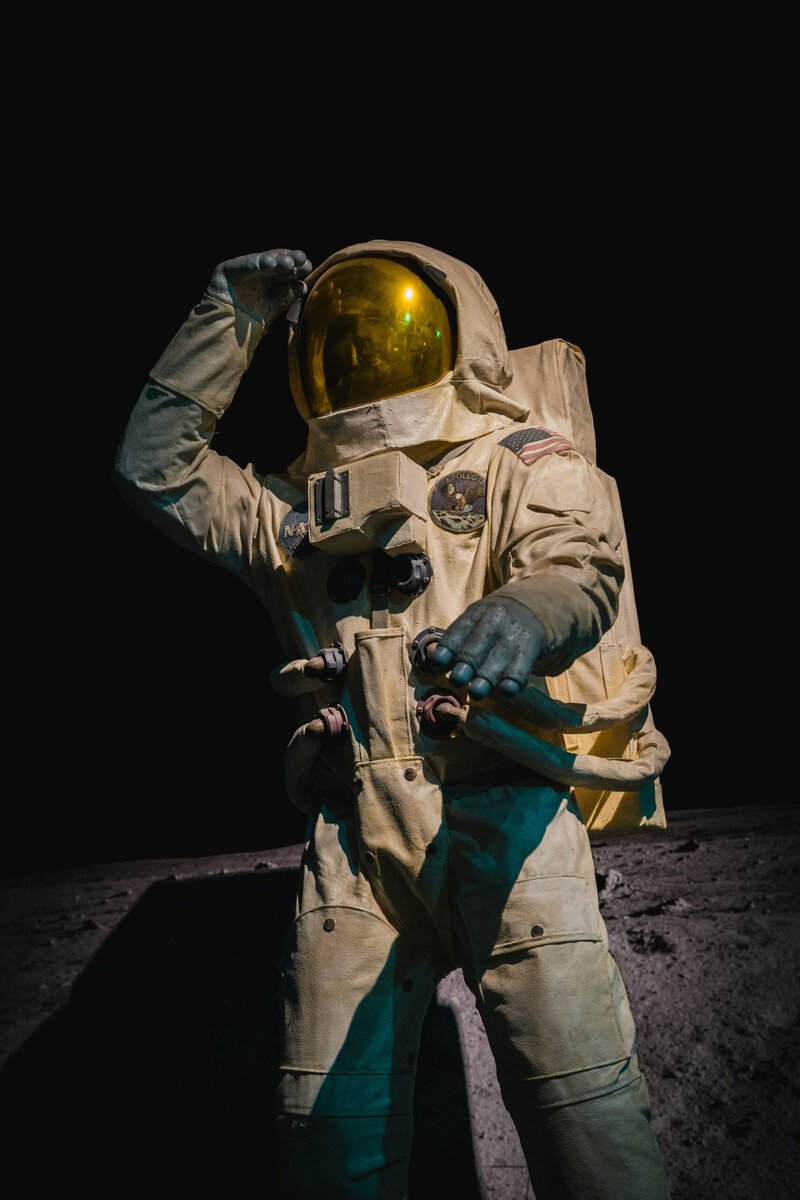
The Moon has no atmosphere. To prevent an astronaut’s blood from boiling and lungs from collapsing, the suit must maintain an internal pressure of approximately 29.6 kilopascals — roughly 30 percent of sea-level air pressure on Earth. This biophysical requirement is the source of one of spacesuit engineering’s most counterintuitive difficulties.
A pressurised suit wants to expand into a rigid sphere. It resists every movement the astronaut attempts, in the same way an inflated balloon resists being bent. Early prototype suits required astronauts to exert considerable muscular force simply to close a hand; the cumulative fatigue over a full moonwalk would be debilitating. Modern suits counteract this with carefully engineered soft goods — layered fabrics, convoluted joints, and precision bearings at the shoulder, elbow, hip, and knee — designed to allow rotation without changing the suit’s internal volume and therefore its pressure. Maintaining pressure while permitting motion is the central design constraint around which everything else must be arranged.
The mobility challenge is compounded by what NASA’s Artemis science objectives actually demand. Astronauts will need to kneel to collect geological samples, reach overhead to operate equipment, and maintain fine motor control for tool use — a range of motion that pressurised suits have historically struggled to accommodate without exhausting the wearer. The AxEMU specifically targets these motion envelopes, though the degree to which it succeeds will not be fully validated until surface operations begin.
The Dust Problem: A Slow-Motion Catastrophe in Every Grain
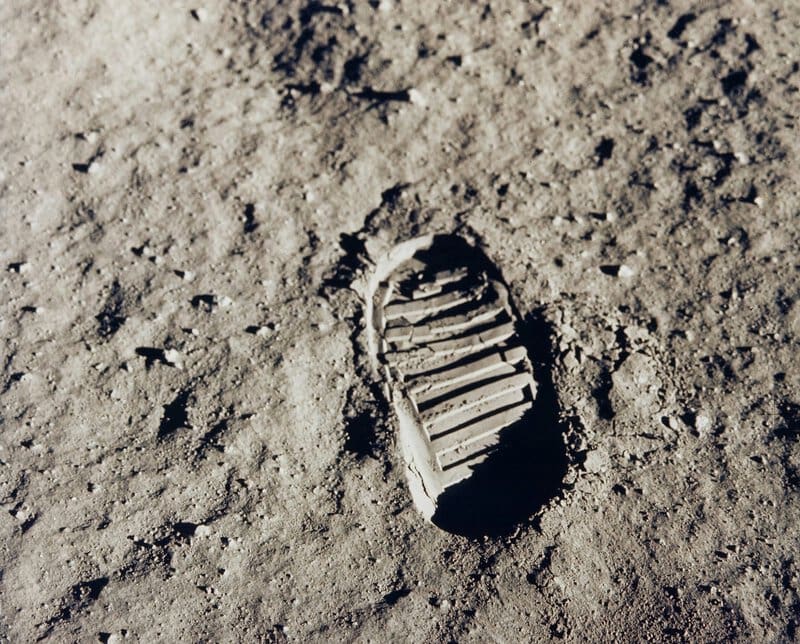
Lunar regolith — the fragmented rock and mineral layer blanketing the Moon’s surface — is not comparable to terrestrial sand. NASA analysis of samples returned by Apollo missions describes individual grains as glassy, sharp-edged, and electrostatically charged. These properties cause regolith to cling tenaciously to surfaces and infiltrate seals, zippers, and mechanical interfaces with exceptional persistence. Apollo astronauts discovered this within hours of their first surface excursions: dust had abraded visor coatings, clogged ventilation ports, and contaminated suit closures after only brief periods of activity.
The Artemis III landing site near the lunar south pole presents a more severe version of the problem. Permanently shadowed regions have never been exposed to direct solar radiation, meaning their regolith has not undergone the thermal cycling that slightly smooths grain edges over geological time. The dust at the south pole may be more abrasive and more electrostatically active than anything Apollo suits encountered. If regolith infiltrates the AxEMU’s thermal control layers or degrades a pressure seal, it becomes a life-safety event rather than a nuisance — which is why the AxEMU design incorporates redundant seals and contamination-resistant materials at critical junctions.
This is another area where textile engineering intersects directly with Prada’s industrial competence. Seam construction, weave density, surface coatings, and bonded closures — the vocabulary of advanced garment manufacturing — are precisely the tools available for resisting dust infiltration at the suit’s outer layers.
Why Prada? The Unexpected Logic of Luxury Materials Science
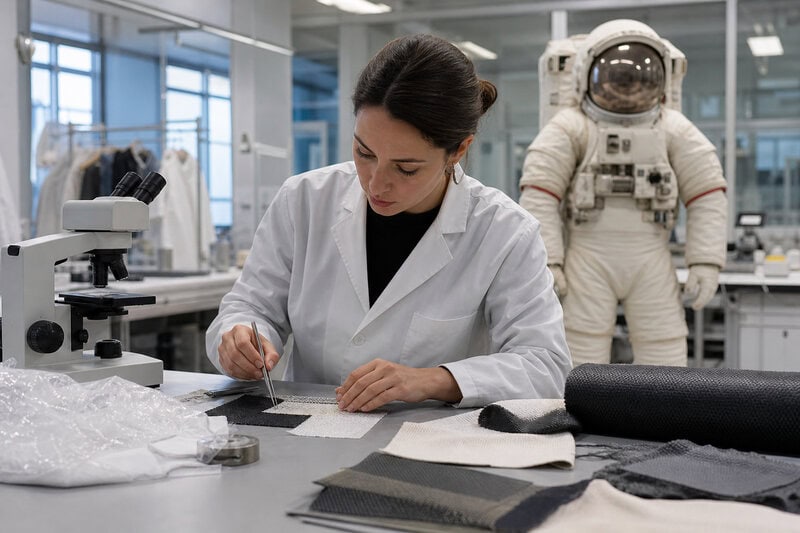
The collaboration attracts attention because of Prada’s cultural identity, but the underlying logic is straightforwardly industrial. High-fashion houses at the technical end of the market operate materials laboratories that solve problems directly analogous to aerospace challenges: creating fabrics that are simultaneously lightweight, dimensionally stable under stress, durable against repeated mechanical loading, and manufacturable to tolerances that most industries would consider extreme. Prada’s technical textiles division has developed coated fabrics, bonded seam techniques, and performance materials over decades — capabilities that Axiom Space could access through partnership rather than build from scratch.
The arrangement also reflects a broader strategic direction NASA has actively encouraged. Commercial and cross-industry collaboration has become central to the agency’s approach to hardware development, with Axiom Space itself being a product of that philosophy. Coverage of the Axiom-Prada partnership has emphasised the visual dimension of the suit’s design, but the functional rationale — accessing mature textile engineering — is the more consequential element.
It is worth being precise about what is publicly confirmed and what is not. Prada’s specific material innovations for the AxEMU’s cooling garment have not been disclosed in technical detail as of June 2026. The confirmed scope of the collaboration is the cooling garment design. Claims about broader contributions to other suit systems should be treated as unverified until Axiom Space releases further technical documentation. The precise engineering contributions remain proprietary, and readers should be cautious of coverage that presents speculation as settled fact.
What Success Requires — and What Remains Open
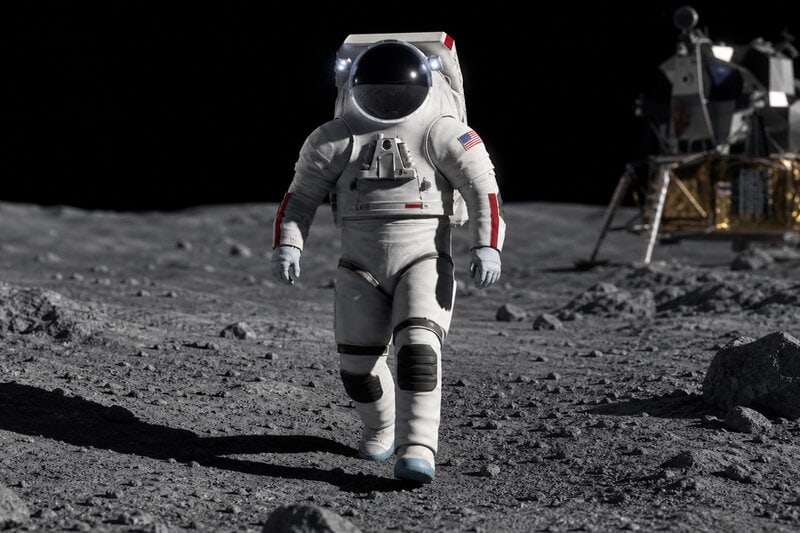
A successful AxEMU moonwalk in 2028 would require an astronaut to work for up to eight hours in the lunar environment, maintain a safe core body temperature throughout, move with sufficient dexterity to conduct scientific fieldwork, and return to the lander with the suit’s pressure integrity intact. No suit has met that benchmark on the lunar surface since Apollo 17 departed in December 1972.
Significant engineering questions remain open and actively debated. The optimal trade-off between internal suit pressure and mobility has not been definitively resolved — lower pressure improves freedom of movement but increases decompression sickness risk, while higher pressure reduces that risk but amplifies wearer fatigue. Long-term dust mitigation strategies for extended surface stays remain an area of active research. Whether the cooling garment’s tube materials can survive repeated thermal cycling between the suit’s extreme temperature ranges without delamination is a durability question that ground testing can only partially answer before actual lunar conditions are encountered.
The Artemis programme’s 2028 timeline is itself subject to ongoing review by NASA and its international partners. Delays to broader programme infrastructure — including the Space Launch System, the Orion capsule, and the Gateway lunar-orbit station — could affect the schedule under which the AxEMU is demonstrated in the field. These are material uncertainties that any honest account of the mission must acknowledge.
What the Prada-Axiom collaboration makes clear, independent of its eventual outcome, is that the hardest problems in deep-space exploration increasingly require expertise that no single aerospace organisation possesses in full. The thermal, mechanical, and materials challenges of keeping a human being alive on the lunar surface for eight hours demand solutions drawn from textile science, industrial chemistry, mechanical engineering, and human physiology simultaneously. In that context, the distance between a Milanese atelier and a Houston spacesuit laboratory is, in material science terms, considerably shorter than the cultural distance might suggest.