
In 2020, the North Complex Fire incinerated a 60-acre property in Berry Creek, California, down to bare ash — a disaster that might have ended the story of that land. Instead, it began one. Maidu community members chose that scorched ground as the starting point for something larger: a scientifically grounded, culturally rooted effort to return intentional fire to the Sierra Foothills, where new evidence suggests the approach their ancestors used for centuries genuinely works.
A 60-Acre Property Burned to Ash in 2020 Is Now Ground Zero for Maidu-Led Forest Restoration
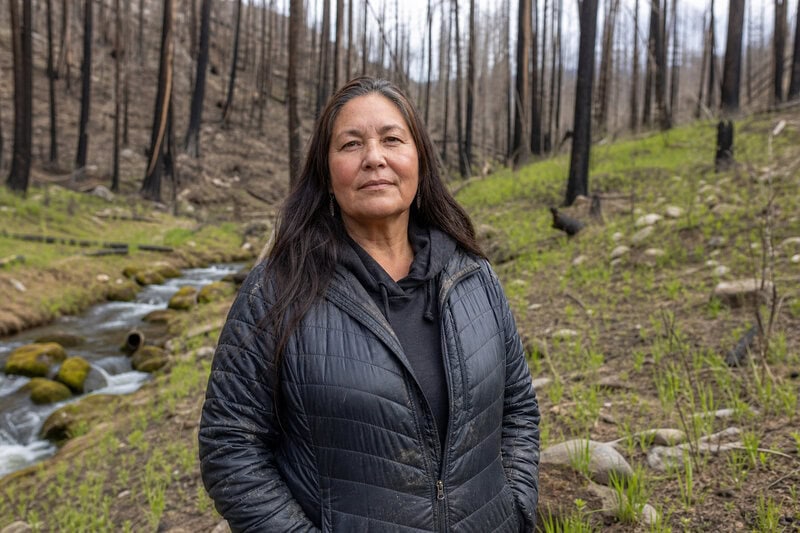
When the North Complex Fire swept through Berry Creek, it left a 60-acre property as a stark case study in what unmanaged landscapes become when Indigenous stewardship has been absent for generations. Rather than abandoning the scorched land, Maidu community members designated it a site of active ecological and cultural restoration — a deliberate act of reclamation in the face of catastrophe.
The property now anchors a broader Maidu initiative to reintroduce cultural burning — deliberate, low-intensity fire applied under carefully chosen conditions — as a core land-management practice across the Sierra Foothills. In doing so, the community transformed a symbol of destruction into an argument for a fundamentally different way of managing fire-prone landscapes.
California’s Forests Were Actively Shaped by Maidu Fire Stewardship for Centuries Before Colonial Suppression Banned It
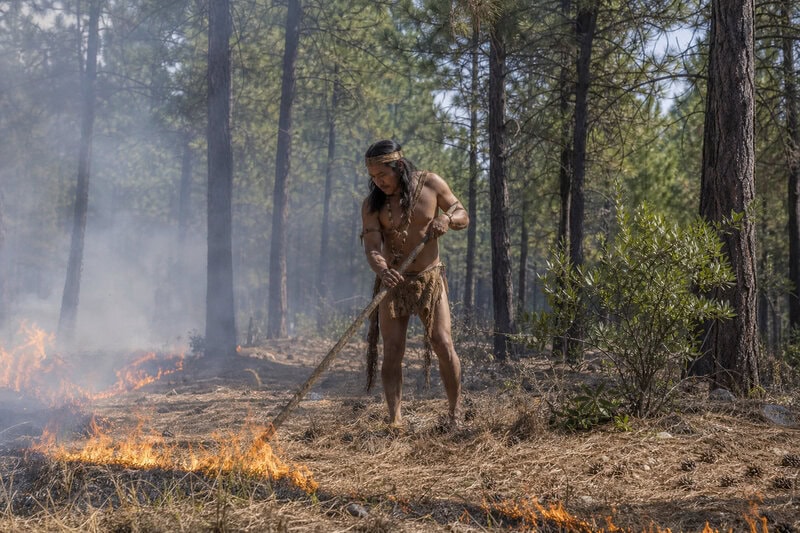
The forests of California’s Sierra Foothills did not arrive at their historic ecological character by accident. The Maidu and neighboring tribal nations used intentional, recurring fire over centuries to manage vegetation, encourage biodiversity, and reduce the accumulation of combustible material — what fire ecologists call fuel loads — that transforms routine ignitions into uncontrollable megafires. These were not random burns; they reflected generations of accumulated, place-specific knowledge about how fire behaves within specific plant communities.
Colonial-era policies dismantled that system. Federal fire-suppression doctrines that took hold in the early 20th century effectively criminalized Indigenous burning, severing communities from a land-stewardship practice that had defined their relationship to the landscape for centuries. Fire ecologists now widely attribute the dangerous fuel accumulations driving modern California megafires not to Indigenous burning, but to the century of aggressive suppression that replaced it.
Cultural Burning Works by Deliberately Reducing ‘Fuel Loads’ — the Dead Wood and Dense Brush That Turn Small Fires Into Megafires
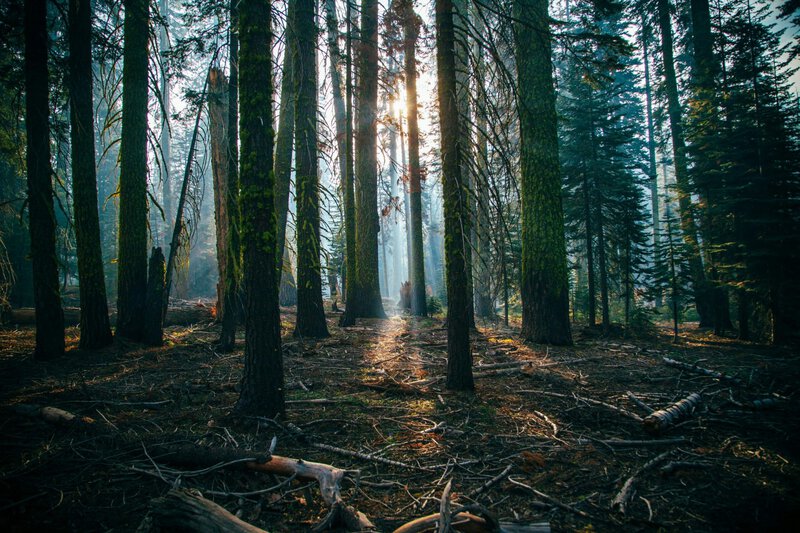
Understanding why cultural burning is effective requires understanding what “fuel load” means in practical terms. Fuel load refers to the accumulated dead vegetation, dry brush, and forest debris that functions as kindling: left unmanaged for decades, it transforms a spark or a lightning strike into a catastrophic, self-reinforcing wildfire that suppression crews cannot easily contain. The mechanism is straightforward — more fuel means more energy released, which means higher temperatures, faster spread, and fire behavior that overwhelms any response.
Low-intensity cultural burns consume that accumulated material under controlled conditions: cooler ambient temperatures, chosen wind direction and speed, appropriate humidity. Burning the fuel deliberately and incrementally means it is not available to feed an extreme-weather fire event. The Maidu practice positions intentional fire as a preventive tool — burning small and deliberately so that the landscape does not burn catastrophically and involuntarily during the next drought year.
Maidu Cultural Burning Is Being Reignited Specifically in the Sierra Foothills — the Tribe’s Traditional Homeland
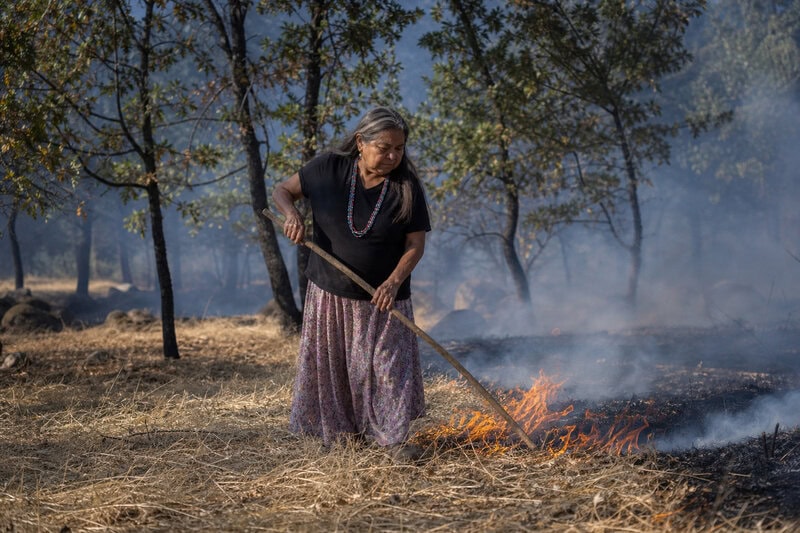
The Sierra Foothills of Northern California are not simply a convenient location for this restoration effort — they are the ancestral territory of the Maidu people, which gives the work both ecological precision and deep place-based legitimacy. Reintroducing fire in this specific geography means working with the exact plant communities — oaks, chaparral, meadow grasses — that Maidu burning historically maintained and that evolved alongside those practices over generations.
A November burn event in the Sierra Foothills documented by KQED was cited as emblematic of the broader movement to return fire stewardship to Indigenous communities across the region. That geographic specificity matters scientifically: traditional ecological knowledge is most reliable and most predictive when applied to the landscapes where it was developed, not transplanted wholesale to different ecosystems with different fire dynamics.
Practitioners Describe Cultural Burning as Returning to Landscapes They Were Once Punished for Stewarding
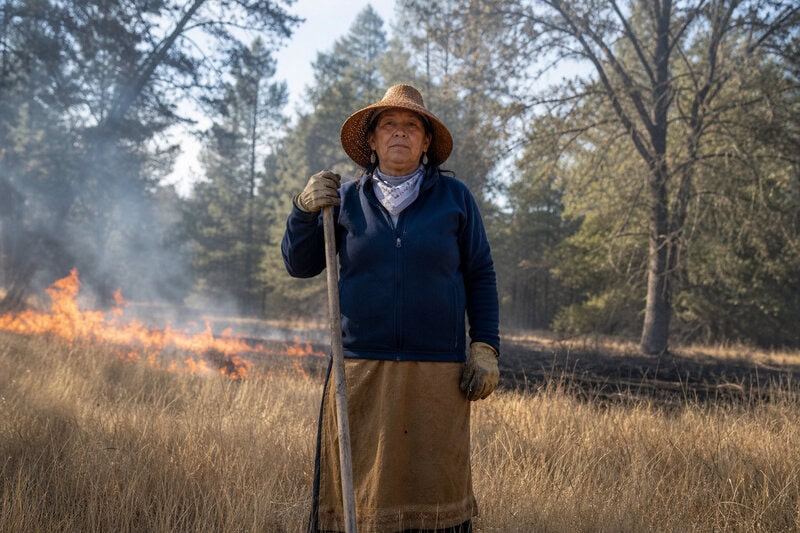
Indigenous fire practitioners frame the revival of cultural burning as something more than an ecological intervention. In their telling, it is an act of historical reckoning — the reclamation of a practice that colonial policy actively suppressed and penalized. The description of “returning to landscapes we were once punished for stewarding” captures a legal and moral reality: people were prohibited by law from doing precisely what ecologists now recognize as sound, effective land management.
The Yocha Dehe and other tribal nations echo this framing, describing communal burns as moments of reclamation: “When we gather for a burn, we reclaim our place.” This language also signals a practical complication that shapes the work on the ground: tribes reintroducing cultural burning must navigate state permitting systems constructed around the same suppression policies that displaced them, creating real bureaucratic friction even as the science increasingly supports their approach.
The Return of Fire Stewardship Is Described as Restoring Community Well-Being — Not Just Ecosystems

Community members involved in Maidu-led burns consistently report that reconnecting with fire as a land-stewardship practice addresses cultural and psychological wounds accumulated across generations of forced disconnection. Practitioners describe the restoration as operating on two levels simultaneously: the ecological health of the forest and the psychological and spiritual health of the people who belong to it. The land and the community are not treated as separate systems requiring separate interventions.
This dual framing is a core principle of traditional ecological knowledge, or TEK — the body of place-based environmental understanding built by Indigenous communities through sustained observation and practice over generations. TEK does not separate human well-being from ecosystem health, a perspective that is increasingly reflected in interdisciplinary conservation science. When practitioners describe fire stewardship as restoring something essential to their communities — restoring the land and people’s souls — they are articulating a relationship between community health and land health that Western resource-management frameworks are only beginning to formally accommodate.
The 2020 North Complex Fire Galvanized Maidu Community Members to Formally Organize Around Fire Healing
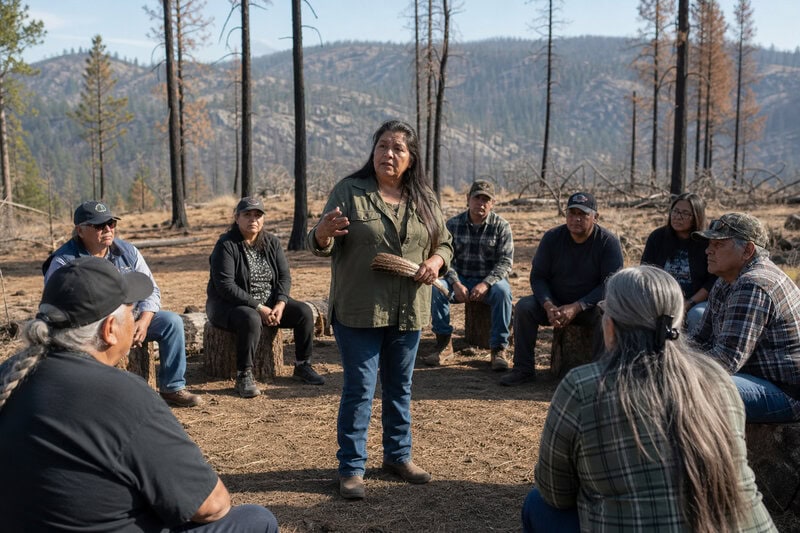
The North Complex Fire devastated communities across Butte and Plumas counties — a disaster of sufficient scale to function as a community-defining trauma. For Maidu community members, it also functioned as a catalyst. Rather than responding only with grief, the community channeled the catastrophe into structured, collective action: organizing specifically to heal the land and restore their relationship with fire as a stewardship tool.
This organizing response reflects a pattern emerging across California — catastrophic wildfire events are, in some cases, accelerating the return of Indigenous fire stewardship rather than simply destroying landscapes and communities. The very scale of the crisis is creating political and social conditions that make traditional ecological knowledge harder to dismiss and easier to institutionalize at the state and federal level.
Traditional Ecological Knowledge of Fire Represents Long-Term Observational Data That Western Science Is Only Beginning to Quantify

Traditional ecological knowledge, or TEK, refers to the cumulative, multigenerational understanding of local ecosystems developed by Indigenous peoples through sustained observation and practice. In the context of fire management, centuries of deliberate burning in the Sierra Foothills constitute something that Western science rarely produces on its own: a longitudinal record of repeated, place-specific interventions conducted across hundreds of generations. Fire ecologists increasingly treat this record not as anecdote but as empirical knowledge — imperfectly documented by academic standards, but real and legible in its effects on the landscapes it shaped.
Emerging research collaborations between tribal nations and institutions including the University of California are working to translate this knowledge into formats that can directly inform state and federal land-management policy. That translation is scientifically promising but methodologically complex: TEK is relational and place-bound, and converting it into the quantitative formats that regulatory agencies require risks stripping away the contextual precision that makes it valuable in the first place. The field remains active and, in important respects, unsettled — but the direction of scientific opinion is clear. Indigenous burning worked, and understanding exactly how and why is now a recognized research priority.
The Maidu effort in the Sierra Foothills stands as one of the most concrete examples in California of traditional ecological knowledge moving from historical record to active land-management practice — a convergence of cultural reclamation and fire science that researchers, policymakers, and affected communities are watching closely as the state’s wildfire crisis shows no sign of relenting.