
As Israeli airstrikes shook Tyre’s Mediterranean waterfront in recent weeks, the dust settling over collapsed buildings was falling on soil that has absorbed the footsteps of Phoenicians, Greeks, Romans, and Crusaders — a layered human record spanning at least 4,000 years. Residents have questioned whether any truce holds, hospital workers say they no longer feel safe, and the rubble accumulating along the waterfront threatens not only a living city but one of archaeology’s most consequential and irreplaceable underground archives.
A City of the Living Built Over One of History’s Deepest Archives
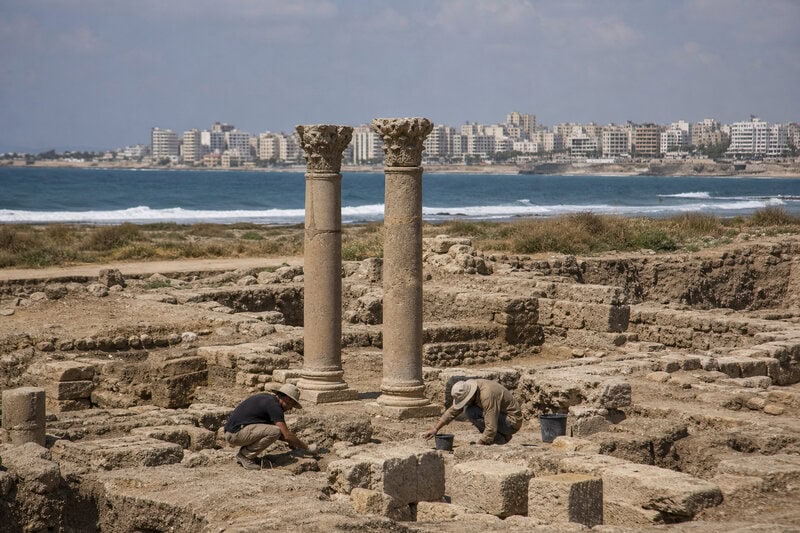
The dual reality of Tyre is difficult to overstate. On the surface, it is a functioning southern Lebanese port city whose residents have endured weeks of bombardment, evacuation warnings, and the kind of existential uncertainty that makes abstract heritage concerns feel distant. Beneath the surface lies something no other active conflict zone on the planet can replicate: a compressed archaeological record of eastern Mediterranean civilization stretching back to roughly the third millennium BCE.
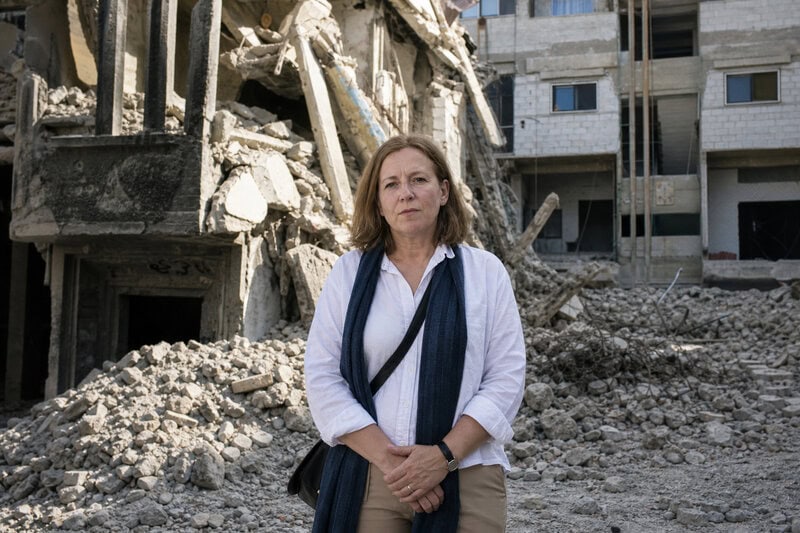
Israel issued a warning in early June for the entirety of Tyre to evacuate before launching intense airstrikes across the city, stating it was targeting Hezbollah. Rubble from destroyed buildings is visible along the waterfront, and observers on the ground note that the dust has barely settled after weeks of sustained bombardment. The strikes have left the city shaken in every sense — structurally, demographically, and, for those who study ancient human civilization, scientifically.
To understand what is at risk underground, it is necessary to first understand how Tyre became the city that refused to disappear.
Why Tyre Belongs on the Short List of the World’s Oldest Continuously Inhabited Cities
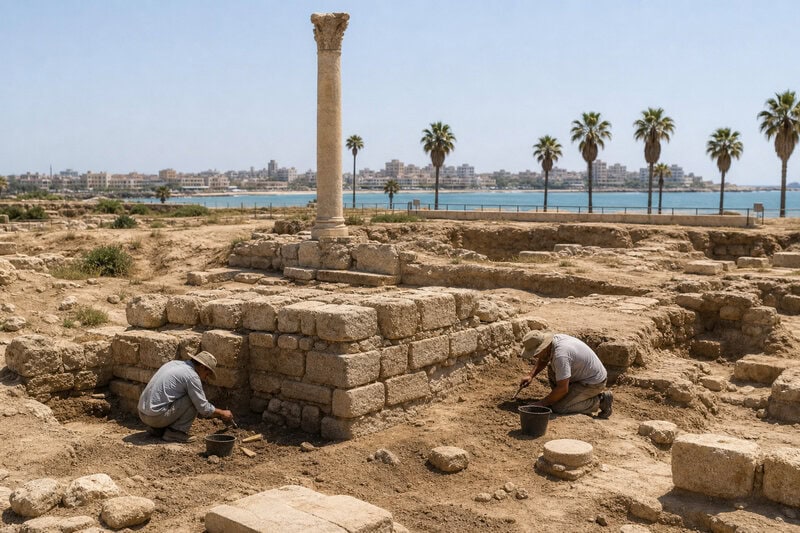
Archaeologists and historians apply a precise standard when describing a settlement as continuously inhabited: the site must show evidence of unbroken occupation — without significant population abandonment — from ancient times to the present. Most ancient cities do not meet this standard. They were abandoned when trade routes shifted, when water sources failed, or when military conquest made reconstruction impossible. Tyre, alongside Jericho, Byblos, and a small number of other sites, satisfies both conditions: it is genuinely old, and it has never been left behind.
UNESCO inscribed Tyre as a World Heritage Site in 1984, describing it as one of the oldest Phoenician metropolises, with occupation evidence traceable to approximately the third millennium BCE. That inscription was not honorary. It reflected a scientific assessment by international bodies — including Lebanese antiquities authorities and collaborating international excavation teams — that the site’s archaeological significance was of outstanding universal value.
The geographic logic behind Tyre’s longevity is straightforward. The ancient city was built on a rocky promontory jutting into the eastern Mediterranean, giving it natural harbor access on multiple sides. That position made it an essential node in Phoenician maritime trade networks. The same strategic value that made Tyre worth fighting over in antiquity has kept people living there continuously — and has made its underground layers exceptionally dense with scientific data. Researchers from institutions including the American University of Beirut and international teams working with Lebanese antiquities authorities have repeatedly found that digging almost anywhere in Tyre quickly produces a new era of human history.
The Phoenician Foundation: What Lies Deepest
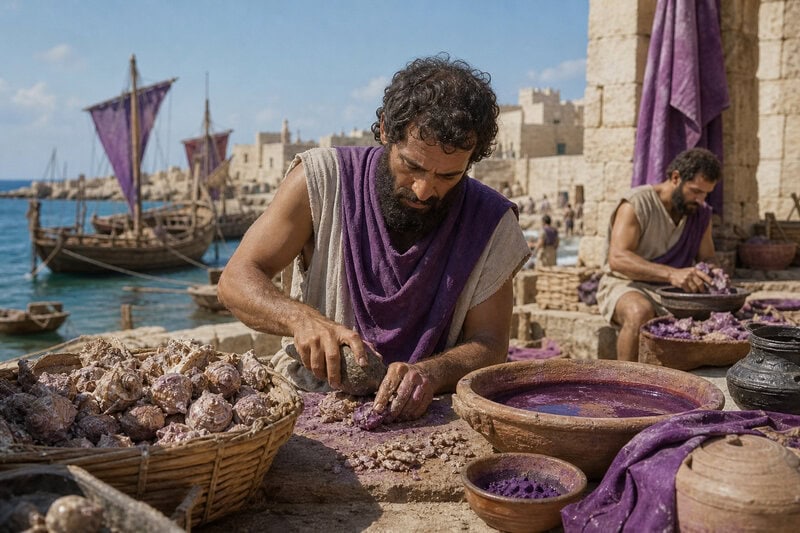
The Phoenician period — roughly 1200 to 539 BCE — is the era that placed Tyre at the center of ancient Mediterranean civilization. Tyre was the dominant Phoenician city of that era and the origin point of the Tyrian purple dye trade, a commodity derived from crushed Murex sea snails that was so labor-intensive to produce and so visually distinctive that it became synonymous with imperial power across the ancient world. Roman emperors later wore it. So did Byzantine rulers. The color’s enduring association with royalty traces, in a direct commercial line, back to Tyre’s harbor workshops.
Excavations documented by the Lebanese Directorate General of Antiquities have uncovered Phoenician-era harbor infrastructure, glass-working workshops, and inscribed artifacts indicating Tyre’s role as both a commercial hub and a religious center. These findings, however, remain only partially excavated because the modern city sits directly above them. The core archaeological challenge is what researchers call overburden: in a continuously inhabited city, each era’s construction compresses — and sometimes destroys — the layer beneath it. Phoenician strata in Tyre lie under Roman, Byzantine, Crusader, Ottoman, and modern concrete, accessible only where demolition or careful archaeological trenching creates a window into the past.
It should be stated clearly that many claims about Tyre’s deepest Phoenician layers remain contested or preliminary. Full stratigraphic excavation — the systematic removal and recording of soil layers to establish their chronological sequence — has never been completed across the site. That incompleteness makes what is already known remarkable, and what remains unknown potentially transformative for the study of ancient Mediterranean history.
Roman Tyre: The Archaeology That Is Visible — and Vulnerable
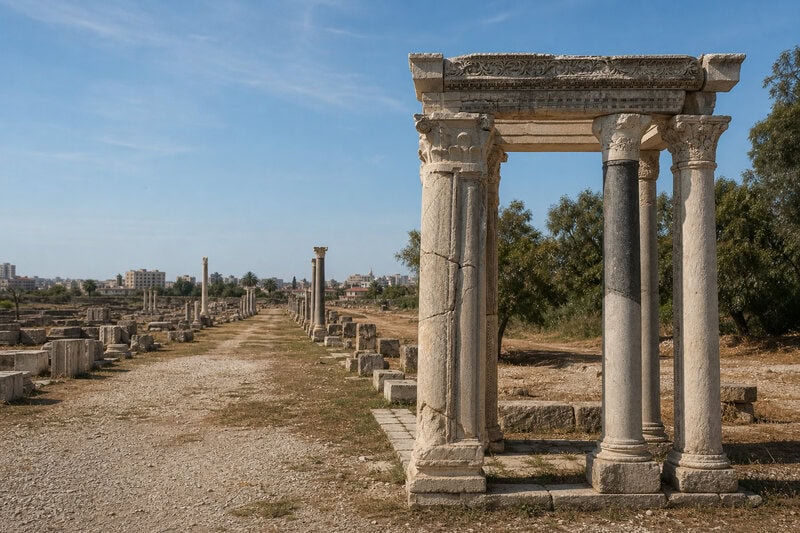
Not all of Tyre’s ancient history is buried. The al-Bass archaeological site, protected under Tyre’s UNESCO designation, contains one of the largest and best-preserved Roman hippodrome complexes in the world. A hippodrome — an ancient racing track for chariots and horses, typically 400 to 600 meters in length — was among the most prestigious civic investments a Roman city could make, and Tyre’s example, dating to the second century CE, provides researchers with significant data on Roman urban planning in the empire’s eastern provinces. The site also includes a monumental colonnaded road and a necropolis documented through Lebanese and international excavation campaigns across the 20th and early 21st centuries.
The al-Bass site sits within the contemporary city, and that proximity matters enormously when assessing the impact of recent strikes. Ancient heritage in Tyre has been described as threatened by observers on the ground, and the scientific basis for that concern is well established. UNESCO and the World Monuments Fund have both documented the principle that even strikes which do not directly hit heritage structures can fracture ancient masonry, destabilize unexcavated stratigraphy, and destroy the contextual relationships between artifacts that give them scientific meaning. Researchers call this contextual loss: an artifact removed from its stratigraphic position without documentation is reduced from a piece of historical evidence to an object without a story.
Layers in Between: Byzantine, Arab, and Crusader Tyre
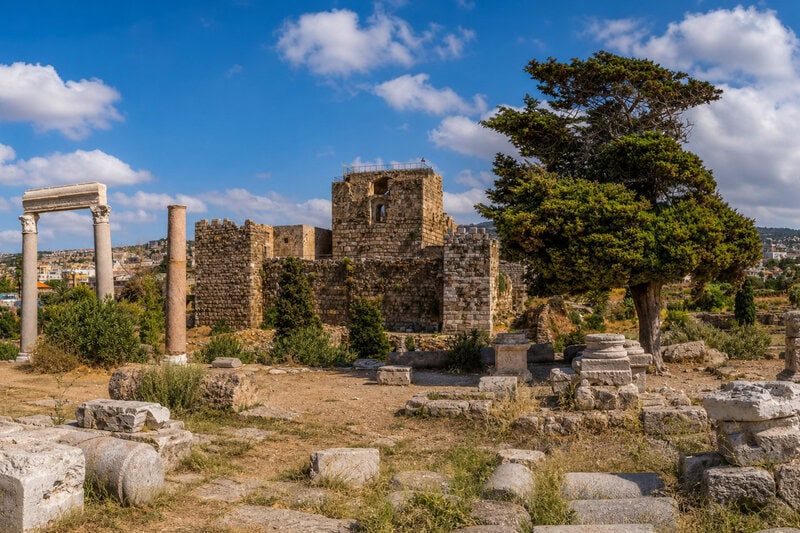
What makes Tyre’s subsurface uniquely complex is the density of the historical sequence compressed within it. After Rome came Byzantine Christian occupation, lasting from roughly the fourth through the seventh century CE. Then came Arab conquest and Tyre’s incorporation into Islamic trade networks. Then Crusader rule — Tyre served as a key Crusader stronghold, the site where leaders of the Kingdom of Jerusalem took refuge after the city fell in 1187. Mamluk and Ottoman periods followed, each leaving physical deposits in the soil and, in some cases, structures that partially survive above ground.
Historians and archaeologists regard this layered sequence as scientifically rare for a specific reason. Most cities were either abandoned — leaving clean, undisturbed stratigraphy that is easier to read — or continuously developed in ways that systematically obliterated earlier layers. Tyre occupies an unusual middle position: partial preservation combined with continuous habitation, creating what researchers describe as a compressed archive of eastern Mediterranean history across multiple civilizational transitions.
Crusader-era structures have been identified in Tyre and partially studied, including portions of a cathedral built over an earlier Byzantine church. Full documentation remains incomplete according to records maintained by the Lebanese Directorate General of Antiquities. The direct line to present risk is not difficult to draw. Every unexcavated layer destroyed by structural collapse or vibration-induced sediment disturbance represents historical data that cannot be recovered — a position articulated not as scientific opinion but as international consensus in the 1954 Hague Convention for the Protection of Cultural Property in the Event of Armed Conflict, a treaty to which Lebanon is a signatory.
What Conflict Archaeology Tells Us About the True Cost of Urban Warfare on Ancient Sites
The subfield of conflict archaeology and heritage impact assessment has developed rigorous methods for documenting and quantifying damage to archaeological sites in active conflict zones. Researchers at institutions including the Smithsonian Institution Cultural Rescue Initiative and the ASOR Cultural Heritage Initiatives program have applied these methods across the Middle East and North Africa over the past two decades, generating findings that consistently challenge assumptions about how heritage damage actually occurs.
Post-conflict assessments at Palmyra in Syria and at sites in and around Mosul in Iraq found that vibration damage, looting enabled by population displacement, and debris dumping caused harm to subsurface archaeology that was in some cases more extensive than damage from direct strikes, according to reports published by ASOR and UNESCO’s emergency safeguarding program. The mechanism is not complicated: when a city’s residents flee and civil authority collapses, the informal systems that protect archaeological sites — site guards, local archaeologists, documentation teams — collapse with them.
A critical distinction must be maintained here. What is confirmed about Tyre’s current situation is that airstrikes have targeted the city, rubble is visible along the waterfront, and credible observers on the ground have described ancient heritage as threatened. What remains unverified is the specific extent of damage to protected archaeological zones, because systematic post-strike heritage assessment has not yet been publicly completed. With hospital workers stating they no longer feel safe and residents displaced by evacuation warnings, the civil infrastructure required to monitor and protect heritage sites is itself disrupted — precisely the condition that past conflict-zone research has identified as the precursor to the most severe and lasting archaeological damage.
What Survives, What Is at Stake, and Why It Matters Beyond Lebanon
The stakes of what is happening in Tyre extend beyond Lebanese national heritage and beyond Phoenician history alone. The Phoenicians are credited by ancient historians — and supported by substantial archaeological evidence — with spreading an alphabetic writing system that became the direct ancestor of Greek, Latin, Arabic, and Hebrew scripts. The archive beneath Tyre’s streets is, in a documented and traceable sense, part of the origin story of written human communication across the ancient Mediterranean world. What lies in those unexcavated Phoenician strata is not merely of local significance; it belongs to the broader human record of how civilization learned to transmit knowledge across generations.
None of that diminishes what the people of Tyre are enduring right now. The shaken city, the unresolved questions about any ceasefire, the medical workers and residents bearing the immediate physical weight of conflict — these are not secondary concerns to be briefly acknowledged before returning to archaeology. They are the primary human reality, and responsible reporting holds both dimensions in the same frame without subordinating one to the other.
The scientific consensus on the archaeological dimension is equally unambiguous: once a stratigraphic layer is disturbed or destroyed, the information it contains about ancient human life is permanently gone. Not damaged. Not reducible. Gone. This is why the international archaeological and heritage community, operating under frameworks including the 1954 Hague Convention, treats conflict-zone sites as requiring documentation and active protection even during hostilities — not as a romantic gesture toward the past, but as recognition that some losses are genuinely irreversible.
If and when Tyre’s dust finally settles, what archaeologists find — or fail to find — in the layers beneath the waterfront rubble will tell a story not only about this conflict, but about how the world treats the places where human civilization first learned to trade, write, and build cities capable of outlasting empires.