
Together, Shigella and Cryptosporidium kill hundreds of thousands of people every year — most of them children under five who have no approved vaccine to protect them and, increasingly, no reliable antibiotic to treat them. Now, researchers at WashU Medicine have identified a single enzymatic weak point shared by both pathogens, a biological vulnerability so fundamental to each organism’s survival that neither can easily mutate its way around it.
Meet the Killers: Shigella and Cryptosporidium
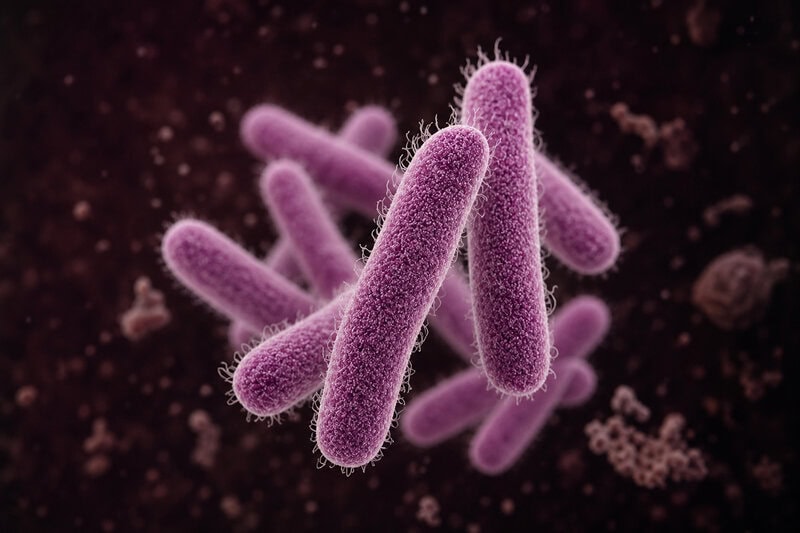
Shigella is a genus of gram-negative bacteria responsible for shigellosis, a severe bloody diarrheal disease that spreads through contaminated food and water and even through person-to-person contact at vanishingly small infectious doses. The World Health Organization estimates Shigella causes roughly 212,000 deaths per year, with the heaviest burden falling on young children in sub-Saharan Africa and South Asia.
Cryptosporidium, by contrast, is not a bacterium at all — it is a microscopic protozoan parasite that causes cryptosporidiosis, a profuse watery diarrhea that proves fatal with alarming frequency in malnourished children and immunocompromised individuals. WHO data consistently rank Cryptosporidium among the leading causes of severe diarrheal mortality in children under two in low-income countries.
Neither pathogen has a licensed vaccine. Shigella presents dozens of distinct serotypes — essentially different surface disguises — making it difficult to formulate a single shot with broad protective coverage. Cryptosporidium‘s complex life cycle and genetic diversity have frustrated every vaccine candidate tested in humans to date. Treatment options are no more encouraging. Shigella strains resistant to multiple antibiotics are spreading globally; the WHO has designated the pathogen a priority drug-resistant organism. The only approved drug for cryptosporidiosis, nitazoxanide, performs poorly in malnourished children — the very population at greatest risk of dying from the infection.
The Discovery: One Enzyme, Two Enemies
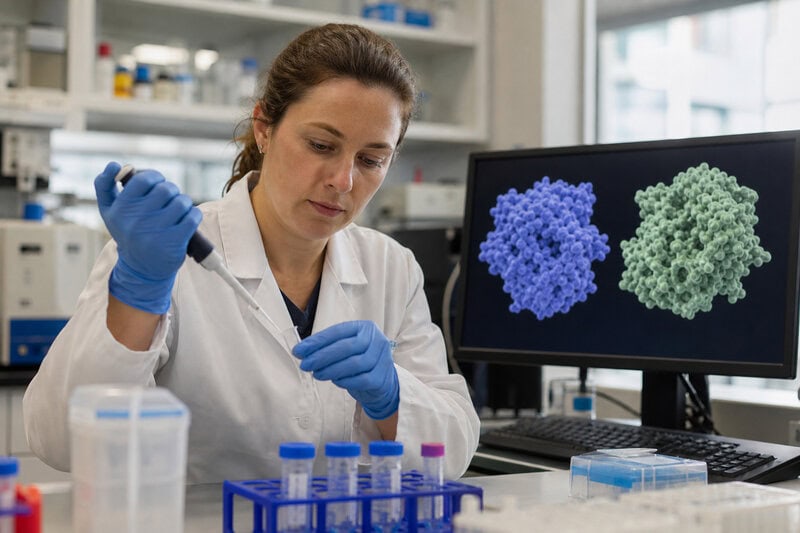
Researchers at WashU Medicine identified an enzyme — a biological molecule that catalyzes a specific chemical reaction inside the pathogen — that both Shigella and Cryptosporidium depend on to survive and replicate. Critically, the structural equivalent of this enzyme is absent in human cells.
That absence is not a footnote — it is the entire foundation of the discovery’s therapeutic promise. A drug or vaccine antigen designed to block an enzyme that exists in the pathogen but not in the patient would, in principle, attack the infection without harming the body’s own biology. That is the foundational requirement for any safe therapeutic target, and it is what separates genuinely exploitable vulnerabilities from biological curiosities.
The enzyme performs a role in a metabolic pathway essential to each pathogen’s survival — the kind of dependency researchers describe as an “Achilles’ heel,” a single point of failure the organism cannot simply bypass without losing the function that keeps it alive. Coverage of the WashU Medicine study has highlighted that this enzymatic vulnerability opens the door to a combined diarrheal vaccine — a direction the researchers themselves have described as a meaningful advance in the long effort to protect against these pathogens.
Precision matters here. The existence of the shared enzymatic target is the confirmed scientific finding. Whether that target can be successfully exploited in a drug or vaccine — whether blocking it in a living organism produces the predicted effect without triggering unforeseen biological consequences — remains an open question requiring years of further experimental work.
Why a Shared Weakness Changes the Strategic Calculus
The fact that two evolutionarily distinct pathogens share a common vulnerability is not just scientifically interesting — it is strategically significant in ways that matter most to the communities bearing the greatest burden from these diseases.
Developing a single vaccine or inhibitor against a shared target is dramatically more cost-efficient than building two entirely separate research and development pipelines. Diarrheal vaccines for low-income countries must ultimately be manufacturable cheaply, deployable without continuous refrigeration, and administrable through existing immunization programs that are already stretched thin. A bifurcated development effort — one program for Shigella, one for Cryptosporidium — requires roughly twice the funding, twice the regulatory pathway, and twice the logistical infrastructure of a combined approach.
The WashU Medicine finding raises the possibility of a combination vaccine: a single immunization protecting against both pathogens simultaneously. The concept is not novel in principle — the MMR vaccine has covered measles, mumps, and rubella in one shot for decades — but applying it to two pathogens as biologically different from each other as Shigella and Cryptosporidium requires a genuinely shared biological handle. The newly identified enzyme may be exactly that handle.
The broader implication extends beyond these two pathogens. Diarrheal illness as a category remains the second leading cause of death in children under five worldwide. A dual-target approach built around a conserved enzymatic vulnerability could, if validated, serve as a platform for tackling multiple enteric pathogens — a modular architecture for global health tools that do not yet exist.
How the Weak Point Works
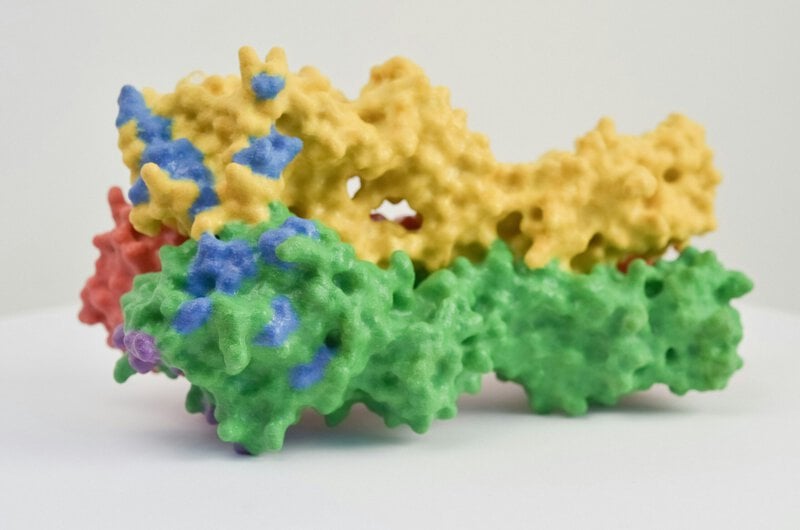
Every living organism — including every pathogen — depends on enzymes to complete the chemical reactions that sustain it. Block the right enzyme and the chain of reactions it drives breaks down; the organism cannot grow, cannot replicate, and eventually dies. The challenge in drug and vaccine development is identifying enzymes that are indispensable to the pathogen, absent or sufficiently different in the host, and structurally stable enough to serve as a reliable target.
Think of the enzyme as a master key the pathogen must use to unlock its own reproductive machinery. A molecule designed to fit the same lock and jam it — whether a small-molecule drug or an immune response primed by a vaccine — stops the infection at its source rather than managing symptoms after the damage is done.
What makes this particular enzyme a strong candidate target is that its structure appears to be conserved across both Shigella and Cryptosporidium — meaning the enzyme looks nearly identical in two organisms that are not closely related to each other. That kind of conservation is a meaningful biological signal. Pathogens do not maintain a molecular structure through millions of years of evolution unless abandoning it is fatal. That same evolutionary pressure is precisely what limits the pathogen’s ability to mutate around a drug or vaccine targeting that structure: any mutation sufficient to evade the therapy would likely destroy the critical function the enzyme provides.
Researchers must still confirm, through systematic experimental work, that blocking this enzyme in a living host produces the predicted outcome — pathogen death — without triggering compensatory mechanisms in the microorganism or unintended effects in the patient. That confirmation process is not a formality; it is the core scientific challenge that preclinical research must resolve before any therapeutic development can begin in earnest.
What Comes Next: From Laboratory to Real-World Impact
The path from an identified enzymatic target to an approved vaccine or drug is long, expensive, and uncertain. The next stages of research involve designing molecules — either small-molecule inhibitors or vaccine antigens — that specifically engage the identified enzyme, then testing those candidates first in cell cultures to confirm the predicted effect, then in animal models to assess safety and efficacy, and eventually in phased human clinical trials before any regulatory submission is possible.
Even under optimistic assumptions, a vaccine or therapeutic built on this discovery is likely a decade or more from reaching the children who need it most. That timeline is not a criticism of the research — it reflects the careful, methodical process that responsible drug development requires. The history of diarrheal vaccine development includes multiple promising preclinical findings that did not ultimately translate to human efficacy, and intellectual honesty demands acknowledging that pattern while still recognizing the genuine scientific significance of a well-grounded new target.
Coverage of the WashU Medicine study has emphasized the finding’s potential to reorient the field, framing the enzymatic discovery as the kind of foundational result that gives researchers a credible direction rather than a ready-made solution. That framing is accurate: the value of this discovery lies in meaningfully narrowing the search space in a field where viable targets have been elusive.
If the target is eventually validated and a combined intervention developed, the populations who would benefit most are those currently bearing the greatest burden — children under five in sub-Saharan Africa and South Asia, where both Shigella and Cryptosporidium circulate widely, sanitation infrastructure remains inadequate, and health systems lack the capacity to manage severe diarrheal illness effectively. A low-cost, thermostable combination vaccine against both pathogens would represent a transformative global health tool, one capable of preventing deaths not in the hundreds but in the hundreds of thousands over time.
Context and Caveats: Where This Fits in the Larger Fight
The WashU Medicine discovery does not exist in isolation. Several Shigella vaccine candidates are already in late-stage clinical trials, pursuing different mechanisms and antigen strategies. The newly identified enzymatic target could complement those parallel efforts rather than replace them — different scientific bets on different aspects of pathogen biology, collectively increasing the probability that at least one approach succeeds.
The antibiotic resistance dimension adds particular urgency to pursuing a non-antibiotic solution. Because multidrug-resistant Shigella is already a clinical reality — not a future projection — identifying a target for vaccine development matters in ways it might not have a generation ago. A vaccine prevents infection before it starts, bypassing the resistance problem entirely rather than racing to stay ahead of it with new antimicrobial compounds.
It is also worth being clear about what science journalism sometimes obscures: a research milestone is not an imminent clinical solution. The significance of the WashU Medicine finding lies precisely in its scientific credibility as a new direction — a well-reasoned, mechanistically grounded target that the broader research community can now investigate, attempt to replicate, and build upon. That is how science progresses, and it is meaningful even when it falls short of a headline-ready cure.
In plain terms: WashU Medicine researchers have identified a shared enzymatic vulnerability in Shigella and Cryptosporidium that neither pathogen can easily escape, giving the scientific community a concrete new target in the long-standing effort to build vaccines and treatments against two of the world’s most dangerous diarrheal diseases. The discovery does not end that effort — it gives it a more credible place to push.