
While SpaceX rocket landings and NASA moon missions dominate the news cycle, a quiet federal grant mechanism has been converting university research and small-business ingenuity into real space technologies for decades — largely invisible to the public that funds it. The National Academies of Sciences, Engineering, and Medicine, one of the most authoritative scientific bodies in the United States, has formally concluded that NASA’s Small Business Innovation Research and Small Business Technology Transfer programs are structurally sound, mission-aligned, and represent a genuine pathway for the commercialization of technology. That unambiguous institutional endorsement has received far less attention than it warrants.
What Are NASA SBIR and STTR? Plain-Language Definitions

Both the NASA SBIR and STTR programs are congressionally mandated mechanisms that direct a fixed percentage of federal research and development budgets toward small businesses. SBIR — Small Business Innovation Research — requires participating federal agencies, including NASA, to set aside a portion of their extramural R&D spending for competitive awards to small firms. STTR — Small Business Technology Transfer — adds a specific structural requirement: the small business must formally partner with a university or nonprofit research institution, splitting the research work between them under a written agreement.
Both programs use the same three-phase funding architecture. Phase I awards fund feasibility studies — proving that a proposed technology concept is scientifically and technically plausible. Phase II awards, which are substantially larger, fund the development and testing of a working prototype. Phase III is commercialization, at which point no additional SBIR or STTR funds are available by statute; companies must attract private investment, win NASA procurement contracts, or secure other federal business to continue. That built-in funding cliff is not a design flaw — it is an intentional feature that distinguishes these programs from open-ended research subsidies by requiring awardees to demonstrate real market viability before the government’s role concludes.
What makes NASA’s version of the program distinctive is the specificity of its solicitations. NASA SBIR and STTR topics are generated directly by the agency’s own technical directorates and mission centers, meaning proposals must address genuine NASA technology needs in areas such as space exploration, Earth science, and aeronautics. A proposal with strong scientific merit but no plausible connection to NASA’s operational priorities will not advance. That filter makes the NASA SBIR program more demanding than a general research grant — and more directly tied to technologies that could eventually fly in space or support missions on the ground.
The National Academies Review: What the Formal Assessment Found
Independent formal reviews by the National Academies of Sciences, Engineering, and Medicine are not routine. They are reserved for programs considered significant enough — in scale, policy relevance, or public investment — to warrant rigorous outside scrutiny. The fact that the National Academies undertook a formal review of NASA’s SBIR and STTR programs is itself a signal of the programs’ institutional weight.
The review’s headline finding is straightforward: the organizational structure and related processes of NASA’s SBIR and STTR programs facilitate the advancement of NASA’s mission and key priorities. This conclusion validates not merely the intentions behind the program but its actual operational design — the way topics are selected, proposals are evaluated, and awards are structured. That is a meaningful distinction in science policy, where well-intentioned programs frequently fail to connect funding mechanisms to real-world outcomes.
The National Academies also specifically concluded that the SBIR program is tightly connected to universities and serves as a valuable pathway for the commercialization of technology. This finding deserves particular attention because it identifies the program as a functioning bridge between two worlds that federal policy often struggles to connect: academic research, which produces knowledge, and industry, which produces products. The STTR structure — with its mandatory university partnership — institutionalizes that bridge in contractual form, keeping university intellectual property moving toward applications rather than accumulating in rarely licensed patent portfolios.
Intellectual honesty requires noting what the National Academies’ review does and does not establish. The review affirms structural soundness and mission alignment. It does not provide a comprehensive public accounting of how many NASA SBIR graduates became self-sustaining companies or precisely how many funded technologies reached operational use aboard space systems. Acknowledging that data gap matters for anyone seeking a complete picture of the program’s return on taxpayer investment — and it points to where future evaluations could add the most value.
How the Program Actually Works: From Lab Bench to Launch Pad
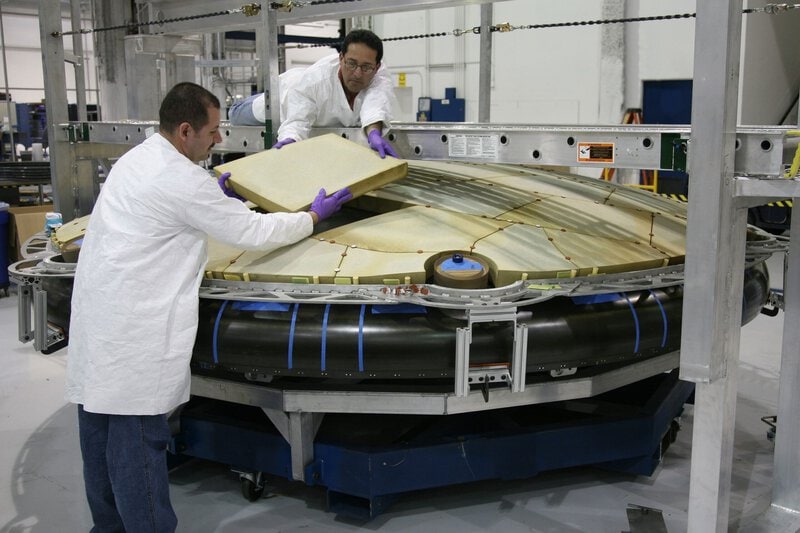
Consider a representative lifecycle. A small engineering firm — perhaps a university spinout whose founders published their early work with federal support — identifies a technology need in NASA’s annual solicitation. That solicitation might call for advances in thermal protection materials, radiation-hardened electronics, or autonomous navigation systems for deep-space probes. The firm submits a Phase I proposal demonstrating that its approach is scientifically credible and technically feasible. If selected, it receives a Phase I award and begins the feasibility work.
If that work succeeds, the firm competes for a larger Phase II award to build and test a prototype against real performance requirements. NASA engineers — who helped generate the original solicitation topic — often remain engaged during this phase, providing technical guidance and, crucially, developing a working familiarity with the small company and its capabilities. That relationship can outlast the grant itself, positioning the firm as a credible future contractor or development partner long after the formal award period ends.
The STTR variant adds a layer of institutional structure to this process. The small business must execute a formal collaboration agreement with a university or federal research institution before receiving funds, specifying how work and intellectual property will be divided. The National Academies review identified this mechanism as a meaningful bridge between academic discovery and commercial application — not because partnerships between academia and industry are inherently successful, but because the contractual requirement forces both parties to resolve questions about IP ownership, work allocation, and commercialization rights before research begins rather than after disputes arise.
The University Connection: The Program’s Underappreciated Strength
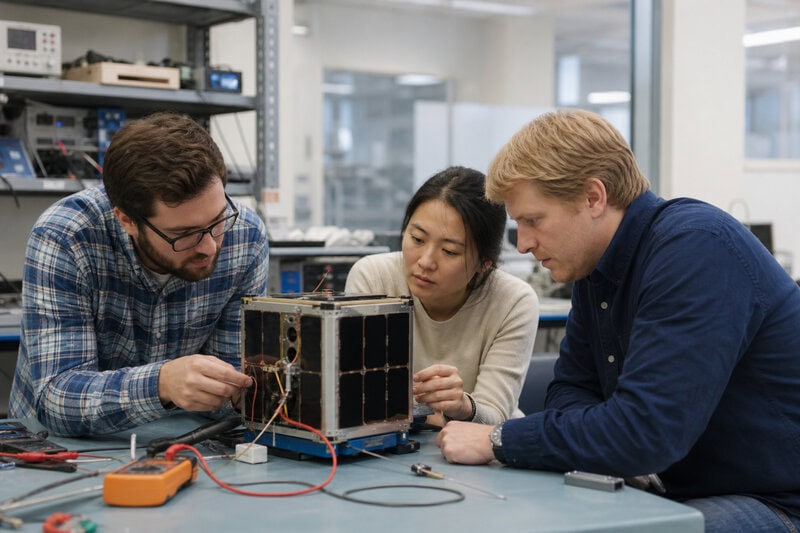
The National Academies’ finding about the SBIR program’s tight connection to universities points to something that rarely surfaces in public discussions of space innovation policy. Many companies that receive SBIR awards are founded by, or closely affiliated with, university researchers whose earlier work was itself supported by federal funding. The SBIR award, in this context, functions as a technology transfer mechanism — converting federally funded academic research into products and services with commercial potential. The program receives little credit for this role, in part because the pathway is indirect and takes years to complete.
This university connection also helps explain why the STTR program’s mandatory partnership requirement is more than procedural. By requiring a formal agreement between a small business and a research institution, STTR creates a structured incentive for universities to move technology out of the lab and toward market applications. Intellectual property that might otherwise sit idle in a university patent portfolio gains a commercial partner with explicit financial motivation to develop it into something buyers will actually pay for.
Some critics of federal innovation programs argue that government grants distort markets by subsidizing research the private sector would have funded anyway, or by keeping marginal companies alive past the point of natural market selection. Those are legitimate concerns in the broader innovation policy literature. But the National Academies’ finding that NASA’s SBIR and STTR programs facilitate the advancement of NASA’s mission priorities — an assessment made by an independent body, not by NASA itself — represents institutional consensus grounded in structured evaluation rather than promotional claims. The programs are not judged on whether they are good for innovation in the abstract; they are judged on whether they serve NASA’s documented needs, and the review found that they do.
The Ecosystem Around NASA SBIR: Networks, Visibility, and What Comes After
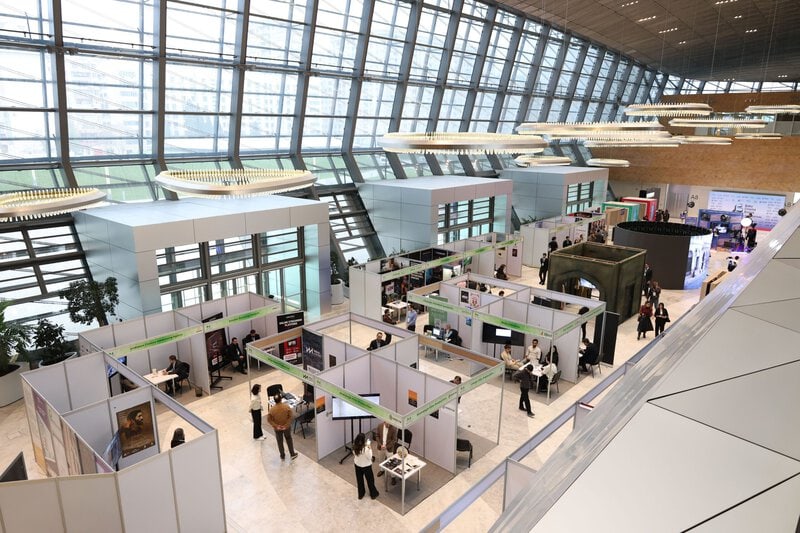
NASA SBIR and STTR awardees do not operate in isolation. The Small Business Administration tracks SBIR and STTR awards across all participating federal agencies and hosts virtual and in-person events for program participants, providing small companies with visibility into what other agencies are funding, what technologies are in demand across the federal government, and what research partners are available. A small firm that wins a NASA SBIR award for a sensor technology may find that the Department of Defense or the Department of Energy has funded adjacent research — and that cross-agency visibility can open paths to partnership or follow-on contracts that a single-agency program would never surface.
Phase III’s funding structure reinforces this outward orientation. Because no SBIR or STTR funds are statutorily available for commercialization, companies that reach Phase III must engage with private markets, venture investors, or federal procurement systems to survive. The program is explicitly designed as a launching pad, not a permanent support structure. Technologies that successfully exit the program have been stress-tested against real market and procurement demands — a filter that distinguishes SBIR graduates from research projects that never had to demonstrate commercial relevance.
The SBA’s public SBIR award database allows anyone to search which companies have received NASA small business grants, in what technology areas, and at what funding levels. That transparency tool makes the program legible to journalists, investors, and policy researchers in a way that few federal R&D mechanisms are — and it provides a factual foundation for evaluating the program’s reach that complements, rather than depends on, institutional assessments alone.
Why This Program Deserves More Public Attention
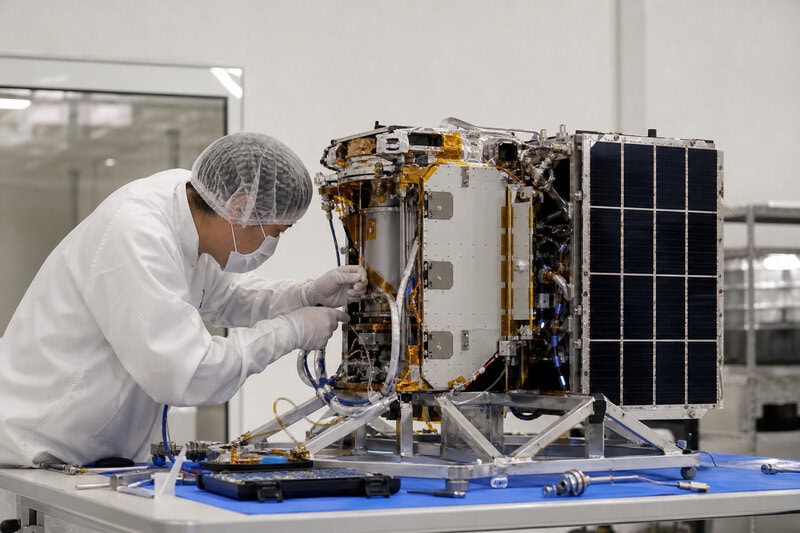
The case for paying closer attention to NASA’s SBIR and STTR programs does not rest on promotional language about transformative innovation. It rests on the straightforward finding of an independent institutional review: as documented by the National Academies’ assessment of NASA’s SBIR and STTR programs, these mechanisms are structurally sound, aligned with NASA’s mission priorities, and serve as a genuine pathway for technology commercialization — particularly through their connection to university research. That is a defensible, evidence-based conclusion, not a superlative.
The broader policy context makes that finding increasingly consequential. As NASA pursues lunar return missions, Mars readiness, and the development of commercial low-Earth orbit infrastructure, the agency’s technology requirements are expanding faster than any single contractor or internal research program can address. Large prime contractors supply critical systems, but they cannot provide the full breadth of specialized components, sensors, algorithms, and materials that advanced space missions require. Small businesses, operating with lower overhead and faster development cycles, fill that gap — and SBIR and STTR are the primary federal mechanisms for directing that small-business innovation toward NASA’s actual documented needs.
A broader analysis of SBIR program impacts across federal agencies, compiled by the Small Business Technology Council, reinforces the point that the government-wide SBIR mechanism has consistently produced commercially relevant technologies across multiple sectors — context that makes the National Academies’ favorable assessment of NASA’s specific implementation more, not less, significant.
NASA’s SBIR and STTR programs will not dominate headlines the way rocket launches or Mars rover images do. But the National Academies review indicates they quietly underpin a meaningful share of the agency’s technology development pipeline — advancing from feasibility study to prototype to procurement contract with little public fanfare. That low profile may be precisely why they have attracted so little scrutiny, and why the institutional verdict in their favor deserves a wider audience than it has received.