
In early 2025, a lunar lander the size of a small car touched down near the Moon’s South Pole, tipped sideways onto the ancient regolith, and stranded a four-wheeled rover that would never roll a single meter across the surface. Within days, the company behind that lander—Houston-based Intuitive Machines—learned that NASA had awarded its most coveted lunar rover contracts to two competitors, sending the company’s stock tumbling sharply in a single trading session. The twin blows offer a vivid, unsparing portrait of what a real commercial lunar economy looks like in its formative years: consequential, brutally competitive, and moving forward regardless of any single setback.
A Lander Falls Sideways—and a Lunar Economy Wobbles
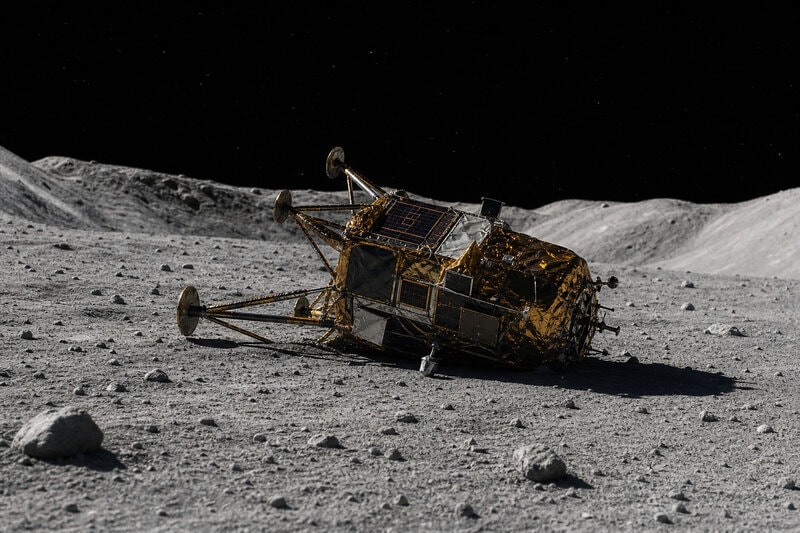
Intuitive Machines’ IM-2 mission landed at Mons Malapert, a mountainous region near the Moon’s South Pole prized by scientists for its proximity to permanently shadowed craters and suspected water-ice deposits. The spacecraft carried NASA science instruments and technology demonstrations—including the PRIME-1 drill designed to excavate subsurface ice and a Nokia-built LTE/4G lunar communications node—that could have yielded data critical to planning any permanent outpost. Instead, the lander came to rest on its side and was subsequently declared dead, with the onboard rover confirmed to have survived in functional condition but unable to deploy from a spacecraft lying on its flank.
Post-mission analysis framed the outcome as a systems-integration failure rather than a fundamental flaw in the rover or the science payloads themselves—a distinction that matters enormously for understanding what went wrong and what can be fixed. Markets reacted sharply nonetheless: when NASA disclosed that Astrolab and Lunar Outpost had won the lunar terrain vehicle contracts, shares of Intuitive Machines (ticker: LUNR) fell as much as 12% in a single session. The company, founded in 2013 by Stephen Altemus with roots in NASA’s Johnson Space Center, had positioned itself as a frontrunner in the emerging lunar services market. The rover loss complicated that narrative—without eliminating it.
What NASA’s CLPS Program Is and Why It Tolerates Failure
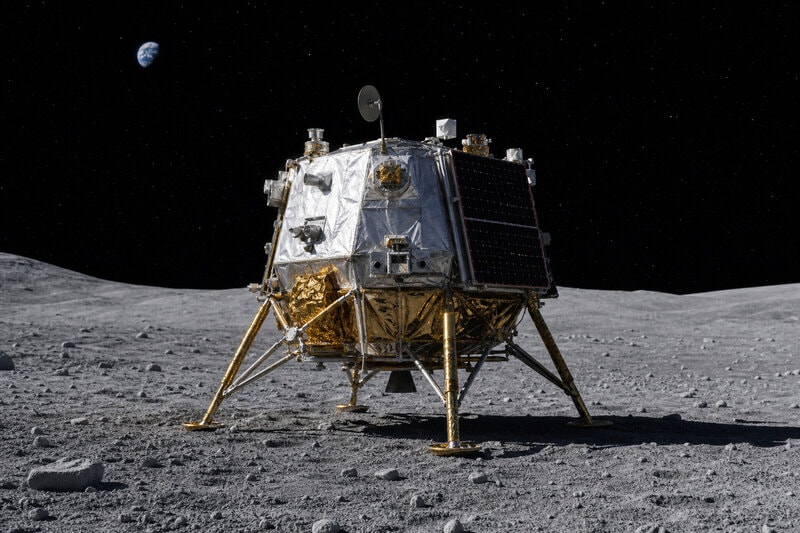
To understand why these setbacks matter—and why they are not necessarily fatal—it helps to understand the architecture NASA deliberately built to produce them. The Commercial Lunar Payload Services program, established in 2018, is a fixed-price contract vehicle through which NASA pays private companies to deliver science instruments and technology demonstrations to the lunar surface. Unlike traditional cost-plus contracts, in which the government absorbs most financial risk, CLPS shifts mission risk squarely to industry. Companies choose their own rockets, landers, and trajectories; NASA buys the ride the way a freight shipper buys cargo space on a vessel it does not own or operate.
The logic is deliberate: by running multiple vendors simultaneously, NASA gets several shots at the Moon for roughly the price of a single traditional robotic mission, and each failure—however painful for the company involved—accelerates the collective learning curve across the entire industry. NASA’s stated long-term ambition is to stimulate a self-sustaining lunar economy in which government payloads eventually represent just one revenue stream among many, alongside commercial data sales, resource prospecting, and habitat logistics. The agency has been explicit that partial failure is an acceptable, even instructive, cost of that acceleration. It is a philosophy that shapes how every CLPS outcome, including IM-2’s, should be read.
Intuitive Machines’ Record: Ambition, Achievement, and Hard Landings
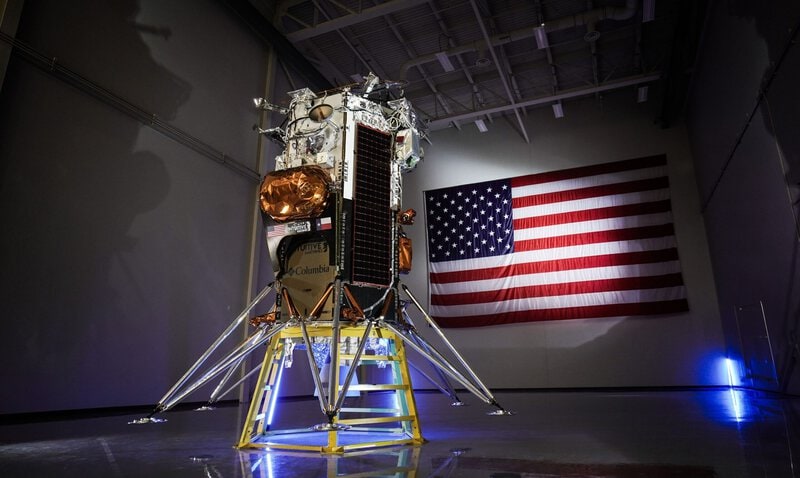
Despite its recent difficulties, Intuitive Machines’ place in lunar history is already secure. The company became the first private enterprise to successfully soft-land a spacecraft on the Moon when its IM-1 mission touched down in February 2024—though that lander also came to rest at an off-nominal angle, limiting some instrument operations. IM-2 pushed into even more scientifically critical territory, targeting the South Pole region that both NASA and international space agencies regard as the most strategically important real estate on the Moon.
NASA’s post-landing news conference on IM-2 confirmed that some science data was collected before the mission ended and that the rover survived the anomalous landing in functional condition. Despite two landers ending in off-nominal orientations, Intuitive Machines has delivered more NASA payload to the lunar surface under CLPS than any other company to date—an operational track record that is credible, if imperfect. That distinction carries real weight when evaluating the company’s long-term competitive standing, even as the rover contract loss stings in the near term.
The Rover Race: Why Astrolab and Lunar Outpost Won
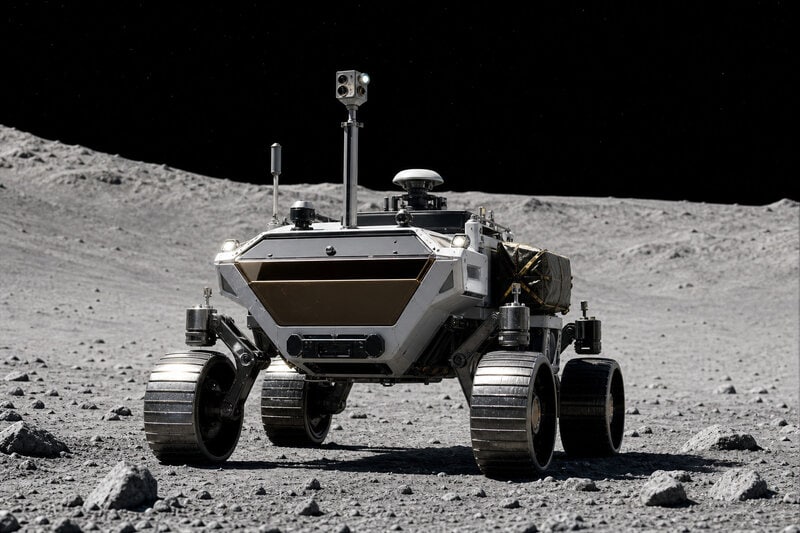
NASA’s Lunar Terrain Vehicle services acquisition seeks something considerably more capable than a payload delivery lander: a crewed-capable, rechargeable rover that can carry Artemis astronauts across the lunar surface and operate autonomously between human visits. The performance bar is high, and the business case requirement is equally demanding—NASA wants vendors to demonstrate that the rover can generate commercial revenue independent of NASA contracts, reducing the agency’s long-term cost exposure and avoiding the creation of another program entirely dependent on government funding.
Astrolab, backed by venture capital and a planned partnership with SpaceX for launch, proposed the FLEX rover—a modular design with a reconfigurable cargo bed intended to serve both NASA crews and future commercial customers moving equipment across the surface. Lunar Outpost, a Colorado-based startup with heritage in resource-prospecting technology, offered a rover architecture built to integrate directly with in-situ resource utilization operations—the process of extracting water or oxygen from lunar regolith—aligning tightly with NASA’s base-building goals. NASA has not publicly disclosed the precise weighting of its evaluation criteria, but agency documents indicate that mission reliability, commercial viability, and price competitiveness all factored heavily. In that context, two sequential landers with documented orientation anomalies may reasonably have introduced evaluator uncertainty about systems-level reliability at the moment it mattered most.
The Science at Stake: South Pole Water Ice and the Base-Building Imperative
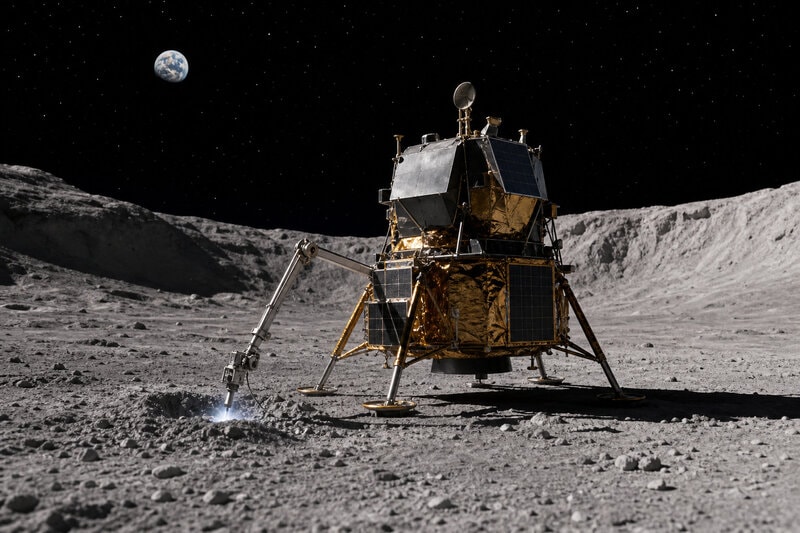
The Moon’s South Pole has become the focal point of international lunar ambitions for reasons grounded firmly in chemistry and economics. Permanently shadowed craters there are believed to harbor water-ice deposits—a hypothesis supported by NASA’s LCROSS impact mission in 2009 and strengthened by subsequent orbital observations from the Lunar Reconnaissance Orbiter. Water ice is the linchpin resource for any sustainable lunar base: it can be electrolyzed into hydrogen and oxygen for rocket propellant, used directly for astronaut life support, and potentially processed into radiation shielding material. Access to indigenous water transforms the Moon from an expensive dead end into something closer to a waypoint with local fuel stations—a difference that makes or breaks the economics of every mission that follows.
IM-2’s PRIME-1 drill was designed specifically to excavate and analyze subsurface ice at the South Pole, data that would feed directly into the engineering blueprints for a future outpost. Every soft landing near the South Pole, successful or partial, also contributes irreplaceable terrain, thermal, and communications data that orbital sensors cannot replicate at the same resolution or fidelity. In that framing, IM-2’s scientific contribution is not zero, even if it fell well short of its potential—and the lessons encoded in that failure are now part of the institutional knowledge base the entire industry draws upon.
A Maturing, Fiercely Competitive Field
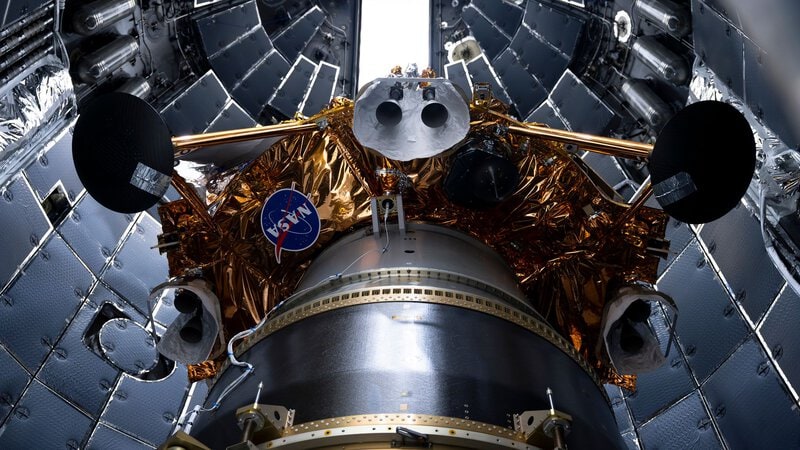
The broader CLPS vendor pool now encompasses more than a dozen companies, ranging from established aerospace contractors to pure-play startups—a composition that signals commercial moon landing has transitioned from novelty into recurring industrial activity. Firefly Aerospace’s Blue Ghost lander completed a fully successful CLPS mission in early 2025, operating upright, delivering all payloads, and setting a new performance benchmark that implicitly raised the competitive bar for every subsequent bidder. Astrobotic, whose Peregrine lander suffered a propellant leak and failed to reach the Moon in January 2024, demonstrates that CLPS failures cut across company size and experience level, reinforcing rather than undermining NASA’s deliberate risk-tolerance philosophy.
The combined addressable market for commercial lunar services—covering payloads, logistics, communications, and resource extraction—is projected by industry analysts to grow substantially through the 2040s as both government and private investment in lunar infrastructure accelerates. That context matters: losing a single contract round is genuinely painful but not structurally fatal for any established vendor with active relationships inside the CLPS ecosystem. The market is large enough, and the timeline long enough, that early stumbles are survivable for companies that iterate, adapt, and demonstrate credible corrective action.
What Comes Next for Intuitive Machines and the Path to a Lunar Base
Despite the rover contract loss, Intuitive Machines retains active CLPS task orders and has publicly signaled plans for an IM-3 mission, keeping the company embedded in NASA’s supply chain at a moment when that chain is only growing more important. NASA’s Artemis program envisions a phased lunar presence: robotic scouts operating now, crew landings targeted for the late 2020s, and a permanent Gateway orbital outpost alongside a surface base camp in the 2030s. That roadmap requires a continuous drumbeat of commercial lander missions to pre-position equipment, validate communications infrastructure, and characterize landing sites in detail—work that CLPS vendors including Intuitive Machines are well positioned to perform regardless of who ultimately builds and operates the rover.
The LTV contracts awarded to Astrolab and Lunar Outpost are themselves structured competitively: NASA will evaluate actual hardware performance before committing to full operational deployment, leaving the door open for future competition rounds in which any vendor, including Intuitive Machines, could participate with hard-won lessons applied. The deeper principle that the IM-2 saga illustrates may be the most important takeaway of all: a resilient lunar economy cannot depend on any single company succeeding every time. Redundancy, sustained competition, and the deliberate tolerance of partial failure are not flaws in NASA’s commercial partnership strategy. They are the strategy—and by that measure, even a lander that tips sideways onto the regolith is contributing to a system that is, imperfectly but unmistakably, working exactly as designed.