
NASA has awarded Firefly Aerospace a $75 million contract to deliver four autonomous “hopping” drones to the Moon’s South Pole — the most logistically ambitious small-robot deployment in lunar history, and a mission that treats the Moon not as a destination but as an operating theater requiring mobile, redeployable scouts.
A $75 Million Bet on Four Hopping Robots
The mission, called MoonFall and managed under NASA’s Jet Propulsion Laboratory, gives Firefly Aerospace a role with no real precedent in planetary exploration: that of an aircraft carrier operating in deep space. Firefly’s Elytra spacecraft will ferry all four hopping drones across 384,000 kilometers of cislunar space, then release them from lunar orbit approximately 50 kilometers above the surface, where each drone will independently navigate its own descent to the Moon’s South Pole.
Awarded as a NASA JPL subcontract, the contract signals a strategic shift in how NASA plans to explore the lunar South Pole — a region of intense scientific and geopolitical interest due to confirmed water-ice deposits locked inside permanently shadowed craters. Rather than relying on a single, stationary lander, NASA JPL is betting on a distributed network of mobile robots capable of repositioning themselves across some of the most treacherous terrain in the inner solar system. Firefly Aerospace confirmed the award on its official news page, describing the Elytra vehicle as purpose-built for this orbital carrier role.
Why the Moon Needs Drones in the First Place
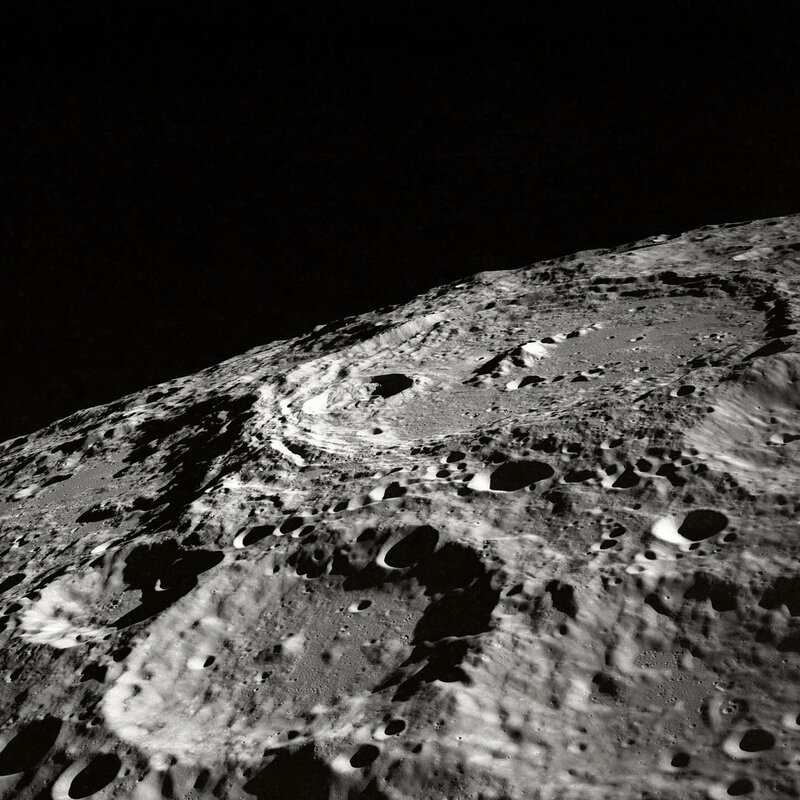
The lunar South Pole presents what planetary scientists call a terrain paradox. Its most scientifically valuable sites — permanently shadowed regions, or PSRs, where temperatures never rise above roughly minus 163 degrees Celsius — are also the hardest for conventional robotic systems to access safely. Traditional wheeled rovers depend on relatively flat, sunlit terrain for solar power generation and reliable traction. PSRs offer neither, remaining in perpetual darkness with surfaces of fine, unstable regolith that can defeat wheeled mobility entirely.
Critically, drone flight on the Moon is fundamentally different from flight on Earth or even on Mars. Because the Moon has no atmosphere, aerodynamic lift is physically impossible. Lunar “drones” must instead use rocket thrust to hop ballistically from point to point — consuming propellant rather than battery power, and following a trajectory more like a miniature spacecraft than a conventional aircraft. This mode of locomotion is uniquely suited to low-gravity, airless bodies where wheeled traction fails on loose regolith.
NASA JPL’s MoonFall concept treats the four hopping drones as a distributed sensor network. Each unit is designed to relocate itself independently, gathering seismic, thermal, or compositional data from positions no single stationary lander could ever reach. The distributed architecture also reduces single-point failure risk: if one drone is lost, the remaining three continue the mission.
Meet the Elytra: NASA’s Lunar Drone Carrier
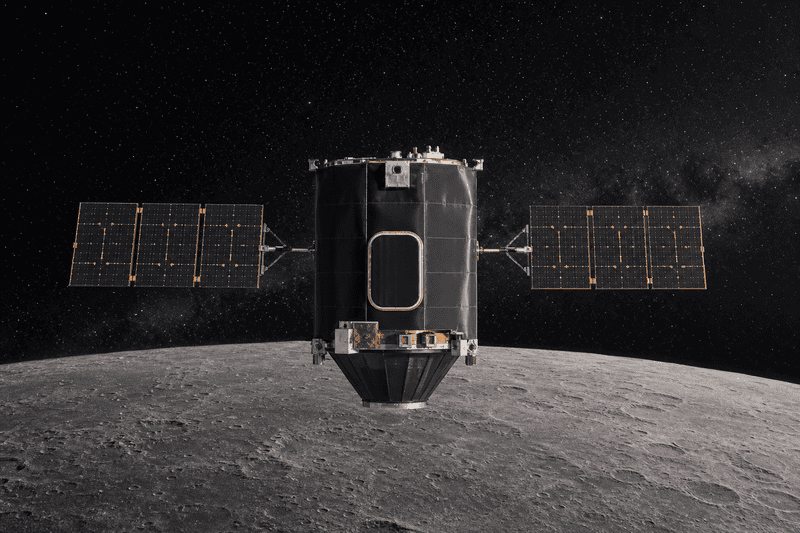
Firefly Aerospace’s Elytra spacecraft is purpose-built as an orbital transfer and deployment vehicle — a modular platform designed to carry payloads from Earth orbit through cislunar space and into lunar orbit. After a 45-day low-energy transit trajectory from Earth, Elytra will achieve stable lunar orbit and serve as the mission’s staging platform, releasing the four hopping drones from approximately 50 kilometers above the Moon’s surface.
That deployment altitude is not arbitrary. It represents an engineering balance between orbital stability over the South Pole’s irregular gravity field and the descent fuel budget available to each individual drone. Releasing the drones at 50 kilometers allows each one to execute its own precisely calculated ballistic descent without requiring a powered braking assist from Elytra itself.
The aircraft-carrier analogy is technically precise in one important respect: Elytra does not land. It remains in lunar orbit throughout the surface operations phase, functioning as a communications relay and coordination hub while its payload operates autonomously below. This architecture allows NASA JPL to outsource the transit and deployment logistics entirely to Firefly under a fixed-price commercial agreement — keeping mission costs predictable in a way that traditional cost-plus government contracts rarely achieve. Full details of the subcontract scope were reported by MSN’s technology coverage.
Firefly Aerospace: The Company Behind the Carrier
Founded and headquartered in Cedar Park, Texas, Firefly Aerospace built its early reputation on the Alpha rocket before pivoting aggressively into lunar delivery services. The company’s trajectory changed decisively when its Blue Ghost lander successfully touched down on the Moon — making Firefly the first American company to land a spacecraft on the Moon upright in more than 50 years. That milestone validated the company’s end-to-end lunar mission capability in a way that no amount of ground testing could replicate.
The Blue Ghost success directly informed NASA’s confidence in awarding Firefly the MoonFall subcontract. The company had demonstrated not just launch capability but precision lunar descent, surface operations management, and the systems engineering discipline required to keep a spacecraft alive across the full Earth-to-Moon journey. CBS Austin reported on how the Cedar Park company’s selection reflects its growing role in NASA’s lunar program.
The MoonFall award represents a significant expansion of Firefly’s mission profile — from payload delivery operator to active mission architect. Designing a vehicle like Elytra requires the company to solve problems it has not publicly faced before: sustained orbital operations around the Moon for weeks, precise multi-asset deployment sequencing, and maintaining communications with four semi-autonomous surface robots operating in permanently shadowed terrain.
The Science Target: Why the South Pole Matters
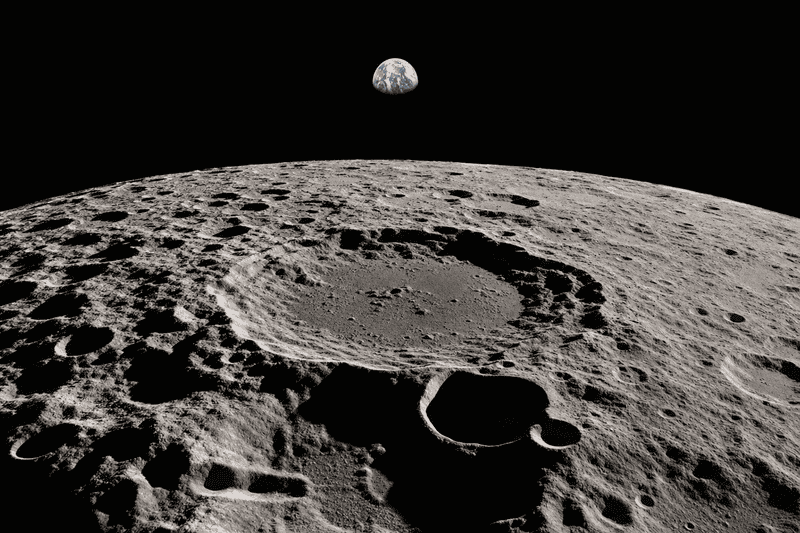
NASA and international space agencies have identified the lunar South Pole as the highest-priority surface exploration target of the 2020s. The scientific basis for that priority is robust: data from missions including India’s Chandrayaan-1 and NASA’s Lunar Reconnaissance Orbiter confirm the presence of water ice in PSRs, locked in craters where sunlight has never penetrated in billions of years.
That water ice carries a dual significance. Scientifically, it represents a preserved record of volatile delivery to the inner solar system — potentially including cometary and asteroidal material that contributed water to the early Earth. Strategically, it is a potential in-situ source of hydrogen rocket propellant and breathable oxygen for sustained human presence, making its precise mapping an urgent prerequisite for NASA’s crewed Artemis lunar surface missions.
The four MoonFall hopping drones are designed to characterize the distribution, depth, and purity of these ice deposits across multiple sites simultaneously — generating a higher-resolution, spatially distributed dataset than any single stationary lander could produce. The South Pole’s extreme lighting geometry, where peaks of near-permanent sunlight sit adjacent to craters in permanent shadow, also makes the region an ideal testbed for the distributed robotics concepts NASA JPL has been developing for years.
How the Mission Actually Works: From Launch to Hop
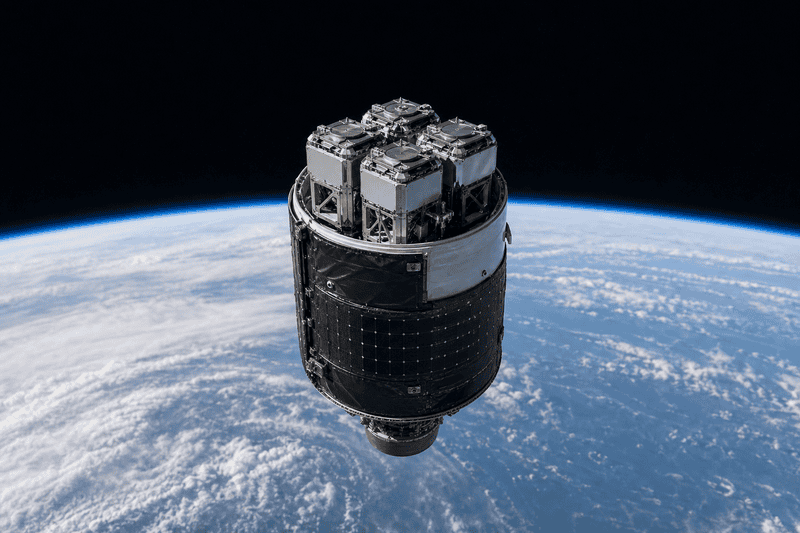
The mission sequence begins with Elytra launching into Earth orbit carrying all four drones in a stacked or clustered configuration. Over the 45-day low-energy transit, Elytra uses fuel-efficient orbital mechanics — trading time for propellant savings — rather than the faster but more expensive direct trajectories used by Apollo-era missions.
Once Elytra achieves stable lunar orbit at approximately 50 kilometers altitude, each drone is sequentially deployed with a precisely calculated velocity vector. That initial push commits each drone to a ballistic descent arc targeting a specific South Pole landing zone, without requiring additional braking thrust from Elytra. Each drone then handles its own terminal descent and landing autonomously.
On the surface, each drone operates semi-autonomously, using onboard thrust to execute hops of variable distance across the South Pole terrain. Mission control at JPL will coordinate the four-drone network using communication relays through either Elytra in orbit or NASA’s Lunar Reconnaissance Orbiter, depending on orbital geometry at any given moment — a contingency architecture that meaningfully reduces the risk of a single communications failure ending the mission. Yahoo Finance’s coverage of the NASA contract award outlines the broader commercial context of this mission architecture.
What This Means for the Future of Lunar Exploration
The MoonFall mission architecture — a commercial orbital carrier releasing a coordinated network of mobile robots — represents a template that NASA JPL could replicate for other planetary bodies where terrain complexity makes single-lander missions insufficient. The concept is potentially applicable to other airless bodies where hopping locomotion would offer similar advantages over wheeled rovers, though MoonFall must first prove the approach operationally before such extensions become realistic planning.
The $75 million fixed-price structure of the subcontract is itself significant. It demonstrates that NASA’s commercial lunar strategy is maturing beyond simple payload delivery toward outsourcing entire mission segments, including orbital operations and multi-asset deployment sequencing. Firefly’s progression from the Blue Ghost lander to the Elytra carrier — within the same contract lineage — suggests that a small commercial ecosystem is consolidating around end-to-end lunar mission capability. The Motley Fool’s analysis of the contract examines what this consolidation means for Firefly’s commercial position.
Whether hopping drones become a standard tool of planetary science depends entirely on MoonFall’s operational results. But the mission is structured to produce something no previous lunar effort has delivered: a systematic, multi-point surface dataset of the lunar South Pole, gathered by mobile platforms capable of reaching sites that wheels never could. That dataset will directly shape the landing site selection process for NASA’s crewed Artemis surface missions — making MoonFall not merely a technology demonstration, but a scientific prerequisite for returning humans to the Moon.