
Atlantic salmon farmed in the Faroe Islands can return more edible omega-3 fatty acids to the human food supply than the marine ingredients used to raise them — a finding that directly contradicts one of aquaculture’s most persistent criticisms. A new study proposes a sharper nutritional accounting tool that, when applied to real-world fish farms, challenges the conventional assumption that fish farming inevitably depletes the world’s supply of heart- and brain-healthy fats.
Why the Old Scorecard Was Misleading
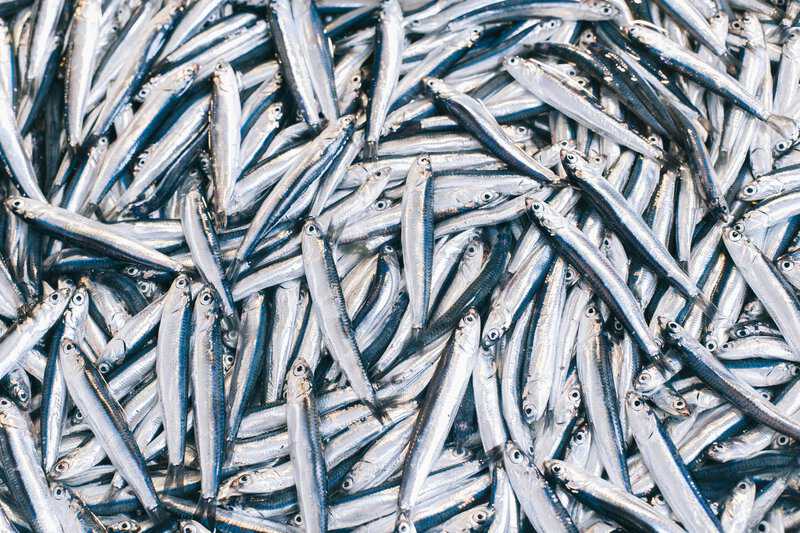
For decades, the dominant way to judge whether salmon farming was sustainable was a measure called the FIFO ratio — fish-in, fish-out. The FIFO ratio counts how many kilograms of wild-caught forage fish, such as anchovies or herring, are needed to produce one kilogram of farmed fish. A ratio above 1.0 has traditionally been read as a signal that aquaculture is a net drain: the ocean gives more than it gets back.
The problem is that FIFO is a blunt instrument. It weighs total fish mass against total farmed fish mass without asking a more nutritionally meaningful question: how much of the omega-3 that enters a fish farm actually ends up on a human plate, and how does that compare to the plate-ready omega-3 that was consumed to produce it? Not all parts of a forage fish are edible by humans. Much of what is rendered into fishmeal and fish oil comes from offcuts, processing waste, and species that most populations do not eat directly. Counting those inputs identically to a salmon fillet a person actually eats produces a distorted picture.
This methodological gap has shaped both policy and consumer perception for years, making salmon farming appear far less efficient — and far more ecologically costly — than a nutritionally focused analysis might reveal. Researchers have explicitly challenged these traditional FIFO metrics, arguing that the field needs a more nutritionally honest alternative.
Meet neFIFO: The Metric That Changes the Calculation

The new measure is called neFIFO, or net edible FIFO. Where the traditional FIFO ratio compares fish weight to fish weight, neFIFO compares the edible EPA and DHA omega-3 fatty acids delivered in a farmed fish fillet against the edible omega-3 contained in the marine ingredients — fishmeal, fish oil, and related inputs — consumed during farming. EPA and DHA stand for eicosapentaenoic acid and docosahexaenoic acid, the long-chain omega-3 fatty acids most strongly linked to cardiovascular and neurological health in the scientific literature.
The threshold that matters is 1.0. When a farmed species achieves a neFIFO below 1.0, the fillet delivered to a consumer contains more edible EPA and DHA than the edible omega-3 that was fed into the system to produce it. Aquaculture is, in that case, amplifying rather than depleting the omega-3 available for human consumption. The word edible is doing significant work in this definition: by restricting the comparison to the portions of both feed ingredients and harvested fish that humans can actually eat, neFIFO puts inputs and outputs on a genuinely like-for-like, plate-ready basis.
According to coverage of the study by Aquafeed, the researchers applied this framework to two farmed species — Atlantic salmon and tilapia — and found that both can achieve neFIFO values below 1.0 under real-world farming conditions, establishing the metric’s practical relevance beyond theoretical modeling.
How Farmed Salmon Becomes an Omega-3 Amplifier
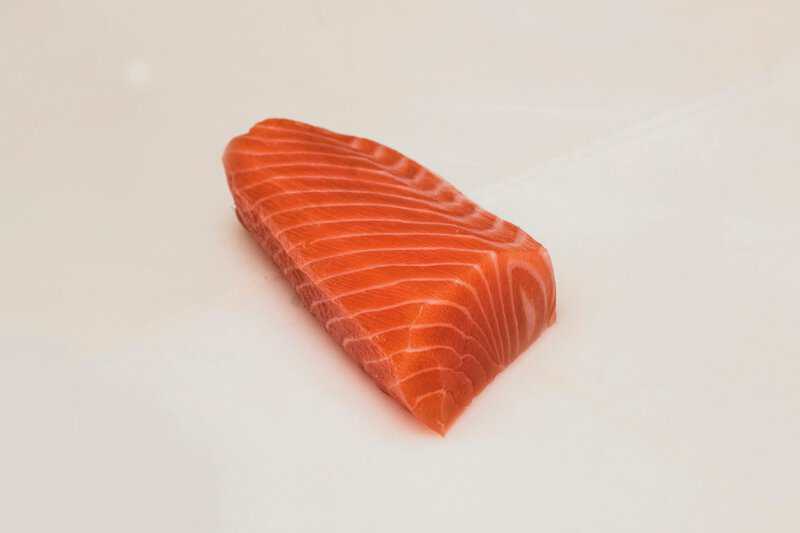
The biological reason Atlantic salmon can clear this bar comes down to physiology. Salmon are unusually efficient at retaining EPA and DHA in their muscle tissue. When they consume marine-derived fats, a meaningful proportion ends up concentrated in the flesh a consumer eats — not lost to metabolic processes or deposited in organs discarded after harvest. This efficiency is an established feature of salmonid biology.
What is newer, and where the study makes its most significant contribution, is the role of feed composition. Modern salmon diets increasingly incorporate marine by-products and processing trimmings: offcuts from fish destined for human consumption that would not otherwise enter the food chain at all. When those ingredients are accounted for correctly under the neFIFO framework, the edible omega-3 cost of each kilogram of feed falls, because much of the marine ingredient comes from material humans were never going to eat regardless. That shift in the denominator of the calculation is a key reason Faroese Atlantic salmon can achieve neFIFO below 1.0.
The study identifies diet composition — specifically the sourcing and type of marine ingredients used — as the critical variable determining whether a salmon farm crosses the neFIFO threshold. This distinction matters: the finding is not a blanket endorsement of all farmed salmon everywhere, but a demonstration that responsible feed sourcing can tip the net omega-3 balance positive under real Faroese farming conditions.
Tilapia Makes the List — For an Entirely Different Reason

The study’s second example complicates the story in an instructive way. Tilapia farmed in China also achieves neFIFO below 1.0, but through a completely different pathway. Tilapia diets are predominantly plant-based, meaning the marine omega-3 input going into the feed is very small to begin with. Even though tilapia fillets contain only modest amounts of EPA and DHA, that modest amount exceeds the even smaller marine omega-3 cost embedded in their largely terrestrial diet.
Consumers should read this carefully. Tilapia’s inclusion in the study does not mean it rivals salmon as a dietary source of EPA and DHA. neFIFO measures omega-3 productivity relative to inputs, not absolute omega-3 richness. Farmed Atlantic salmon remains substantially richer in EPA and DHA per serving than tilapia; that nutritional hierarchy is unchanged by this analysis.
What the dual-species finding does accomplish is broaden the framework’s relevance. By showing that neFIFO below 1.0 is achievable through two very different biological and dietary routes — high omega-3 retention in salmon, and low marine input in tilapia — the study suggests the metric could meaningfully reshape how the entire aquaculture industry is evaluated, not just premium salmon farming. Aquaculture North America’s coverage of the study highlights exactly this broader implication for the sector.
What This Means for Consumers
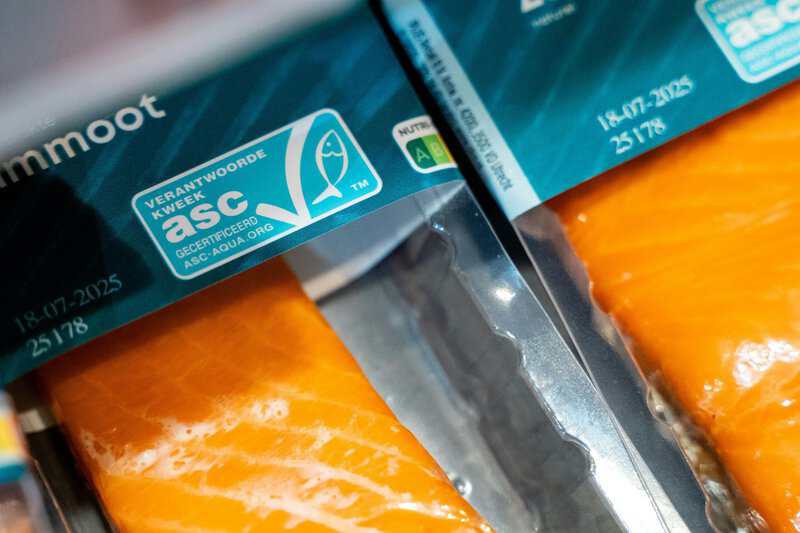
For health-conscious consumers asking whether farmed salmon is a good dietary choice, the new evidence offers a meaningful reframing — on omega-3 grounds specifically. Responsibly farmed Atlantic salmon raised on sustainably sourced marine ingredients does not merely deliver EPA and DHA; under the neFIFO framework, it may actively contribute more edible omega-3 to the food supply than it requires to produce. That is a substantially different story from the one told by a high FIFO ratio alone.
Several important caveats deserve equal prominence. The neFIFO values reported for Faroese salmon depend heavily on the specific feed sourcing practices at those farms. Operations that rely more heavily on whole wild-caught forage fish rather than by-products and trimmings will face a higher edible omega-3 cost in their inputs and may not achieve neFIFO below 1.0. Results from the Faroe Islands cannot be automatically generalized to every salmon farm operating under different standards in different regions of the world. Consumers buying farmed salmon from other origins have no straightforward way to know whether those farms meet the same feed-sourcing standards that make the Faroese result possible.
What This Means for the Aquaculture Industry

For producers, the metric carries a practical incentive structure. If neFIFO gains traction as an accepted benchmarking tool — among feed manufacturers, certification bodies, or buyers — it would create a measurable, marketable reason to prioritize sustainable marine ingredient sourcing. Farms that can demonstrate neFIFO below 1.0 could credibly position their product not just as a protein source but as a net contributor to global omega-3 nutrition, a genuinely differentiated claim in a competitive sector.
That adoption, however, has not yet happened. As of publication, neFIFO has not been incorporated into the standards of major international aquaculture certification schemes or adopted by regulatory bodies. It is a promising analytical framework supported by the internal logic of its construction and the initial findings of its proponents — but it requires broader validation across more species, regions, and farming systems before it can be treated as settled industry science. Independent replication by researchers without ties to the aquaculture industry would strengthen its credibility considerably.
The Bigger Picture: Aquaculture and the Global Omega-3 Gap
The study lands against a documented public-health backdrop. Most populations worldwide consume substantially less EPA and DHA than health authorities recommend, and wild-catch fisheries — already under pressure from overfishing and climate-driven ecosystem shifts — cannot realistically close that gap at scale on their own. The volume of omega-3-rich fish that would need to be harvested to meet global dietary recommendations through wild catch alone is incompatible with sustainable ocean management.
Aquaculture has long been proposed as part of the solution, but the traditional FIFO-based critique has clouded its nutritional credentials. The implicit argument of the neFIFO study is that if aquaculture is designed, fed, and measured with nutritional productivity as an explicit goal, it can function as a genuine tool for improving population-level omega-3 intake — not merely a system for producing protein at an omega-3 cost to the ocean.
The key findings from the study, taken together, are these:
- Farmed Atlantic salmon is one of the richest dietary sources of EPA and DHA available to consumers globally, and Faroese farms have demonstrated neFIFO values below 1.0 under real operating conditions.
- Modern feed formulations increasingly use marine by-products that would not otherwise enter the human food chain, meaningfully reducing the edible omega-3 cost of aquaculture inputs.
- The neFIFO framework makes the comparison between omega-3 inputs and outputs on a plate-ready, edible basis — a more nutritionally honest accounting than weight-based FIFO ratios.
- Both high-omega-3 species like salmon and low-marine-input species like tilapia can, under the right conditions, achieve net edible omega-3 production — through entirely different mechanisms.
- The metric’s conclusions are only as strong as the feed supply chains behind them; farms with less rigorous sourcing practices may not replicate these results.
One study does not rewrite aquaculture policy, and neFIFO’s dependence on feed sourcing means its conclusions travel no further than the supply chains that underpin them. But the framework does offer a more precise lens for asking the question that ultimately matters most: is fish farming feeding the world’s omega-3 needs, or quietly depleting them? For responsibly managed Faroese salmon farms, the new evidence suggests the answer may be more encouraging than the old scorecard implied — provided that the feed practices making it possible are held to account.