
Hundreds of scientists studying cancer and aging may have spent years generating data about the wrong protein — not because of fraud, but because two proteins shared names ambiguous enough to send researchers ordering the wrong antibody from a catalog. The mix-up, surfaced in a Science magazine article and dissected in analyst Sholto David’s piece Mind over Antibody, is a case study in how biology’s chaotic naming systems can silently corrupt the published literature at scale.
One Name, Two Proteins, Hundreds of Compromised Papers
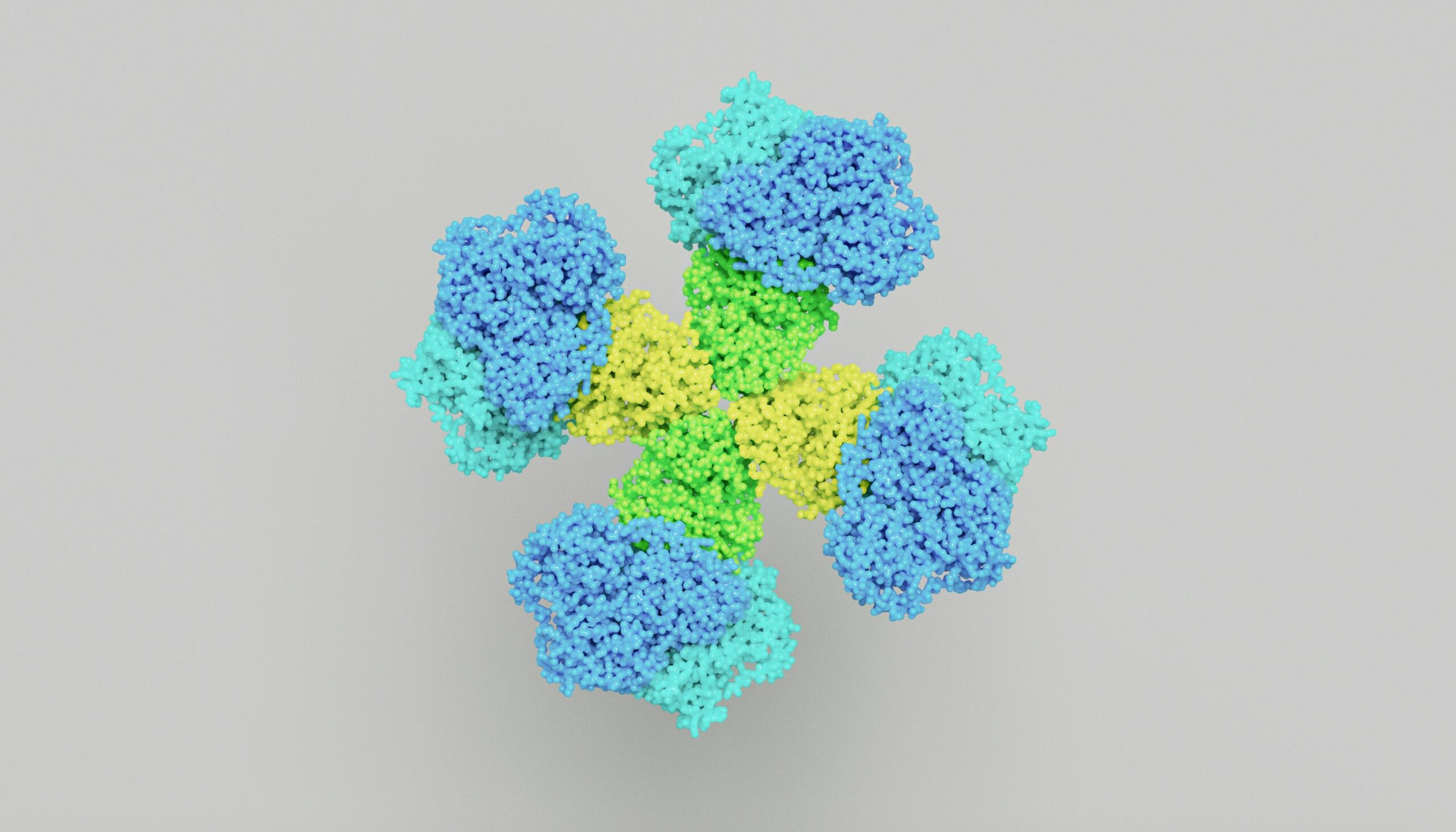
Proteins are the molecular machines that execute virtually every function in a living cell, and they are named by the researchers who discover them. That decentralized process has accumulated decades of overlapping, colliding, and genuinely confusing labels: a single protein can carry multiple names assigned by different laboratories in different countries, while entirely distinct proteins can share near-identical designations. The result is what some researchers have informally called biology’s Tower of Babel.
The practical danger is most acute when scientists purchase antibodies — laboratory tools designed to bind and detect a specific protein. Researchers order antibodies by catalog name; when nomenclature is inconsistent, a scientist can request what they believe is the correct reagent and receive one that binds a completely different molecular target. Science NOW reported that hundreds of scientists studying cancer and aging made this avoidable mistake, ordering reagents under names they understood to refer to one protein when the catalog entry actually mapped to another. The downstream consequence is a body of published results built on measurements of the wrong molecule — conclusions that may be internally consistent but externally meaningless, or worse, actively misleading for downstream research and clinical decisions.
How the Error Traveled Through Peer Review Undetected

Sholto David’s analysis reconstructed the mechanism by which a protein nomenclature overlap created an antibody identity crisis that spread through the literature largely undetected. The pathway is straightforward once explained: peer reviewers read methods sections that describe antibody catalog numbers, but they rarely have the bandwidth or specialized database access to verify that a given catalog number actually corresponds to the protein the authors intended to study. The system relies on trust, and in this case that trust was misplaced.
David’s work belongs to a growing genre of post-publication scrutiny, in which independent researchers comb through published papers for errors that passed peer review. This informal but increasingly influential layer of checking has caught image duplications, statistical errors, and now reagent misidentification. It is not peer review as journals formally define it, but it is functioning as a necessary complement to it — and in this instance, it caught something formal review entirely missed.
The case reinforces a point that reproducibility researchers have argued for years: errors in biological reagents are among the most underappreciated sources of irreproducible results in the life sciences. When an experiment cannot be replicated, scientists and institutions often assume the problem lies in technique, statistical analysis, or even misconduct. Whether the antibody in the freezer actually binds the intended target is checked far less systematically, and this episode illustrates exactly how costly that gap can be.
A Familiar Ghost: When Gene Names Meet Spreadsheets

The protein naming story is not without precedent. A well-documented parallel problem involves gene name errors caused by spreadsheet software, where auto-formatting converts gene symbols such as SEPT2 or MARCH1 into dates or serial numbers, corrupting data before researchers notice. A 2016 study by Mark Ziemann and colleagues found that roughly one in five genomics papers containing supplementary spreadsheet files harbored gene-name conversion errors — a finding that shocked the genomics community and prompted partial reforms in how gene symbols are assigned.
Both problems share the same structural root: scientific naming systems designed by specialists collide with general-purpose tools and ordinary human cognitive shortcuts, producing errors that are invisible without deliberate, targeted checking. In the spreadsheet case, the error is introduced by software auto-correction. In the antibody case, the error is introduced by nomenclature ambiguity. In both cases, the failure propagates through the literature because no single checkpoint in the publication process is designed to catch it.
Together, these episodes make a larger argument: protein nomenclature problems and gene name errors are not minor housekeeping failures. They are structural vulnerabilities in the reproducibility of modern biology, capable of affecting not a handful of papers but hundreds or thousands simultaneously, across fields as consequential as cancer biology and aging research.
Uneven Accountability Makes Self-Correction Harder

The protein naming story appeared in Retraction Watch’s Weekend Reads alongside a separate but thematically connected thread: reporting on uneven sanctions for scientific misconduct. Research on research integrity has consistently found that consequences for misconduct vary dramatically by institution, country, and career stage, with junior researchers and those at less prestigious institutions often facing harsher penalties than senior or well-connected scientists. That asymmetry is not incidental — it shapes the incentive structure governing whether honest errors get disclosed or quietly buried.
When the culture of a field punishes honest disclosure and rewards silence, researchers who suspect their own antibody data may be compromised have little institutional encouragement to investigate. A junior scientist who discovers that two years of experiments may have targeted the wrong protein faces a stark calculation: self-report and risk career damage, or say nothing and hope the error goes unnoticed. Uneven sanctions push that calculation toward silence, which means cumulative error in the literature grows rather than shrinks over time.
This is why the two stories sitting side by side in that Weekend Reads roundup are not coincidental companions. They describe the same underlying failure from two different angles: a system where errors — honest or deliberate — face inadequate correction mechanisms, and where the people best positioned to catch mistakes have the most to lose by surfacing them.
Metascience Enters the Room: The Journal of Research on Research

Also featured in the same Weekend Reads was news of the launch of a Journal of Research on Research, a development that signals the maturation of metascience — the empirical study of how science is conducted, communicated, and corrected — into a recognized discipline with its own peer-review infrastructure. Where metascience once lived primarily in scattered preprints and blog posts, it now has a dedicated venue for the kind of rigorous, systematic investigation that crises like this naming debacle demand.
Metascience findings directly relevant to the antibody problem include studies showing that reagent validation is inconsistently reported across journals, that antibody misidentification is far more widespread than the literature acknowledges, and that post-publication correction mechanisms are too slow and too rare to contain cumulative error before it influences downstream research, clinical trials, or drug development decisions. A dedicated journal for this kind of inquiry creates the institutional pressure — and the citation record — necessary for reforms to reach editors, funders, and policymakers.
Applying a metascience lens, the protein naming debacle looks less like an anomaly and more like a predictable output of a system with known design flaws. Science’s informal trust networks — the assumption that a colleague ordered the right reagent, used the right name, interpreted the catalog correctly — are not robust enough to carry the load placed on them when nomenclature infrastructure is not systematically governed.
Practical Paths Toward a Fix

Several concrete reforms have been proposed and, in some cases, partially implemented. None is sufficient alone; taken together, they describe what a more reliable system would look like:
- Mandatory unique identifiers for biological reagents, analogous to the Digital Object Identifier system that links every paper to a persistent record, would allow any antibody cited in any paper to be traced unambiguously to a characterized, documented lot. Reproducibility advocates have proposed this for years; adoption remains inconsistent across journals and funders.
- Research Resource Identifiers (RRIDs), already endorsed by hundreds of journals, link reagent descriptions in methods sections to curated database records. Journals that require RRIDs create a paper trail that makes catalog mix-ups detectable after publication. Enforcement, however, remains uneven, and many journals treat RRID inclusion as optional rather than mandatory.
- Nomenclature governance at the point of publication is perhaps the most structurally important reform. Bodies such as the HUGO Gene Nomenclature Committee continue to work toward standardization, but their guidelines reach individual researchers slowly and are not systematically enforced by journal editors or peer reviewers at submission. Closing that gap requires journals to build nomenclature checks into editorial workflows, not leave them to author goodwill.
- Post-publication scrutiny of the kind practiced by Sholto David — independent, public, and increasingly recognized as legitimate — remains the most immediately available safeguard. It scales poorly and relies on volunteer effort, but it has demonstrably caught errors that formal peer review missed at the moment they mattered most.
The protein naming crisis is, at its core, an infrastructure problem masquerading as an isolated incident. Discussion among working researchers following the story’s publication reflects widespread recognition that the problem is systemic, not idiosyncratic. Until naming conventions are governed with the same rigor applied to statistical methods or data-sharing requirements, the literature in cancer biology, aging research, and adjacent fields will remain quietly vulnerable to the same failure — repeated, at scale, across hundreds of papers at a time, with consequences that reach far beyond any individual laboratory or retraction notice.