
On June 5, a slender experimental jet slipped through the sound barrier over the California desert and produced something the history of supersonic flight had never quite managed before: almost nothing. NASA’s X-59 reached approximately Mach 1.1 on its first supersonic flight, and the acoustic signature it left behind on the ground was closer to a distant car door than the thunderclap that grounded commercial supersonic travel half a century ago.
Why Sonic Booms Grounded Supersonic Flight Over Land
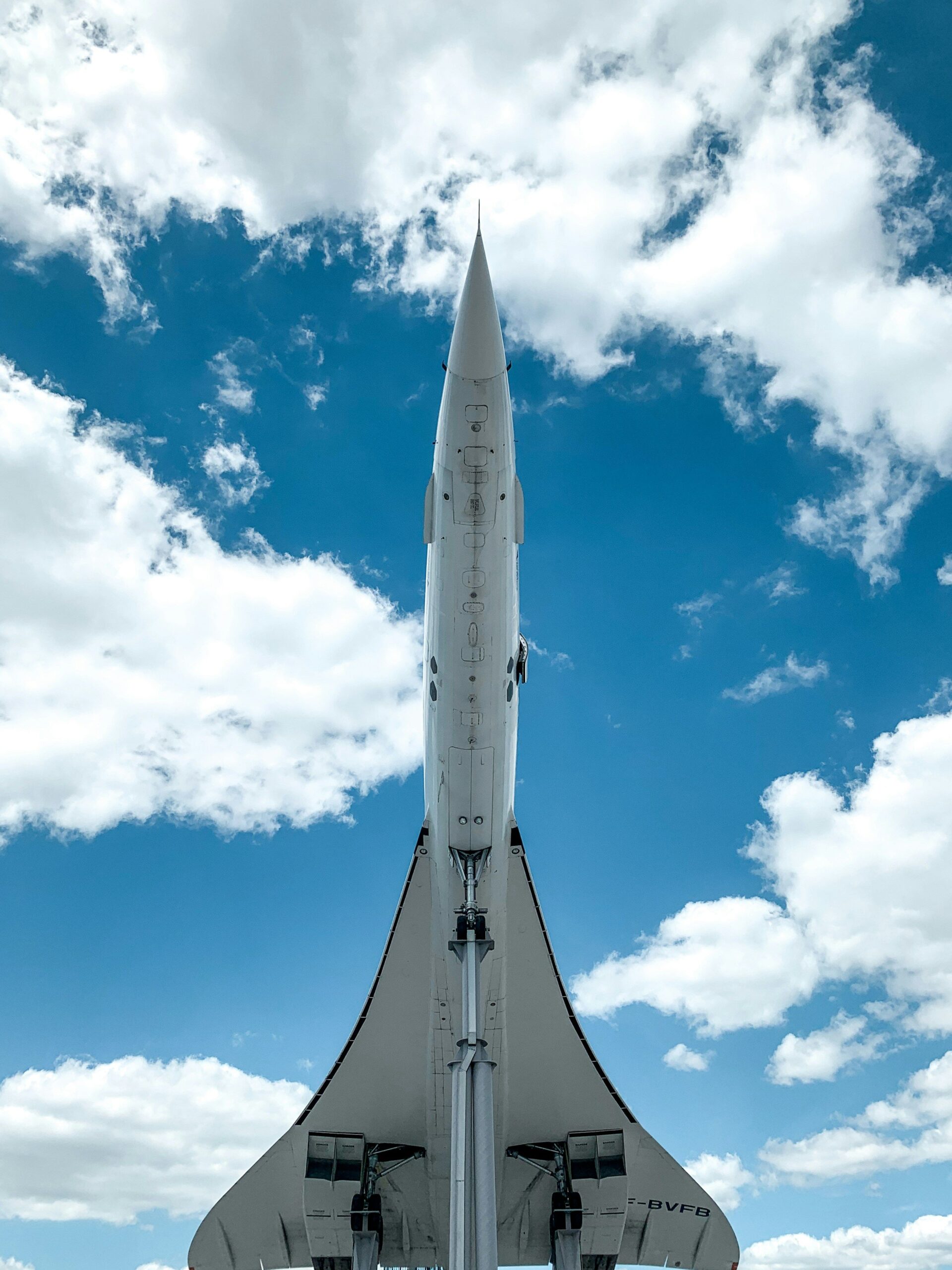
To understand why the X-59 matters, it helps to understand what a sonic boom actually is — and what it is not. A sonic boom is not a single event that happens the moment an aircraft crosses the sound barrier. It is a continuous pressure wave that trails a supersonic aircraft across its entire flight path, rolling across the landscape below like an invisible wake behind a speedboat. Every person underneath that flight path hears it.
During the Concorde era, those booms registered around 105 effective perceived noise decibels (EPNdB) — roughly comparable to standing near a thunderclap. The public reaction was swift and decisive. In 1973, the FAA banned overland supersonic commercial flight in the United States entirely. Similar restrictions followed in other countries. The Concorde, one of the most iconic aircraft ever built, was effectively confined to oceanic routes where its booms disturbed only open water.
The consequences were enormous. Supersonic passenger travel never scaled. The economics of ocean-only routes were punishing, and without the ability to fly faster than sound over the most lucrative land corridors — New York to Los Angeles, London to Tokyo — there was no viable commercial future for the technology. Faster-than-sound flight over populated areas remained legally and politically off the table for five decades, not because the engineering was impossible, but because no one had solved the noise problem.
That is exactly the problem NASA set out to solve.
Meet the X-59: Shape Is Everything
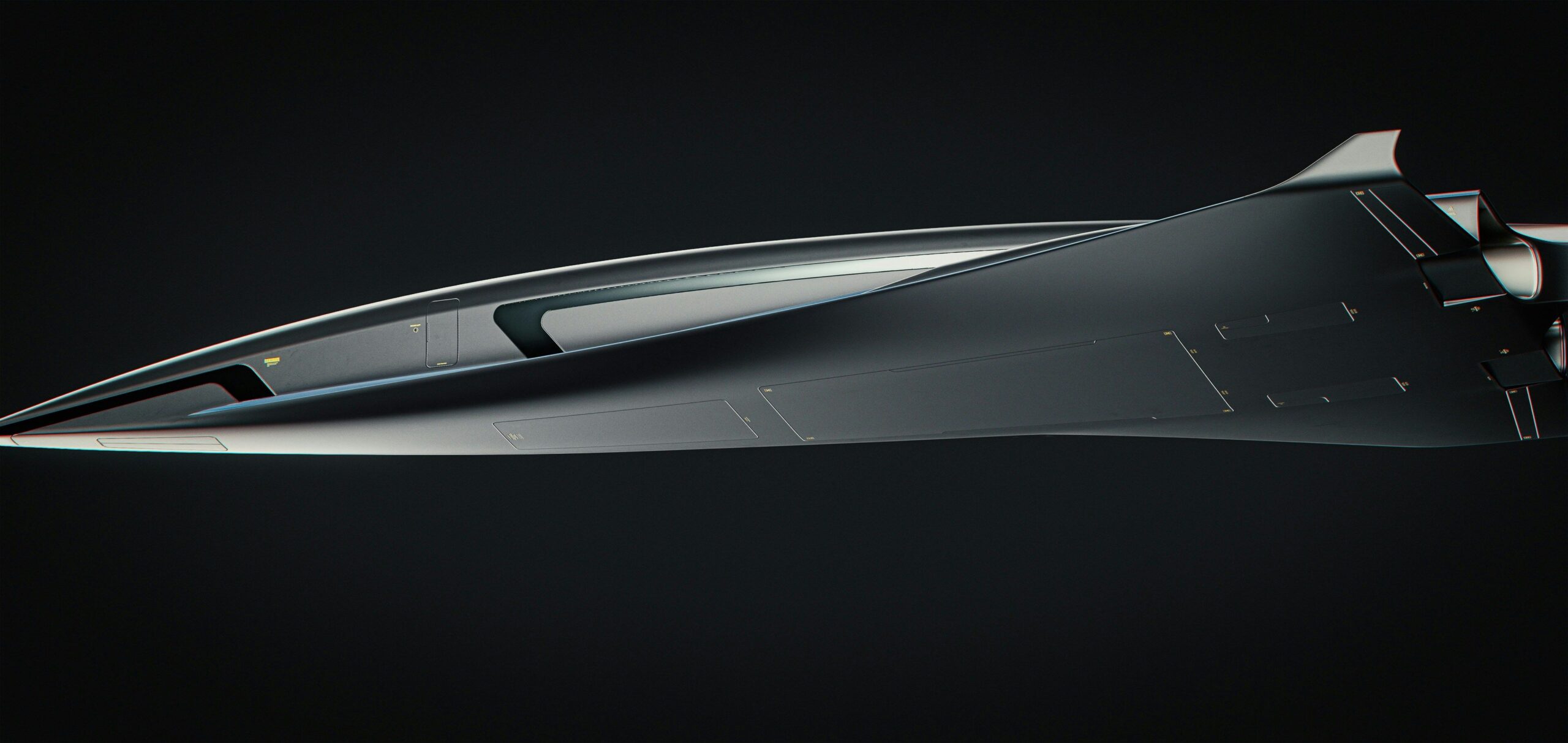
The Lockheed Martin X-59 Quesst — where Quesst stands for Quiet SuperSonic Technology — looks unlike any aircraft most people have seen. Its most immediately striking feature is its nose: an extraordinarily long, tapered spike that stretches nearly a third of the aircraft’s 99-foot total length. That shape is not aesthetic. It is the central engineering insight of the entire program.
When an aircraft flies faster than sound, it continuously pushes air aside, generating pressure waves. At subsonic speeds those waves travel ahead of the plane and disperse harmlessly. At supersonic speeds they cannot escape forward, so they stack up and merge into concentrated shockwaves — the boom. Traditional supersonic jets, with their relatively compact profiles, allow these pressure waves to coalesce quickly into a single powerful acoustic signature.
The X-59’s long, sculpted fuselage forces those same pressure waves to stay separated. Instead of combining into one sharp crack, they arrive at the ground as a series of gentler, drawn-out pressure rises. The result, by design, is a soft thump — something the aircraft is engineered to hold to just 75 EPNdB at ground level. That is roughly 30 decibels quieter than the Concorde. Because the decibel scale is logarithmic, that numerical gap translates to a sound perceived as dramatically less intense by human ears.
The cockpit design reflects just how extreme the aerodynamic requirements are. Because the nose stretches so far ahead of where a pilot would normally sit, there is no forward-facing window. Instead, pilots rely on an external vision system — cameras feeding displays in place of glass. It is an unusual arrangement, but a direct consequence of prioritizing the shape that makes quiet supersonic flight possible.
The X-59 was built by Lockheed Martin’s Skunk Works division as part of NASA’s aeronautics research program. It carries no passengers and is not intended to. Its entire purpose is to generate the data and demonstrate the technology that could eventually allow others to build aircraft that do.
What Actually Happened on June 5
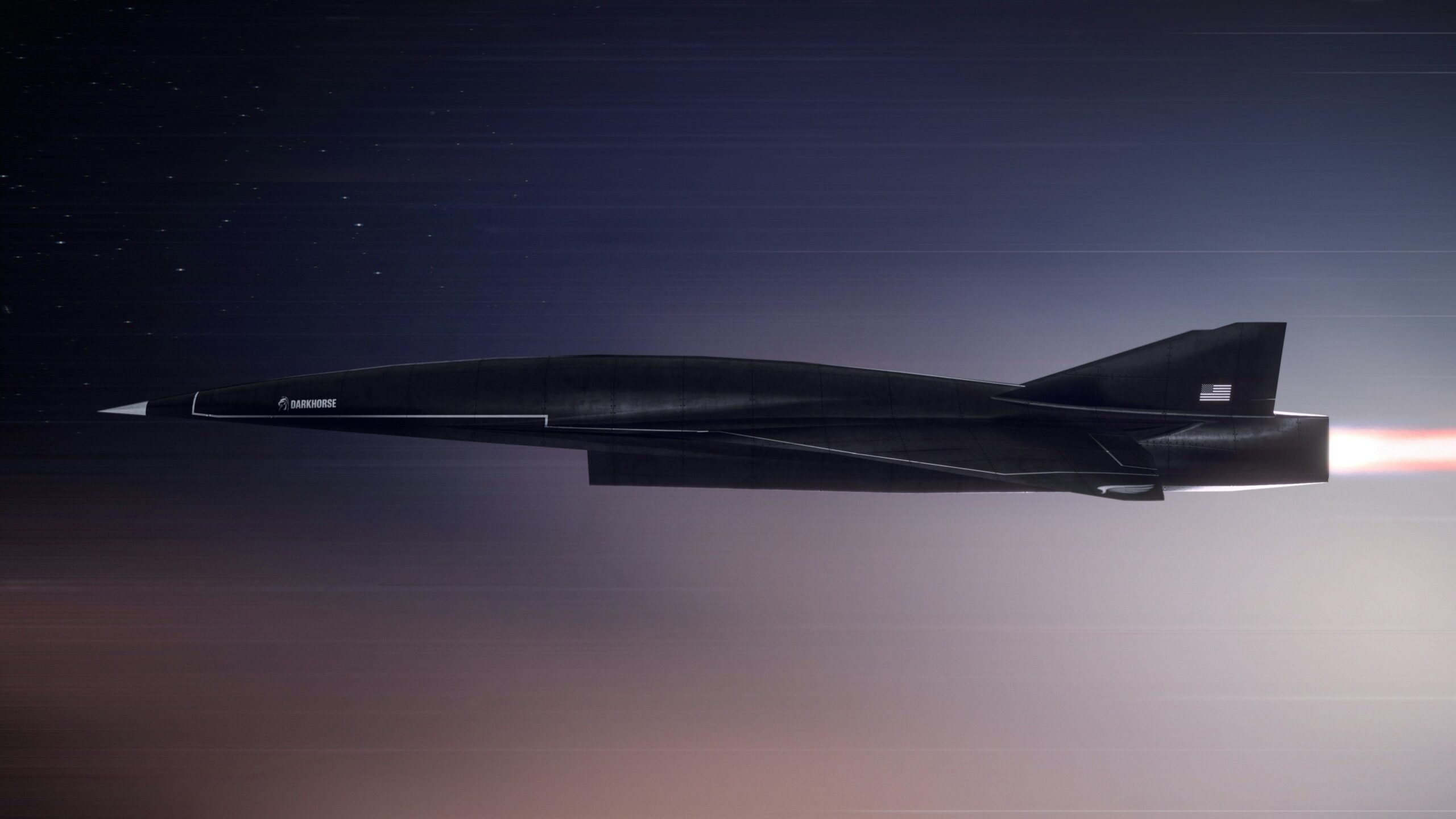
According to NASA, the X-59 pushed through to approximately Mach 1.1 during a deliberately conservative first supersonic flight, with a NASA F-15 flying in support to observe the aircraft’s performance and verify its behavior crossing the transonic and supersonic thresholds. Mach 1.1 is not a speed record — but that was never the point.
The goal of this flight was to confirm how the airframe actually behaves when it crosses the sound barrier under real flight conditions, not in a wind tunnel. Does it handle predictably? Do the pressure wave dynamics match what aerodynamicists modeled? Does the aircraft remain controllable and stable at supersonic speeds? Those questions needed real-world answers before any community overflight program could responsibly begin.
As Smithsonian Magazine noted, the flight represents the transition of the X-59 from a ground-tested prototype to an active airborne research tool — a significant threshold in a program years in the making. Engineers will now analyze the flight data in detail before advancing toward the phase that will ultimately determine whether any of this changes the rules of aviation.
The Quesst Mission: Asking Real Communities What They Heard

The first supersonic flight is a milestone, but it is not the destination. The X-59 Quesst mission has a second phase that is arguably more consequential than any of the aerodynamics: flying over actual U.S. communities and systematically surveying the residents about what they experienced.
No amount of instrumentation or computational modeling can substitute for that data. Wind tunnels measure pressure. Microphones record decibel levels. Neither tells regulators whether ordinary people — going about their days in neighborhoods beneath a supersonic flight path — find the sound acceptable or disruptive. That human-response data is what the mission is ultimately designed to produce.
NASA intends to deliver the community survey findings to the FAA and to international aviation bodies including the International Civil Aviation Organization (ICAO). The goal is to give regulators an empirical, science-based foundation to reconsider the 50-year-old overland supersonic ban and, where the data supports it, to define new noise standards specifically tailored to quiet supersonic aircraft — standards the old rules were never designed to accommodate because the technology did not exist when they were written.
Why This Matters Far Beyond One Experimental Jet
The X-59 will never carry a single paying passenger. Its value lies entirely in the precedent it sets and the regulatory pathway it could open for a generation of aircraft that come after it. Several private companies are already developing commercial supersonic transports that would directly benefit from updated overland flight rules that Quesst data could help unlock.
The commercial stakes are significant. Revised regulations could make transcontinental routes like New York to Los Angeles feasible in under three hours at supersonic speeds, without producing the neighborhood-disturbing noise that made such flights politically impossible before. For hundreds of millions of passengers who currently accept subsonic flight times as an unchangeable feature of modern travel, that would represent a meaningful shift in what air travel can offer.
NASA’s underlying calculation is straightforward: invest years of focused research in one carefully designed experimental aircraft now, and potentially reshape the framework governing commercial aviation for decades to come. You can explore the aircraft’s design history and technical background at the Lockheed Martin X-59 Quesst overview.
The sky over that California desert did not crack. It whispered. Whether that whisper becomes the sound of a new era in air travel depends on what comes next — the data, the surveys, the regulators, and ultimately the communities asked to weigh in on a question aviation has been unable to ask honestly for half a century: is this quiet enough?