
Most students who dream of a physics or engineering career assume the path begins — and succeeds or fails — at a four-year research university. A quietly significant partnership between two Georgia institutions is challenging that assumption, and the implications stretch well beyond Atlanta.
The On-Ramp to a Physics Career Most Students Don’t Know Exists
On June 12, 2026, Kennesaw State University and Oglethorpe University announced an expansion of their LINK partnership, opening more structured pathways for students to earn degrees in physics and engineering. The announcement was modest in press-release terms but consequential in practice: it formalizes a route that, for many students, previously existed only as a vague possibility.
For first-generation college students, community college transfers, and career changers eyeing a pivot into STEM, that distinction matters enormously. The difference between a mapped pathway and an informal rumor is often the difference between finishing a degree and abandoning it.
The expansion reflects a broader national reckoning with how STEM education is structured — and who it quietly excludes. Physics in particular has long ranked among the most socioeconomically homogeneous STEM fields. The traditional route demanded early enrollment at a four-year institution with a strong physics department, expensive lab infrastructure, and an immediate, unwavering commitment to the major. Students who didn’t arrive on that track often found themselves effectively locked out — not because of ability, but because of architecture.
What the KSU-Oglethorpe LINK Partnership Actually Offers
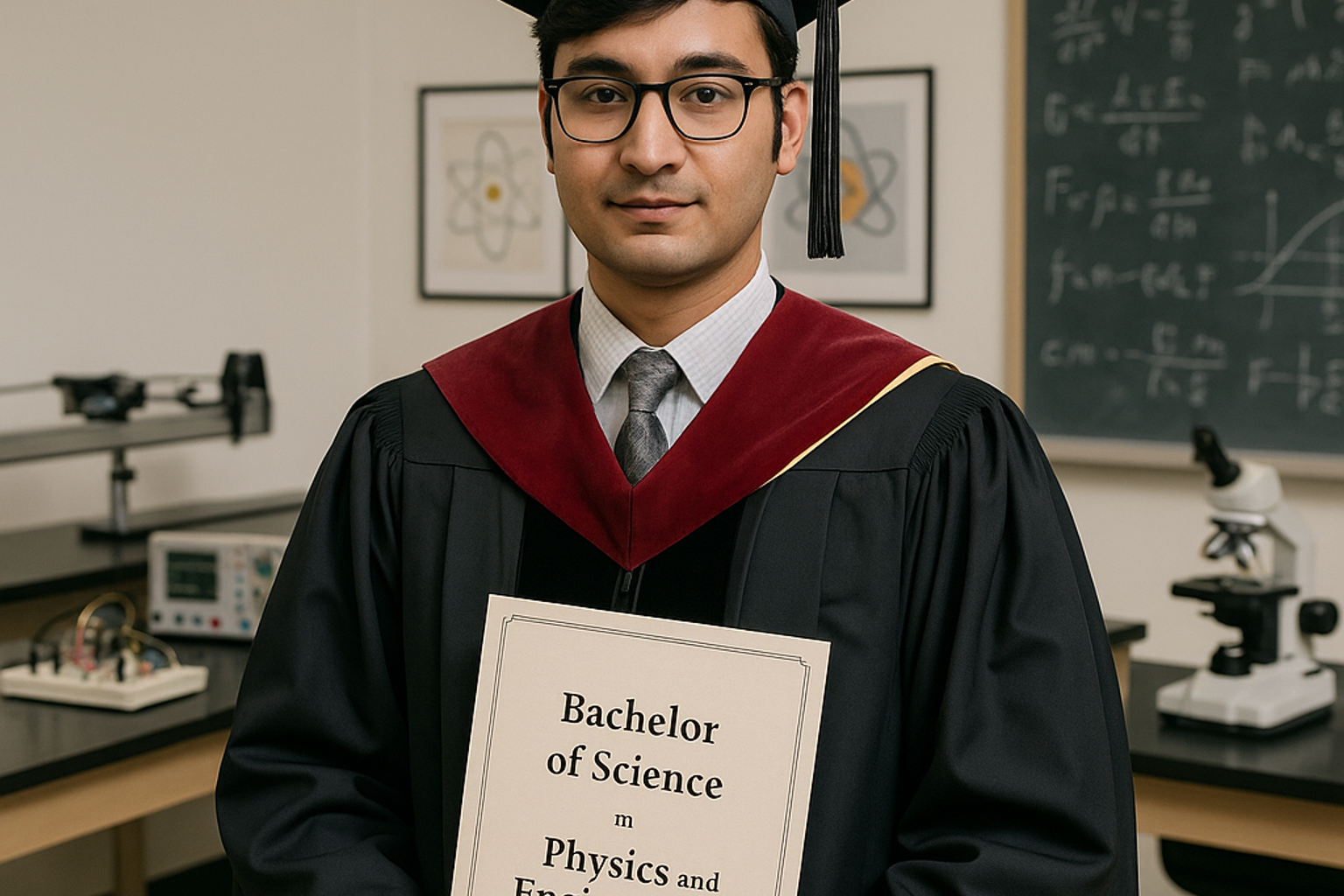
At the center of this expanded partnership is Oglethorpe University’s dual degree engineering program, which allows students to earn a Bachelor of Science in Physics from Oglethorpe alongside a specialized engineering degree. That combination is rarer than it sounds. Most single institutions either offer a physics program or an engineering program with meaningful depth — doing both well requires resources and a curricular philosophy that don’t always coexist on one campus.
The LINK partnership solves that problem through collaboration rather than duplication. Students gain access to the liberal arts physics foundation Oglethorpe provides — emphasizing rigorous reasoning, problem-framing, and theoretical depth — while tapping Kennesaw State’s engineering infrastructure and resources. KSU, as one of Georgia’s largest universities, brings scale; Oglethorpe brings a particular kind of intellectual environment. Together, they offer something neither could provide alone.
Critically, the expanded partnership creates clearer, formalized bridges between the two institutions. Rather than navigating a maze of transfer requirements and hoping credits survive the journey, students get a mapped sequence — a defined route from start to degree. That structural clarity is not a minor administrative convenience. It is, for many students, the thing that makes the path walkable at all.
Why Physics Degrees Have Always Had an Access Problem
The physics pipeline has historically been less a pipeline and more a narrow gate. Community college students attempting to transfer into physics programs at four-year universities frequently encountered a brutal reality: credits earned in calculus, introductory physics, or chemistry labs often didn’t count toward the major’s requirements at the receiving institution. Without formal agreements specifying exactly how credits transfer and apply, students lost time, money, and momentum — sometimes enough to abandon the degree entirely.
This is not a fringe problem. It is one of the primary structural reasons why the community college transfer to physics degree path has remained more aspirational than actual for so many students. The coursework in physics and engineering is sequential and cumulative. A lost semester of calculus credit doesn’t just mean one course retaken — it can cascade into a delayed graduation, an extra year of tuition, and a recalculation of whether the degree is worth pursuing at all.
Articulation agreements address this directly. These formal contracts between institutions specify exactly which credits transfer and how they apply toward a degree, eliminating the guesswork that costs students time and money. When those agreements cover STEM sequences — not just general education requirements, but the high-stakes, sequential coursework that defines a physics or engineering trajectory — they make the transfer pathway genuinely viable rather than merely theoretical.
States like California, Florida, and Georgia have been expanding STEM articulation frameworks at the system level. But partnerships like KSU-Oglethorpe demonstrate that individual institutions can move faster than state systems when the will and the relationship are in place.
The Dual Degree Model: More Than a Marketing Term

Oglethorpe’s dual degree structure represents a specific educational philosophy, not just a credential arrangement. The model mirrors the classic “3-2” engineering program format, in which students spend their initial years at a liberal arts college developing foundational and theoretical skills before completing an engineering degree at a partner institution with specialized technical resources.
The advantage is both practical and philosophical. Physics taught in a liberal arts environment tends to emphasize the kind of reasoning and problem-framing that engineers increasingly need as careers become more interdisciplinary and complex. The ability to ask the right question — not just apply the right formula — is a skill that technical training alone doesn’t always cultivate. A dual degree structure that deliberately combines both approaches can produce graduates capable of moving fluidly between abstract thinking and applied problem-solving.
For students asking how to pursue a physics or engineering career without enrolling at a flagship research university — without the brand-name admissions advantage or the financial runway that elite institutions often presuppose — this pathway offers a credible, well-structured answer. The physics degree is real. The engineering credential is real. The route is documented.
What Students and Counselors Should Know Right Now

Students interested in this partnership should connect with advisors at both KSU and Oglethorpe as early as possible. The mapped sequences only deliver their full benefit when students follow them from the outset; arriving mid-program and attempting to reconstruct a compliant transcript is significantly harder than starting with the sequence in hand.
Community college students in the Atlanta metro area are particularly well-positioned to benefit, given KSU’s size and regional reach. Counselors advising students who express interest in physics or engineering — but who assume that four-year enrollment from day one is the only viable option — should flag this partnership explicitly. That assumption is one of the most common and most consequential misconceptions in STEM advising.
Because the June 2026 expansion was recently announced, specific articulation maps, application timelines, and program details are still being finalized at both institutions. Students and counselors should confirm current specifics directly with KSU and Oglethorpe rather than relying on secondary sources, including this one.
The Bigger Picture: Access Is the Next Frontier in STEM Education

Expanding STEM degree access is not only an equity issue — it is a workforce issue. Demand for physicists and engineers continues to outpace the supply of graduates from traditional pipelines. If the only viable route into these fields runs through a narrow set of well-resourced universities, that shortfall will persist regardless of how many students express interest at earlier stages of their education.
Partnerships like KSU-Oglethorpe point toward a different model: networked, deliberately structured, and built to meet students where they are rather than where the system expects them to start. Kennesaw State’s broader institutional announcements suggest this partnership fits within a larger pattern of expanding access rather than representing a one-off arrangement. The universities’ public statements on the expansion reinforce that framing.
If models like this scale — and there is real reason to think they will — the assumption that a top research university is the only credible starting point for a physics or engineering career may eventually seem as outdated as assuming you need a physical library to become a scholar. The more urgent challenge right now is awareness. Access means little if the students who need these pathways most never learn they exist.