29. Cup corals extend beautiful translucent tentacles at night.
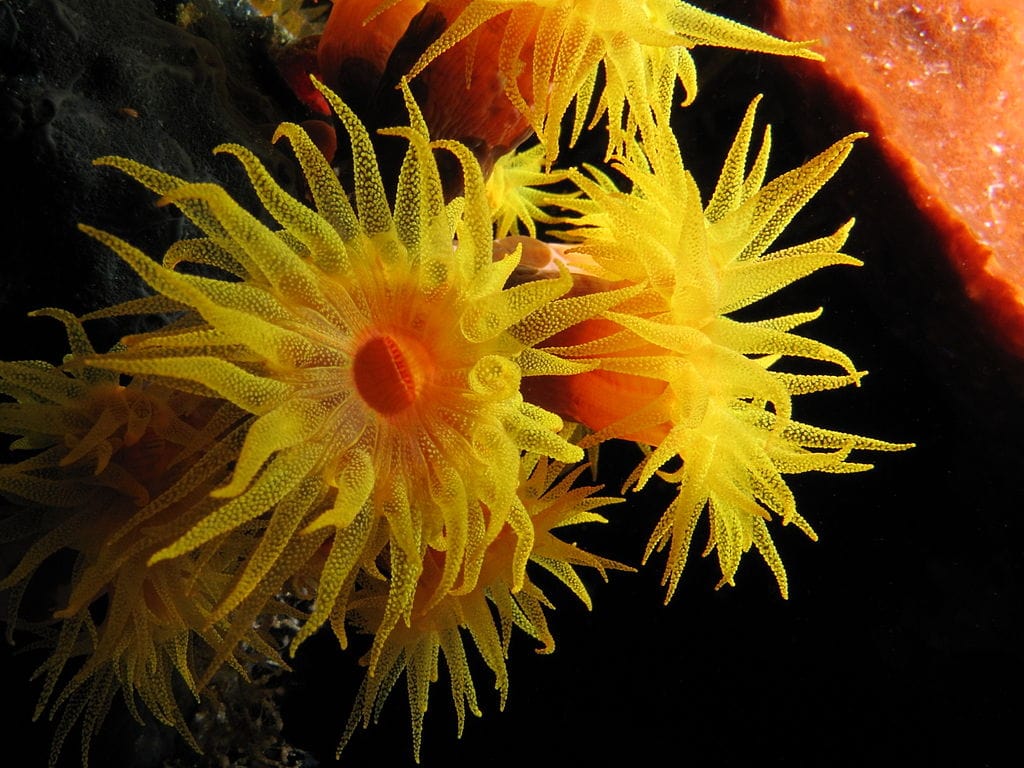
It’s no surprise that you’ll find this kind of coral in the Arctic waters and near Alaska. That’s because they can live as far down as where hydrothermal vents exist, feeding off the minerals being spewed into the water. They stick their arms out to catch bacteria and other microbes in the water that they use as a food supply at night. They’re not very large, but they do live together in small clusters.
Cup corals lack any symbiotic algae and are, therefore, not dependent on photosynthesis for food production. They are essential components to bottom marine ecosystems. These things provide a complex habitat structure that is important to invertebrates, fish, and other deep-sea life. Their slow growth rates, longevity, and limited habitat make corals more vulnerable to the adverse impact of oil and gas exploration activities. Increasing ocean acidification due to climate change is also a threat.