32. The large-toothed walrus face includes a mustache and two long tusks.
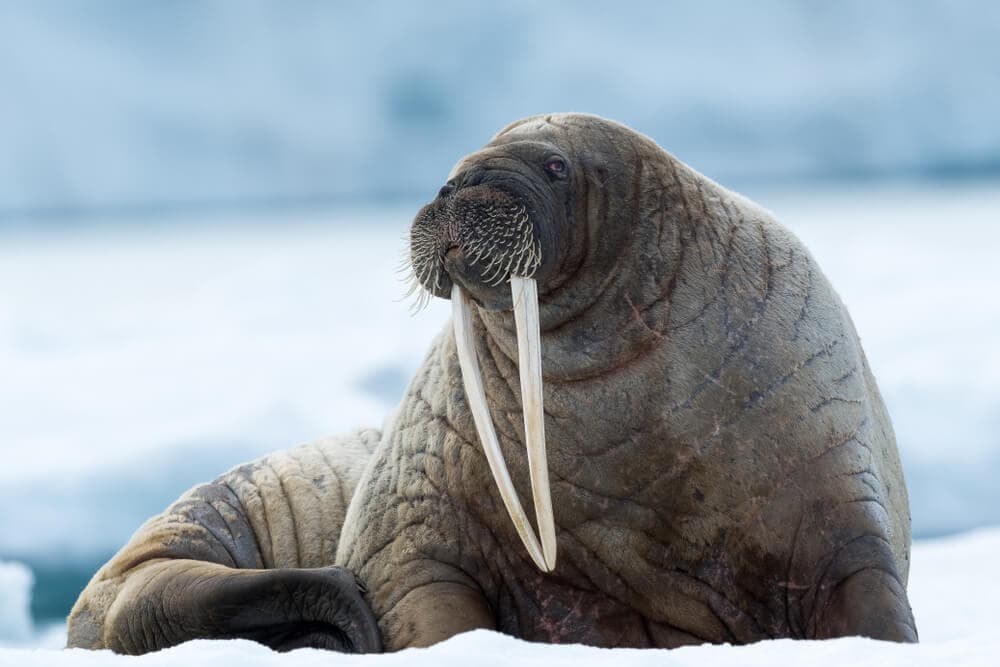
Walruses are most often found about the North Pole in the Arctic seas, lying around on the ice with their other companions. They live in shallow waters above continental shelves, surviving on shrimp, crabs, mollusks, and soft corals. They’re very sociable by nature and can usually be found bellowing and snorting at each other. Their long tusks help them form holes in the ice and climb out of the water onto the ice.
Walruses also use their tusks to develop breathing holes from underwater into the ice. Their distinctive whiskers are highly sensitive organs attached to their muscles and consist of blood and nerves. Walruses can also conserve oxygen while diving by slowing down their heart rate. These animals have thick layers of blubber to keep them warm and cozy in the frigid Arctic waters, where the temperatures go down below zero degrees. However, don’t let the size of them fool you: a determined walrus will give chase if they feel threatened, and they’re a lot faster than you think.