
A set of jawbone fragments and teeth recovered from northern Egypt — dated to roughly 17 to 18 million years ago — belongs to a previously unknown ape species called Masripithecus, and its existence in that corner of Africa is forcing paleoanthropologists to reconsider one of the field’s most durable assumptions: that East Africa was the singular cradle of the lineages closest to modern apes and, ultimately, to humans. The find is significant, the questions it raises are legitimate, and the caveats surrounding it deserve as much attention as the headlines.
What Is Masripithecus and Why Does It Matter?
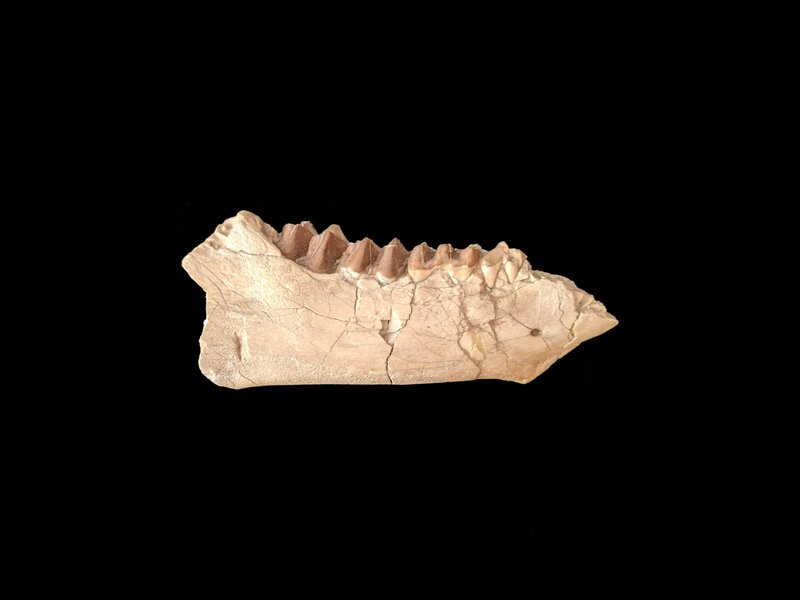
Masripithecus is classified among the hominoids — the broad superfamily that today includes gibbons, orangutans, gorillas, chimpanzees, and humans — placing it firmly on the ape side of the evolutionary split from Old World monkeys. That classification rests on teeth and jaw morphology, which are among the most diagnostically reliable features available to paleontologists working with primate fossils. Tooth shape encodes information about diet, approximate body size, and evolutionary relationships. The dental and jaw characteristics of Masripithecus are described by the researchers who studied it as sufficiently distinct to warrant recognition as a new taxon — a species not previously recorded in the fossil record.
The fossil material dates to the early-to-mid Miocene epoch, the geological period roughly 5 to 23 million years ago during which ape and monkey lineages were actively diversifying. At 17 to 18 million years old, Masripithecus predates Homo sapiens by more than 16 million years, yet the anatomy preserved in these fragments carries direct implications for understanding where our own branch of the primate family tree first took root — or at least for understanding how wide that root system actually was.
According to Smithsonian Magazine, researchers involved in the discovery argue the find could rewrite the evolutionary tree of apes, including humans — a significant characterization that demands both attention and careful scrutiny. This article explains what Masripithecus is, why its location in northern Africa matters, what scientists are confident about versus what remains genuinely contested, and what the field must do next before broader consensus can emerge.
The Old Story: Why East Africa Dominated the Narrative
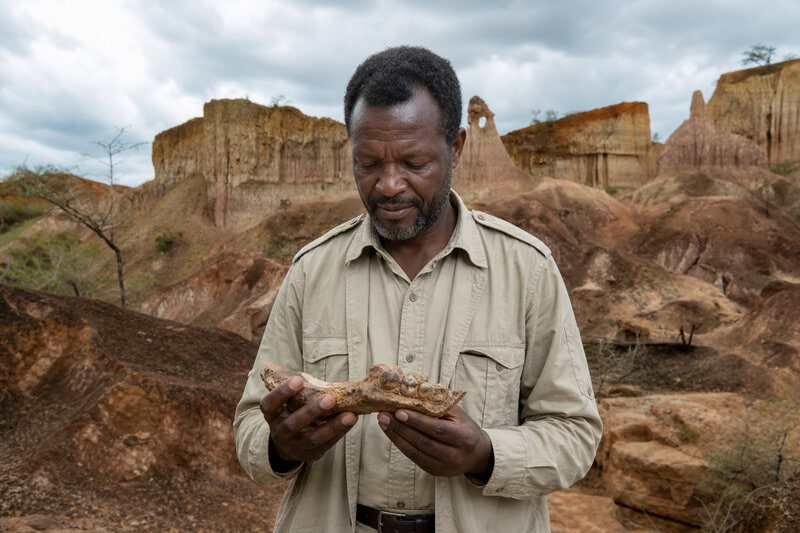
Before this discovery, the Miocene ape fossil record was anchored overwhelmingly by material from East Africa. Well-known genera such as Proconsul and Afropithecus, recovered from sites in Kenya and Uganda, established the East African rift valley system as the apparent center of early ape evolution. That dominance is not simply a matter of scientific bias — it is grounded in a genuinely rich fossil record produced by decades of sustained fieldwork in a region whose geology, characterized by volcanic deposits and exposed sedimentary basins, is exceptionally well suited to preserving ancient remains.
But paleontologists have long acknowledged a problem with that picture: it may reflect where scientists dug as much as where evolution actually concentrated its activity. This is a classic sampling bias. The fossil record is not a neutral archive of everything that ever lived; it is a record of what happened to be preserved in rock, exposed by erosion, and found by researchers with the funding and access to look. Northern Africa, central Africa, and large parts of the continent’s interior have been comparatively underexplored for Miocene primate fossils. Their absence from the record did not mean apes were absent from those regions — only that the evidence had not yet been found.
The East African fossil record remains central to understanding primate evolution during the Miocene. What Masripithecus introduces is the possibility that the geographic picture was always more complex than a single-region model allowed.
Why Northern Egypt Changes the Geographic Equation
During the early-to-mid Miocene, northern Egypt occupied a geographically distinct position on the African continent. It was separated from East Africa by different vegetation zones and climate regimes, and it sat considerably closer to the Mediterranean land bridges that periodically connected Africa to Eurasia — corridors through which fauna, including primates, are thought to have dispersed between continents.
That proximity to potential dispersal routes is scientifically meaningful. One of the central unresolved questions in primate evolution is how and when early apes moved between Africa and Eurasia, eventually giving rise to the Asian great apes and the European Miocene apes such as Dryopithecus. Northern Africa, as a potential origin point or a corridor closer to those land bridges, is directly relevant to models of that dispersal. As National Geographic has reported, the Masripithecus find is being discussed as potentially redrawing the map of early ape evolution by placing a hominoid of this age and anatomical character in a part of Africa that has rarely figured in such discussions.
Precision matters here. The presence of Masripithecus in northern Egypt raises the possibility that hominoid lineages were diversifying across a much wider geographic range than previously documented. It does not, by itself, establish northern Africa as the origin point of the lineages most closely related to modern great apes. That formulation — “may have emerged there” — reflects a hypothesis supported by this fossil, not a conclusion verified by multiple independent lines of evidence. The find adds to a growing body of data, including Miocene primate material from Chad, Libya, and Morocco, indicating that primate diversity across Africa was far richer and more geographically distributed than the East African record alone suggested. But a single fossil site, however important, does not settle a question of this scale.
How Paleontologists Date and Classify a 17-Million-Year-Old Fossil

A reasonable question for any reader encountering a claim like “17 to 18 million years old” is how scientists actually establish that figure. Fossils themselves cannot be directly dated using radiometric techniques. Instead, researchers date the rock layers — strata — surrounding the fossil, using methods such as radiometric dating of associated volcanic ash deposits or magnetic polarity stratigraphy, which matches ancient reversals of Earth’s magnetic field to a calibrated global timescale. The fossil is then assigned an age based on its stratigraphic position within those dated layers. This is a well-established methodology, though it introduces a margin of uncertainty, which is why ages are expressed as ranges rather than precise numbers.
Classifying Masripithecus as a distinct species and placing it among hominoids relies on comparative anatomy — measuring tooth cusp patterns, jaw proportions, and enamel thickness against the known record of fossil and living apes. These morphological signatures are the primary data available from fragmentary remains, and experienced paleontologists are skilled at extracting meaningful information from them. But jawbone fragments and teeth, however informative, do not provide the complete picture that a skull or postcranial skeleton would offer. Claims about Masripithecus‘s precise position on the ape family tree should be understood as the researchers’ best current interpretation of limited but genuine evidence — subject to revision as more material is recovered and as independent teams conduct their own analyses.
Science Daily reports that scientists involved in the discovery argue the field has been looking in the wrong place for crucial chapters of ape evolutionary history — a provocative framing that captures the spirit of the find while underscoring why independent review and additional fossil material will be essential before its full implications can be assessed.
What This Discovery Does — and Does Not — Overturn
Scientific communication around fossil discoveries frequently suffers from overclaiming, so it is worth being precise about the boundaries of what Masripithecus actually changes. If the researchers’ interpretation holds up to independent scrutiny, the discovery challenges the assumption that East Africa was the sole or primary origin point for the ape lineages most closely related to modern great apes and humans. That is a meaningful revision to a long-held working model, and it is worth taking seriously.
What it does not change is the broad arc of human evolution as currently understood. The emergence of Homo sapiens in Africa within the last few hundred thousand years, the shared common ancestry between humans and chimpanzees dating to roughly 6 to 7 million years ago, and the overall structure of the primate family tree are not called into question by a 17-to-18-million-year-old Miocene ape fossil from Egypt. The discovery operates at a much earlier and more distant branch of the tree — important for understanding the deep roots of the hominoid lineage, but not a challenge to what is known about the human lineage specifically.
It is also worth noting that the characterization of Masripithecus as reshaping the evolutionary tree of apes, including humans, comes from the researchers who conducted the study. Independent paleontologists not involved in the original analysis may assess its phylogenetic significance differently once the full findings are published and subjected to peer review. In science, individual fossil discoveries rarely rewrite history in a single stroke — they add a data point that shifts probability toward one model or another, prompting reassessment, new fieldwork, and refined hypotheses. Masripithecus is best understood as a significant new data point, not a definitive verdict.
The Sampling Bias Problem and What It Means for the Fossil Record
One of the most important contributions of the Masripithecus discovery is the way it foregrounds an underappreciated structural problem in paleoanthropology: the geographic distribution of fossil sites shapes the theories built on them, sometimes in ways that are difficult to detect until a find from an unexpected location forces the issue.
The concentration of research effort in East Africa during the twentieth century produced an extraordinary body of evidence, but it also produced a narrative in which East Africa appeared uniquely central to primate evolution simply because that is where the evidence was concentrated. Northern and central Africa, with their different geological conditions and histories of research access, generated far less fossil material — not because early apes were absent, but because the conditions and resources for finding them were less favorable.
Every early ape fossil recovered from an underexplored region is therefore doubly valuable: it adds a specimen to the record and it recalibrates researchers’ understanding of where the gaps in that record actually lie. Masripithecus does both, and in doing so it makes the case for expanded survey work across the African continent more compellingly than any theoretical argument could.
What Needs to Happen Next
The next steps are straightforward to identify, if not easy to execute. Further excavation at the northern Egyptian site is the immediate priority, since additional fossil material — ideally including skull fragments or postcranial bones — would allow far more precise phylogenetic placement than jawbone fragments and teeth alone permit. Isotopic analysis of tooth enamel could reconstruct the diet and habitat of Masripithecus, providing context for understanding what ecological conditions supported its existence in northern Africa during the Miocene. Expanded survey work across northern and central Africa, where Miocene fossil sites remain underexplored, would help establish whether Masripithecus represents an isolated outlier or one member of a broader northern African hominoid community.
Quantitative phylogenetic analysis — modeling where Masripithecus fits among all known Miocene apes using formal comparative methods — will be essential before the scientific community can reach even a provisional consensus on the discovery’s implications. And independent assessment by paleontologists not involved in the original study will be necessary before the field treats the current interpretation as settled.
None of that diminishes what has already been found. At 17 to 18 million years old, positioned in northern Egypt rather than East Africa, Masripithecus does not answer the question of where humanity’s deepest ape ancestry began. But it makes that question considerably more interesting, and considerably more open, than it was before — and in a field built on fragments of ancient bone, that kind of productive disruption is precisely how progress is made.