1. Ophiocordyceps unilateralis (Zombie-Ant Fungus)
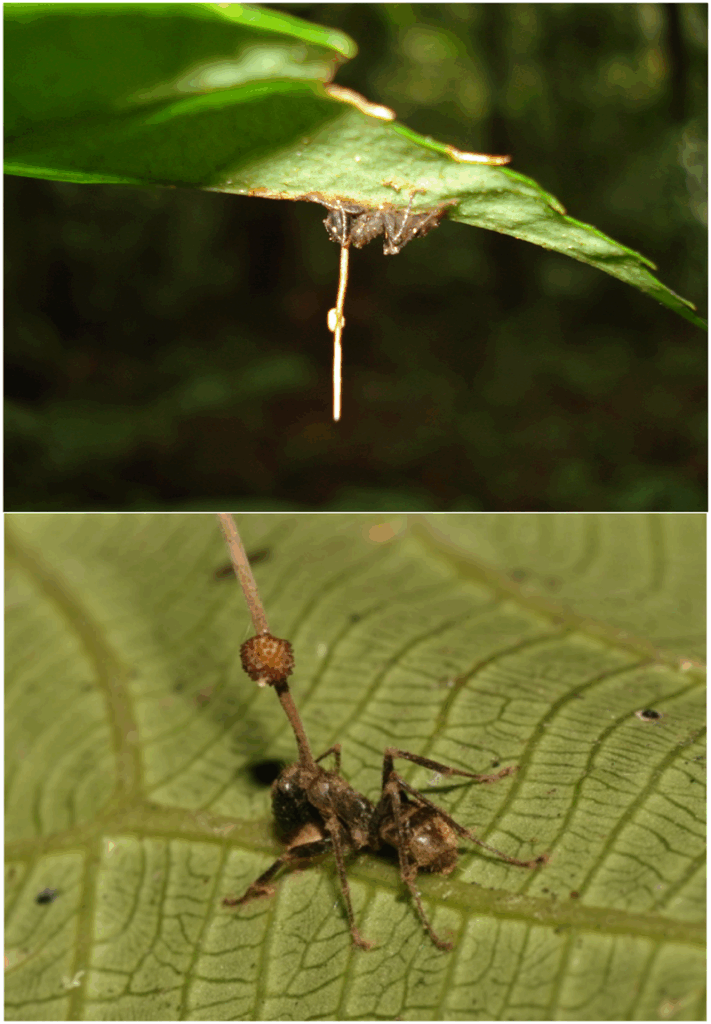
The parasitic fungus Ophiocordyceps unilateralis, commonly known as the “zombie-ant fungus,” infects carpenter ants, manipulating their behavior to facilitate its own reproduction. Upon infection, the fungus compels the ant to descend from the canopy to the forest floor, where it climbs vegetation and bites down on the underside of a leaf or twig, securing itself in a “death grip.” This behavior ensures the ant remains anchored in an optimal location for the fungus’s growth and spore dispersal. After the ant’s death, the fungus continues to develop, producing a stalk that emerges from the ant’s head, releasing spores to infect other ants below. Remarkably, the fungus achieves this manipulation without infecting the ant’s brain; instead, it secretes bioactive compounds that affect the ant’s central nervous system, leading to convulsions and disoriented movements. The fungus’s hyphae infiltrate muscle fibers, particularly those in the mandibles, causing atrophy and enabling the “death grip.” This phenomenon has been likened to “zombie” scenarios, highlighting the fungus’s ability to control its host’s behavior for its own benefit. (britannica.com)