7. Ceres: The Dark Horse of the Asteroid Belt
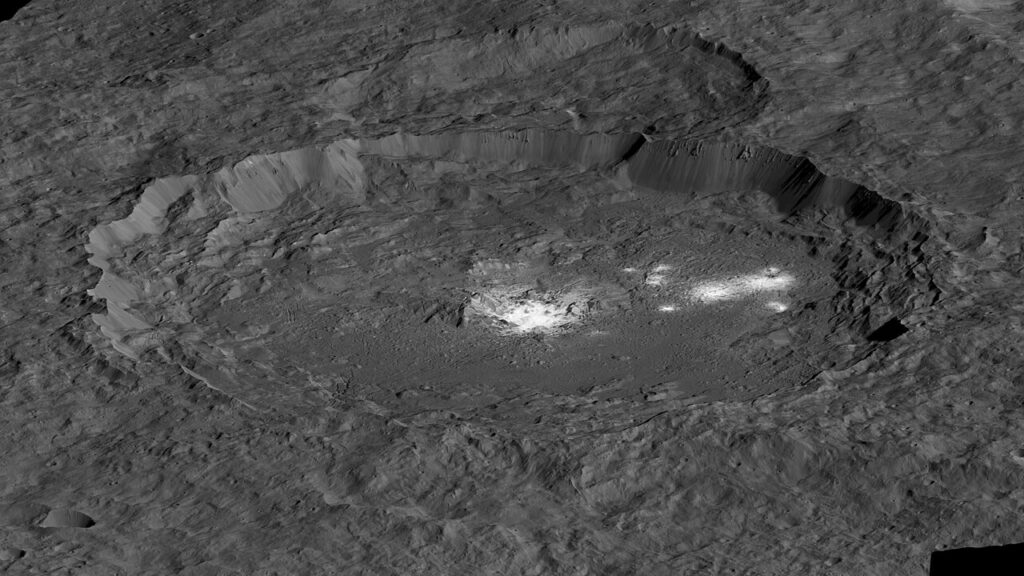
Ceres, the largest object in the asteroid belt, has intrigued scientists with its mysterious bright spots, briny water deposits, and signs of potential cryovolcanic activity. (jpl.nasa.gov) Data from NASA’s Dawn mission revealed that these bright spots are composed of salts, likely sodium carbonate, indicating the presence of subsurface brine that has percolated to the surface and evaporated. (jpl.nasa.gov) Additionally, features like Ahuna Mons suggest past cryovolcanic activity, where icy materials erupted from beneath the surface. (en.wikipedia.org) These findings raise intriguing questions about Ceres’ potential to support life, particularly microbial forms, in its subsurface ocean. (seti.org)