9. Triton: Neptune’s Captured, Active World
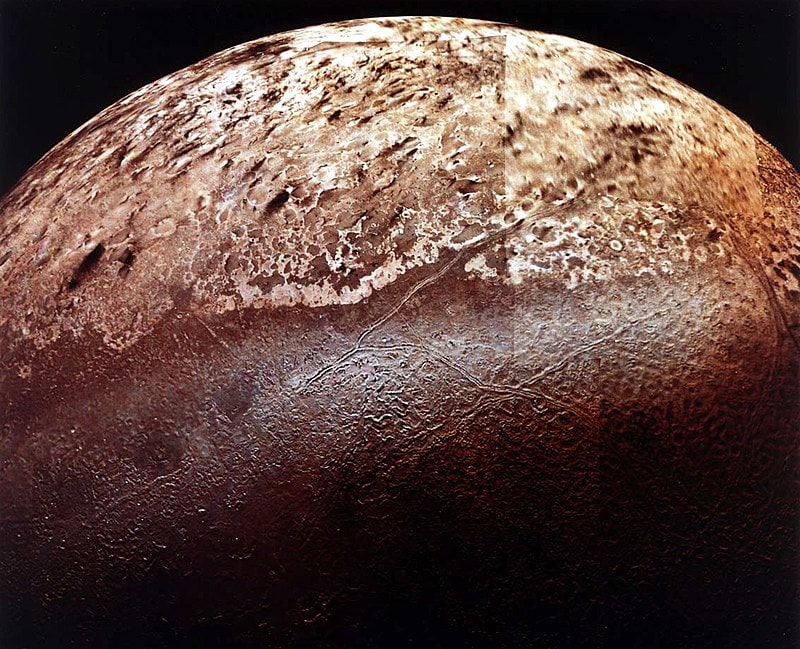
Triton, Neptune’s largest moon, is unique in the Solar System for its retrograde orbit, indicating it was likely captured from the Kuiper Belt. (science.nasa.gov) Voyager 2’s 1989 flyby revealed a young, geologically active surface with few impact craters, suggesting ongoing resurfacing processes. (planetary.org) The presence of cryovolcanoes and geysers indicates internal heating, possibly from tidal interactions during its capture. (cbsnews.com) These features raise the possibility of a subsurface ocean beneath Triton’s icy crust, making it a compelling candidate in the search for extraterrestrial life. (space.com)