Undead Crabs
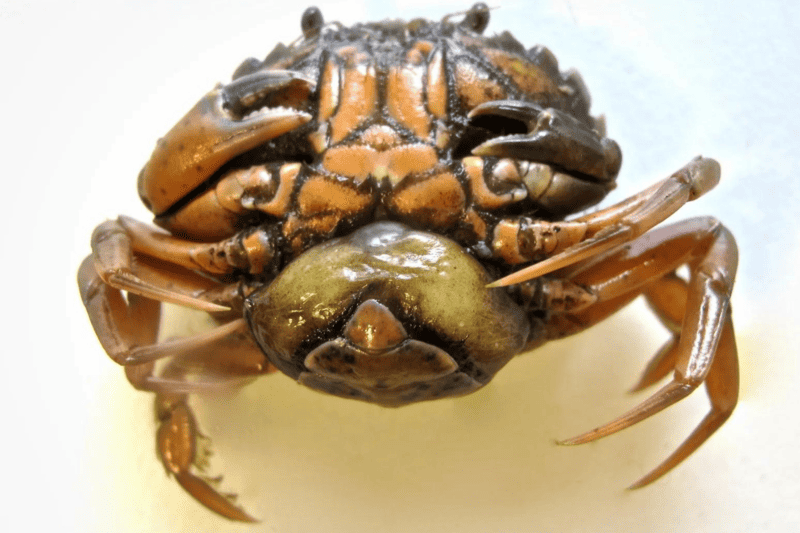
Forget human zombies—our oceans harbor a legion of the undead, manipulated by a minuscule yet malevolent mastermind: the parasitic horror known as Rhizocephalan. These spine-chilling parasites aren’t just your average garden-variety worms—they’re crafty infiltrators with a taste for crustacean hosts. Rhizocephalans and their unsuspecting victims, including crabs and shrimp, are all part of the Crustacea family.
However, these parasites are the true puppet masters, causing mayhem within their hosts’ bodies. At less than 300 micrometers in size, Rhizocephalans may be small, but their impact is anything but insignificant. Once they’ve infiltrated a host they set up shop in the soft tissues, often targeting the gills for their fiendish purposes. Injecting their own tissues into the host’s bloodstream, they establish root-like structures within the digestive system, siphoning off nutrients like oceanic vampires.
When it’s time to reproduce, these parasites pull off a diabolical scheme. Unable to mate within the host’s body, the female parasite grows a grotesque reproductive organ—called the externa—outside of the host. Male parasites are lured in to fertilize the eggs, birthing a legion of tiny terrors that scatter in search of new hosts to zombify. These delectable creatures, often harvested for their succulent meat, unwittingly become hosts to these parasites.
Infected crabs undergo a grotesque transformation, with males feminized and both genders displaying abnormal behaviors, like tending to the parasitic sacs as if they were their own offspring. The horror doesn’t end with physical changes. Infected crabs exhibit bizarre behaviors akin to caring for their own eggs, despite being unwitting carriers of a parasitic plague. Yet, fear not for your seafood feast—proper cooking should neutralize any threat these parasites pose to humans.