9. Pea Plants (Pisum sativum)
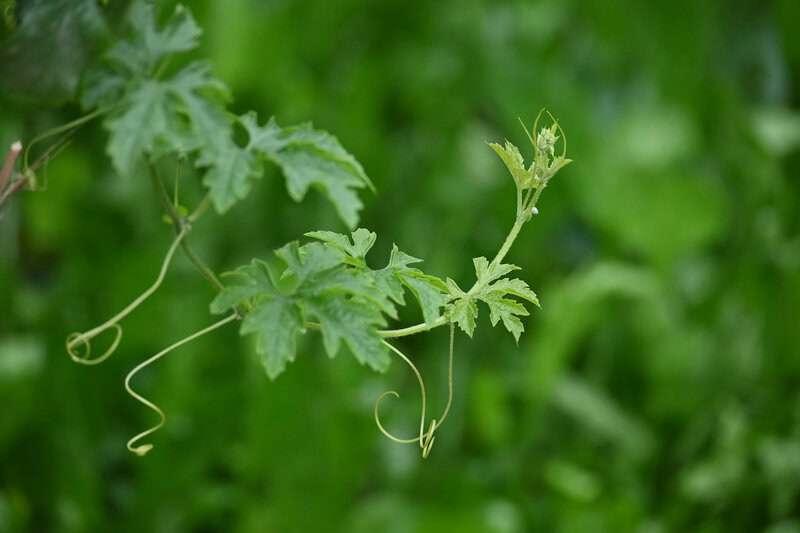
Pea vines utilize tendrils to sense and grasp neighboring supports, facilitating vertical growth. Upon contact with a solid object, tendrils exhibit thigmotropism—a directional growth response to touch. Cells on the contact side of the tendril elongate more slowly than those on the opposite side, causing the tendril to coil around the support. This coiling mechanism enhances the plant’s stability and optimizes light exposure for photosynthesis. The plant hormone auxin plays a crucial role in this process by promoting cell elongation on the non-contact side of the tendril. For a detailed study on this phenomenon, refer to the article “Physiological Studies on Pea Tendrils: VI. The Characteristics of Sensory Perception and Transduction.” (pubmed.ncbi.nlm.nih.gov)