
When NASA’s Juno probe skimmed just 1,500 kilometers (930 miles) above the surface of Io — closer than many satellites orbit Earth — its instruments detected something that redefined what planetary scientists thought possible: heat pouring upward from below a crust so thin and so perpetually recycled that the word “solid” barely applies. The moon Juno was studying isn’t merely the most volcanic world in the solar system. It may be a world that has never fully cooled down at all.
What Juno Actually Did — and Why It Matters
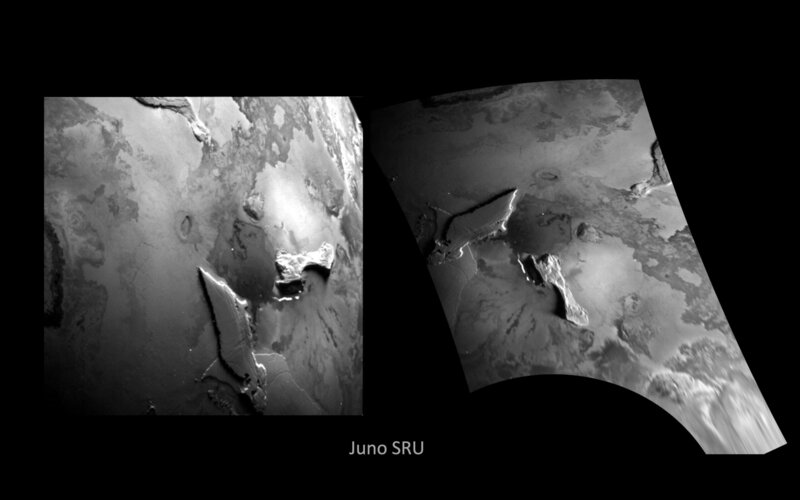
Juno’s close flybys of Io, conducted as part of an extended mission approved by NASA, represent the first time scientists have obtained direct measurements of Io’s subsurface rather than relying on surface imaging or telescope observations from afar. Flying at an altitude lower than many Earth-orbiting satellites, Juno’s microwave radiometer — an instrument designed to detect thermal emissions leaking upward through rock — functioned like a thermal X-ray of the moon’s interior, sensing heat signatures rising from below the visible crust.
Those subsurface measurements, reported by NASA’s Jet Propulsion Laboratory, revealed heat rising from beneath Io’s surface in patterns inconsistent with a fully solid mantle. The data point instead toward widespread partial melting at depth — meaning large portions of Io’s interior may exist in a state somewhere between solid rock and fully molten magma. Juno also carried gravity-sensing instruments, allowing researchers to cross-check thermal data against how the moon’s mass is distributed internally. That independent line of evidence significantly strengthens the findings, a methodological advantage the mission team has emphasized in discussing the results.
Together, these measurements transform Io from a well-photographed surface curiosity into a scientifically legible interior system — and what that interior reveals is, by any reasonable measure, extraordinary.
The Smooth Surface Paradox
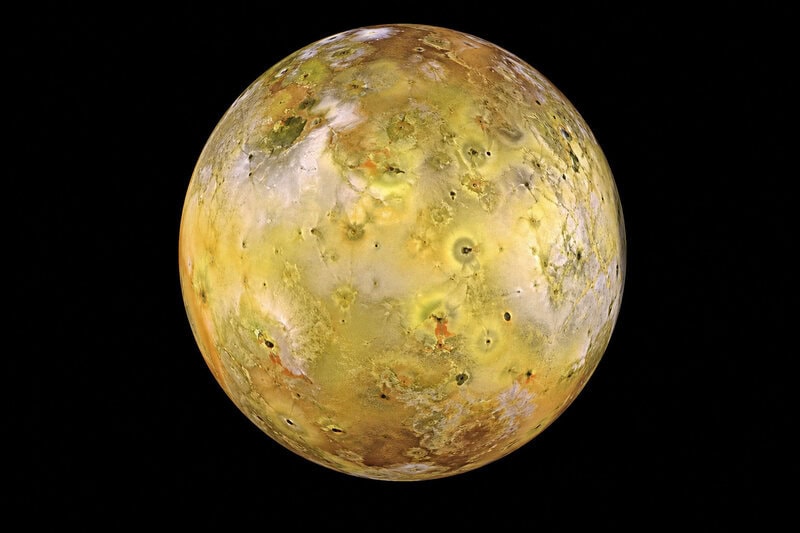
One of Juno’s most counterintuitive findings is that Io’s surface is surprisingly smooth for the most volcanically active world in the solar system. On Earth, sustained volcanism builds mountains, calderas, and rugged highland terrain over geological time. On Io, topographic features appear to be buried or erased almost as fast as they form.
This smoothness is not geological calm — it is evidence of geological excess. The interior is so productive that erupted material floods the landscape continuously, acting less like discrete lava flows and more like a slow, planet-wide repaving operation. Planetary scientists interpret this as evidence that Io’s crust is extraordinarily thin and perpetually recycled from below, leaving little time for solid relief features to accumulate. In this context, a smooth surface is one of the most alarming things Juno could have found — a landscape that looks placid only because violence here is constant rather than episodic.
Inside Io: The Case for a Magma Ocean
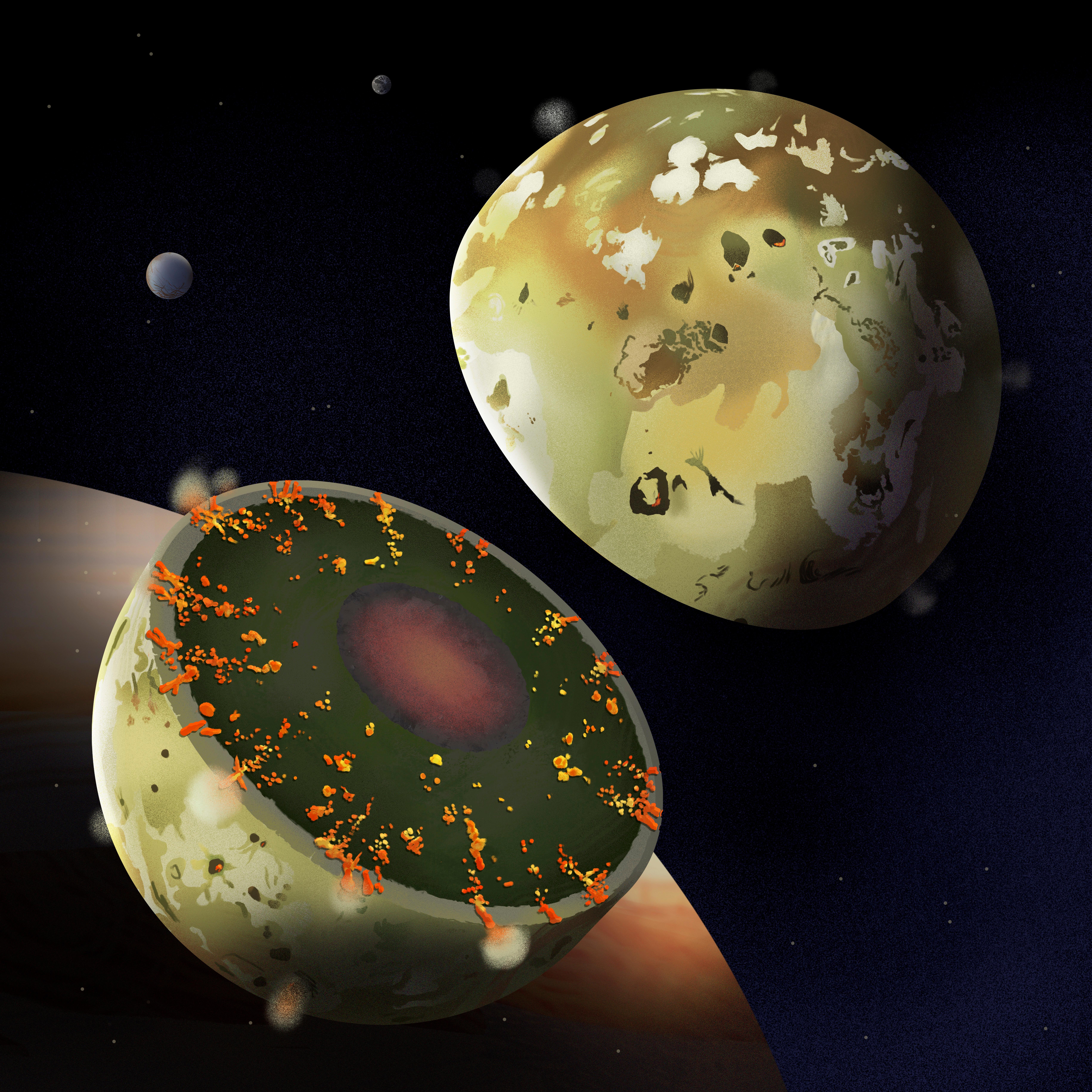
The central question Juno’s data bears on — and the most scientifically contested — is whether Io harbors a global magma ocean. In planetary science, a magma ocean refers to a deep layer of partially or fully molten rock encircling a body’s interior. Magma is molten rock beneath the surface; lava is the term used once it erupts. The distinction matters here because Juno’s instruments are measuring what has not yet reached the surface.
Prior models, based on data from NASA’s Galileo spacecraft and theoretical tidal heating calculations, predicted such an ocean might exist beneath Io’s crust. Juno’s subsurface heat measurements now provide the first observational evidence consistent with widespread melt at depth, rather than the isolated magma chambers that feed individual volcanoes. Scientists are careful, however, to distinguish between a fully molten global ocean and what is sometimes called a “mush zone” — a layer in which solid rock and liquid magma coexist in roughly equal measure. Juno’s findings are more consistent with the mush-zone interpretation, and no single measurement is yet considered definitive.
If a global or near-global magma layer is eventually confirmed, Io would join early Earth as one of the rare known examples of a planetary body sustaining a magma ocean in the present era — making it a living laboratory for processes that shaped rocky planets billions of years ago, and elevating these findings well beyond the study of one unusual moon.
Why Io Is So Extraordinarily Hot: Tidal Heating Explained
Io’s volcanic intensity is not driven by radioactive decay or residual heat left over from formation, as is the case for most rocky bodies in the solar system. Instead, it is powered by tidal heating — a mechanical process in which Jupiter’s immense gravitational field, amplified by the gravitational tugs of neighboring moons Europa and Ganymede, continuously flexes and deforms Io’s interior as it orbits. The three moons are locked in a gravitational resonance: for every orbit Ganymede completes, Europa completes two and Io completes four — a rhythmic celestial clockwork that ensures Io is never gravitationally at rest.
This perpetual flexing generates friction at depth, and that friction converts directly into heat. The process is analogous to repeatedly bending a metal wire until it grows warm to the touch, except the object being bent is an entire moon and the bending never stops. Published estimates in the planetary science literature suggest Io dissipates roughly 100 trillion watts of heat — more than all of Earth’s volcanic and geothermal output combined.
Juno’s direct heat-flow measurements from below the surface are now giving scientists the first opportunity to test tidal-heating models against real subsurface data, rather than inferring everything from surface eruption rates and theoretical calculations. That shift from inference to direct measurement is one of the mission’s most significant contributions to the field.
The Record-Breaking Eruption Juno Witnessed
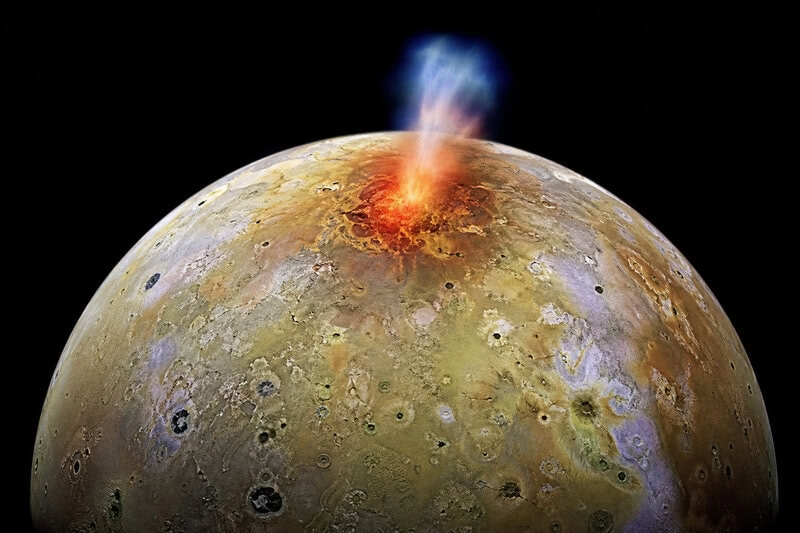
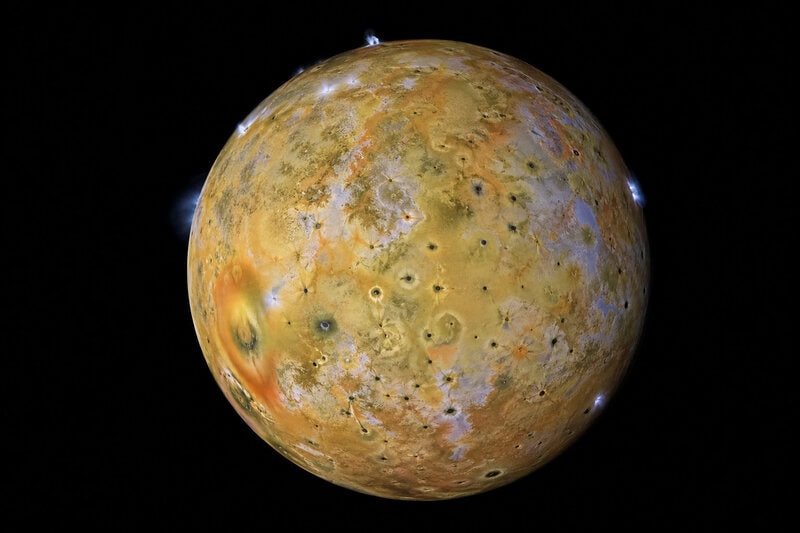
Beyond its interior measurements, Juno delivered a dramatic surface observation. Juno spotted the largest volcanic eruption ever observed on Io — an event the mission team characterized as the most violent volcanic cataclysm ever seen in our solar system.
The scale of that eruption dwarfs anything in recorded Earth history and illustrates, in visceral terms, what a world operating near the upper limit of geological violence looks like in practice. This is not a single vent releasing pressure in a controlled way. It is a system so energized that it periodically ruptures at a scale with no modern terrestrial equivalent.
The scientific value extends well beyond spectacle. Eruption intensity, frequency, and spatial distribution are key inputs for the models scientists use to determine how heat moves from Io’s interior to its surface. Researchers are now combining the thermal footprint of this eruption with Juno’s subsurface heat data to refine estimates of how much of Io’s interior is molten at any given moment — a figure that remains uncertain but is now better constrained than it was before Juno’s close approaches began.
What Io Tells Us About Planets — Including Early Earth
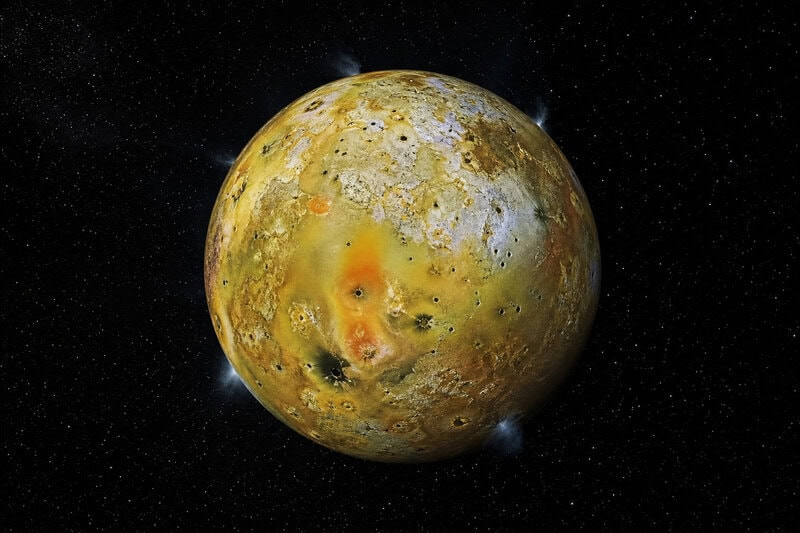
Io’s current state serves as a working analog for conditions planetary scientists believe existed on early Earth and other rocky planets shortly after formation, when magma oceans were common before crusts had time to solidify. Studying Io’s active interior is, in a real and not merely metaphorical sense, studying our own planet’s deep past — processes that Earth passed through billions of years ago but that Io is still undergoing today.
Resolving the question of whether Io maintains a global magma layer will also test the physical models used to understand heat escape from planetary interiors across the solar system and beyond, including in the growing catalog of volcanically active moons identified around other planets and, increasingly, in exoplanet systems where tidal heating is suspected around rocky worlds orbiting close to their stars.
Juno’s measurements have sharpened an existing tension in the data as well: Io’s surface shows volcanic activity concentrated in patterns that do not perfectly match the predictions of current tidal heating models regarding where heat output should be greatest. That mismatch suggests either the models, the assumptions about interior structure, or both may need revision — a productive form of scientific discomfort that tends to drive discovery forward.
What NASA’s Juno mission has ultimately demonstrated is that Io is not simply a world with a lot of volcanoes. It is a world whose interior has never been allowed to rest — and whose restlessness, properly understood, illuminates the geological history of every rocky planet we know.