Aries

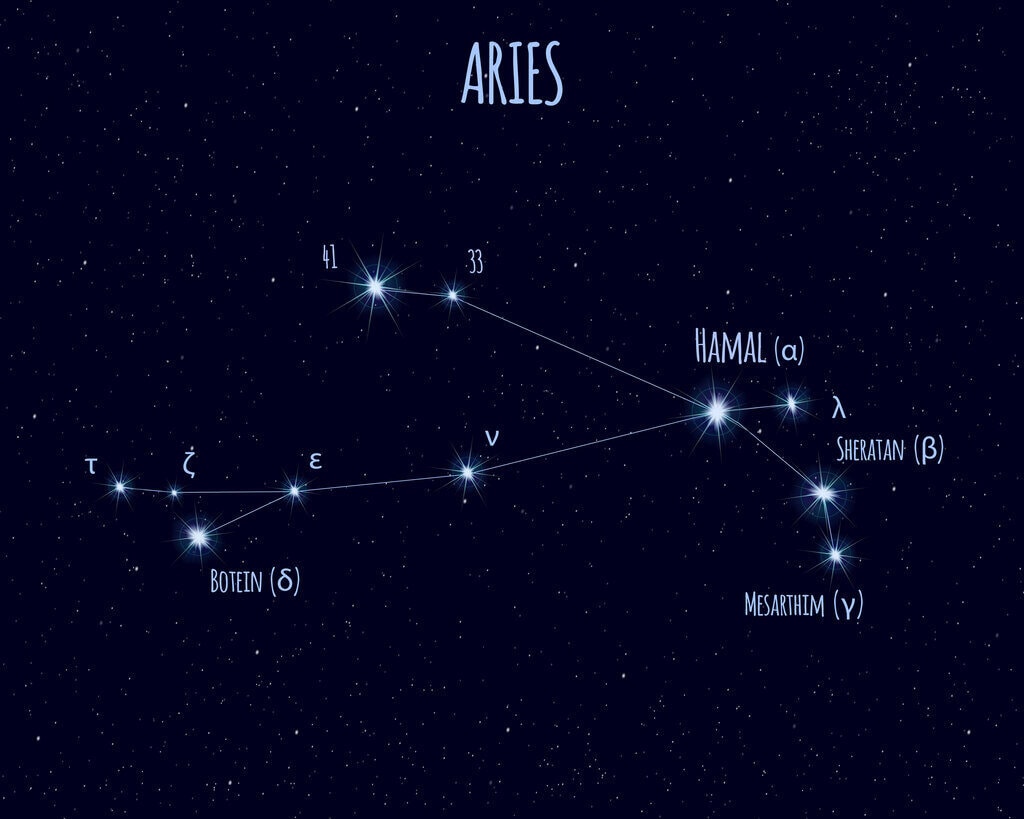
One of the significant zodiac constellations, Aries, means “the ram” in Latin and represents the horns of a ram in the northern sky. Though an integral part of the Zodiac constellations, Aries contains only four to five visible stars. The brightest star among them is Hamal and is often referred to as the “orange giant.” Best observed during December, Aries is located between the latitude of +90 degrees and -60 degrees.
Aries has its roots in Greek mythology since the time of Phirxus, and the ram is referred to as the golden fleece. According to the legend, Phrixus and Helle were the twin children of a Boeotian King, and their mother was a cloud nymph called Nephele. The children had a stepmother who was wicked and could not stand them. One day her evil intentions led to famine in the country, and she bribed the ministers into giving a false prophecy, which made the king believe that only sacrificing his children could save his country from the famine. Just when the king was about to sacrifice his children, a flying ram came from the heavens, sent by their mother to save the children. The children mounted the ram and flew over land and sea. However, on the way to the edge of the Black Sea, Helle fell off near the strait that connects Asia to Europe and drowned at sea. In honor of the ram that saved the children, Zeus placed a constellation in the sky and named it Aries.