The Pacific Salmon
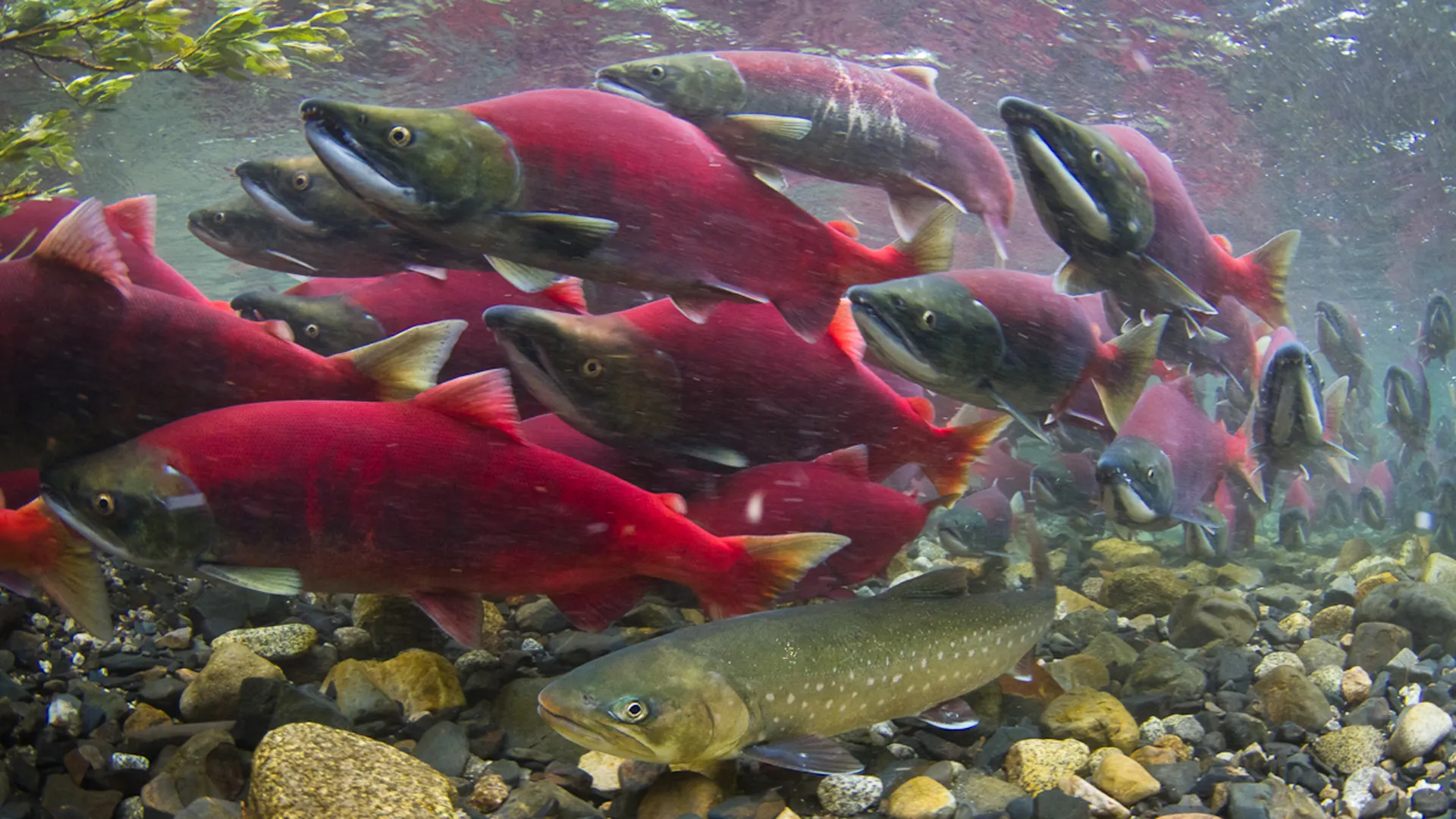
We’ve seen land animals migrate, we’ve seen birds migrate, but what about all the fish in the sea? The Pacific salmon experience a migration that spans across saltwater and freshwater environments. This is important for the salmon’s lifecycle, as they return to their natal rivers to continue mating for their species. They’ll begin in Washington, Oregon, and California, and migrate to the Pacific Ocean.
Salmon hatch from their eggs in freshwater rivers. They then undergo smoltification, where they can adapt to saltwater. Their journey begins as they migrate to the great open ocean to continue maturing into adults. They’ll spend between one and six years in the ocean until they turn into adults. They need to battle strong ocean currents, predators, waterfalls, hydroelectric dams, and the open sea. But the most remarkable thing is that the salmon return to their original rivers, oftentimes traveling thousands of miles, to mate and start the lifecycle again (Fisheries).