Dwarf Galaxies
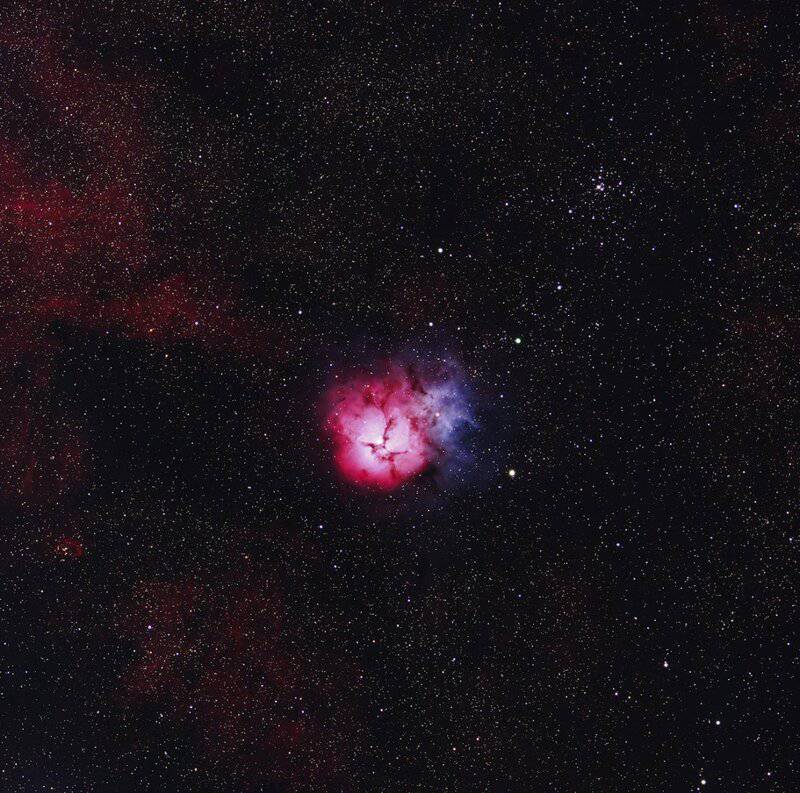
Among the universe’s many wonders, dwarf galaxies represent the smallest and most abundant galactic structures. These tiny galaxies contain significantly fewer stars—from a few million to a few billion—compared to their larger counterparts.
Astronomers classify dwarf galaxies into types such as dwarf ellipticals, dwarf irregulars, and dwarf spheroidals, each reflecting distinct evolutionary histories and compositions. One prominent example is the Sagittarius Dwarf Galaxy, a satellite galaxy currently being absorbed by the Milky Way. Studying dwarf galaxies offers valuable insights into galaxy formation processes, revealing how larger galaxies may evolve through the merger of smaller neighbors.