
A Falcon 9 rocket lifted off from Vandenberg Space Force Base on California’s central coast on September 10, carrying a classified payload for the U.S. Space Force — and almost no one was watching, by design. Days later, a second classified mission, designated USSF-432 and targeted for a 7:42 p.m. CT liftoff from the same site, was scrubbed and pushed to Friday, again without any public explanation of what was aboard or why the delay occurred.
A Question Most Launch Coverage Skips
These back-to-back missions — the successful USSF-153 launch on September 10 and the scrubbed USSF-432 — raise a pointed question that most launch-day reporting sidesteps entirely: what does the U.S. Space Force actually put into orbit, and what legitimate national-security logic justifies keeping it secret from the taxpayers who fund it? Answering that requires unpacking the architecture of classified space launches — the vehicles, the orbits, the payloads, and the persistent tension between operational security and democratic accountability.
What the Space Force Is — and Isn’t
The U.S. Space Force, established in December 2019 as the sixth branch of the U.S. Armed Forces under the National Defense Authorization Act, is not NASA. Its mandate is warfighting and deterrence in the space domain, not exploration or scientific discovery. The Space Force’s primary responsibilities, as defined by the Department of Defense, include operating military satellites, providing GPS signals, delivering missile-warning data, and ensuring the United States can deny adversaries the use of space in a conflict.
The service publicly acknowledges operating roughly 80 satellites across a range of orbits — but classified programs mean the true number is almost certainly higher. That distinction between military utility and scientific exploration is essential context for why Space Force payloads like USSF-432 and USSF-153 routinely disappear behind a wall of classification the moment they leave the launch pad.
What ‘USSF-432’ Actually Tells Us
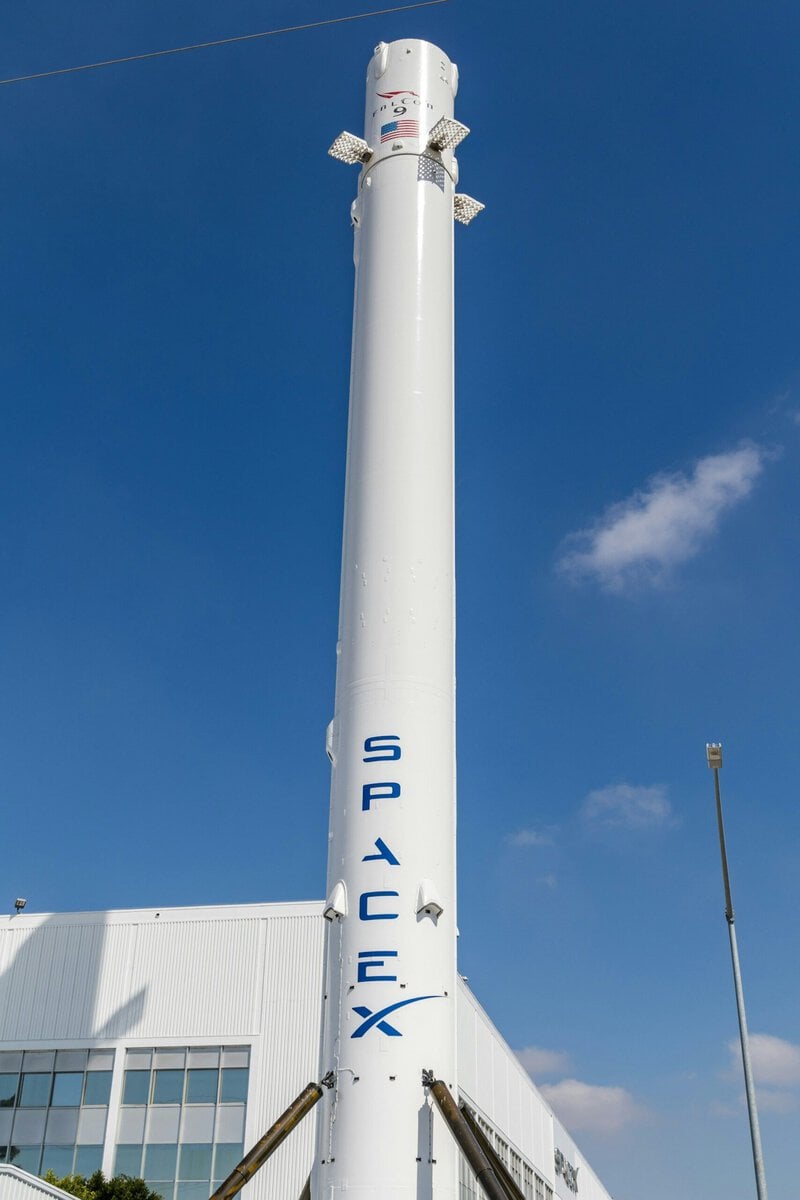
Mission designators like USSF-432 follow a numbering convention tied to Space Force launch contracts, not mission type. The number itself reveals nothing about the payload’s orbit, purpose, or the number of satellites aboard. What is publicly confirmed is narrow: SpaceX was contracted to fly an undisclosed number of satellites for USSF-432 on a Falcon 9 rocket from Vandenberg Space Force Base, with a liftoff window targeting 7:42 p.m. CT before the scrub pushed the attempt to Friday. No technical cause for the scrub was publicly announced.
The choice of launch site, however, is a meaningful clue. Vandenberg sits on California’s central coast, and its orbital geometry — angled toward polar and sun-synchronous orbits — is well-suited for reconnaissance and signals-intelligence satellites that need to pass over every point on Earth at regular intervals. That inference is grounded in orbital mechanics and geography, not classified briefings. Classified Space Force missions from Vandenberg typically feature a limited or entirely muted webcast, a practice that contrasts sharply with commercial SpaceX launches where payload deployment is narrated in real time. Payload fairings are often covered or obscured during fueling and rollout. The rocket, the launch site, and the contractor are known quantities. Everything about the cargo is not.
What Military Satellites Actually Do in Orbit
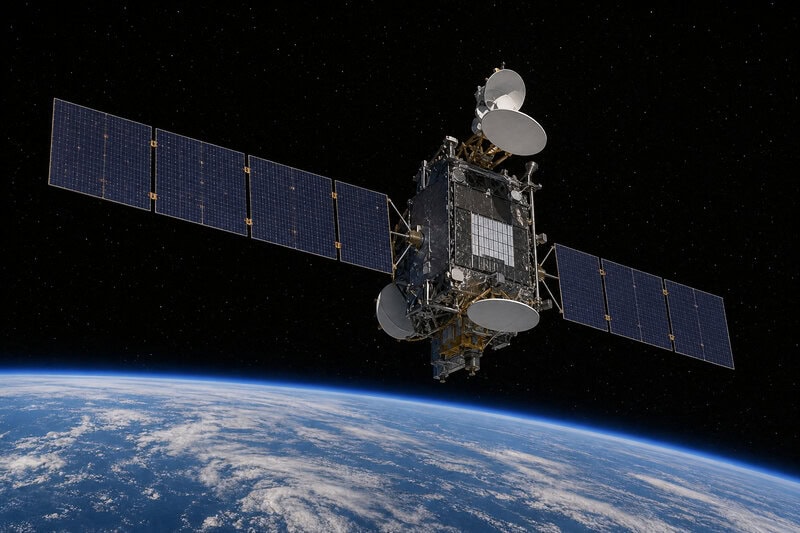
Declassified histories and open-source satellite-tracking data maintained by organizations like the Center for Strategic and International Studies (CSIS) identify four broad categories of military space payloads:
- Communications relay — secure, jam-resistant links between commanders, forces, and assets in the field
- Missile-launch early warning — infrared sensors that detect ballistic missile launches within seconds of ignition
- Positioning and navigation — the GPS constellation that underpins precision munitions, military logistics, and civilian smartphone navigation alike
- Intelligence-gathering — imagery, signals intelligence (SIGINT), and electronic intelligence (ELINT) collected from orbit
GPS is itself a Space Force asset. The constellation of roughly 31 operational satellites is managed by the 2nd Space Operations Squadron at Schriever Space Force Base in Colorado, and it illustrates how deeply military and civilian space infrastructure are intertwined. Early-warning satellites in geosynchronous orbit — such as those in the Space-Based Infrared System (SBIRS) program developed by Lockheed Martin and documented in Government Accountability Office acquisition reports — detect the infrared signatures of ballistic missile launches within seconds of ignition. Engineering details for these systems remain classified decades after deployment, a posture the Space Force regards as standard rather than exceptional.
What the USSF-153 satellites will do in orbit has not been disclosed by the Space Force, leaving even professional satellite trackers working from orbital parameters alone.
Why Secrecy Has a Legitimate — and a Contested — Rationale
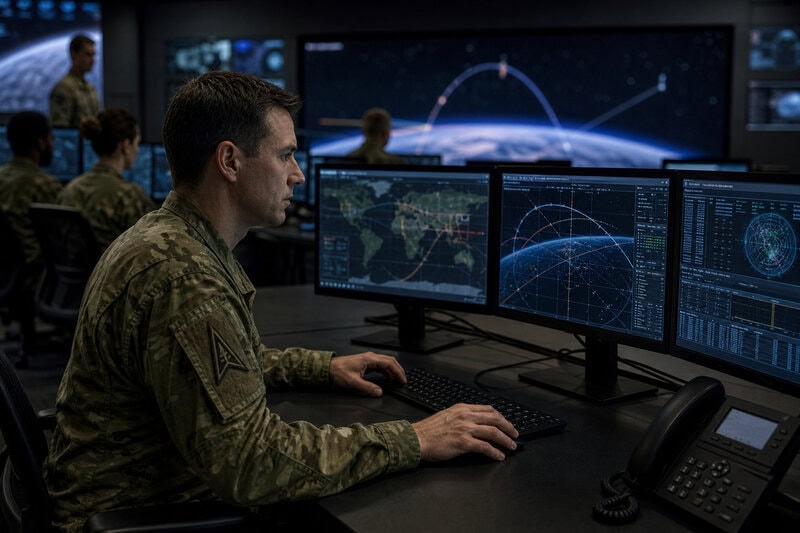
The core security argument, articulated repeatedly by the Office of the Director of National Intelligence, is that disclosing a satellite’s orbit, sensor capabilities, or operational schedule hands adversaries a roadmap for blinding, jamming, or spoofing it. The CSIS Space Threat Assessment 2024 describes this threat as increasingly credible, citing demonstrated Chinese and Russian anti-satellite capabilities including direct-ascent missiles, co-orbital interceptors, and ground-based laser systems capable of dazzling or damaging optical sensors.
Classification also obscures the gap between what the U.S. claims its satellites can do and what they actually achieve. Defense analysts at the Mitchell Institute for Aerospace Studies have argued this is a double-edged sword: it deters adversaries but also shields underperforming programs from the congressional and public scrutiny that drives accountability. The Government Accountability Office, in multiple unclassified acquisition reports, has noted that excessive classification can delay identification of cost overruns and technical failures in military space programs — a tension the Space Force has acknowledged without fully resolving.
A genuinely contested question, debated openly at forums like the annual Space Symposium in Colorado Springs, is whether the era of commercial satellite imagery has eroded the practical value of mission-level secrecy. Companies like Planet Labs and Maxar now publish near-real-time photographs of military facilities globally, meaning that what a satellite does can sometimes be inferred from what it photographs. Whether that reality makes orbital and sensor secrecy more critical or less defensible is a live debate among defense researchers — not a settled one.
SpaceX’s Role: Why the Military Flies Commercial
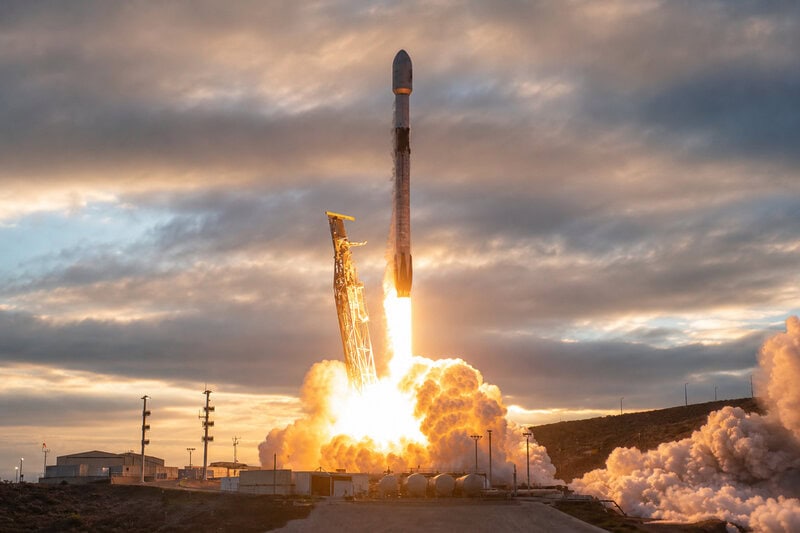
The Space Force’s shift to commercial launch providers under the National Security Space Launch (NSSL) Phase 2 contract — a competitive program run by the Space Force’s Space Systems Command — reflects a deliberate policy choice to leverage private-sector cost reductions rather than maintain dedicated government launch infrastructure. Falcon 9’s reusable first-stage boosters dramatically cut launch costs compared to the United Launch Alliance Atlas V rockets that previously dominated the national-security launch market.
Using a commercial rocket does not make the payload less classified. The Falcon 9 is, in this context, a delivery vehicle. The Space Force controls all payload integration, fairing access, and post-deployment tracking. SpaceX employees without appropriate security clearances do not interact with the satellites themselves. The scrubbed USSF-432 mission and the successful USSF-153 launch both illustrate a maturing model in which the most sensitive national-security payloads now routinely ride on the same rocket design that also delivers commercial broadband satellites — a convergence with real implications for how adversaries assess U.S. launch activity.
What We Can — and Cannot — Honestly Know
It is worth being precise about the boundaries of verifiable knowledge, because classified launch coverage often blurs them.
Established fact: SpaceX launched USSF-153 from Vandenberg on September 10 carrying a classified Space Force payload. USSF-432, also a classified Falcon 9 mission from Vandenberg targeting 7:42 p.m. CT, was scrubbed and rescheduled for Friday. Both missions proceeded with limited public disclosure, consistent with standard Space Force classification practice.
Reasonable inference from open-source orbital mechanics: Vandenberg launches into high-inclination orbits well-suited to reconnaissance and signals-intelligence missions. That inference is grounded in physics and geography, not leaked intelligence.
Genuinely unknown and not resolvable from public data: how many satellites are aboard USSF-432, what USSF-153’s satellites will do in orbit, and whether these missions represent new capabilities or replenishment of existing constellations.
The honest bottom line: the U.S. Space Force conducts classified launches because space-based military infrastructure is both operationally critical and increasingly contested by capable adversaries. The secrecy is neither arbitrary nor absolute — it reflects real vulnerabilities in systems that underpin everything from nuclear deterrence to the GPS receiver in a civilian car. But the line between necessary operational security and accountability-free opacity remains actively debated by defense researchers, the Government Accountability Office, members of Congress, and the Space Force itself. Two rockets lifting off in near-silence from California’s coast, carrying unnamed cargo to undisclosed orbits, are a precise expression of that unresolved tension.