
Somewhere above the Pacific Ocean, traveling at roughly 17,500 miles per hour, NASA astronaut Anil Menon opened his personal computer inside the compact privacy of his crew quarters aboard the International Space Station — and voted. Not symbolically. Not by proxy. His ballot was encrypted, transmitted through a constellation of relay satellites, and eventually received by a county clerk’s office in Harris County, Texas, processed alongside every other absentee ballot that cycle.
Who Is Anil Menon — and Why His Vote Made Headlines
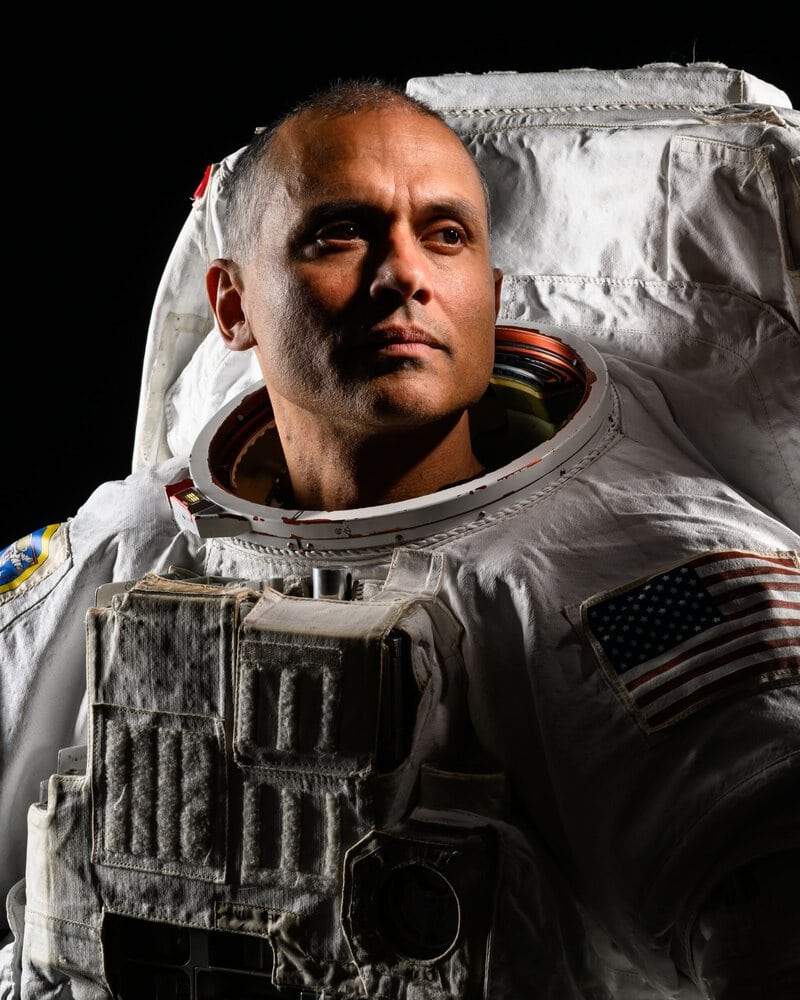
Anil Menon is a NASA astronaut and flight surgeon. When he cast his ballot during a Texas election from aboard the ISS, he was not alone — all three U.S. crew members aboard the station during that election window exercised the same right. But Menon’s willingness to explain the process publicly, in detail, gave the public a rare window into one of the quieter rituals of life in low Earth orbit.
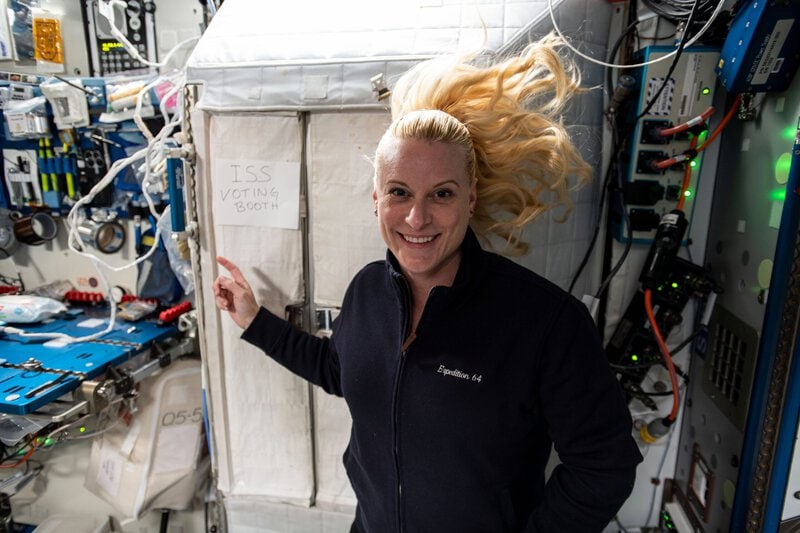
The setting matters. Menon voted from his personal crew quarters — a small, enclosed pod that functions simultaneously as bedroom, office, and, in this case, polling booth. In the broader context of station daily life, this is less remarkable than it might sound: astronauts brush their teeth with edible toothpaste, sleep in bags anchored to the wall to prevent drifting, and exercise two hours a day to slow bone and muscle loss caused by microgravity. Voting sits comfortably in this catalog of surprisingly ordinary acts performed in an extraordinarily hostile environment. Menon has explained the process directly, describing it in terms that strip away the drama and emphasize the deliberate, procedural normalcy of the whole thing.
The Legal Architecture: How Texas Made Space Voting Possible
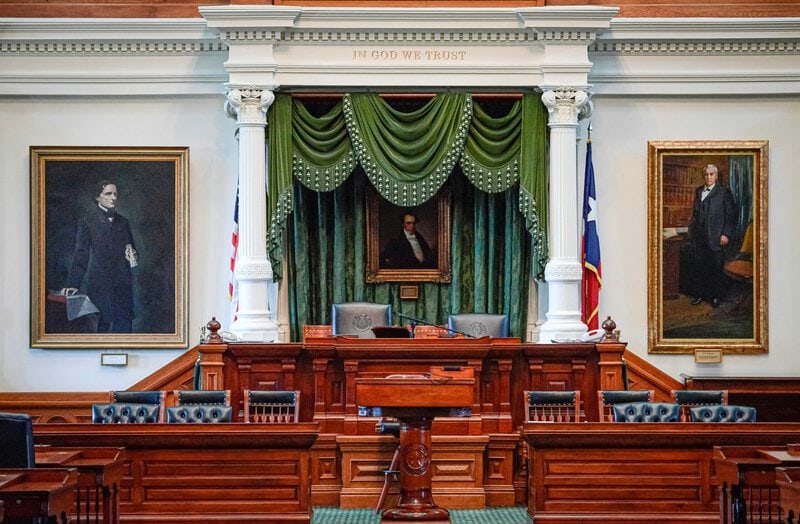
None of this would be possible without legislation Texas passed in 1997 — a forward-thinking legal move made years before commercial spaceflight was a serious industry and well before the current era of long-duration ISS missions. The law allows astronauts to designate a home county before launch and vote absentee from space, giving the act a firm legal foundation rather than leaving it in an ambiguous gray zone.
In Menon’s case, that home county was Harris County, which encompasses Houston — home of NASA’s Johnson Space Center and the professional address of most American astronauts. Before launch, NASA and county election officials coordinate to ensure the ballot request is submitted on time and the returned ballot is accepted as valid. The legal framework closely mirrors standard absentee voting procedures. The only unusual entry in the address field is the extraterrestrial one.
The fact that all three U.S. crew members voted during the same election cycle underscores something important: this is not a novelty or a one-off accommodation. It is an institutionalized system, repeatable and reliable, used across multiple elections and multiple missions. Coverage from The New York Times captured how routine the crew treated the process — itself a testament to how well the system has been designed.
The Technology: Encrypted Ballots on a Very Long Route
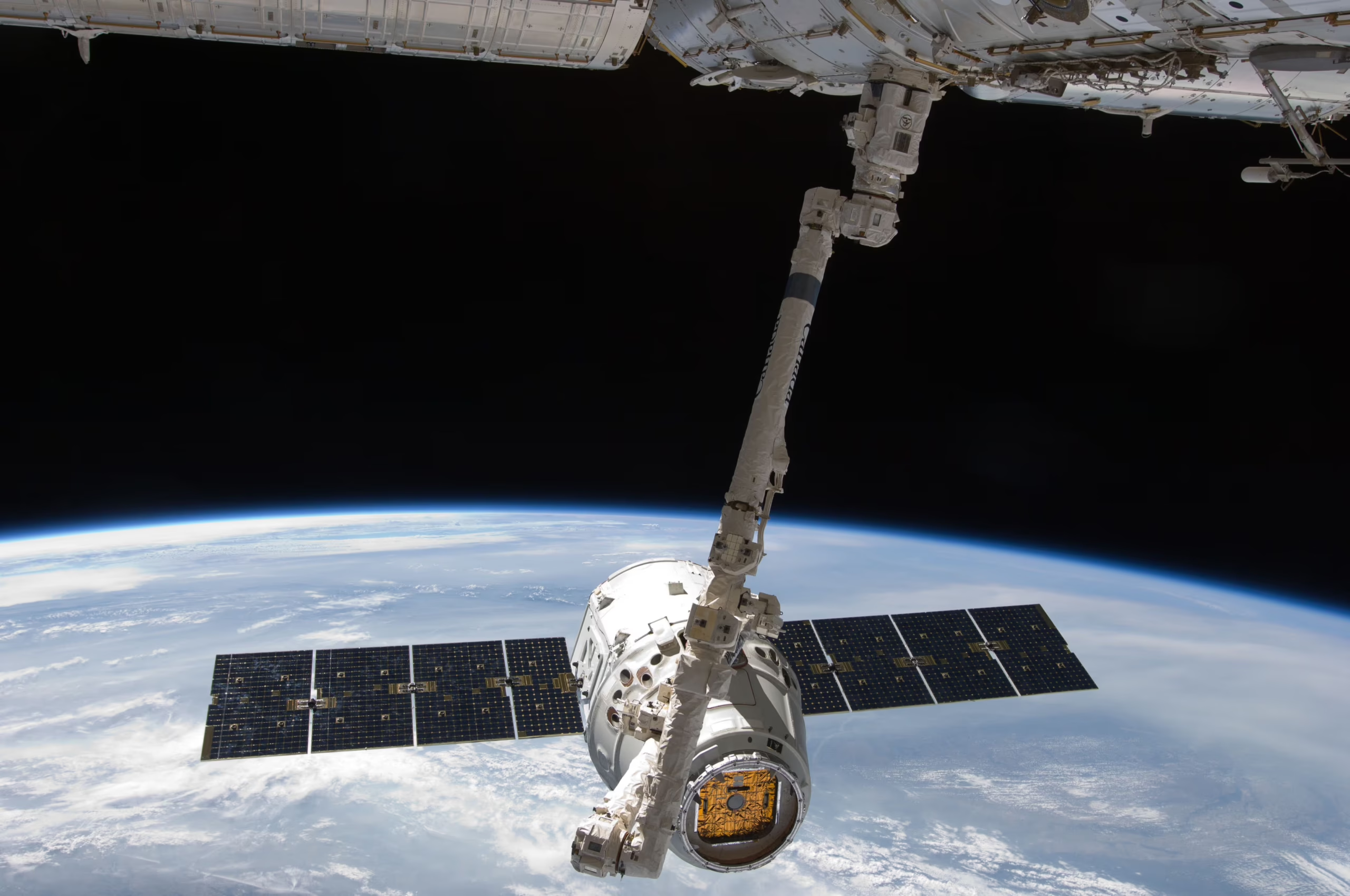
The mechanics of how a vote travels from the ISS to Harris County involve several layers of infrastructure working in quiet coordination. Astronauts complete secure, encrypted electronic ballots — encryption is not optional. The data passes through NASA’s Tracking and Data Relay Satellite system, the communication backbone between the ISS and the ground, before it reaches any Earth-based server.
The ISS does not have a direct, persistent broadband connection to the internet in the way a home office might. Communications are routed through relay satellites, which introduces additional infrastructure between an astronaut’s keystrokes and their destination. The station’s orbital mechanics add further complexity: the ISS circles Earth once every 90 minutes at roughly 400 kilometers of altitude, meaning it is never stationary relative to any single ground antenna. Despite this constant motion, the communication link is engineered to remain live — a feat of orbital mechanics and antenna design that most users of the voting system will rightly take for granted.
Once the encrypted ballot reaches NASA’s Johnson Space Center in Houston, it is forwarded securely to the Harris County election authority. The chain of custody is designed to replicate, as closely as possible, the procedural integrity of a standard absentee process. The Wall Street Journal’s video explainer describes how the experience feels, from the astronaut’s perspective, closer to sending a secure email than standing at a polling booth.
What “Election Day” Looks Like 250 Miles Up
To understand how voting fits into an astronaut’s day, it helps to understand what that day actually looks like. ISS crew members follow a heavily scheduled routine: conducting science experiments, performing station maintenance, exercising for two hours to counteract the muscle and bone deterioration caused by microgravity, and eating meals portioned and prepared for spaceflight. Free time exists, but it is planned free time — a scheduled window rather than an open afternoon.
Voting, for Menon and his crewmates, would have slotted into one of those windows. Personal computers in crew quarters are used for video calls with family, leisure, and administrative tasks. The ballot process is specifically designed to feel as routine as composing an email. Reporting from the Times of India highlighted how Menon described the experience as a civic act he chose to participate in, without fanfare, because participation mattered to him.
One detail is worth pausing on: the ISS completes a full orbit every 90 minutes, meaning crew members witness approximately 16 sunrises and 16 sunsets every single day. The concept of “Election Day” — a calendar date anchored to a local time zone — becomes genuinely abstract when you are crossing time zones every few minutes. Yet the system accommodates this. The ballot is tied to the legal calendar of Harris County, Texas, not to whatever the station’s clock reads at a given moment.
Why This Matters Beyond the Novelty
The practical implications of astronauts voting from space extend well beyond the current ISS program. NASA’s Artemis initiative is designed to return crews to the Moon and eventually send humans to Mars. A lunar crew could be absent from Earth for months. A crewed Mars mission would involve communication delays measured not in milliseconds but in minutes — sometimes exceeding twenty minutes each way. The encrypted ballot that works reliably in low Earth orbit would face a fundamentally different physics problem in deep space, and policymakers have not yet built a legal architecture to address it.
The Menon example also carries implications closer to home. The astronaut model serves as a proof of concept for secure remote voting infrastructure. If the legal and technical barriers of 250 miles of vacuum, orbital mechanics, and relay-satellite latency can be overcome reliably, the conversation about accessibility barriers facing voters on the ground — distance, disability, work schedules, lack of transportation — becomes harder to dismiss as an unsolvable problem.
- Texas’s 1997 law established a legal framework before the problem became urgent — a model for proactive policymaking.
- The encrypted, relay-satellite system demonstrates that ballot security does not require physical proximity to a polling location.
- Three crew members voting in the same election window confirms the system is scalable within a crew, not dependent on a single individual’s special arrangement.
- Future deep-space missions will require new legal and technical solutions that the current framework cannot simply be extended to cover.
Civic Duty Has No Altitude Limit
Return to the simplest image in this story: Anil Menon, in his crew quarters, opening a ballot on a personal computer while the Earth turns 250 miles below him. The act was quiet, undramatic, and entirely intentional — which is exactly the point. No one required him to vote. The system existed, he used it, and a Harris County election official processed the result like any other absentee ballot received that cycle.
What makes the story worth telling is the layered achievement underneath it. Texas legislators in 1997 wrote a law for a situation most of them would never personally face. NASA engineers built and maintain a communication infrastructure capable of carrying encrypted civic data through relay satellites to a county clerk’s server. And astronauts like Menon made a personal choice to participate in democratic processes even when no one would have noticed — or blamed them — for skipping it.
The question future missions will force onto the table is what happens when a crew is too far away for a same-day ballot — when the physics of deep space introduce delays that make the current system technically unworkable. Legal and engineering communities will have to evolve their answers, just as Texas legislators evolved theirs in 1997. The ISS travels 17,500 miles per hour, its crew witnesses sixteen sunrises every single day, and a vote cast aboard it still counts in Harris County, Texas. That is not a small thing. It is a template for every hard question that comes next.